“It doesn't hurt, not really. Not like you'd think. It's just… a tingle. A fizz.”
— Allie/Eve's first experience using her power, realizing it's not painful for her.

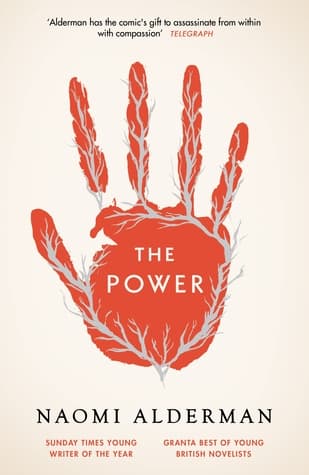
Naomi Alderman (1998)
Genre
Fantasy / Young Adult / Romance
Reading Time
7-8 hours
Key Themes
See below
Sign in to track this book
When teenage girls worldwide suddenly gain the ability to unleash deadly electrical currents, the world changes forever, forcing a re-evaluation of power, gender, and societal control.
The story begins by introducing several characters as the 'Power' awakens. Roxy Monke, a London gangster's daughter, escapes a sexual assault by accidentally electrocuting her attacker. She realizes she has an internal electrical charge. Margot Cleary, an American politician, sees her daughter, Jocelyn, display the power during a public event, causing fear and wonder. Allie, an abused foster child, hears a voice in her head, later calling herself Mother Eve, and uses her growing power to escape her tormentors. In Nigeria, Tunde, a journalist, begins documenting the global phenomenon of girls discovering this new physical ability to generate electricity, causing pain, control, and even death.
As the Power appears globally, initial reactions range from panic to awe. Governments struggle to understand and control it. Tunde travels the world, reporting on the escalating situation, documenting how women use the power, often in self-defense, but increasingly to assert dominance. Margot, hesitant at first, embraces the political implications of the Power, seeing a chance for women to gain equality, or even supremacy. Allie, now Mother Eve, gathers young women, starting a spiritual movement centered on the Power, offering them solace and belonging away from patriarchal structures.
Allie, having escaped her abusive foster home, travels and gathers more young women, all with the Power. She renames herself Mother Eve and builds a sanctuary in a remote region, where she teaches her followers to control and amplify their abilities. Her teachings combine spiritual guidance with practical training in using the Power, creating a strong community. Mother Eve becomes a symbol of female empowerment and a spiritual leader for many, offering a vision of a world where women are safe and in control. Tunde reports on her rise, noting the shift in global dynamics as more women join her cause.
Margot Cleary, a mayor, uses her daughter Jocelyn's ability and her own strategic mind to navigate politics. She starts 'skilling' programs to train women in controlling the Power, presenting it as a beneficial force. Through political maneuvering and public speaking, Margot gains national prominence, advocating for women's rights and the Power's integration into society. She understands the fear and resentment from men but frames the Power as a necessary step towards a more just world, building a political base among women.
Roxy Monke, after her awakening, fully uses her electrical abilities. She uses the Power to defend herself, confront her father's criminal rivals, and eventually assert her authority within the family's illicit drug trade. Her ability makes her a formidable figure. She takes over parts of her father's business, showing ruthless efficiency and a willingness to use violence. Her journey shows a more direct application of the Power, rooted in survival and control in a dangerous environment, not political or spiritual aims.
As the Power spreads, governments, often led by women like Margot, start 'skilling' programs to teach girls how to control and weaponize their abilities. This shifts societal roles, with women now having a significant physical advantage. However, male resistance grows, with protests, violence, and attempts to suppress or understand the Power. Tunde documents male militias forming and the growing divide between genders, as women, now physically superior, reshape the world, often with force in response to perceived threats.
Over time, the Power transforms political structures. Countries like Saudi Arabia experience overthrows, with women seizing power and establishing matriarchal states. Women form military units, enforce new laws, and dismantle patriarchal systems. Tunde continues to travel, documenting these radical shifts, including 'Girls' Camps' where young men are sent for 're-education' or forced labor. The world divides along gender lines, with women asserting dominance nationally and internationally, leading to new forms of governance and social order.
Nigeria becomes a conflict zone as a civil war erupts, pitting empowered women against traditional male-dominated forces. Tunde, a Nigerian, reports on the violence and the devastating use of the Power. Women, using their electrical abilities, engage in brutal combat, showing the destructive potential of their newfound strength. The war illustrates the complete inversion of power dynamics and the chaos that arises when one group gains absolute physical dominance over another, regardless of gender.
Roxy experiences a personal tragedy when her mother is murdered and her sister is attacked by male gang members seeking revenge. This event devastates Roxy and strengthens her resolve to use her Power without mercy. In her grief and rage, she learns to channel her electrical energy with greater precision and force, making her a formidable force. This loss hardens her, solidifying her commitment to the matriarchal order and making her a dangerous and influential figure in the new world.
Years pass, and the world has reshaped itself. Women hold all positions of power, from political leaders to religious figures and military commanders. Men are largely disarmed, subservient, and in many places, confined or relegated to domestic roles. Tunde, now an older, respected journalist, documents this new reality, noting the subtle and overt forms of oppression faced by men. The story portrays a world where gender roles have completely inverted, leading to new societal problems and injustices, mirroring many issues faced by women in the 'old' world.
Mother Eve's teachings and spiritual movement grow into a global religion, becoming the dominant faith in many parts of the world. Her followers, 'Eves,' adhere to a strict doctrine of female supremacy and the divine nature of the Power. Her pronouncements shape laws, social norms, and international relations. Mother Eve, with an aura of divine authority, wields immense influence, often dictating policy and justice. Her story shows how power can be institutionalized through religion, creating a new framework for control and belief in the inverted world.
Margot Cleary rises to become a powerful global leader, perhaps a President or similar head of state in the new matriarchal world. She champions policies that solidify female dominance and oversees the continued 'skilling' of girls. However, her journey involves increasing moral compromises and growing ruthlessness to maintain her position. She grapples with the ethical implications of the new world order, acknowledging the injustices faced by men, but ultimately prioritizing the stability and power of women. Her story reflects the corrupting influence of absolute power, even when initially sought for noble reasons.
Roxy continues to refine her Power, becoming a master of electrical manipulation. She can not only generate immense charges but also absorb and redirect them. She becomes a key enforcer and military leader in the new female-dominated world, feared and respected for her abilities. Her personal vendettas and experiences of loss fuel her dedication to maintaining the matriarchal order, making her a ruthless and effective instrument of the new regime. She embodies the physical manifestation of the Power's ultimate potential, unburdened by the political or spiritual concerns of Margot or Mother Eve.
Tunde, now an old man, sends his final dispatches to a female historian in a distant future. He reflects on the world's trajectory, from the Power's awakening to the matriarchal society's full establishment. His reports record the inversion of power dynamics, the atrocities committed by both genders, and oppression's cyclical nature. He observes that while power wielders have changed, the fundamental abuses and injustices associated with absolute power remain, suggesting that human nature, not gender, determines tyranny.
The novel is a historical manuscript sent by a male writer, Neil T. Q. Alden, to a female editor, Naomi, in a future where women are the dominant gender. Neil tries to write a historical novel about a time when men held power, and Naomi criticizes his work as unrealistic and implausible, especially his depiction of men's historical subjugation of women. This meta-narrative reveals that the world in 'The Power' is the 'past' from the perspective of a future where women have always been dominant, making the novel a thought experiment on power itself, not a simple gender swap.
The Protagonist
Roxy evolves from a vulnerable victim to a powerful, feared enforcer in the new matriarchal world, hardened by personal tragedy and fully embracing her formidable abilities.
The Protagonist
Margot transforms from a local politician to a powerful global leader, using the Power to ascend to the highest echelons of government, ultimately grappling with the ethical costs of her ambition.
The Protagonist
Allie evolves from a voiceless, abused girl into Mother Eve, a revered, almost deified spiritual leader who establishes a powerful global religion based on the Power.
The Supporting
Tunde transitions from an ambitious young reporter to an elderly, respected historian, bearing witness to the complete inversion of gender roles and the cyclical nature of power and oppression.
The Supporting
Initially a conduit for her mother's political rise, Jocelyn eventually becomes a skilled user of the Power, though her individual story remains secondary to Margot's.
The Supporting
Bernie's power is steadily eroded by his daughter's abilities, transforming him from a dominant crime boss into a marginalized, fearful figure in the new world order.
The Mentioned
Daniel's role is primarily as a catalyst, his abuse triggering Allie's transformation and setting her on the path to becoming Mother Eve.
The Supporting
Naomi serves as a static character, representing the established power dynamics of the future, providing critical commentary on the 'historical' narrative.
The Mentioned
Neil's arc is implied through his attempts to write the 'history', showing his struggle to depict a world contrary to his present reality.
The novel explores how absolute power, no matter who holds it, tends to corrupt. Initially, the Power helps women defend themselves and gain freedom, but as they become dominant, they start to repeat the oppression they once suffered. Mother Eve's spiritual authority becomes rigid, Margot's political ambition leads to ruthless compromises, and Roxy's raw power is used for intimidation and violence. The Nigerian war, in particular, shows the brutality women inflict once they are in control, demonstrating that cruelty is not limited by gender.
“The world is as it is because of the way it is. And no one can change it.”
A central theme is the complete reversal of traditional gender roles and the resulting societal change. The book details how women, once physically vulnerable, become dominant, leading to men being subservient and relegated to secondary roles. This reversal makes readers confront their assumptions about gender and power. The novel shows how female-dominated societies mirror many patriarchal structures and injustices of the 'old' world, from male sex slaves to forced labor in 'Girls' Camps,' showing that oppression is a function of power, not gender.
“It means the world is turned inside out. It means that everything we thought we knew about power is wrong.”
The Power is an electrical current within women's bodies, making their physical form a weapon. This changes the female body from an object of vulnerability and exploitation into a source of strength and control. Women use their bodies to inflict pain, defend themselves, and enforce their will, fundamentally altering physical interactions. This theme explores how control over one's body, and the ability to project power from it, is central to personal and societal autonomy, and how losing that control leads to subjugation.
“The power is in you. You just have to let it out.”
The novel's framing device, where a male author in a future matriarchal society tries to write 'history' about a time when men were dominant, is key to this theme. It questions history's objectivity and how dominant power shapes narratives. The future editor, Naomi, dismisses Neil's account as unlikely, suggesting that the prevailing power structure dictates what is considered 'truthful' or even imaginable about the past. This meta-commentary highlights how historical records are often written by the victors, and how difficult it is to truly understand a radically different power dynamic.
“It's so much harder to imagine than you'd think, isn't it? A world where men are in charge.”
Mother Eve's change from an abused girl to a revered spiritual leader shows how religion can become a powerful force to consolidate and justify new power structures. Her teachings and the 'Eves' religion provide a moral framework for female dominance, giving the Power a sacred quality. This theme explores how religious narratives can be created and adapted to serve political and social agendas, and how faith can both free and control, ultimately becoming another tool for maintaining authority in the new world order.
“God is in us now. God is in our hands, in our skin, in our mouths. She is in our power.”
The entire novel is presented as a historical manuscript from a future matriarchal society.
The novel is framed as a historical novel written by a male author, Neil T. Q. Alden, in a future where women have always been the dominant gender. He sends his manuscript to a female editor, Naomi, who critiques his portrayal of a male-dominated past as unrealistic. This device serves to underscore the novel's central premise: it forces the reader to consider the story not as a fantasy, but as a thought experiment about power dynamics. It also highlights how history is written by the victors and how difficult it is to truly imagine an inverted power structure, challenging the reader's own assumptions about gender and power.
The story is told through the shifting viewpoints of four main characters.
The narrative alternates between the perspectives of Roxy, Margot, Allie (Mother Eve), and Tunde. This allows the author to present a comprehensive, multifaceted view of the global impact of the Power. Each character represents a different facet of the societal transformation: Roxy embodies raw physical power, Margot political maneuvering, Allie spiritual leadership, and Tunde the journalistic observer. This technique provides a panoramic scope, showing how the Power affects individuals across different social strata and geographical locations, and how their interconnected stories contribute to the larger narrative of global change.
The biological organ in women that generates electrical energy.
The 'skein' is the biological organ located in women's collarbones that enables them to generate and discharge electrical power. This device grounds the fantastical element of the story in a pseudo-scientific reality, making the Power feel more tangible and less purely magical. By making it a physical attribute, the novel emphasizes the biological component of the power shift, suggesting a fundamental, almost evolutionary, change in women. It also becomes a symbol of female inherent strength and a target for those who seek to control or understand it.
Tunde's journalistic observations often hint at future societal shifts and conflicts.
As Tunde travels and reports on the emerging Power, his journalistic insights and observations often foreshadow the larger societal changes and conflicts to come. He notes the growing tensions, the increasing assertiveness of women, and the fear among men, subtly hinting at the eventual full inversion of power and the violent conflicts that will ensue. This device adds a layer of realism to the narrative, as a keen observer might indeed predict such outcomes, and builds suspense for the reader as they anticipate the unfolding consequences of the Power's rise.
“It doesn't hurt, not really. Not like you'd think. It's just… a tingle. A fizz.”
— Allie/Eve's first experience using her power, realizing it's not painful for her.
“The world is about to change. Everything you thought you knew, everything you've ever been told. It's all going to burn.”
— Roxy's early realization about the scope of the power and its implications.
“We are not asking for permission. We are taking it.”
— A common sentiment among girls and women as they assert their new dominance.
“You can never go home again. But you can make a new one.”
— Margot's internal reflection on the societal shift and the need to adapt.
“When you have the power, you don't need to be afraid.”
— A simplified, yet profound, understanding of the new world order.
“The only thing that matters is who can hurt whom. And now, it's us.”
— A blunt assessment of the shift in the balance of power.
“A man's world, they called it. Well, it isn't anymore.”
— A common phrase used to describe the overthrow of patriarchal society.
“Sometimes, the only way to be safe is to be dangerous.”
— A survival philosophy adopted by many women in the evolving world.
“History is not what happened. History is what gets written.”
— Neil's observation from the future, highlighting the subjective nature of historical records.
“The world had turned itself inside out, and she was still just trying to find her place in it.”
— Tunde's struggle to adapt and understand the new societal norms as a man.
“Power is not given. It is taken.”
— A core theme of the book, reflecting the violent acquisition of female dominance.
“The body remembers what the mind forgets.”
— A general statement about trauma and inherent knowledge, applicable to the physical nature of the power.
“They had wanted to be safe. They had wanted to be free. And they had got both, at a price.”
— A reflection on the cost of the new world order, particularly for women.
“The greatest trick the devil ever pulled was convincing the world she didn't exist.”
— A subversive twist on a famous quote, hinting at the hidden power of women before its emergence.
Ready to see how well you understood this book? Take our interactive quiz with 10 questions.







