
Biography coming soon.
Archivist's Choice
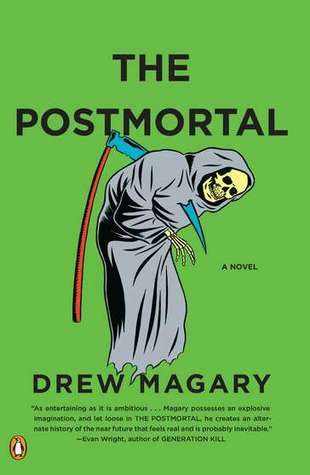
The Postmortal
Drew Magary (2011)
Genre
Fantasy / Science Fiction
Reading Time
12 Minutes
Key Themes
See below
Track Your Reading
Sign in to track this book
In a near future where aging is cured, John Farrell discovers that while he can't die of old age, he can still die from terrifying new threats like alien invaders and a government bent on euthanasia.
Synopsis
In a near-future world, John Farrell, a cynical lawyer, takes 'The Cure,' a revolutionary treatment that halts the aging process and offers immortality. As the cure becomes universally available, the global population grapples with the profound implications of a deathless existence. Farrell's personal journey unfolds against a backdrop of societal collapse, where overpopulation leads to government-mandated euthanasia, new religions emerge, and humanity's darkest impulses are amplified by the absence of natural death. The narrative follows Farrell through centuries, witnessing the slow, terrifying unraveling of civilization as the promise of eternal life transforms into an endless struggle for survival and meaning.
Difficulty
Medium
Pacing
Moderate
Mood
Dark, satirical, existential, unsettling, thought-provoking
Plot Summary
The Cure
In 2019, divorce lawyer John Farrell decides to get 'The Cure,' a gene therapy that stops aging. Dr. Henry Dusu developed The Cure in a lab accident. After years of ethical and political debate, it became available worldwide. John wants to avoid the decline he saw in his aging parents and joins society's move toward immortality. He blogs about his experiences, which forms the novel's story. Many people felt excited about The Cure, believing it would start a new golden age free from natural death. But early signs of the social problems it would cause were already appearing.
The Population Boom and Its Immediate Aftermath
After The Cure became widely used, global birth rates stayed high while death rates dropped, causing a huge population boom. Governments struggled to manage the growing numbers, leading to depleted resources, housing crises, and widespread unemployment. John saw public services quickly worsen and people grow more desperate for limited resources. The first hope about immortality soon gave way to a harsh reality: life, though endless, often lacked quality. The once-celebrated Cure became a source of great social stress, pushing nations to consider extreme measures to keep some order and sustainability in a rapidly unsustainable world.
The Green People and Euthanasia
As the population crisis got worse, a radical environmentalist group called the 'Green People' grew. They promoted 'voluntary' euthanasia as a sacrifice for the planet and future generations. At first, they used persuasion, but they soon used force and then violence against those who refused to 'green out.' Governments, desperate to control the population, began to quietly, then openly, support euthanasia programs. John witnessed society's moral decay as it normalized the killing of people. The idea of a 'good death' became a tool for population control, blurring ethics and creating fear and suspicion among the postmortals.
The Rise of 'Forever' and Cults
Amid the chaos and despair, a new religious cult called 'Forever' became prominent. Led by a charismatic leader, they preached that The Cure was a curse, not a blessing. They claimed true immortality could only come through spiritual 'ascension' – essentially, suicide – promising eternal bliss in a perfect afterlife. This cult attracted many who felt let down by the harsh realities of postmortal life, offering comfort and an escape from suffering. John documented the growing influence of 'Forever,' noting how it offered a dangerous alternative to state-approved euthanasia, further destabilizing society and worsening the moral mess. The cult's appeal showed the mental toll of endless life without purpose.
The Great War and Scarcity
The growing lack of resources and disagreements led to 'The Great War,' a series of destructive global conflicts. Nations fought fiercely over water, farmland, and energy, using increasingly powerful weapons. John described the world falling into a long period of lawlessness and violence, where governments crumbled and social structures collapsed. The war destroyed infrastructure and further used up the planet's already strained resources. Life for the postmortals became a constant fight for survival, marked by hunger, disease, and the constant threat of violence. The dream of eternal life had turned into a nightmare of endless conflict and suffering, as humanity proved unable to manage its new long life.
The Return to 'Normal' and the 'Reset'
After the Great War, a new, broken world order appeared, with strict authoritarian governments and harsh population control. 'The Reset' was introduced, where people were randomly chosen for 'termination' to keep the population balanced. John chronicled the creation of these brutal systems, noting how society had adjusted to a life where death was not natural but engineered. The value of individual life lessened further, replaced by a cold calculation of population management. Survivors lived under constant threat, their lives controlled by the state. The Cure's initial promise had completely reversed, creating a world where life was not valued but managed and ended.
John's Personal Losses
Over the decades, John suffered greatly. He saw his parents, who chose not to take The Cure, slowly decline and die. Then he lost his wife, Jenny, to a 'Green' attack. These experiences showed the unique pain of postmortal life: watching loved ones age and die while you stay the same, or losing them to violent social changes. The buildup of grief and the inability to escape it through natural death weighed heavily on John. His personal losses strongly contrasted the initial hopeful view of immortality, showing the deep emotional scars left by an unnaturally long life in a broken world.
The Isolation of Immortality
As decades turned into centuries, John became more isolated. Friends and acquaintances either died violently, 'greened out,' or simply drifted away, unable to cope with endless life. Forming meaningful, lasting relationships became difficult in a world where everyone was potentially immortal but also potentially temporary. People became detached, fearing the pain of loss, which led to a breakdown of social connection. John's blog entries showed his growing loneliness and weariness. The once strong human connections he valued became rare and fragile. For John, the curse of immortality was not just the world's suffering, but the deep solitude it created.
Encounters with 'Ancients'
John met 'Ancients' – people who had lived for hundreds of years, some since the start of the Postmortal era. These meetings offered insights into the long-term psychological and physical effects of endless life. Some Ancients were very tired, disconnected from humanity, and driven to madness, while others had found unique ways to cope or specialized existences. Their experiences showed the varied and often unsettling ways humans adapt, or fail to adapt, to immortality. These interactions gave John a disturbing look at his own possible future, forcing him to face the deep existential challenges of an unnaturally long life and the potential for a complete loss of identity and purpose over time.
The Search for Meaning
As centuries passed, John's story changed from just recording events to a more personal search for meaning and purpose. In a world where the natural cycle of life and death was broken, traditional motivations and goals lost their importance. He questioned the value of endless existence when it was full of so much suffering and repetition. This search for meaning became more central to his survival as he wrestled with the deep questions immortality raised. His journey reflected humanity's wider struggle to find new ways to define purpose and identity in a world where the basic human condition had changed forever.
The Return of the Cure's Creator
Centuries after The Cure's release, Dr. Henry Dusu, its creator, reappeared. Having seen the terrible results of his invention, Dusu revealed he had been working on an 'un-Cure' – a way to reverse immortality and bring back natural aging and death. He believed this was the only way to save humanity and the planet. Dusu's return sparked new debates and conflicts. Some embraced the idea of returning to mortality, while others, having adapted to endless life, strongly resisted it. His desperate attempt to undo his creation added another layer of ethical complexity, forcing humanity to confront whether an unending life, however painful, was better than a finite one.
The Final Reckoning and John's Choice
The 'un-Cure' forced humanity to a final decision. The world split into those who wanted to return to mortality and those who clung to their endless lives, despite the suffering. John, after centuries of seeing humanity's decline, had to make his own choice. His decision was not just personal but symbolized humanity's ultimate fate. The story ends with a reflection on the true meaning of life and death, and whether immortality, the greatest gift, ultimately became the greatest curse. John's final actions and thoughts summarized the novel's main idea about the inherent value of an end and the natural order.
Principal Figures
John Farrell
The Protagonist
John transforms from an optimistic postmortal into a jaded, isolated, yet ultimately reflective individual, searching for meaning in an endless, broken world.
Jenny
The Supporting
Jenny's arc is cut short by violence, serving as a poignant example of the fragility of life even after the Cure, and a major catalyst for John's disillusionment.
Dr. Henry Dusu
The Supporting
Dusu transforms from a celebrated scientific pioneer to a guilt-ridden recluse, dedicating his endless life to rectifying the global catastrophe his discovery unleashed.
The Green People
The Antagonist (collective)
The Green People evolve from an ideological movement into a violent, destructive force, illustrating the dangers of extreme solutions to complex problems.
The 'Forever' Cult Leader
The Antagonist (indirect)
The cult leader rises to power by exploiting societal despair, demonstrating the human tendency to seek spiritual escape from overwhelming reality.
His Parents
The Supporting
They live and die naturally, their finite lives becoming a source of both solace and profound grief for their immortal son.
Various 'Ancients'
The Supporting
Collectively, they demonstrate the varied and often negative long-term psychological and emotional consequences of endless life.
Themes & Insights
The Curse of Immortality
The main theme explores how immortality, meant as a gift, becomes a curse. Instead of a perfect future, endless life brings overpopulation, resource wars, social collapse, and deep personal suffering. The novel argues that the natural cycle of life and death is vital for human meaning, purpose, and a stable society. By removing an end, immortality takes away life's urgency and value, leading to a world where existence is long but often lacks joy or meaning, burdened by endless loss and repetition.
“We had traded the fear of death for the fear of everything else.”
The Nature of Humanity and Morality
The book explores what humanity becomes when free from death. It asks if humans are good or prone to self-destruction when facing huge challenges. The rise of euthanasia, eco-terrorism, and global warfare shows humanity's capacity for cruelty and moral compromise when resources are scarce and survival is at stake. The novel suggests that immortality does not improve humanity but instead magnifies its flaws, showing a species ill-equipped to handle the ethical and practical demands of endless life, which leads to a deep decline in moral values.
“When you have all the time in the world, what do you do with it? How do you fill it? And if you can't fill it, what does it do to you?”
Loss, Grief, and Loneliness
A constant theme is the heavy burden of loss and loneliness in an immortal world. John experiences the unique pain of watching mortal loved ones die while he remains unchanged. Later, he repeatedly loses immortal friends and acquaintances to violence or 'greening out.' The inability to escape grief through natural death leads to deep emotional scars and isolation. Immortality does not prevent loss; it only prolongs the experience, making meaningful, lasting connections harder and leading to a deep sense of loneliness for those who live for centuries.
“The greatest curse of immortality wasn't the violence, or the boredom, or the sickness. It was the loneliness.”
Environmentalism and Resource Scarcity
The novel highlights the terrible effect of uncontrolled population growth on the environment and global resources. The Cure, by removing natural death, worsens overpopulation to an unsustainable level, causing widespread hunger, water shortages, and ecosystem collapse. This scarcity fuels global conflicts and gives rise to extreme movements like the Green People, who advocate harsh measures to protect the planet. The book is a warning about humanity's relationship with its environment and the severe results of disrupting natural balances without considering wider ecological effects.
“The Earth, once so vast, suddenly felt impossibly small.”
The Search for Meaning and Purpose
In a world where death is no longer a natural end, the usual reasons for human purpose — legacy, having children, achieving goals within a limited lifespan — lose their meaning. The novel explores the crisis faced by postmortals who must find new reasons to exist when life is endless. This search for meaning leads some to despair, others to cults, and some, like John, to philosophical reflection about the value of existence itself. The book suggests that an end is linked to purpose, and without it, humanity struggles to define what makes life worth living.
“What was the point of forever, if there was no point to anything?”
Plot Devices & Literary Techniques
First-Person Blog Narrative
The entire story is told through John Farrell's personal blog entries.
The novel is presented entirely as a series of blog posts written by John Farrell, spanning centuries. This device offers an intimate, subjective, and immediate perspective on the unfolding events, immersing the reader directly into John's thoughts and experiences. It allows for a gradual revelation of the world's deterioration and John's personal transformation. The blog format also provides a sense of authenticity and personal testimony, making the dystopian future feel more real and impactful, as if the reader is witnessing history unfold through the eyes of a survivor.
Dystopian Future
A seemingly utopian scientific breakthrough leads to a nightmarish society.
The Postmortal employs the classic dystopian future trope, where a scientific advancement intended for good (the Cure for aging) inadvertently leads to a catastrophic societal breakdown. The initial promise of eternal life quickly devolves into overpopulation, resource wars, authoritarian regimes, and widespread human suffering. This device serves as a cautionary tale, exploring the unintended consequences of tampering with fundamental biological processes and highlighting the fragility of societal structures when faced with radical change, ultimately presenting a terrifying vision of a future humanity creates for itself.
Foreshadowing and Ironic Reversal
Early optimism about the Cure is gradually undermined by its dark consequences.
The novel masterfully uses foreshadowing and ironic reversal. Initial blog entries express John's and society's optimism about The Cure, portraying it as a miracle. However, subtle hints of underlying problems and ethical debates are present from the start. This early optimism is systematically and tragically reversed as the plot unfolds, revealing that the 'cure' is, in fact, the catalyst for humanity's downfall. This device creates a powerful sense of dramatic irony, as the reader watches the characters unwittingly embrace their own destruction, making the dystopian outcome all the more impactful.
Critical analysis
Notable Quotes
Quiz
Test Your Knowledge
Ready to see how well you understood this book? Take our interactive quiz with 10 questions.
10
Questions
~5
Minutes
?
Best Score
Key Questions (FAQ)
The Postmortal is set in a near future where a cure for aging, called 'The Cure,' is discovered and made available globally. This means people can no longer die of old age, but they are still vulnerable to other forms of death.







