“The war, it turned out, was not the story. The stories were the people, and the stories were the letters.”
— Early reflection on the true nature of war from the perspective of the postmistress.

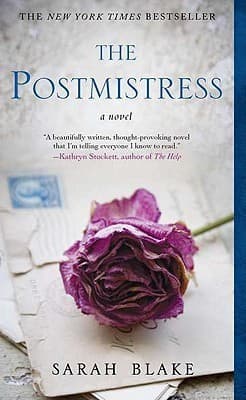
Sarah Blake (2010)
Genre
Historical Fiction
Reading Time
11 hours
Key Themes
See below
Sign in to track this book
During World War II, a small-town postmistress decides to withhold a letter, linking her fate to a wartime reporter and the harsh realities of war.
The novel opens in the summer of 1940 in Franklin, Massachusetts, introducing Iris James, the careful and dedicated postmistress. She takes her duty of delivering every letter seriously, understanding the impact of each message. Her husband, Franklin, is a doctor, and their lives are comfortable, but the growing war in Europe looms. Newsreels and radio broadcasts bring the devastation closer, especially the Blitz in London. Iris starts to feel the weight of her responsibility, as letters from the front lines and from anxious families at home become more frequent. She is aware of her community's emotional fragility and the potential for devastating news in the envelopes she handles daily.
Across the Atlantic, Anna Owens, a young and determined American journalist, arrives in London amidst the chaos of the Blitz. Driven by a desire to report on the human cost of the war, especially the experiences of ordinary citizens rather than just military movements, she finds herself in a city under constant siege. She quickly learns the harsh realities of wartime journalism, facing skepticism from male colleagues and the constant threat of air raids. Anna is persistent and resourceful, using her wit and charm to gain access and build trust with the people she interviews, determined to give voice to those often overlooked in war coverage. Her initial assignments focus on the resilience of Londoners, but she soon seeks deeper, more uncomfortable truths.
Back in Franklin, Iris faces her first significant moral challenge. A letter arrives for a young mother, informing her of her husband's death in the war. Iris, knowing the family personally and seeing the joy in the young woman's life, hesitates. She holds the letter, its contents weighing on her. She considers the immediate impact, the shattering of a life, and for a moment, the unthinkable crosses her mind: what if she didn't deliver it? This internal conflict shows her deep empathy and the burden of her profession during wartime, forcing her to confront the impersonal yet deeply personal nature of her duties. She ultimately delivers it, but the experience affects her.
Anna's journalistic assignments take a darker turn when she is sent to a small French village recently liberated by Allied forces. She is tasked with reporting on the aftermath of a German massacre, but what she discovers goes beyond typical wartime tragedy. She uncovers evidence of a deliberate and brutal slaughter of civilians, including women and children, by Nazi forces. More disturbingly, she sees an effort by the Allied military to downplay or even conceal the full extent of the atrocities, fearing it would demoralize the public or complicate diplomatic efforts. Anna is horrified by the inhumanity and the attempt to hide the truth, strengthening her resolve to expose what she's seen.
After another devastating delivery of a death notification, Iris is increasingly tormented by her role as a bringer of grief. She sees the lasting impact of such news on recipients and their families. When a letter arrives containing what she believes to be destructive information—perhaps a confession of infidelity from a soldier, or news that would undoubtedly shatter a fragile family—she makes a conscious, deliberate decision not to deliver it. This is a significant change from her previous hesitation; she actively intervenes, believing she is protecting someone from unbearable pain, even if it means betraying her professional oath. This act marks a turning point for her.
Armed with her notes and interviews from the French village, Anna returns to London, determined to publish her story. However, she faces resistance from her editors, who are under pressure from military censors. They argue that her report is too graphic, too demoralizing, and potentially damaging to morale. They try to soften her account, focusing on less controversial aspects or denying the extent of the atrocities. Anna, however, refuses to compromise. She believes it is her duty to report the truth, no matter how uncomfortable, and she engages in a fierce battle with her superiors, risking her career and safety to ensure the world knows what truly happened.
As Iris continues to withhold letters, her husband, Franklin, a perceptive doctor, starts to notice changes in her. She becomes more withdrawn, preoccupied, and at times, visibly distressed. He sees her spending an unusual amount of time sorting mail, or sometimes seeing letters disappear from the post office without apparent delivery. While he initially dismisses these observations as stress from the war, his concern grows. He respects Iris's dedication to her work but senses a deeper secret. His medical background makes him sensitive to psychological distress, and he worries about the toll her work is taking on her, leading him to subtly investigate.
Anna's uncompromising stance on her reporting eventually leads to professional consequences. She is threatened with dismissal, her credentials are questioned, and her reputation is on the line. The pressure to conform and self-censor is immense. Despite her initial resolve, the constant battle and the personal cost begin to weigh heavily on her. She faces a moral crossroads: continue to fight a losing battle for unvarnished truth, potentially sacrificing her career entirely, or compromise to ensure at least some version of the truth gets out. This period of intense self-reflection forces her to examine her own journalistic ethics and the practicalities of reporting during wartime.
Iris's secret eventually comes to light, likely through Franklin's investigation or inquiries from families about missing correspondence. The discovery is devastating, not only for Iris but for the community she believed she was protecting. The withheld letters, some containing vital information or last words, are found, revealing the full extent of her actions. This leads to a painful confrontation, forcing Iris to explain her motivations and face the anger and confusion of those whose lives she inadvertently affected, both by withholding news and by preventing closure. The consequences of her choices, intended to lessen pain, instead create new forms of suffering and distrust.
In the aftermath, both Iris and Anna must confront the long-term consequences of their actions. Iris faces public scrutiny and personal anguish, coming to terms with the complex ethics of her choices. She must reconcile her good intentions with the harm caused by her interventions. Anna, having either published a modified version of her story or faced professional exile, reflects on the nature of truth in wartime and the responsibility of the reporter. Both women, in their distinct ways, lose some of their innocence, understanding that even with the best intentions, the truth can be elusive, manipulated, or too painful to bear, and that the impact of one's actions, however small, can spread widely during times of global upheaval.
The Protagonist
Iris transitions from a steadfast, rule-bound civil servant to a woman who believes she must intervene to protect her community, ultimately facing the complex repercussions of her choices.
The Protagonist
Anna evolves from an idealistic reporter to a more jaded but resolute journalist, understanding the immense challenges of reporting truth amidst war and censorship.
The Supporting
Franklin moves from a loving, unsuspecting husband to a man burdened by his wife's secret, forced to confront the moral complexities of her actions.
The Supporting/Antagonist
Major Smith remains largely static, representing the consistent institutional pressure to control information.
The Supporting/Mentioned
The townspeople collectively experience the progression of the war's impact, from initial anxiety to profound loss and eventually, the revelation of Iris's secret.
The Supporting/Mentioned
These individuals collectively represent the enduring human spirit and suffering during wartime, as observed and reported by Anna.
The novel explores the weight carried by those who control or share information, especially during wartime. Iris James, as postmistress, has the power to deliver life-altering news, and her struggle with this burden leads her to question her duty. Similarly, Anna Owens deals with the responsibility of reporting atrocities and the fight against censorship. Both women face personal and professional consequences for their decisions regarding truth, highlighting that truth, while vital, can also be destructive, and its handling is full of moral complexity. The book asks whether ignorance can sometimes be a form of protection.
“What if the truth, in its purest form, was too heavy a burden for the human heart to bear?”
The narrative traces the parallel loss of innocence for both Iris and Anna, and for America. Iris's initial belief in her duty and the sanctity of mail is shattered by the horrors of war and the pain she sees, leading her to morally compromising actions. Anna's idealistic view of journalism and the clarity of truth is eroded by censorship and the grim realities of the atrocities she reports. America, initially removed from the direct conflict, slowly loses its innocence as the full scope of the war's brutality becomes undeniable, forcing a reckoning with its own isolationist tendencies and the global human cost. The war fundamentally changes their perceptions of right and wrong, and of humanity itself.
“The war, like a thief in the night, stole not just lives, but the very innocence of the world.”
A central theme is the conflict between one's personal ethics and professional duty, especially when faced with great suffering. Iris's decision to withhold letters comes from a deep empathy and a desire to spare individuals pain, directly clashing with her oath as postmistress. Her actions force readers to consider whether there are circumstances where compassion overrides duty, and what the true cost of such intervention might be. Anna's fight against censorship similarly pits her journalistic duty to report truth against the perceived national duty to maintain morale. The novel does not offer easy answers, instead exploring the grey areas where good intentions can lead to unforeseen consequences, and where following rules can feel inhumane.
“Was it a greater sin to deliver the blow, or to shield someone from a truth they deserved to know?”
Letters and news reports are essential to the novel, showing the power of communication. Letters connect soldiers to loved ones, deliver life-altering news, and provide comfort or despair. News reports shape public opinion and reveal the realities of war. The absence of communication, whether through Iris's withholding of letters or censorship of Anna's reports, creates voids of uncertainty, misunderstanding, and delayed grief. The story highlights how important these channels are for human connection, understanding, and processing collective trauma, and how their manipulation or obstruction can have far-reaching and devastating effects on individuals and society.
“A letter was more than paper and ink; it was a lifeline, a whisper across oceans, a piece of someone's beating heart.”
Two distinct female characters whose parallel narratives illuminate different facets of the war.
The novel employs dual protagonists, Iris James in Franklin, Massachusetts, and Anna Owens in London and Europe. Their separate but thematically linked stories allow the author to explore the war's impact on both the home front and the front lines of reporting. Iris's internal, moral struggle with information control is mirrored by Anna's external, professional battle against censorship. This device provides a comprehensive view of the war's reach, showing how it affects individuals in vastly different roles and locations, and how their personal ethical dilemmas resonate with larger societal conflicts surrounding truth and information during wartime.
The central role of letters, even those undelivered, in driving the plot and character development.
While not strictly an epistolary novel, the concept of letters is central. The plot is heavily driven by the arrival and non-arrival of mail. The letters themselves, with their unseen contents, act as catalysts for Iris's moral dilemmas and reveal the emotional landscape of the characters and the community. The imagined contents of these letters, whether good news, bad news, or crucial information, underscore the power of written communication and the profound impact of its delivery or withholding. They are both tangible objects and symbolic vessels of hope, fear, and truth.
Hints and subtle clues suggesting the eventual unraveling of Iris's secret and the challenges Anna will face.
The narrative subtly foreshadows the inevitable consequences of both Iris's actions and Anna's uncompromising journalism. Iris's increasing anxiety, her furtive behavior with certain letters, and Franklin's growing suspicion all hint at the eventual discovery of her secret. Similarly, Anna's early clashes with editors and the pervasive nature of wartime censorship suggest the uphill battle she will face in getting her stories published. This device builds tension and a sense of impending revelation, reinforcing the idea that actions, particularly those of moral compromise or defiance, have unavoidable repercussions.
The alternating chapters or perspectives between Iris and Anna, highlighting thematic connections.
The novel likely utilizes a parallel structure, alternating between Iris's narrative in Franklin and Anna's in Europe. This allows the author to draw direct comparisons between their experiences and highlight the overarching themes of truth, duty, and the war's impact. The juxtaposition of a quiet American town with the bombed-out streets of London or war-torn France emphasizes the global reach of the conflict. This structure effectively demonstrates how deeply interconnected individual moral choices are with broader historical events, even when those individuals are geographically separated.
“The war, it turned out, was not the story. The stories were the people, and the stories were the letters.”
— Early reflection on the true nature of war from the perspective of the postmistress.
“There was a line between what you knew and what you allowed yourself to know, and for most people, that line was a comfort.”
— Anna's internal struggle with the reality of war and the news she receives.
“Every letter was a life, a hope, a fear, a love, a loss. Every letter was a whisper from one soul to another.”
— Description of the significance and emotional weight of the mail Anna handles.
“The world was going to hell, but the mail still had to go through.”
— A pragmatic view of duty amidst global chaos.
“Sometimes the hardest thing to do was to do nothing at all.”
— A reflection on the helplessness felt by those on the home front.
“She was a witness, not a participant, and sometimes that felt like a crime.”
— Anna's struggle with her role as an observer of suffering.
“The truth was a weapon, and sometimes it was best left sheathed.”
— Anna considering the impact of delivering bad news.
“Hope was a dangerous thing, a fragile thing, easily crushed.”
— A somber reflection on the nature of hope during wartime.
“To forget was a luxury she couldn't afford. To remember was a burden she couldn't shake.”
— Anna's internal conflict regarding the memories of the war.
“Every day was a choice: to succumb to the darkness, or to find a flicker of light.”
— A testament to resilience in the face of despair.
“The stories of the dead were not just stories; they were warnings, lessons, echoes of what could happen.”
— Anna reflecting on the profound impact of the letters from the front.
“Silence could be a kindness, and silence could be a cruelty. It all depended on what was being kept quiet.”
— Anna's thoughts on the power and ambiguity of silence.
“Love, in wartime, was a fiercely burning ember, constantly threatened by the winds of despair.”
— A metaphorical description of love's resilience during conflict.
“Even the smallest act of defiance, of truth-telling, could be a revolution.”
— Anna's growing understanding of the power of her own actions.
Ready to see how well you understood this book? Take our interactive quiz with 10 questions.

Biography coming soon.







