“I kissed her. Her eyes were shining up at me like two blue stars. It was like being in church.”
— Frank describes his first kiss with Cora, highlighting the intense, almost spiritual passion that defines their relationship.


James M. Cain (2010)
Genre
Thriller / Mystery
Reading Time
120 min
Key Themes
See below
Sign in to track this book
In a California diner, a drifter and a restless wife start an affair, leading to a murder plot that spirals into unexpected consequences and doom.
Frank Chambers, a young drifter, hitches a ride and stops at the Twin Oaks Tavern, a run-down roadside diner and filling station owned by Nick Papadakis, a friendly but aging Greek immigrant. Nick offers Frank a job, and Frank takes it, despite not wanting to settle down. He is immediately drawn to Nick's much younger, beautiful wife, Cora Papadakis. Cora is unhappy with her life, feeling stuck in the diner and her marriage to Nick. Frank and Cora are instantly attracted to each other, setting the stage for dark events.
Frank and Cora's attraction quickly becomes a passionate affair. They meet secretly, their desire for each other consuming them. Cora tells Frank about her unhappiness, her dreams of a better life, and her dislike for Nick and the diner. She sees Frank as her way out, believing he can help her escape her miserable existence. Frank, equally infatuated, agrees to her plans. Their affair is reckless and dangerous, fueled by lust and desperation, leading them to consider drastic measures to remove Nick from their lives.
Wanting to be together and for Cora to inherit the diner, they plan to kill Nick. Their first attempt involves electrocuting Nick in the bathtub. Cora waits for Nick to be in the tub, then Frank, after cutting the power, tries to drop a radio into the water. The plan fails when the lights flicker back on early, and a cat causes a distraction, making Nick suspicious. Nick is only knocked unconscious, and they pretend it was an accident, though Nick remains suspicious.
After the failed murder attempt, the tension between Frank and Cora grows. Cora, frustrated and scared, briefly leaves Frank and the diner, going to her mother's home. Frank is upset by her leaving but stays at the diner, working for Nick. However, Cora soon realizes she cannot live without Frank and the freedom he offers. She returns to the diner, and their reunion is intense, restarting their passion and their shared desire to get rid of Nick. Her brief absence only strengthens their resolve.
Frank and Cora plan a second murder attempt, this time staging a car accident. They take Nick on a drive along a winding road, intending to hit him and then crash the car. During the drive, Frank hits Nick with a wrench, knocking him out. Cora then drives, but their plan almost fails when the car goes off the road and crashes down an embankment. They put Nick's body in the driver's seat and make the scene look like he lost control while drunk. Frank and Cora escape the wreck, pretending to be injured to support their story to the authorities.
The police investigate the 'accident.' While initial findings support Frank and Cora's story, District Attorney Sackett is very suspicious. He believes they murdered Nick. Sackett uses psychological tactics, separating Cora and Frank and suggesting evidence that does not exist. He offers Cora a deal, saying Frank has confessed and implicated her. Cora, fearing betrayal, signs a confession implicating Frank in the murder, hoping to save herself. However, Sackett's plan is a bluff, and he does not have enough evidence to prosecute them immediately.
The situation becomes more complicated when Nick's life insurance company, also suspicious, refuses to pay out and hires a lawyer named Katz. Katz, working to protect the insurance company's interests, examines every detail of the case, forcing Sackett to delay charges. He subtly threatens Frank and Cora with exposure, creating pressure on them. This external pressure makes Frank and Cora stick together, despite their growing distrust and resentment, as they face a common enemy in the legal system.
Despite Sackett's and Katz's efforts, Frank and Cora are not charged with Nick's murder due to lack of conclusive evidence and conflicting statements. They return to the diner, now legally Cora's, but their relationship is broken by suspicion and the trauma of their crime. They marry, but their passion is replaced by resentment and fear. Cora becomes pregnant, and for a short time, they find a fragile hope for a new beginning. However, the past continues to bother them, preventing any true peace or happiness.
While on an outing by the beach, Frank and Cora go for a swim. A sudden squall hits, and Cora, who is pregnant, struggles in the water. Frank tries to save her, but she drowns. The authorities, still suspicious from Nick's death, immediately suspect Frank. Despite Frank's genuine grief and Cora's accidental death, the district attorney, Sackett, sees an opportunity to convict Frank. The previous murder, Frank's confession to Cora's first 'confession,' and his general character are used against him. Frank is arrested and charged with Cora's murder.
During the trial for Cora's death, Frank cannot convince the jury of his innocence. The prosecution uses the circumstances of Nick's death, Cora's earlier signed confession, and Frank's own testimony against him. The jury, already biased by Frank's history and the lingering suspicion of Nick's murder, finds him guilty of killing Cora. Despite his pleas and the accidental nature of Cora's drowning, Frank is sentenced to death. He thinks about the irony of being executed for a crime he did not commit, while getting away with the murder he did commit.
The Protagonist
Frank descends from a carefree drifter into a murderer, and then a man haunted by his actions, ultimately becoming a victim of circumstances and legal machinations.
The Protagonist/Antagonist
Cora evolves from a resentful wife into a calculating murderer, then a woman haunted by her crime, and finally, a tragic figure who finds a brief glimpse of happiness before her accidental death.
The Supporting
Nick remains a static character, a victim of circumstance and the desires of others.
The Antagonist
Sackett maintains his role as the persistent legal antagonist throughout the story, eventually achieving a conviction, albeit for the wrong crime.
The Supporting
Katz's role is primarily to introduce legal and financial complications, acting as a temporary deterrent to Sackett's prosecution.
The Mentioned
Madge's character does not have an arc; she serves as a momentary temptation and a symbol of Frank's alternative choices.
The novel is driven by the immediate, overwhelming sexual passion between Frank and Cora. Their obsession with each other, fueled by lust and a desire for escape, blinds them to consequences and leads them to murder. This theme is clear from their first meeting, where their mutual attraction is almost instantaneous and all-consuming, leading to Nick Papadakis's murder, a direct result of their desire to be together without impediment. Their passion, however, quickly turns into resentment and distrust, showing its destructive nature.
“We were like a couple of wild animals, and all the time we were trying to figure out how to get rid of the Greek.”
A strong sense of fatalism is in the story. Frank and Cora's attempts to escape their past and create a new life are constantly stopped by unforeseen circumstances and the lingering consequences of their actions. The title, 'The Postman Always Rings Twice,' suggests that consequences will inevitably catch up to you. Frank's final conviction for Cora's accidental death, despite having successfully avoided justice for Nick's murder, shows this theme, implying he was destined for retribution regardless of the specific crime.
“I knew it was coming. I knew I'd get it. But I didn't think it would be for something I didn't do.”
The novel explores how unchecked desire, both sexual and material, can corrupt people and lead to moral decay. Cora's desire for a better life and Frank's lust for her combine to form a destructive force that destroys their moral sense. They justify their actions, but their pursuit of personal gratification ultimately leads to murder and a life filled with suspicion and misery. Even after achieving their initial goal (Nick's death and ownership of the diner), their desires are never truly satisfied, and their relationship becomes poisoned by guilt and distrust.
“Once you get in trouble, it's like a bear trap. The more you struggle, the deeper you get.”
The theme of justice is explored ironically in the novel. Frank and Cora successfully commit murder and initially avoid legal consequences, showing the flaws of the justice system. However, Frank is ultimately convicted and executed for a crime he did not commit (Cora's accidental death), while escaping punishment for the one he did. This twisted outcome challenges traditional ideas of justice, suggesting that retribution can be arbitrary and that the system can fail to deliver true justice, instead punishing for perceived rather than actual guilt.
“They always get you. They always do. It's like the postman. He always rings twice.”
Provides an intimate, biased, and immediate perspective of Frank Chambers's thoughts and actions.
The story is told entirely from Frank Chambers's perspective, giving the reader direct access to his raw desires, amoral justifications, and immediate sensory experiences. This narrative choice immerses the reader in Frank's criminal mindset, making his actions, however reprehensible, understandable from his point of view. It also creates a sense of immediacy and tension, as events unfold through his limited and often self-serving lens, blurring the lines between protagonist and villain and enhancing the noir atmosphere.
Cora Papadakis as a seductive, dangerous woman who leads the male protagonist to ruin.
Cora Papadakis embodies the classic femme fatale archetype. She is beautiful, alluring, and deeply dissatisfied, using her sexuality to manipulate Frank into committing murder. While she is also a victim of her circumstances, her calculated ambition and willingness to instigate violence are central to the plot. She promises Frank a better life, but ultimately leads him to destruction, fulfilling the role of the dangerous woman who ensnares the male protagonist in a web of crime and despair characteristic of noir fiction.
The use of contrasting outcomes, particularly Frank's conviction for a crime he didn't commit.
Situational irony is a dominant plot device, most notably in Frank's ultimate fate. He successfully murders Nick and evades justice for that crime, only to be convicted and executed for Cora's accidental death, a crime he is truly innocent of. This profound irony underscores the novel's fatalistic themes and its commentary on the arbitrary nature of justice. Dramatic irony also appears as the reader is aware of Frank and Cora's guilt while other characters, particularly the authorities initially, remain oblivious, building suspense and tension.
A claustrophobic and isolated backdrop for the unfolding drama and illicit affair.
The Twin Oaks Tavern, a run-down roadside diner, serves as a crucial setting. Its isolation on the highway creates a sense of being cut off from mainstream society, fostering an environment where illicit activities can thrive unseen. The small, confined space of the diner also contributes to a feeling of claustrophobia, trapping Frank and Cora together and intensifying their passionate and destructive relationship. It symbolizes their mundane, undesirable existence, which Cora desperately wants to escape, and becomes the stage for their crimes and their subsequent, troubled life together.
“I kissed her. Her eyes were shining up at me like two blue stars. It was like being in church.”
— Frank describes his first kiss with Cora, highlighting the intense, almost spiritual passion that defines their relationship.
“She was like the first woman I ever saw. I couldn't take my eyes off her.”
— Frank's initial reaction upon seeing Cora, emphasizing her magnetic and overwhelming allure.
“I wanted to do something to her, and I didn't know what it was.”
— Frank's confused and violent impulses toward Cora early in their relationship, foreshadowing the turmoil to come.
“We were like two people that had been locked up in a room and had found the key.”
— Frank reflects on the sense of liberation and shared destiny he and Cora feel after deciding to be together.
“I had her and she had me and from now on, nothing could ever be the same.”
— Frank after their affair begins, acknowledging the irreversible change their union brings to their lives.
“The Greek was a big guy, but he was soft. I could have taken him with one hand.”
— Frank's contemptuous and arrogant assessment of Nick Papadakis, Cora's husband, revealing his violent tendencies.
“I was all tightened up inside, like a spring.”
— Frank describes his tense, anxious state as he and Cora plot to murder Nick, capturing the novel's suspense.
“We had to go through with it now. There was no backing out.”
— Frank's realization of the point of no return in their murder plot, emphasizing the inevitability of their actions.
“It was like we were in a trap, and the only way out was to go ahead.”
— Frank and Cora feel trapped by their circumstances, justifying their decision to commit murder as necessary.
“I never knew what love was until I saw her. Then I knew, and I knew I'd never know it again.”
— Frank's reflection on the unique and consuming nature of his love for Cora, highlighting its tragic depth.
“The law doesn't care about love. It cares about evidence.”
— A pragmatic observation about the legal system's indifference to personal motives, underscoring the novel's crime elements.
“We were two of a kind, and that's why we understood each other.”
— Frank on the deep, almost fated connection between him and Cora, based on shared desires and flaws.
“It's a funny thing. A woman can be your whole life, and then she's gone, and you go on living.”
— Frank's bitter reflection on loss and the enduring impact of Cora on his life, even after her death.
“I had to have her, and I had to have her all to myself.”
— Frank's possessive and obsessive desire for Cora, driving much of the plot's conflict.
Ready to see how well you understood this book? Take our interactive quiz with 10 questions.
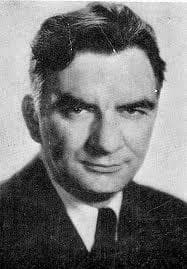
James Mallahan Cain was an American novelist, journalist and screenwriter. He is widely regarded as a progenitor of the hardboiled school of American crime fiction.







