“They were on their honeymoon, but it was a honeymoon that would end in a bloodbath.”
— Describing the tragic start of the killings in Paris.

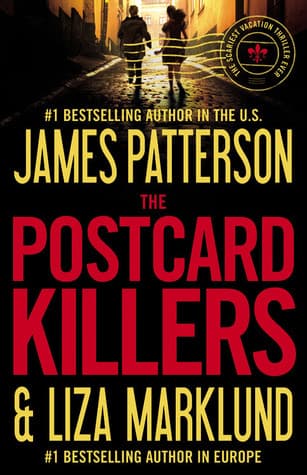
James Patterson (2010)
Genre
Thriller / Mystery
Reading Time
420 min
Key Themes
See below
Sign in to track this book
A grieving NYPD detective hunts his daughter's killer across Europe, following a trail of macabre postcards and murdered couples, racing to intercept the next victim before the chilling message 'Wish you were here' claims another pair.
NYPD Detective Jacob Kanon is called to Rome after his daughter, Kimmy Kanon, and her boyfriend, Simon, are found murdered in their hotel room. The scene is horrific, with the bodies posed grotesquely. Jacob, a seasoned detective, is overwhelmed by personal grief but also a professional instinct to understand what happened. Italian authorities, led by Inspector Moretti, investigate, but initial clues are scarce. Jacob observes the crime scene, noting the meticulous staging and lack of a clear motive, which immediately signals that this might not be a random act but something more sinister and planned. The experience leaves him shattered but resolute in his pursuit of justice for Kimmy.
Following Kimmy's murder, similar killings of young couples begin to appear across Europe, in cities like Paris, Copenhagen, and Frankfurt. Each crime scene mirrors the one in Rome, with the same brutal method and victims posed disturbingly. The only consistent clue is a postcard, always showing a famous local landmark, sent to a major newspaper in each city a day before the murders. The postcards bear the chilling message, 'Wish you were here.' Jacob, now on an unofficial investigation, tracks these murders, convinced they link to Kimmy's death. He feels a growing urgency and frustration with the lack of progress from different European police forces.
Jacob Kanon's pursuit of the killer leads him to Stockholm, Sweden, after another postcard arrives at the Aftonbladet newspaper. The recipient is Dessie Larsson, a sharp crime reporter. Dessie, intrigued and disturbed by the postcard, has already begun her own investigation into the European murders, noticing the similarities. Their paths converge when Jacob contacts her, recognizing her unique position. Dessie, initially skeptical of the grieving American detective, quickly realizes his insights are valuable. They form an alliance, combining Jacob's police experience and personal drive with Dessie's journalistic resources and local knowledge, both determined to stop the killer before another couple is victimized in Stockholm.
Working together, Jacob and Dessie analyze the patterns of the previous postcards and murders, trying to predict the killer's next move in Stockholm. They search potential locations and investigate recent disappearances, driven by time running out. Despite their efforts and Dessie's connections within the Swedish police, they cannot prevent the next crime. A young Swedish couple is found murdered, their bodies posed in the familiar, macabre style, confirming the killer's presence in Stockholm. The failure is a blow, especially for Jacob, who feels the weight of his inability to protect others, mirroring his failure to protect Kimmy. This setback only strengthens their resolve to catch the elusive killer.
As Jacob and Dessie continue their investigation, a breakthrough occurs. Through analysis of the postcards, crime scene details, and victim profiles, they begin to piece together a disturbing picture. Dessie's journalistic research uncovers a connection to a wealthy, eccentric European family, and Jacob's detective instincts focus on specific psychological traits in the killings. They identify the perpetrators as Julian and Nini, a brother and sister who share a disturbed and incestuous relationship. The realization that they are hunting not one, but two intelligent and psychopathic killers, adds a new layer of complexity and horror to their pursuit. Their motive remains unclear, but their identities are now known.
The story often shifts to Julian and Nini's perspective, revealing their twisted internal world. They see their murders not as crimes, but as artistic expressions, meticulously staging each scene as a macabre tableau. Julian, the more dominant and intellectual, sees himself as a modern artist, using human life to create his masterpieces. Nini, equally complicit and disturbed, is devoted to her brother and finds pleasure in their shared acts. Their postcards are not just taunts but signatures, a way to announce their 'exhibitions.' They are driven by a sense of superiority and a disregard for human life, believing they bring beauty to a mundane world through their horrifying creations.
With Julian and Nini's identities confirmed, Jacob and Dessie embark on a desperate chase across the continent. They follow the killers' trail through various European cities, using forensic evidence, witness testimonies, and their growing understanding of the siblings' psychology. They travel to places like Munich, Vienna, and even back to Paris, always arriving just a step behind. Frustration mounts as Julian and Nini prove cunning and elusive, often leaving behind taunting clues or narrowly escaping capture. Each near-miss fuels Jacob's determination and Dessie's journalistic zeal, pushing them to their physical and emotional limits.
The pursuit ends in Venice, Italy, a city known for its canals and narrow alleys. Jacob and Dessie, through deduction and a lucky break, track Julian and Nini to a remote, decaying palazzo. The stage is set for a final, violent confrontation. Jacob, fueled by Kimmy's memory, faces Julian, while Dessie struggles with Nini. The fight is brutal and desperate, with the killers proving formidable and unhinged. The Venetian setting provides a dramatic backdrop for the climax, as the pursuit of justice reaches its bloody conclusion amidst the ancient architecture.
In the aftermath of the Venice confrontation, Julian and Nini are stopped. The details of their demise are grim, but Jacob's primary mission is accomplished. European authorities arrive to process the scene, ending the reign of terror. While the immediate threat is neutralized, the emotional toll on Jacob and Dessie is immense. Jacob carries the grief of his daughter's loss, forever changed by the experience. Dessie, triumphant in breaking the story, is haunted by the horrors she witnessed. The ending suggests a lingering unease, as some psychological complexities of the killers remain unsettling, implying that true evil can never be fully understood or eradicated, only contained.
After the resolution in Venice, Jacob Kanon returns to New York, a city that now feels both familiar and alien. He is no longer just a detective; he is a father who hunted his daughter's killers across a continent. The experience has left him with deep psychological scars, but also a sense of grim satisfaction that justice, however brutal, was served. He faces the task of rebuilding his life and coming to terms with the trauma he endured. While the immediate threat is gone, the memory of Kimmy and the horrific acts of Julian and Nini will forever be a part of him. His journey has transformed him, leaving him a more complex and haunted individual, but one who found a measure of peace through his relentless pursuit.
The Protagonist
Jacob transforms from a grieving father into a relentless, almost obsessive, hunter, ultimately finding a measure of closure by bringing his daughter's killers to justice.
The Supporting
Dessie evolves from an independent reporter into a vital, trusted partner for Jacob, risking her life to expose the killers and finding a deeper purpose in her work.
The Antagonist
Julian remains a consistent, unrepentant psychopath throughout, committed to his 'art' until his final confrontation.
The Antagonist
Nini remains Julian's devoted and equally twisted accomplice throughout, never wavering in her commitment to their shared pathology.
The Mentioned
Kimmy's arc is tragic and serves as the inciting incident, her memory driving the protagonist's actions.
The Supporting
Moretti shifts from initial skepticism of Jacob to a more cooperative and understanding ally.
The Mentioned
Simon's arc is tragic and serves as part of the inciting incident, his death contributing to the killer's pattern.
The novel explores the destructive and motivating power of grief, particularly through Jacob Kanon. His daughter Kimmy's murder transforms his grief into an unyielding drive for vengeance and justice. This theme appears in his relentless pursuit across Europe, pushing him beyond official channels and personal safety. The contrast between his professional detective's mindset and his raw paternal anguish highlights how personal loss can redefine one's purpose, as seen when he disobeys orders and risks his career to hunt the killers, fueled by the memory of Kimmy's brutal end.
“He wasn’t a cop anymore. He was a father, and a father had only one job now: find them.”
The book explores the unsettling nature of pure evil as seen in Julian and Nini. Their murders are not for profit or passion, but for a twisted aesthetic pleasure, viewing their victims as 'art'. This theme explores the psychology of psychopathy, incest, and nihilism, where human life holds no value. The killers' thoughts reveal a chilling detachment and a grandiose self-perception, making their acts even more horrifying because they are driven by a lack of empathy and a desire for 'beauty' in destruction. Their 'art' is a manifestation of their moral void.
“Beauty was in the eye of the beholder, and Julian was the beholder. He was the artist.”
This theme highlights the complexities and frustrations of international crime investigation. Jacob's journey across Europe shows the challenges of different police forces, jurisdictional issues, and cultural differences in solving a continent-spanning crime. His unofficial status often hinders him, but his determination forces cooperation. The theme emphasizes that while borders exist for nations, evil does not recognize them, requiring a more unified and persistent approach to justice, as shown by Jacob and Dessie's cross-national partnership to overcome these bureaucratic hurdles.
“The killers didn't care about borders. Why should he?”
The novel explores the significant and often double-edged role of the media in high-profile crime. Dessie Larsson, as a crime reporter, is important to the investigation, using her journalistic skills and connections to uncover vital clues and share information. However, the killers also manipulate the media, sending postcards to newspapers to announce their 'art' and create fear. This theme examines how the media can both aid in solving crimes and inadvertently amplify the perpetrators' messages, creating a complex dynamic between reporting, investigation, and the public's perception of fear and justice.
“The postcard was a message. A taunt. And a promise.”
Cryptic postcards sent to local newspapers before each murder.
The postcards are the central plot device, serving multiple functions. They are the killers' signature, a taunt to authorities, and a chilling announcement of their next 'exhibition'. Each postcard depicts a local landmark and bears the message 'Wish you were here,' turning a benign tourist sentiment into a sinister threat. For Jacob and Dessie, they are crucial clues, providing a timeline and geographical pattern that helps them track the killers. The postcards elevate the killers' acts beyond mere violence, framing them as a twisted performance intended for public consumption and a direct challenge to law enforcement.
The killers' meticulous staging of their victims as macabre art installations.
This device highlights the unique psychological profile of Julian and Nini. They don't just kill; they meticulously pose their victims, often in sexually explicit and grotesque ways, viewing these scenes as their 'art'. This element is crucial in establishing the killers' motive—not financial gain or passion, but a profound, twisted aesthetic. It also complicates the investigation, as authorities struggle to comprehend the lack of conventional motive, making the killers harder to profile and predict. This 'art' is a window into their profound narcissism and nihilism, making their acts even more chilling.
The killers' pattern of moving across different European cities.
The international nature of the murders is a key plot device that allows the story to unfold across various iconic European backdrops, adding scale and complexity. It creates jurisdictional challenges for law enforcement, forcing Jacob to operate outside standard protocols and rely on a network of contacts. This device emphasizes the elusive nature of the killers and the global reach of their crimes, while also providing opportunities for Jacob and Dessie to explore different cultures and environments as they pursue their targets. It underscores the theme of 'justice beyond borders'.
The deeply disturbed and incestuous relationship between Julian and Nini.
The incestuous relationship between Julian and Nini is a critical plot device that explains their profound psychological connection and shared pathology. This bond is the foundation of their 'partnership' in crime, making them a uniquely cohesive and dangerous duo. It highlights the depth of their depravity and their isolation from normal human relationships, creating a closed, self-reinforcing system of evil. This device adds a layer of disturbing psychological complexity to the antagonists, making them more terrifying and their actions more incomprehensible to conventional morality, thereby intensifying the horror of their crimes.
“They were on their honeymoon, but it was a honeymoon that would end in a bloodbath.”
— Describing the tragic start of the killings in Paris.
“The killer wasn't just murdering people; he was making a statement. A very public, very gruesome statement.”
— Jacob Kanon realizing the theatrical nature of the murders.
“Every city, every postcard, a new victim. It was a macabre travelogue.”
— Reflecting on the killer's method of moving across Europe.
“He knew, with a chilling certainty, that this was just the beginning. The first act in a play no one wanted to see.”
— Jacob's grim premonition after the first murder.
“The postcards weren't just clues; they were taunts. A direct challenge to anyone trying to stop him.”
— Understanding the killer's arrogant communication.
“Grief was a heavy cloak, suffocating him, but it also fueled a cold, burning rage.”
— Jacob's emotional state after his daughter's murder.
“He was hunting a ghost, a phantom who left behind a trail of blood and beautiful scenery.”
— Jacob's pursuit of the elusive killer across Europe.
“The deeper he dug, the more twisted the roots became. A darkness far older than the current murders.”
— Uncovering the historical and familial connections to the crimes.
“Sometimes, the most beautiful things can hide the most horrific secrets.”
— A realization about the picturesque European settings of the murders.
“He wasn't just looking for a killer; he was looking for answers. Answers that might destroy him.”
— Jacob's personal investment and risk in the investigation.
“The line between justice and vengeance was blurring, and he wasn't sure he cared anymore.”
— Jacob's internal struggle as his quest for the killer intensifies.
“The greatest trick the devil ever pulled was convincing the world he didn't exist. This killer was doing something similar.”
— Jacob's thoughts on the killer's ability to evade detection.
“He had walked into a nightmare, and the only way out was to face the monsters within it.”
— Jacob fully committing to confronting the killer and the conspiracy.
“The silence after the storm was often the most deafening, filled with the echoes of what was lost.”
— Reflecting on the aftermath of the intense investigation and its toll.
Ready to see how well you understood this book? Take our interactive quiz with 10 questions.

Biography coming soon.







