“She was fond of life, and meant to make the best of it.”
— Describing Isabel Archer's general outlook early in the novel.


Henry James (2015)
Genre
Historical Fiction / Romance
Reading Time
20-25 hours (based on 698 pages at average reading speed)
Key Themes
See below
Sign in to track this book
An American heiress, wanting freedom in European high society, learns that wealth cannot protect her from manipulation and the sad results of a bad choice.
Isabel Archer, a smart and spirited young American woman, travels to England after her father's death to live with her wealthy aunt, Mrs. Touchett, at her country estate, Gardencourt. There, Isabel meets her cousin, Ralph Touchett, and his kind, elderly father, Mr. Touchett. She also meets Lord Warburton, a charming and rich aristocrat, who is a close family friend. Isabel's lively and unconventional spirit immediately attracts everyone, especially Ralph, who becomes fascinated by her potential and wish for independence. Her presence brings new energy to the quiet English household.
Lord Warburton, taken with Isabel's charm and intelligence, quickly proposes marriage. He is a man of high social standing, wealth, and good character, making him a suitable match in society's eyes. However, Isabel, who values her independence above all, feels that marrying Warburton would confine her, limiting her chances for self-discovery. Despite the practical benefits and her genuine affection for him as a friend, she declines his offer, surprising and disappointing her aunt and even Ralph, who secretly wants her to remain free.
While at Gardencourt, Isabel is also visited by Caspar Goodwood, a wealthy and earnest American businessman from Boston who has long loved her. Goodwood represents a more traditional, straightforward American idea of marriage and home life. He is persistent, deeply devoted to Isabel, and offers her a stable, secure future. However, Isabel finds his directness and conventional expectations somewhat stifling. She feels he lacks imagination and would limit her spirit. Despite his true affection and reliable character, Isabel rejects his proposals too, confirming her wish to make her own way without marriage.
Mr. Touchett, on his deathbed, changes his will at Ralph's subtle suggestion. Ralph, believing that Isabel's potential needs complete financial independence, convinces his father to leave her a large fortune of 70,000 pounds. This inheritance, meant to free Isabel from needing to marry for money or status, ironically sets her up for future troubles. Isabel, now wealthy, feels truly able to make her own choices and explore the world, unaware of Ralph's kind but ultimately misguided intention behind the gift.
After receiving her inheritance, Isabel travels to Florence, Italy, where she meets Madame Merle, an American living abroad and a long-time friend of Mrs. Touchett. Madame Merle is charming, cultured, and socially graceful, but also cynical and manipulative. Isabel, impressed by Merle's sophistication, becomes close to her, seeing her as a mentor. Through Madame Merle, Isabel meets Gilbert Osmond, an American expatriate living an artistic life in Italy. Osmond is a widower with a young daughter, Pansy, and presents himself as a man of exquisite taste and intellect.
Gilbert Osmond, with Madame Merle's help, skillfully creates an image of deep originality and artistic sensitivity that greatly impresses Isabel. She sees him as a man living outside conventional society, a quality she values. Despite her friends' doubts, especially Ralph, Henrietta Stackpole, and even Mrs. Touchett, who see Osmond as superficial and cold, Isabel becomes increasingly fond of him. She interprets his refined detachment as depth and his aestheticism as a noble pursuit. Believing she is choosing a partner who will respect her independence and challenge her mind, Isabel accepts Osmond's proposal, sealing her fate.
Soon after their marriage, Isabel's ideal view of Gilbert Osmond shatters. She discovers that his refined aestheticism hides a deeply narcissistic, controlling, and cruel personality. Osmond wants to possess and control Isabel completely, reducing her to an ornament for his own image and forcing her to fit his strict standards. Her fortune, which she had hoped would give her freedom, instead becomes another tool for Osmond's manipulation and social climbing. Isabel finds herself trapped in a suffocating marriage, her spirit slowly crushed by her husband's demands and emotional abuse. She realizes she made a terrible mistake.
Isabel grows to deeply care for Osmond's innocent and gentle daughter, Pansy. Pansy, who Osmond has trained to be perfectly obedient and demure, is a pawn in her father's social plans. Osmond wants Pansy to marry Lord Warburton, despite Warburton's lingering affection for Isabel and Pansy's own lack of strong feelings for him. Isabel, seeing Pansy's vulnerability and Osmond's ruthlessness, feels a strong protective instinct. She tries to guide Pansy and even tries to discourage Warburton from the match, though Osmond's strong influence and Pansy's ingrained obedience often stop her efforts.
Through hints and conversations, especially with Mrs. Touchett, Isabel slowly uncovers the truth about Madame Merle. She discovers that Merle and Osmond were not just friends, but long-time lovers, and that Pansy is their biological daughter. Merle had arranged Isabel's marriage to Osmond specifically for her fortune, intending it to benefit Osmond and, through him, Pansy. This revelation shows the full extent of the manipulation Isabel has faced, destroying her trust in Merle and confirming the malicious plan behind her marriage. The knowledge leaves Isabel feeling deeply betrayed and used.
Isabel learns that Ralph Touchett is seriously ill and wants to see her before he dies. Osmond, angry at any defiance of his will, forbids her from going. However, Isabel, asserting a rare moment of rebellion, defies him and travels to Gardencourt. During her last, sad conversations with Ralph, he confesses his deep love for her and reveals he was the one who arranged her inheritance, hoping to give her complete freedom. This revelation is a bittersweet comfort, as Isabel understands his good intentions but also the tragic irony of how the fortune led to her entrapment. Ralph dies, leaving Isabel with deep sadness and gratitude.
After Ralph's funeral, Isabel returns to Rome, where she confronts Osmond. She now fully understands his cruelty and the extent of his and Madame Merle's deception. Osmond, as expected, remains unrepentant and continues to demand her absolute obedience. Caspar Goodwood, who has followed Isabel to Europe, makes one final, passionate plea for her to leave Osmond and come with him, offering her escape and true affection. Isabel is torn between her wish for freedom and her sense of duty and marriage vows. The novel ends with her making a difficult and unclear choice about her future.
In the novel's unclear ending, Isabel, after her intense encounter with Caspar Goodwood, who tries to physically make her leave Osmond, makes a choice that leaves her future uncertain. Despite Goodwood's passionate appeal and the clear path to freedom he offers, Isabel returns to Rome. Her reasons are complex: a sense of duty, a refusal to be seen as fleeing, a desire to protect Pansy, or perhaps a deep, if tragic, commitment to the results of her own choices. The novel closes without stating whether she stays with Osmond indefinitely, suggesting that her 'portrait' is one of ongoing internal struggle and the complex nature of freedom and responsibility.
The Protagonist
Isabel's arc is a tragic journey from naive idealism and a fervent desire for freedom to a harsh awakening to the realities of manipulation and entrapment, forcing her to confront the consequences of her choices.
The Antagonist
Osmond's arc is static; he remains a consistently manipulative and self-serving character, revealing his true nature over time rather than developing.
The Antagonist/Supporting
Madame Merle's arc reveals the tragic consequences of her past choices and compromises, culminating in a poignant confession and a departure from the scene of her deceptions.
The Supporting
Ralph's arc is one of selfless devotion and tragic self-sacrifice, culminating in his death after witnessing the failure of his grand plan for Isabel's happiness.
The Supporting
Lord Warburton's arc highlights the limits of good intentions when faced with powerful manipulation, as he is nearly drawn into a marriage orchestrated by Osmond.
The Supporting
Caspar Goodwood's arc is one of unwavering devotion, culminating in a final, desperate plea for Isabel to choose freedom, despite her complex internal struggles.
The Supporting
Pansy's arc highlights the crushing impact of an oppressive upbringing, as she struggles to assert any personal will against her father's control.
The Supporting
Henrietta's arc shows her successful integration into a European life while maintaining her American identity, ultimately finding happiness in marriage.
The novel explores Isabel's strong wish for freedom and independence, especially as a woman in the 19th century. Initially, Isabel thinks financial independence and the ability to choose will give her complete liberty. However, her marriage to Gilbert Osmond shows that true freedom is not just the lack of outside limits, but also freedom from manipulation and the ability to see true character. Her inheritance, meant by Ralph to free her, ironically becomes the very thing that traps her, as Osmond wants her fortune more than her. The novel suggests that freedom is complex, often hard to find, and that one's choices, even those made for freedom, can lead to deep unfreedom.
““She had an unquenchable desire to think well of herself. She had a theory that she was a person of great good-will, and that she should always act with a certain nobleness.””
A main theme is the conflict between American innocence and European sophistication, often shown as a type of corruption. Isabel, with her American ideals of self-reliance and moral clarity, arrives in Europe full of romantic ideas. She is at first charmed by the 'old world' beauty and social graces, especially as seen in Madame Merle and Gilbert Osmond. However, she slowly discovers that this European sophistication often hides deep cynicism, manipulation, and moral decay. Her journey becomes a loss of innocence, as she learns that appearances can be misleading and that seeking 'culture' can lead to moral compromise, contrasting with the more straightforward, if less refined, American characters like Caspar Goodwood and Henrietta Stackpole.
““She was not eager to please, she was eager to live.””
Manipulation and betrayal are common throughout the novel, ultimately leading to Isabel's sad entrapment. Madame Merle and Gilbert Osmond skillfully arrange Isabel's marriage, using her idealism, her pride, and her wish for an unconventional life. Merle, in particular, betrays Isabel's trust as a friend, acting as a knowing partner in Osmond's plan to get Isabel's fortune. Ralph Touchett's kind manipulation in getting Isabel's inheritance, while well-intended, also puts her on a path where she becomes open to others' bad intentions. The novel details how characters use social graces, emotional pleas, and calculated deceptions to control others, showing the devastating effect of such betrayals on a person's sense of self and control.
““She had had a vision of the world, and it was a vision of the world that was too simple.””
The novel examines marriage and the restrictive nature of social rules, especially for women in the 19th century. Isabel at first rejects marriage proposals from Lord Warburton and Caspar Goodwood because she fears losing her independence. However, her eventual marriage to Gilbert Osmond, which she believes will be a partnership of equals, instead becomes a prison. Osmond systematically takes away her control, forcing her to follow his will and social expectations. The novel shows how marriage, far from being a source of freedom or companionship, can be a tool for control and a place of deep personal sacrifice, especially when choices are made under false pretenses or naive idealism.
““It was not a question of her being happy; it was a question of her being free.””
A large sum of money bequeathed to Isabel, intended to grant her freedom, but ironically leading to her entrapment.
Ralph Touchett orchestrates Isabel's inheritance of 70,000 pounds from his dying father, Mr. Touchett. This substantial sum is intended as a gift of freedom, allowing Isabel to live without financial constraint and pursue her ideals. However, it becomes a crucial plot device that directly facilitates her downfall. Her wealth makes her an attractive target for Gilbert Osmond and Madame Merle, who manipulate her into marriage solely for her money. The inheritance serves as a tragic irony, demonstrating how even well-intentioned actions can have unforeseen and devastating consequences, transforming a symbol of liberation into a chain of enslavement.
The novel's title and recurring imagery of 'portraits' reflecting how characters perceive and define Isabel.
The title itself, 'The Portrait of a Lady,' serves as a central metaphor. Throughout the novel, various characters attempt to 'paint' their own portrait of Isabel – to define her, control her, or fit her into their preconceived notions. Ralph sees her as a magnificent, independent spirit; Osmond views her as a beautiful object to be possessed and refined; Madame Merle sees her as a means to an end. Isabel herself struggles to define her own portrait, her true self, amidst these competing interpretations. The metaphor highlights the subjective nature of perception and the societal pressures that seek to mold individuals, particularly women, into predefined roles. The ambiguity of her final choice leaves her 'portrait' unfinished or open to interpretation.
The sophisticated European backdrop serving as a contrast to American innocence and a stage for moral corruption.
The novel's primary setting in various European cities, particularly Florence and Rome, is a crucial plot device. Europe, with its rich history, culture, and established social hierarchies, serves as a seductive and dangerous environment for the innocent and idealistic Isabel. It represents a world of refined manners and aesthetic beauty, which initially captivates her. However, it also becomes the stage for her corruption and entrapment, as the 'old world' sophistication masks the moral decay and manipulative schemes of characters like Osmond and Merle. The European setting allows James to explore the clash between American optimism and European cynicism, and how the former can be exploited by the latter.
“She was fond of life, and meant to make the best of it.”
— Describing Isabel Archer's general outlook early in the novel.
“It has made me think I have been a great fool.”
— Isabel's realization about her marriage to Osmond.
“The world was a large place, and she had only just begun to see it.”
— Isabel's initial excitement about her travels and new experiences.
“She had an undefinable instinct that the world was a dangerous place.”
— Isabel's growing unease and perception of threats.
“To live is to be a woman, and to be a woman is to be a perpetual revelation.”
— Madame Merle's cynical view on womanhood.
“There are few things in life more disagreeable than the necessity of having to go to bed when you are not sleepy.”
— Lord Warburton's lighthearted complaint.
“She was a woman of many moods, and they were all of them charming.”
— Ralph Touchett's affectionate observation about Isabel.
“One can't be always crying about one's self.”
— Isabel's attempt to maintain composure despite her sorrow.
“The deepest quality of a work of art will always be the quality of the mind of the producer.”
— Osmond's pronouncement on art, reflecting his own character.
“Her life was her own, to be disposed of as she chose.”
— Isabel's strong belief in her independence before marriage.
“Deep in her soul, she was a creature of fine ambitions.”
— Describing Isabel's inner drive and aspirations.
“She had a theory that it was always better to discover than to be told.”
— Isabel's preference for learning through experience.
“She had an air of being at home in the world, and yet of being a stranger to it.”
— A paradoxical description of Isabel's presence and perception.
“There was a great deal of the world that she was not acquainted with.”
— Isabel's awareness of her own limited experience.
Ready to see how well you understood this book? Take our interactive quiz with 10 questions.
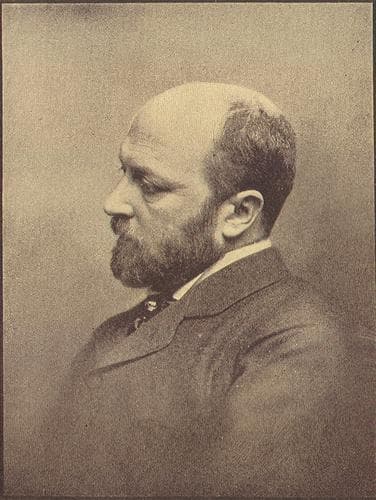
Henry James was an American-British author. He is regarded as a key transitional figure between literary realism and literary modernism, and is considered by many to be among the greatest novelists in the English language. He was the son of Henry James Sr. and the brother of philosopher and psychologist William James and diarist Alice James.