“War doesn't make you a better person. It makes you a survivor.”
— Rin's early reflections on the brutal realities of combat and its impact on her.

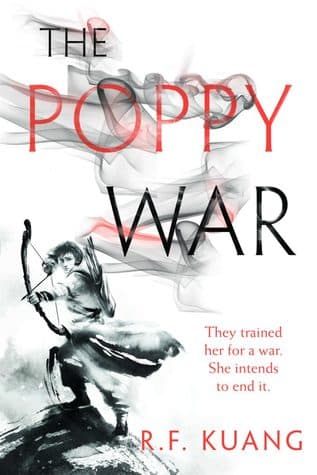
R.F. Kuang (2018)
Genre
Fantasy / Historical Fiction / Young Adult
Reading Time
12-16 hours
Key Themes
See below
Sign in to track this book
A war orphan's escape to an elite military academy leads to a brutal journey of self-discovery as she unleashes a terrifying, god-like power that could save her empire but damn her soul in a war-torn world inspired by historical atrocities.
Fang Runin, known as Rin, is a war orphan from Rooster Province. Abusive foster parents plan to marry her off to an older merchant. Desperate to escape, Rin secretly studies for the Keju, the Empire-wide civil service examination. Against all odds, she aces the test, surprising everyone. Her exceptional score grants her admission to Sinegard, Nikan's most elite military academy. This achievement is a monumental shock; a peasant girl from the south usually does not pass, let alone excel. It secures her escape from a predetermined life of servitude and a forced marriage.
At Sinegard, Rin immediately encounters hostility. Her dark skin, peasant origins, and gender make her an outcast among the predominantly light-skinned, aristocratic students. She struggles academically and physically, falling behind in combat training and strategy lessons. Nezha, a privileged and skilled student from a powerful military family, leads severe bullying. Nezha targets Rin relentlessly, verbally and physically, viewing her as an undeserving interloper. Rin's initial academic struggles and social isolation push her to despair, making her question her place at the academy.
Desperate to improve, Rin seeks help from Master Jiang, a quirky, seemingly senile Lore Master. Jiang is an outcast among the faculty. Despite his odd behavior and reputation, Jiang recognizes a latent spiritual power within Rin. He teaches her about the Pantheon of gods and the mythical art of shamanism, a practice long thought extinct. Through meditation, spiritual exercises, and psychoactive substances, Jiang guides Rin to tap into the ethereal realm and connect with the divine. This mentorship marks a turning point as Rin slowly begins to understand and control her nascent powers.
Under Jiang's tutelage, Rin learns she is a shaman, capable of communing with the gods. She discovers she is chosen by the Phoenix God, a powerful, ancient deity of fire, destruction, and rebirth. This connection grants her immense, volatile power, but with a heavy price: the Phoenix demands control and threatens to consume her sanity. Rin experiences visions and physical manifestations of the god's power, struggling to harness it without losing herself. Jiang warns her of the dangers, emphasizing the fine line between wielding the gods' power and being consumed by them, especially the destructive Phoenix.
As Rin continues her studies, rumors of escalating tensions with the Federation of Mugen, Nikan's historical enemy, reach Sinegard. Despite the Empire's complacency, a devastating surprise attack by the Federation shatters the fragile peace. The Third Poppy War erupts, forcing Sinegard students, including Rin, Nezha, and Altan, into active duty. The war's sudden onset and brutal reality immediately expose the students to combat horrors. It tears them from academic lives and thrusts them into a fight for survival. This global conflict shifts the narrative from internal school struggles to external warfare.
Rin, Altan, Nezha, and the other Sinegard cadets are assigned to various units and sent to the front lines. Rin fights alongside Altan, a renowned Cike warrior and the last survivor of his people. The Battle of Speer is brutal, showing the Federation's advanced weaponry and ruthless tactics. Rin witnesses unimaginable atrocities and war's devastating impact on soldiers and civilians. She confronts the harsh realities of combat, struggling to reconcile her academic training with the chaotic, morally ambiguous nature of real warfare. This battle is her true baptism by fire.
Rin is eventually assigned to the Cike, a special unit of shamans and warriors led by Altan. They are sent to Golyn Niis, a strategic city under siege by the Federation. The Cike, despite their unique abilities, are severely outnumbered and outmatched. Rin witnesses the Cike's desperate struggle and heavy casualties. The battle for Golyn Niis is a turning point, as Rin must make a difficult decision. In extreme desperation and facing imminent defeat, she unleashes the full power of the Phoenix God, causing catastrophic destruction and altering the battle's course, but also terrifying her comrades.
During the siege of Golyn Niis, with her unit on the brink of annihilation and the city about to fall, Rin succumbs to the Phoenix God's demands. She fully embraces its destructive power, unleashing a firestorm that eradicates both Federation soldiers and Nikara civilians. This event, known as the Nian, is a horrific act of mass destruction, leaving Golyn Niis a smoldering ruin. Rin's actions are a desperate attempt to stop the Federation, but they come at an immense cost, blurring the lines between hero and monster. This moment solidifies her connection to the Phoenix but also leaves her deeply traumatized and burdened by guilt.
Following the devastation of Golyn Niis, some hail Rin as a hero for stopping the Federation's advance, but others revile her for the civilian casualties. She is deeply scarred by the Nian and struggles with the moral implications of her power. The Nikara Empire, particularly Empress Su Daji and her court, view Rin with awe and fear. They try to control her, seeing her as a weapon. Rin becomes disillusioned with the Empire's leadership, realizing that the war is not as straightforward as she once believed. Power often corrupts those who wield it, even for seemingly good intentions.
Rin learns the full, horrifying truth about the Second Poppy War and the fate of Altan's people, the Speerlies. She discovers that Empress Su Daji, in a desperate bid to win the war against the Federation, orchestrated the genocide of the entire Speerly population, including women and children, on the island of Speer. This act of unimaginable cruelty was hidden from the public. The revelation deeply traumatizes Rin and fuels a burning desire for vengeance against the Empress and the corrupt Nikara leadership. This discovery reshapes Rin's understanding of her own Empire and her place within it, turning her anger towards those she once served.
Rin confronts Altan, who, as the last Speerly, carries the immense burden of his people's annihilation. This shared trauma deepens their bond but also highlights the dark path Rin is now on. The revelation of the Speerly genocide pushes Rin further from the Nikara Empire and its ideals. She questions all authority and seeks to understand the true nature of power and justice. Her anger and grief solidify her resolve to use her Phoenix powers not just against the Federation, but against those within Nikan who committed unforgivable atrocities. This sets her on a collision course with the very people she was meant to protect.
At the story's climax, Rin faces an impossible choice: continue to serve a corrupt Empire that committed genocide, or use her devastating power to exact vengeance and forge a new path. After much internal struggle and witnessing further injustices, Rin aligns herself with the Southern warlords and rebels against Empress Su Daji. This decision marks her complete transformation from a peasant girl seeking escape to a powerful, vengeful shaman willing to burn down the old world to build a new one. She embraces the destructive aspect of the Phoenix, choosing to be a force of radical change, regardless of the personal cost.
The Protagonist
Rin transforms from a bullied, insecure student into a powerful, morally ambiguous shaman consumed by vengeance, willing to sacrifice her humanity for what she believes is justice.
The Supporting
Jiang guides Rin, revealing the hidden world of shamanism and acting as a moral anchor, though his own past remains largely unresolved.
The Supporting
Altan, burdened by his past, finds a kindred spirit in Rin, but his own trauma and a desire for vengeance lead him down a dark path alongside her.
The Supporting
Nezha evolves from a prejudiced bully to a complex comrade, forced to confront his biases and the realities of war alongside Rin.
The Antagonist
Empress Su Daji is revealed as a morally bankrupt ruler whose past atrocities drive Rin's ultimate rebellion.
The Supporting
Kitay remains a steadfast friend and intellectual counterpoint to Rin, struggling to reconcile her actions with his own morality.
The Mentioned
The Phoenix God acts as a catalyst for Rin's power and moral descent, constantly pushing her towards destruction.
The Antagonist
The Federation's invasion and atrocities drive the initial plot, serving as the external threat that awakens Rin's powers and fuels her initial desire to fight.
The novel portrays war not as glorious, but as a horrific, dehumanizing experience. It explores how war forces individuals to commit unspeakable acts, blurring the lines between good and evil. Rin's journey shows this, as she witnesses and participates in atrocities like the Nian at Golyn Niis, where she unleashes the Phoenix's power, causing mass destruction to both enemy and civilian. The narrative also exposes the political machinations and cruelties of leaders, such as Empress Su Daji's genocide of the Speerlies. It demonstrates that 'good' and 'evil' are often matters of perspective and necessity in conflict.
“War doesn't determine who's right. War determines who's left.”
This theme explores the heavy price paid for wielding immense power, especially when driven by vengeance. Rin's shamanic abilities, particularly her connection to the destructive Phoenix God, give her incredible strength but threaten to consume her sanity and humanity. Her desire for revenge against those who wronged her, both the Federation and later Empress Daji, pushes her to make increasingly morally dubious choices. The story questions whether pursuing justice through destructive means makes the avenger no better than their oppressor. Rin grapples with the guilt and trauma of her actions, such as the Nian.
“The gods demand a price. They always do.”
Rin's journey is deeply tied to her struggle for identity and belonging. As a dark-skinned peasant girl from the south, she faces relentless prejudice and discrimination at Sinegard, an institution dominated by light-skinned aristocrats. Her initial fight is simply to prove her worth and carve out a place for herself. This theme highlights how societal structures and ingrained biases affect individuals, forcing Rin to constantly justify her existence. Her eventual embrace of her shamanic identity, despite its terrifying implications, is a form of self-acceptance, but it also isolates her further from conventional society.
“She was a dark-skinned peasant girl from the south, and she would not be forgotten.”
The narrative is steeped in the historical trauma of Nikan's past occupation by the Federation of Mugen and the lingering effects of the First and Second Poppy Wars. This history of oppression and violence shapes the present conflict and the characters' motivations. The Speerly genocide, orchestrated by the Nikara Empire itself, reveals internal violence and a colonial mindset within Nikan. The story illustrates how historical grievances, hidden truths, and unaddressed trauma continue to fester, influencing political decisions and driving cycles of violence. This makes it difficult for characters like Altan and Rin to ever truly escape the past.
“History isn't a pretty thing. It's a tapestry of blood and lies.”
A magical system where individuals commune with gods for power.
Shamanism is the central magical system, allowing certain individuals, like Rin and Altan, to connect with and draw power from a Pantheon of ancient gods. Each god represents different forces (e.g., the Phoenix for fire and destruction). This device introduces a powerful, but dangerous, element into the story. It serves as Rin's primary source of strength, transforming her from an ordinary student into a formidable weapon. However, it also acts as a moral dilemma, as the gods demand a price and threaten to consume their shamans, personifying the corrupting influence of unchecked power.
A meritocratic civil service exam that acts as Rin's initial escape from her predetermined life.
The Keju is the Empire-wide examination designed to select the most talented youth for prestigious academies. For Rin, it functions as a crucial plot device that initiates her journey. It represents her only escape from a life of servitude and forced marriage, symbolizing the slim possibility of upward mobility in a rigid social structure. Her unexpected success in the Keju is the inciting incident that propels her into Sinegard and, subsequently, into the wider world of war and shamanism, acting as a gateway to her destiny.
The large-scale conflict that drives the plot and forces Rin's transformation.
The Third Poppy War is the overarching conflict between the Nikara Empire and the Federation of Mugen. It serves as the primary external force shaping the plot and driving character development. This war is not merely a backdrop but a catalyst that pulls Rin out of Sinegard, exposes her to extreme violence and moral dilemmas, and forces her to embrace her shamanic powers. It highlights themes of brutality, sacrifice, and political corruption, ultimately leading Rin to question her loyalty to the Empire and seek her own form of justice.
A hidden historical atrocity that fuels vengeance and exposes the Empire's corruption.
The Speerly Genocide is a historical event, kept secret from the public, where Empress Su Daji orchestrated the massacre of Altan's entire people during the Second Poppy War. This hidden atrocity serves as a major revelation and a powerful plot device. It shatters Rin's perception of her Empire as righteous, fueling her deep-seated desire for vengeance against the Empress and the corrupt Nikara leadership. It transforms her primary antagonist from the Federation to her own government, fundamentally shifting her moral alignment and setting the stage for rebellion.
“War doesn't make you a better person. It makes you a survivor.”
— Rin's early reflections on the brutal realities of combat and its impact on her.
“The gods do not care about your intentions. They care about your actions.”
— A lesson imparted to Rin regarding the unforgiving nature of divine power and its consequences.
“Sometimes, the only way to win is to be more monstrous than your enemies.”
— Rin's internal justification for her increasingly dark and violent choices in the war.
“Power is never given. It is taken.”
— A recurring theme and brutal truth Rin learns as she navigates the military and political landscape.
“You cannot save the world by being a good person. You save it by being a smart person.”
— A pragmatic, cynical piece of advice given to Rin about the nature of leadership and conflict.
“There are no good wars, only necessary ones.”
— A perspective offered on the unavoidable nature of conflict, even when it is devastating.
“Grief was a weapon, and Rin wielded it like a sword.”
— Describing Rin's transformation of her personal sorrow and loss into a driving force for vengeance.
“The world was a cruel place, and it rewarded cruelty.”
— Rin's grim realization about the harsh realities of the world and the path she must take.
“History is written by the victors, but the truth is remembered by the dead.”
— A poignant reflection on the distortion of historical narratives and the silenced voices of victims.
“You are a weapon, Rin. Learn how to use yourself.”
— A mentor's guidance to Rin, emphasizing her innate abilities and potential for destruction.
“To conquer, you must first become a monster.”
— Another internal thought or lesson Rin grapples with as she embraces her darker capabilities.
“Silence was a luxury, and they could not afford it.”
— Referring to the necessity of action and speaking out, even in the face of danger.
“Peace was a lie, a temporary cessation of hostilities, never a true ending.”
— Rin's cynical view on the nature of peace in a world perpetually embroiled in conflict.
“The choices you make define you, but the choices you don't make define you just as much.”
— A philosophical reflection on agency and responsibility, both in action and inaction.
Ready to see how well you understood this book? Take our interactive quiz with 10 questions.

Biography coming soon.







