“The past is a foreign country; they do things differently there.”
— A general reflection on the nature of history and understanding past events.

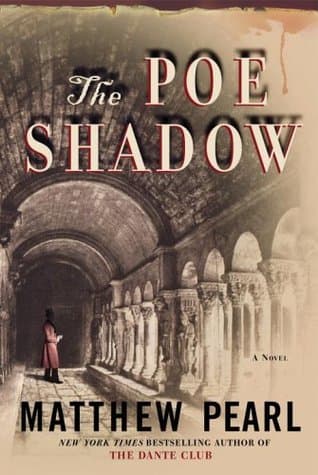
Matthew Pearl (2006)
Genre
Thriller / Historical Fiction / Mystery
Reading Time
9-10 hours
Key Themes
See below
Sign in to track this book
A determined Baltimore lawyer risks his career to unravel the sinister truth behind Edgar Allan Poe's mysterious death, using the author's own detective stories as a guide to expose a shadowy world of political intrigue and a real-life Dupin.
Baltimore, October 1849. Edgar Allan Poe dies under mysterious circumstances and is quickly buried in an unmarked grave. His reputation is damaged by accusations of drunkenness and madness. Quentin Clark, a young lawyer and admirer of Poe's work, is troubled by the public's quick dismissal of the writer. He attends Poe's small funeral and feels a strong sense of injustice, refusing to believe the official story of Poe's shameful end. Wanting to clear Poe's name and find the truth, Quentin begins his own unofficial investigation, risking his new legal career and social standing in Baltimore's elite circles. His first questions are met with doubt and resistance, as many consider Poe a disreputable figure not worth defending.
Quentin's investigation leads him to interview various people who saw Poe in his last days, including Dr. Moran, the doctor who cared for Poe. He learns about Poe's confused state, his repeated cries of 'Reynolds,' and the ill-fitting clothes he was found in. More unsettling, Quentin discovers that Poe had been carrying a large sum of money, which vanished. He also finds a cryptic note Poe had written, hinting at a secret society or a dangerous undertaking. These differences strengthen Quentin's belief that Poe's death was not an accident but the result of a deliberate plot. He realizes the official story is a convenient lie meant to cover up a darker truth, putting him in conflict with powerful, hidden forces.
Frustrated by the lack of official interest and dead ends, Quentin finds inspiration in Poe's tales of reason. He remembers C. Auguste Dupin, Poe's fictional detective, and deduces that Poe must have based the character on a real person. Quentin sets out to find this individual, believing that only someone with Dupin's unique skills can solve the complex mystery of Poe's death. His search takes him through various literary and social circles as he tries to piece together clues from Poe's personal life and letters to identify the person who inspired such a sharp mind. This search becomes central to his plan for uncovering the deeper conspiracy.
Quentin's persistent search eventually leads him to Augustus Barre, a reclusive and somewhat eccentric former government agent with a strong intellect and a sharp eye for detail. Barre lives a quiet life, having retired from a career surrounded by secrecy and intrigue. At first unwilling to get involved, Barre is interested by Quentin's passion and the intricate circumstances of Poe's death. He recognizes the patterns of a carefully planned deception. Barre agrees to help with the investigation, though he warns Quentin of the dangers, hinting at the powerful and ruthless enemies they may face. His involvement marks a turning point, changing the investigation from amateur detective work to a high-stakes search for truth.
Barre's analytical mind quickly focuses on the political unrest and the upcoming Baltimore elections. He tells Quentin about the practice of 'cooping,' where victims are abducted, drugged, disguised, and forced to vote multiple times for a specific candidate. The description of Poe's disheveled appearance, confusion, and missing money matches the known tactics of cooping gangs. This suggests that Poe was not simply a victim of chance but was deliberately targeted and used in this illegal scheme. The investigation now points towards powerful political figures and criminal organizations who would go to great lengths to protect their operations, including silencing anyone who discovered their secrets.
As Quentin and Barre investigate further, they realize their questions have been noticed. They become aware of a shadowy figure, a skilled and ruthless female assassin named Ariadne, who is systematically eliminating anyone who might know about Poe's last days or the cooping scheme. Ariadne works with chilling efficiency, leaving a trail of silenced witnesses. Quentin and Barre find themselves in danger, constantly looking over their shoulders. Ariadne's presence shows the high stakes of their investigation and confirms that they are against a powerful and organized force determined to bury the truth, not just about Poe, but about broader political corruption.
Barre's deductions lead them to uncover a darker part of the conspiracy: the cooping scheme is connected to the illegal slave trade. The same criminal networks involved in forcing votes are also kidnapping free Black individuals and selling them into slavery, often using the chaos of election day for these abductions. Poe, in his journalism, had accidentally discovered this horrific practice. This discovery raises the moral stakes for Quentin, who is deeply troubled by the injustice. It reveals the immense power and depravity of their enemies, who profit from both political manipulation and human suffering, making their silence even more important.
Through careful research into Poe's past work and letters, Quentin finds evidence that Poe was actively investigating the cooping rings and their connection to the slave trade. Poe, always a keen observer of societal problems, had been gathering information for a possible expose. His last trip to Baltimore was not just for a literary event but to pursue these dangerous leads. This reveals Poe as a courageous journalist who died seeking justice. It also explains why he was targeted: he was not a random victim of cooping, but a deliberate threat to the conspirators, who silenced him to protect their illegal operations.
With the puzzle pieces coming together, Quentin and Barre identify the main figures behind the conspiracy: a powerful and corrupt political boss named Judge Whitlock and his network. They realize that to expose the truth and clear Poe's name, they must directly confront these individuals. The plan involves a carefully arranged reveal of the evidence, navigating Baltimore's treacherous political landscape. They understand the immense risks, as Whitlock has considerable influence and has shown a willingness to use violence to protect his interests. The stage is set for a dramatic confrontation, where Quentin's legal skills and Barre's strategic mind will be tested against a formidable enemy.
In a tense and dangerous climax, Quentin and Barre expose the full extent of the cooping and slave trade conspiracy, linking it directly to Judge Whitlock. They present their findings to influential citizens and honest officials, using public opinion and legal channels. While not all conspirators are immediately brought to justice, the truth about Poe's death is revealed, clearing his name from accusations of drunkenness and showing him as a victim of a larger, darker scheme. Quentin's efforts ultimately restore some honor to Poe's legacy, though the personal cost to Quentin is significant, and full justice remains hard to find in a corrupt world.
The Protagonist
Quentin transforms from a naive admirer into a seasoned investigator, risking everything to uphold justice and honor Poe's legacy, ultimately becoming more cynical but resolute.
The Central Figure (posthumous)
Poe's character arc is explored posthumously; his reputation is initially tarnished but gradually redeemed as the truth of his proactive investigation and tragic end is uncovered.
The Supporting (Mentor/Detective)
Barre is drawn out of his self-imposed retirement and re-engages with the world's injustices, finding a renewed sense of purpose in mentoring Quentin.
The Antagonist
Ariadne's arc is one of unyielding dedication to her mission, a force of nature driven by past trauma, ultimately serving as a tragic tool of the larger conspiracy.
The Antagonist
Whitlock's arc is one of a powerful man clinging to his illicit empire, ultimately facing exposure but not necessarily full justice.
The Supporting
Dr. Moran's role is largely static, serving as a witness whose initial observations, when re-examined, help unravel the larger mystery.
The Supporting
Marie-Louise remains a steadfast and loyal companion, acting as a grounding presence for Barre amidst the unfolding chaos.
The novel explores how stories, both fictional and historical, shape how people see things and how they are remembered. Quentin's entire quest is driven by his belief in Poe's literary talent and a desire to correct the false story about his death. The common public view of Poe as a drunken failure directly contrasts with Quentin's understanding, showing how easily a person's reputation can be ruined by sensationalism or deliberate misinformation. The book argues for the importance of truth in shaping a legacy, showing how Quentin's efforts to uncover the facts about Poe's death restore honor to his name, much like Poe's own stories aimed to reveal hidden truths. This is clear in Quentin's strong dedication despite public scorn.
““I present to you . . . the truth about this man’s death and my life.””
The novel shows the dark side of 19th-century Baltimore, exposing widespread corruption in politics and the terrible reality of the illegal slave trade. The 'cooping' scheme, where voters are drugged and forced to cast multiple ballots, reveals deep-seated political manipulation. This is made worse by the discovery that the same criminal networks are kidnapping free Black individuals and selling them into slavery. These injustices are not just background elements but are central to the conspiracy that led to Poe's death. Quentin's fight becomes not just about Poe, but about exposing the moral decay and exploitation hidden beneath the surface of respectable society, especially through Judge Whitlock's actions.
““The law, Mr. Clark, is a blunt instrument. Justice, if it exists, is far more subtle.””
A main part of the mystery is the constant struggle to tell truth from lies. From the start, the official story of Poe's death is presented as a convenient lie. Quentin and Barre must sort through conflicting accounts, misdirection, and deliberate cover-ups to find out what really happened. The conspirators, especially Judge Whitlock, are good at deception, using their power to control information and manipulate public perception. The novel suggests that truth is often hidden, requiring careful investigation and a refusal to accept easy answers, much like Dupin's method of seeing what others miss. This is clear in the gradual uncovering of layers, from simple drunkenness to a complex political and criminal plot.
““The obvious is often the most difficult to perceive.””
The novel honors Poe's contributions to detective fiction by showing detection as an art. Quentin, inspired by Poe's C. Auguste Dupin, seeks a real-life counterpart in Augustus Barre, who embodies the ideal of the 'ratiocinator.' Barre's methods are like an artist's precision and creativity, seeing patterns and connections where others see chaos. He uses logic, psychology, and careful observation to reconstruct events, much like a writer builds a story. This theme elevates solving a mystery beyond just finding facts, presenting it as a deep intellectual and creative effort, directly reflecting Poe's own literary innovations.
““The mind, Mr. Clark, is a labyrinth, and the truth often lies in its darkest corners, not its illuminated paths.””
The initial, widely accepted account of Poe's death is deliberately misleading, serving as the central mystery.
The novel opens with an unreliable narrative: the public and press's portrayal of Poe's death as a drunken, disgraceful end. This serves as the primary conflict and the driving force for Quentin's investigation. The misinformed narrative is perpetuated by powerful figures to cover up their crimes, forcing Quentin to constantly question what he is told and to seek out hidden truths. This device immediately immerses the reader in the mystery and challenges their preconceptions about historical events.
The search for a real-world inspiration for Poe's fictional detective to solve the real-world mystery.
This is a clever meta-fictional device. Quentin, recognizing the brilliance of Poe's C. Auguste Dupin, deduces that such a character must have a real-life model. His quest to find this 'Dupin' (Augustus Barre) becomes a central plotline. This device not only provides a brilliant mentor character but also grounds the fictional narrative within literary history, blurring the lines between fiction and reality in a way that Poe himself often did in his writings. It allows for the introduction of a character with extraordinary deductive powers.
A real historical election fraud practice used as a key plot mechanism.
The historical practice of 'cooping'—where individuals were abducted, drugged, and forced to vote multiple times—is a meticulously researched plot device. It provides a plausible and shocking explanation for Poe's disoriented state, ill-fitting clothes, and eventual death. By grounding the conspiracy in a real, albeit dark, historical practice, the novel gains authenticity and highlights the corruption of the era. This device turns what might seem like a random act into a calculated crime with broader political implications.
A mysterious and deadly enforcer adding suspense and danger to the investigation.
Ariadne serves as a constant, tangible threat to Quentin and Barre. Her presence elevates the stakes from a mere intellectual puzzle to a life-or-death struggle. As a skilled, enigmatic female assassin, she embodies the ruthless power of the conspirators and introduces elements of a thriller. Her relentless pursuit of witnesses and the protagonists creates high tension and forces Quentin and Barre to operate with extreme caution, constantly looking over their shoulders.
“The past is a foreign country; they do things differently there.”
— A general reflection on the nature of history and understanding past events.
“There are some things that even death cannot quite extinguish.”
— Reflecting on Poe's lasting influence and the mystery surrounding his death.
“Every secret has its own shadow.”
— A comment on the hidden motives and consequences of concealment.
“The truth is often stranger than fiction, but far less satisfying.”
— A cynical observation about the sometimes anticlimactic nature of reality.
“To truly understand a man, one must walk in his shadows, not just his light.”
— Emphasizing the importance of examining the darker, more complex aspects of a person.
“A good story, like a good lie, requires a certain amount of conviction.”
— Discussing the art of storytelling and deception.
“The greatest mysteries are not those that defy explanation, but those that resist a simple one.”
— A musing on the nature of complex puzzles and human motivations.
“Baltimore held its breath, and its secrets.”
— Describing the city's atmosphere and its role in concealing information.
“One cannot chase a shadow without becoming one's own.”
— A warning about the dangers of obsession and losing oneself in a quest.
“The dead, alas, are often the most reliable witnesses, for they have nothing left to hide.”
— A dark reflection on seeking truth from those who can no longer deceive.
“Every man has his own version of the truth, especially when it comes to his own reputation.”
— Highlighting the subjective nature of truth and self-perception.
“The past is not dead; it is not even past.”
— A recurring theme emphasizing the lingering influence of historical events.
“In the labyrinth of the human heart, one can easily lose one's way.”
— A metaphorical statement about the complexities of human emotions and motives.
“The world of the living is but a faint echo of the world of the imagination.”
— A nod to Poe's own emphasis on the power of the mind and creativity.
Ready to see how well you understood this book? Take our interactive quiz with 10 questions.







