“Fear, real fear, was a thing that could make you forget everything you thought you knew about yourself.”
— Reflecting on the growing anti-Semitism and political shifts.

Philip Roth (2010)
Genre
Literary Fiction / Politics / Historical Fiction / Science Fiction
Reading Time
10-12 hours
Key Themes
See below
Sign in to track this book
In an America where Charles Lindbergh becomes president and aligns with Nazi Germany, a young Philip Roth navigates the terrifying descent of his Jewish family and nation into an abyss of fascism and antisemitism.
In 1940, the Roth family in Newark, New Jersey – Philip, his older brother Sandy, their parents Bess and Herman, and their cousin Alvin – lives a typical Jewish-American life. The political landscape is dominated by the looming presidential election, where Franklin D. Roosevelt is challenged by the aviator Charles A. Lindbergh, who runs on an 'America First' platform advocating isolationism and subtly blaming Jews for pushing the country toward war. Despite widespread disbelief, Lindbergh wins the election in a landslide, shocking the nation, particularly the Jewish community, who fear the implications of his antisemitic rhetoric and his admiration for Nazi Germany. This victory immediately casts a shadow of dread over the Roth household and their neighborhood.
President Lindbergh quickly implements policies that align with his 'America First' agenda. He signs a non-aggression pact with Nazi Germany and an 'understanding' with Imperial Japan, effectively withdrawing America from the global conflict and aligning with totalitarian regimes. Domestically, his administration initiates programs like 'Homestead 42' and 'Just Folks,' which encourage Jewish families to relocate from urban centers to the rural South and Midwest, ostensibly for integration but effectively dispersing and isolating them. The Roth family watches with growing horror as the government's rhetoric and actions become hostile towards Jews, creating an atmosphere of fear and uncertainty across the country.
Philip's older brother, Sandy, an artist, is selected for a 'Just Folks' program trip to Kentucky, where he is hosted by a seemingly benevolent but subtly antisemitic family. Sandy, initially enthusiastic, becomes detached from his family's concerns, seemingly swayed by the program's assimilationist agenda. Meanwhile, their cousin Alvin, a rebellious young man, is disgusted by Lindbergh's policies. He enlists in the Canadian army to fight the Nazis, losing a leg in battle and returning a cynical individual, disillusioned with America's inaction and his family's passive fear. His injuries and bitterness are a stark symbol of the personal costs of the political climate.
Rabbi Lionel Bengelsdorf, a charismatic but opportunistic figure, becomes a vocal supporter of President Lindbergh and his 'America First' policies. He is a liaison between the administration and the Jewish community, arguing that cooperation is the best path to safety and acceptance. Bengelsdorf marries Evelyn Finkel, Philip's aunt and Bess's sister, further entangling the Roth family with the controversial administration. His public endorsements of Lindbergh's programs, including 'Homestead 42' and 'Just Folks,' are met with outrage and scorn by many Jews, including Herman Roth, who view him as a traitor collaborating with an antisemitic regime. Bengelsdorf's influence grows, yet he remains a divisive figure.
The 'Homestead 42' program, designed to disperse Jewish populations, gains momentum. Jewish families are subtly and overtly pressured to relocate from their established communities to various parts of the country. Philip's friend Seldon Wishnow and his mother are forced to move to Kentucky, a move that proves disastrous and isolating for them. The Roths see their community disintegrate as neighbors leave, fearing for their safety and future. Herman Roth resists any notion of moving, determined to stay in Newark and protect his family's home and identity, despite the growing social and economic pressures from the Lindbergh government. This program highlights the systematic targeting of Jewish Americans.
As Lindbergh's rhetoric and policies continue, antisemitic sentiment becomes normalized and overt. Incidents of violence against Jews become more frequent and public, including the desecration of synagogues and assaults on individuals. The Roth family lives in constant fear, with Herman becoming agitated and defensive, often arguing with those who support Lindbergh or question Jewish loyalty. Philip, as a young boy, experiences the pervasive fear firsthand, witnessing his parents' anxiety and the subtle shifts in social interactions. The once-secure world of the Newark Jewish community begins to unravel under the weight of state-sanctioned prejudice and public hatred.
Herman Roth, a proud and stubborn man, becomes vocal in his opposition to Lindbergh and Rabbi Bengelsdorf. He refuses to be intimidated, standing his ground against the encroaching antisemitism. However, the stress, fear, and frustration take a severe toll on his health. He suffers a stroke, leaving him partially paralyzed and unable to speak clearly. This event devastates the Roth family, particularly Bess, who is left to manage the household and care for her ailing husband while grappling with the escalating national crisis. Herman's physical breakdown symbolizes the pressure and psychological toll the Lindbergh administration inflicts on its opponents.
Amidst growing national unrest and widespread fear, President Lindbergh mysteriously disappears during a flight. His plane is never found, and the circumstances surrounding his vanishing remain unclear. The nation is thrown into political turmoil and uncertainty. Vice President Burton K. Wheeler briefly assumes the presidency, but his administration is seen as a continuation of Lindbergh's isolationist and antisemitic agenda, leading to further civil unrest and widespread riots, particularly targeting Jewish communities. The disappearance creates a power vacuum and exacerbates the already tense political climate, fueling conspiracy theories and deepening the sense of instability across America.
Following Wheeler's brief and chaotic tenure, and amidst national outcry, it is revealed that Lindbergh's disappearance was orchestrated by a conspiracy involving Nazi agents. With this revelation, the American public, disillusioned by the chaos and the truth about Lindbergh's allegiances, demands a return to normalcy. Franklin D. Roosevelt, having lost the 1940 election in this alternate timeline, is reinstated as President, bringing an end to the 'America First' nightmare. The nation slowly begins the process of healing and rebuilding, undoing the damage caused by the Lindbergh administration. For the Roth family, it signifies the return of hope, though the scars of the experience remain.
In the aftermath of Roosevelt's return, the Roth family slowly tries to resume their pre-Lindbergh lives. Herman, though recovering, is permanently changed by his stroke and the ordeal. Sandy, influenced by the 'Just Folks' program, struggles to reconcile his experiences with his family's perspective. Alvin, still bitter and injured, remains a stark reminder of the sacrifices made. Philip, as a young boy, is left with memories of fear, injustice, and the fragility of democracy. The novel concludes with a reflection on how easily a nation can be swayed by demagoguery and how personal lives are altered by political extremism, leaving a lasting impact on the Roth family and the American Jewish community.
The Protagonist
Philip transforms from an innocent child to a more aware, though still young, individual who has witnessed the fragility of his world.
The Supporting
Herman's unwavering defiance leads to a physical breakdown, symbolizing the immense toll of resisting oppression.
The Supporting
Bess evolves from a supportive wife to the primary caregiver and emotional backbone of the family, demonstrating quiet strength.
The Supporting
Sandy's initial enthusiasm for assimilation programs gives way to a more nuanced understanding of their implications, though he remains somewhat detached.
The Supporting
Alvin's youthful idealism is shattered by the brutalities of war and political betrayal, leaving him permanently scarred and cynical.
The Antagonist
Lindbergh's meteoric rise to power is followed by his mysterious disappearance, leading to the unraveling of his regime.
The Antagonist
Bengelsdorf rises to prominence as a seemingly legitimate Jewish voice in the Lindbergh administration, only to be discredited and disgraced with the regime's collapse.
The Supporting
Evelyn's social climb through marriage to Bengelsdorf ends in public humiliation and personal ruin.
The novel shows how easily democratic institutions can be subverted by a charismatic leader and the nature of political extremism. Lindbergh's 'America First' platform, cloaked in patriotism, quickly devolves into antisemitic policies and an authoritarian state. The story shows how fear, propaganda, and the manipulation of national sentiment can lead a nation down a dangerous path. It highlights the constant vigilance required to protect democratic values. The rapid shift from Roosevelt's America to Lindbergh's regime underscores how quickly freedoms can erode when unchallenged, as seen in the implementation of programs like 'Homestead 42' and the normalization of antisemitic rhetoric.
“That was the year when the bottom fell out of the world.”
Central to the narrative is the theme of antisemitism and its impact on Jewish-American life. Lindbergh's presidency unleashes a wave of state-sanctioned discrimination, forcing Jewish families into fear, displacement, and internal conflict. The 'Homestead 42' and 'Just Folks' programs are thinly veiled attempts to disperse and assimilate Jews, while the rise of antisemitic violence and rhetoric creates an atmosphere of terror. The Roth family's experiences, from Herman's defiant rage to Philip's childhood fear, portray the psychological and social toll of being targeted based on one's identity. The novel explores how prejudice can be legitimized and normalized, even in a democratic society.
“Our very existence was now a political question.”
Fear is a pervasive force throughout the novel, shaping the decisions and emotions of the characters. The Roth family, along with the entire Jewish community, lives under a constant shadow of anxiety and uncertainty. This fear manifests in different ways: Herman's defiant anger, Bess's quiet resilience, Philip's childhood confusion, and the community's painful choices to either resist or comply. The novel demonstrates how fear can erode trust, divide communities, and paralyze individuals, making them susceptible to manipulation. The constant threat of violence and displacement creates a climate where every decision, from staying in Newark to considering relocation, is dictated by terror.
“Fear was the reigning emotion, a constant, low-frequency hum beneath every conversation.”
The novel explores how a national crisis impacts the dynamics and identity of a family. The Lindbergh presidency strains the Roth family, exposing fault lines and testing their bonds. Herman's fierce protection and Bess's practical concerns create tension, while Sandy's potential assimilation and Alvin's direct rebellion highlight differing responses to oppression. Philip's childhood perspective emphasizes how these larger political forces shape personal identity and memory. The family's struggle to maintain their Jewish-American identity in the face of forced assimilation and discrimination forms the emotional core of the narrative, revealing the connection between personal and national identity.
“My father's dream of America was collapsing, and with it, the ground beneath our feet.”
A historical 'what if' scenario that alters a pivotal past event.
The entire premise of 'The Plot Against America' hinges on the alternate history device. By positing that Charles A. Lindbergh won the 1940 presidential election instead of Franklin D. Roosevelt, Roth creates a counterfactual reality that allows him to explore the potential for fascism and antisemitism to take root in America. This device is crucial for examining the fragility of democracy and the 'what if' anxieties that many American Jews felt during the rise of Nazism, even as the U.S. remained out of the war.
The story is told through the eyes of a young boy, Philip Roth.
Using Philip Roth as a young, first-person narrator provides an intimate and emotionally resonant perspective on the unfolding events. Philip's limited understanding and innocent observations highlight the absurdity and horror of the political climate, making the adult world's anxieties even more palpable. This perspective allows the reader to experience the fear and confusion alongside the protagonist, offering a unique blend of personal trauma and historical commentary, filtering complex political events through a relatable, human lens.
Historical figures are placed into new, fictionalized roles within the alternate timeline.
Roth employs real historical figures such as Charles A. Lindbergh, Franklin D. Roosevelt, Walter Winchell, and Burton K. Wheeler, but places them in altered or exaggerated roles within his fictional narrative. This device blurs the line between fact and fiction, lending an unsettling authenticity to the alternate history. It allows Roth to leverage existing public perceptions and historical anxieties surrounding these figures, making the 'what if' scenario feel more plausible and chilling, thus intensifying the novel's warning about the potential for demagoguery.
Characters or events that reflect or contrast with each other.
The novel uses mirroring, particularly in the contrast between Herman Roth and Rabbi Bengelsdorf, and between Philip and Sandy. Herman's staunch defiance mirrors Bengelsdorf's collaboration, highlighting different responses to oppression. Sandy's initial acceptance of the 'Just Folks' program and subsequent detachment from his family's fears contrasts with Philip's growing awareness and anxiety. These parallel characters and their divergent paths underscore the internal divisions within the Jewish community and the varied ways individuals cope with extreme political pressure.
“Fear, real fear, was a thing that could make you forget everything you thought you knew about yourself.”
— Reflecting on the growing anti-Semitism and political shifts.
“America. What a paradise it was, if you were white and Christian, and willing to be blind.”
— Observing the privileges and prejudices in the alternative America.
“The worst thing about censorship is that it makes you wonder what you've missed.”
— When certain books and newspapers become unavailable.
“A world without Roosevelt was a world without a center.”
— The impact of Roosevelt's defeat on the nation's psyche.
“How easily people could be swayed, how readily they would surrender their reason to a charismatic figure, especially when that figure promised them a scapegoat.”
— The rise of Charles Lindbergh and the public's reaction.
“Every day you woke up and there was another little piece of your normal gone.”
— The gradual erosion of civil liberties and familiar routines.
“It was impossible to live in America without being an American, and yet how could one be an American when America was turning against itself?”
— The internal conflict of identity during a divisive time.
“History is not just the past, but the story we tell ourselves about the past.”
— The manipulation and reinterpretation of historical narratives.
“The only thing more frightening than a mob is a mob led by a man who believes he is doing God's work.”
— Considering the religious and moral justifications for political actions.
“There was no place to hide from history, not even in your own house, not even in your own head.”
— The pervasive influence of political events on private lives.
“Children, as always, understood more than they were given credit for, and what they understood was often terrifying.”
— The perspective of young Philip on the unfolding events.
“That's how it happened, you see. Not with a bang, but with a series of small, insidious compromises.”
— Reflecting on the slow descent into authoritarianism.
“The feeling of being an outsider, even in your own country, was a wound that never quite healed.”
— The experience of being Jewish in a increasingly hostile America.
“What happens when the people you trust most betray you the deepest?”
— A character's disillusionment with a political figure they once admired.
Ready to see how well you understood this book? Take our interactive quiz with 10 questions.
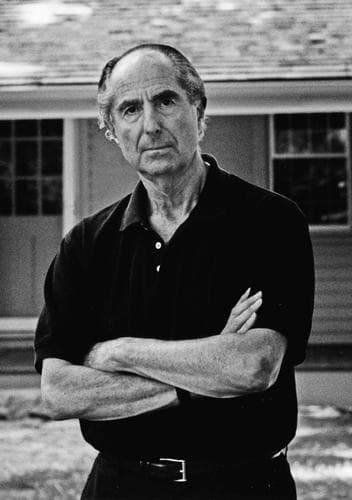
Philip Milton Roth was an American novelist and short story writer. Roth's fiction—often set in his birthplace of Newark, New Jersey—is known for its intensely autobiographical character, for philosophically and formally blurring the distinction between reality and fiction, for its "sensual, ingenious style" and for its provocative explorations of American identity. He first gained attention with the 1959 short story collection Goodbye, Columbus, which won the U.S. National Book Award for Fiction. Ten years later, he published the bestseller Portnoy's Complaint. Nathan Zuckerman, Roth's literary alter ego, narrates several of his books. A fictionalized Philip Roth narrates some of his others, such as the alternate history The Plot Against America.







