“The past is a garden, no doubt, but one that is overgrown with the weeds of our own making.”
— Evelina's reflection on the weight of history and personal responsibility.

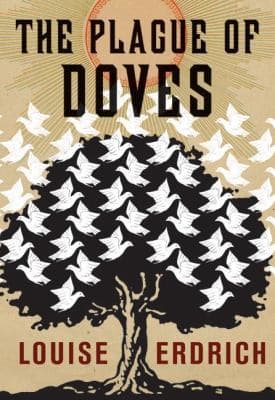
Louise Erdrich (2008)
Genre
Literary Fiction / Historical Fiction / Mystery
Reading Time
360 min
Key Themes
See below
Sign in to track this book
In a small North Dakota town, the unsolved murder of a farm family echoes through generations. An Ojibwe girl, her history-keeping grandfather, and a judge seeking justice uncover years of revenge, hidden truths, and the lasting impact of historical injustice.
Evelina Harp, a main narrator, describes her childhood in Pluto, North Dakota, a small town near the Ojibwe reservation. She talks about her family, especially her grandfather, Mooshum, an elder and storyteller, and her Uncle Billy Peace, a gentle, artistic man. Young Evelina focuses on first loves and family mysteries. She mentions a historical event, 'the plague of doves,' a brutal murder of the Couch family decades earlier. This event deeply affected both Pluto's white community and the Ojibwe people on the reservation. The unsolved crime and its aftermath still influence present relationships and identities. Evelina recounts her early crushes, especially on Corwin Peace, setting up the intertwined stories.
Mooshum, Evelina's grandfather, shares his fragmented, often exaggerated, memories of the 1911 Couch family murders. He was a young boy on the reservation at the time. He describes finding the murdered white family – the parents and their daughter – and the immediate, racially charged fear that gripped Pluto's white community. Without a trial, a vigilante mob lynched or executed four innocent Ojibwe men, including Mooshum's uncle, in revenge. Mooshum's accounts are vivid and sometimes conflicting, showing his people's trauma and oral tradition. He hints at a more complex truth behind the murders, suggesting the first assumptions were wrong and the real killers were never punished, leaving a lasting wound in the community.
Judge Antone Bazil Coutts, another main narrator, is a respected member of the Ojibwe community and a relative of the men wrongly accused and killed after the Couch killings. Driven by a quiet sense of justice and a wish to understand his family's history, he carefully examines old newspaper clippings, court documents, and oral testimonies. His story offers a more objective, though deeply personal, view of the historical events. He finds inconsistencies in the official story and begins to suspect that the true killer of the Couch family was not one of the lynched Ojibwe men, but someone else entirely. This secret was carefully kept by Pluto's white community for generations. His investigation is slow and careful, showing the lasting power of historical injustice.
Evelina's story continues, focusing on her growing up and her intense, often misguided, romantic pursuits. She falls in love with her cousin, Corwin Peace, a troubled but artistic young man. Their relationship is complex, with both passion and an underlying sadness, further complicated by their family ties. Evelina's youthful crushes are set against her family and community's heavy historical burden. Her experiences with love and heartbreak reflect the novel's broader themes of longing and loss. This highlights how the unresolved past affects the present generation. Corwin's own struggles with identity and belonging suggest deeper scars within their family.
Through the combined stories of Mooshum and Judge Coutts, the true killer of the Couch family begins to appear. It turns out that Barnaby, a white farmhand for the Couch family, was the killer. Barnaby, a disturbed man, had a dark interest in the Couch daughter, Lilith. His reason was not racial, but deeply personal. The white townspeople of Pluto, in their rush to judgment and desire for revenge against the Ojibwe, either missed or actively hid evidence pointing to Barnaby. This revelation is important, showing how racial prejudice allowed a killer to escape justice while innocent men paid the ultimate price, twisting the historical record for decades.
Evelina's personal journey takes a spiritual turn as she deals with her Catholic faith and the church's influence in her community. She becomes interested in Sister Leopolda, a stern nun who has a deep, almost mystical, connection to nature and Ojibwe spiritual traditions. Sister Leopolda's character shows the complex mix of Indigenous spirituality and Catholicism on the reservation. Evelina seeks guidance and understanding from Sister Leopolda, who, in her own way, offers a path to healing and reconciliation. This spiritual exploration adds another layer to Evelina's growing up, as she tries to balance conflicting beliefs and find her place in a world shaped by historical trauma.
Seraphina, a strong Ojibwe woman, is important in keeping the true story of the Couch murders alive. As a direct descendant of one of the wrongly accused men, she carries the weight of her family's injustice. She keeps oral history, with details and views that challenge the official story. Seraphina's quiet resolve to ensure the truth eventually comes out shows her people's enduring spirit. She represents the Ojibwe community's collective memory, a memory that refuses to be silenced or forgotten, despite generations of oppression and attempts to erase their history. Her contributions are vital to Judge Coutts's investigation.
As Judge Coutts investigates further, he uncovers the extent of the cover-up planned by Pluto's white establishment. Key figures, including the local sheriff and powerful families, actively suppressed evidence and spread the false story that the Ojibwe men were guilty. This cover-up stemmed from racial prejudice, a desire to protect one of their own (Barnaby), and a need to maintain social order after the horrific crime. The Judge's work exposes the systemic injustice and the deliberate manipulation of facts that allowed the true killer to go free and condemned innocent men. His findings highlight the moral compromises the community made.
Evelina's story moves into her adulthood. She thinks about her past loves, especially Corwin, and her experiences away from Pluto. She eventually returns to her hometown with a more mature view of her family's history and her own identity as a mixed-race woman. Her journey is one of self-discovery and reconciliation, both with her personal past and her community's collective trauma. Evelina deals with the complexities of love, loss, and the lasting power of family ties, even those strained by historical injustice. She learns to accept her multifaceted heritage, finding strength in both her Ojibwe and white roots.
The novel ends with the full truth about the Couch murders: Barnaby, the white farmhand, was the killer. His confession, though delayed, eventually appears, confirming what many in the Ojibwe community had suspected for generations. While this truth cannot undo the past or bring back the innocent lives lost, it offers a form of closure. The communities of Pluto and the reservation must deal with the implications of this long-buried secret. The story emphasizes that while the facts are known, the scars of injustice remain, shaping the identities and relationships of those who live after the 'plague of doves.' The truth, however painful, is a necessary step toward healing.
The Protagonist/Narrator
Evelina matures from a naive, romantic girl to a woman who understands the complex interplay of love, loss, and historical injustice, finding her voice in telling her community's story.
The Supporting/Narrator
Mooshum, as an elder, continuously reinterprets and shares the stories of his past, ensuring the memory of injustice and resilience lives on.
The Protagonist/Narrator
Judge Coutts moves from a detached historical investigator to a figure who brings the painful truth to light, offering a path towards collective healing.
The Supporting
Corwin remains a figure of youthful, artistic potential, whose struggles reflect the broader impact of historical trauma on individual lives.
The Supporting
Sister Leopolda serves as a spiritual anchor and guide, embodying the enduring blend of Indigenous and Catholic faiths.
The Supporting
Seraphina stands as a testament to the preservation of truth and memory within the Ojibwe community, ensuring the past is not forgotten.
The Antagonist
Barnaby's role is to be the hidden truth, the true criminal whose unmasking exposes the deep-seated prejudice and cover-up in the white community.
The Supporting
Uncle Billy Peace serves as a quiet artistic presence, embodying resilience through creation and gentle detachment.
The Mentioned
Lilith's arc is tragic; her murder acts as the inciting incident, revealing the depths of prejudice and injustice.
The novel shows how past injustices, specifically the unpunished murder and wrongful lynching of innocent men, continue to affect generations. The 1911 Couch murders and their aftermath create a deep division between the white town of Pluto and the Ojibwe reservation. This impacts individual identities, family relationships, and community trust decades later. Judge Coutts's investigation and Mooshum's fragmented stories show how the truth, though hidden, constantly pressures the present, shaping the lives of Evelina and her peers who inherit this difficult history. Healing fully without acknowledging the truth is a central idea.
“History is a wound, and the wound is always open.”
Storytelling in the novel both preserves history and distorts it. Mooshum's vivid, often exaggerated, oral accounts keep the memory of the injustice alive within the Ojibwe community, even if they are not always strictly factual. In contrast, the official 'story' spread by Pluto's white community actively suppresses the truth, creating a false narrative that serves their prejudices. Evelina, as a young narrator, learns to tell her own story and her family's stories, dealing with the personal nature of memory and the responsibility of witnessing. The novel itself is a collective act of storytelling, combining different views to reveal a more complete truth.
“A story is not a thing but a way of knowing. It is not just information but a relationship.”
Many characters, especially Evelina, deal with their identity in a world divided by race and history. Evelina, with her mixed Ojibwe and white heritage, navigates belonging to both communities, often feeling caught between them. The generational trauma of the Couch murders further complicates these identities, as characters must balance their personal lives with their people's collective suffering and strength. The search for belonging extends to understanding one's place within the family, the community, and the broader historical narrative. The novel explores how individual identities are shaped by both personal experience and ancestral legacy.
“We are all the children of our grandfathers, no matter what color they were.”
Below the historical mystery, the novel explores various forms of love and loss. Evelina's passionate, often heartbreaking, first loves with Corwin Peace highlight the universal human experience of connection and separation. The deep love within families, despite their flaws and historical burdens, is a constant force. The loss of innocent lives in 1911 leaves a lasting impact, but the characters' search for truth and justice can be seen as a form of redemption – an attempt to honor the dead and help the living heal. The story suggests that while true redemption for past wrongs may be hard to find, understanding and reconciliation offer a way forward.
“Love is a dangerous thing, a beautiful thing, and a thing that can save us.”
The story is told through the distinct voices of Evelina Harp, Mooshum, and Judge Antone Bazil Coutts.
This device allows the reader to experience the story from various perspectives, each offering a different lens on the historical events and their impact. Evelina provides a youthful, romantic, and contemporary view; Mooshum offers fragmented, often embellished, oral history from the perspective of an elder who lived through the initial trauma; and Judge Coutts brings a methodical, investigative, and emotionally resonant approach to uncovering the truth. This technique emphasizes the subjective nature of memory and history, illustrating how a single event can be interpreted and remembered differently by individuals and communities, ultimately building a richer, more complex picture of the truth.
The story shifts between different time periods, primarily the present day and 1911, and earlier memories.
The novel does not follow a strict chronological order, instead jumping between Evelina's coming-of-age in the present, Mooshum's memories of the past, and Judge Coutts's investigation that delves into historical records. This non-linear structure mirrors the way memory and history function, often surfacing in fragments and influencing the present. It creates suspense around the 1911 murders, gradually revealing details and allowing the reader to piece together the truth alongside the characters. This structure also highlights the enduring legacy of the past, showing how historical events are not simply confined to a specific time but continue to shape subsequent generations.
The reliance on spoken stories, particularly Mooshum's, as a means of preserving history and culture.
The Ojibwe oral tradition is a central plot device, particularly through Mooshum's character. His stories, though sometimes embellished or contradictory, are crucial for transmitting cultural knowledge, family history, and the memory of the 1911 injustice across generations. This device highlights the importance of spoken narratives in Indigenous cultures, contrasting them with written historical records which often omit or distort Indigenous perspectives. The act of telling and listening to stories becomes a way of understanding, healing, and resisting the erasure of history, demonstrating the power of narrative to shape identity and preserve truth.
The decades-old, unresolved murder of the Couch family drives the plot and character motivations.
The unsolved murder of the Couch family in 1911 serves as the central mystery and the primary catalyst for the entire narrative. Its lingering presence fuels Judge Coutts's investigation, shapes Mooshum's memories, and influences Evelina's understanding of her family and community. The fact that the mystery remains unsolved for so long underscores the deep-seated racial prejudice and cover-up that allowed injustice to fester. The eventual uncovering of the truth, however painful, becomes the driving force for potential healing and reconciliation, demonstrating how historical injustices must be confronted to move forward.
“The past is a garden, no doubt, but one that is overgrown with the weeds of our own making.”
— Evelina's reflection on the weight of history and personal responsibility.
“There are some things that can only be healed by time, and some things that time only makes worse.”
— Mooshum's musings on grief and the nature of healing.
“Love is not a house, it's a journey. And sometimes, the journey takes you to places you never expected.”
— Ignatius's thoughts on the unpredictable nature of love and relationships.
“A story is a way of holding time still, of keeping what's gone from going too far.”
— Evelina considering the power and purpose of storytelling.
“The truth is a tricky thing. It changes shape depending on who's holding it.”
— Judge Antone Bazil Coutts reflecting on the subjective nature of truth in legal and personal contexts.
“We carry our dead with us, not as burdens, but as the ground we walk on.”
— Mooshum's profound understanding of how ancestors and past generations influence the living.
“Sometimes, the only way to find your way out of the dark is to walk deeper into it.”
— Clemence White's struggle with her past and the need to confront it.
“Memory is a kind of haunting, but not always a bad one. Sometimes it's just company.”
— Evelina's contemplation on the presence of past events and people in her life.
“Justice, like a river, can be diverted, but it always finds a way to flow.”
— Judge Coutts's enduring belief in the eventual triumph of justice, despite obstacles.
“The world is full of signs, if you know how to read them. And if you don't, it's just noise.”
— Mooshum's wisdom about interpreting the world and its spiritual dimensions.
“Forgiveness is not forgetting. It's remembering without pain.”
— A character's internal struggle to move past a traumatic event.
“Every secret casts a shadow, and some shadows are long enough to cover a whole town.”
— The pervasive impact of the unsolved murders on the community.
“We are all made of stories, and if you listen closely, you can hear the whole world whispering.”
— Evelina's deep appreciation for the interconnectedness of human lives through their narratives.
“There's a kind of beauty in broken things, if you know how to look for it.”
— A character finding solace and meaning amidst tragedy and imperfection.
Ready to see how well you understood this book? Take our interactive quiz with 10 questions.

Karen Louise Erdrich is an American author of novels, poetry, and children's books featuring Native American characters and settings. She is an enrolled member of the Turtle Mountain Band of Chippewa Indians, a federally recognized tribe of Ojibwe people.







