“The only way to fight the plague is with honesty.”
— Dr. Rieux's unwavering commitment to truth in the face of the epidemic.

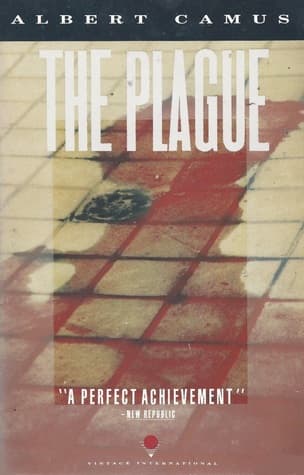
Albert Camus (1947)
Genre
Literary Fiction / Philosophy
Reading Time
300 min
Key Themes
See below
Sign in to track this book
In the sun-baked city of Oran, a deadly plague forces residents to confront existence, testing their resilience, compassion, and definition of humanity amid inescapable death.
In the bustling North African city of Oran, Dr. Bernard Rieux begins to notice many dead rats appearing in the streets and buildings. Initially, residents, busy with daily routines and business, dismiss this. However, the sheer number of dead rodents, often bleeding from their mouths, soon becomes impossible to ignore. Dr. Rieux, a practical and observant man, is disturbed by this unusual event, feeling a vague unease that something more serious is at play. The city council and public health officials react slowly, blaming the deaths on natural causes, but the doctor's professional intuition tells him otherwise.
After the rat infestation, Dr. Rieux's elderly concierge, M. Michel, falls ill with a strange, fast-moving fever and dies after a short, agonizing struggle. Other similar cases soon appear, with high fever, swollen glands, and dark spots on the skin. Dr. Rieux, with his colleague Dr. Castel, immediately recognizes the symptoms as bubonic plague, a disease thought to be gone. Despite the doctors' warnings, local authorities, led by Prefect Othon, hesitate to admit the illness's true nature, fearing panic and economic problems. They use soft language and downplay the severity, but the rising death toll makes denial harder.
As the death rate rises sharply and the plague diagnosis becomes clear, the Prefect, under great pressure, declares a state of plague and orders Oran sealed off. All gates are closed, rail services stopped, and outside communication is greatly restricted. This sudden isolation shocks and depresses the city's residents. Families are separated, lovers torn apart, and the once-busy port becomes silent. Raymond Rambert, a journalist visiting Oran, is trapped, desperate to return to his wife in Paris. Dr. Rieux's wife, who left for a sanatorium just before the closure, is also now unreachable, adding personal grief to his professional burden.
Life within the quarantined city changes greatly. Essential goods become scarce, prices rise, and rationing begins. The initial shock gives way to fear, boredom, and resignation. Public spaces empty, and social life disappears. The plague dictates daily existence, with death becoming common. Large, public funerals are replaced by mass burials, making mourning less personal. Cottard, a mysterious man who attempted suicide before the plague, seems to thrive in this new environment, finding a strange sense of belonging amid the chaos, as his past actions are overshadowed by the collective crisis.
Faced with the huge task of fighting the plague, Dr. Rieux, driven by his commitment to his patients, organizes voluntary sanitary teams. Jean Tarrou, a quiet and mysterious man who carefully records the plague's events in his journal, joins him and dedicates himself to the fight without question. Joseph Grand, a humble and precise municipal clerk, also volunteers, finding purpose in his methodical work. Father Paneloux, a Jesuit priest, initially preaches that the plague is divine punishment for the city's sins, but later joins the sanitary teams, seeing the suffering firsthand. These volunteers work tirelessly, often risking their lives, to care for the sick and bury the dead.
Raymond Rambert, the journalist, wants to escape Oran and rejoin his wife. He believes his love for her justifies any means. He seeks help from various underworld figures and smugglers, including Cottard, who has connections within the city's illegal networks. Rambert tries several times, each failing, showing how impenetrable the quarantine is. Despite his initial insistence that he has no part in the city's struggle, he becomes more involved in the lives of Rieux and Tarrou, seeing their dedication and the widespread suffering. His personal struggle reflects the broader theme of individual desire versus collective responsibility.
Father Paneloux gives a strong sermon, saying the plague is God's just punishment for the city's moral failings. However, his theological certainty is tested when he sees the agonizing death of Othon's young son, Philippe. The child's prolonged suffering, watched by Rieux, Tarrou, and Paneloux, deeply shakes the priest's beliefs. This innocent death challenges the idea of divine justice and forces Paneloux to confront the inexplicable nature of suffering. He later delivers a second, more nuanced sermon, acknowledging the mystery of faith in such horror, and stressing the need for active compassion over passive acceptance.
After many failed escape attempts, and deeply moved by the suffering he has seen, especially the death of Othon's child, Raymond Rambert makes a key decision. He tells Dr. Rieux he can no longer be happy alone and chooses to stay in Oran, joining the sanitary teams. This decision marks a significant change in his character, as his personal desire for individual happiness gives way to a sense of unity and shared responsibility with the trapped citizens. He realizes that true happiness cannot be found in isolation while others suffer, embracing the collective fight against the plague.
After months of death and despair, the plague inexplicably begins to fade. The number of new cases decreases, and recovery rates improve. A careful optimism spreads through Oran, and the possibility of the gates reopening becomes a real hope. However, in a cruel twist, Jean Tarrou, who has tirelessly fought the disease, suddenly contracts the plague. Dr. Rieux stays by his friend's side, watching Tarrou's long and agonizing struggle. Despite Rieux's desperate efforts, Tarrou dies, a tragic loss that deeply affects the doctor, showing the arbitrary and indiscriminate nature of the disease, even as it retreats.
Finally, the day arrives when Oran's city gates officially reopen. A wave of joyful celebration sweeps through the city as families reunite and people embrace loved ones they feared they would never see again. The streets, once silent and threatening, are filled with laughter and festivity. However, amid the joy, there is a clear sense of loss and the lingering trauma of the past year. Dr. Rieux, though relieved, feels a deep sadness, having lost Tarrou and knowing his own wife died while away. The city's return to normal is tinged with the irreversible changes and deep scars left by the plague, reminding everyone of their shared ordeal.
The Protagonist
Rieux remains steadfast throughout the plague, solidifying his belief in human solidarity and the importance of fighting against indifference and suffering, even in the face of inevitable loss.
The Supporting
Tarrou evolves from an observer to an active participant, embodying the struggle against evil, only to fall victim to the very plague he fought, highlighting the arbitrary nature of suffering.
The Supporting
Rambert transforms from an individualist focused solely on his own happiness to someone who embraces collective responsibility and solidarity, choosing to stay and fight the plague.
The Supporting
Paneloux's faith is severely tested by the plague, evolving from a rigid, dogmatic interpretation of divine justice to a more nuanced, compassionate, and suffering acceptance of God's mysterious ways.
The Supporting
Grand remains consistently good and dedicated, finding a meaningful outlet for his meticulousness in fighting the plague, and his survival offers a quiet triumph of the ordinary.
The Supporting
Cottard's initial relief during the plague gives way to renewed anxiety and eventual capture once order is restored, revealing his inability to cope with normalcy.
The Supporting
Othon's bureaucratic rigidity is softened by personal tragedy, leading him to volunteer for the sanitary teams, showing a shift towards active compassion.
The Mentioned
M. Michel's death serves as the catalyst for the city's realization of the plague's arrival, signifying the beginning of the human tragedy.
Camus explores the human search for meaning and purpose in a world without it, especially when faced with irrational suffering and death. The plague is an absurd event, striking randomly and defying explanation. Characters like Dr. Rieux and Tarrou embrace a stoic resistance to this absurdity, finding meaning in their persistent, though ultimately unending, fight against suffering, rather than seeking divine explanations. The constant struggle to maintain hope and dignity in the face of loss is a central part of this theme, particularly when Tarrou, a dedicated fighter, dies from the disease.
“What's true of the world is true of the plague, too. It helps men to rise above themselves.”
The novel stresses the importance of collective action and mutual aid in great adversity. While some characters, like Rambert, initially prioritize individual happiness, the shared experience of the plague ultimately builds unity among Oran's citizens. Dr. Rieux, Tarrou, and Grand show this theme through their tireless work in the sanitary teams, demonstrating that true courage lies in persistent, compassionate effort to ease suffering, even if complete victory is impossible. Rambert's decision to stay and fight, abandoning his personal escape, powerfully illustrates this theme, highlighting the moral need to stand with others in their struggle.
“There's no question of heroism in all this. It's a matter of common decency. That's the only way to fight a plague.”
The plague serves as a metaphor for various forms of evil and suffering, from natural disasters to oppressive regimes. Camus examines how individuals and society react to such overwhelming forces. The suffering is often senseless and random, challenging traditional ideas of divine justice, as seen in Father Paneloux's crisis of faith after witnessing the death of Othon's innocent child. The novel suggests that evil is not always a grand, malevolent force, but can appear as indifference, bureaucracy, or the quiet, persistent threat beneath ordinary life. The constant presence of death forces characters to confront the raw reality of human vulnerability.
“Each of us has the plague within him; no one on earth is free from it.”
The quarantine on Oran clearly shows the limits placed on individual freedom by outside circumstances. Characters like Rambert, initially driven by personal desire, find their autonomy greatly reduced by the city's isolation. The plague forces individuals to confront their interconnectedness and the constraints of their existence. While personal desires remain, the crisis demands a sacrifice of individual liberty for the common good. This theme explores the tension between the human desire for personal happiness and the inescapable demands of shared human experience and responsibility, suggesting that true freedom might involve choosing to embrace unity.
“I know positively that I have no place in this city. I'm a stranger, and I've no business here.”
At its heart, *The Plague* explores the human condition, especially in extreme situations. It looks at questions of morality, ethics, and what it means to be human when stripped of social norms and comforts. Characters must face their own mortality and choose how to live in the face of death. Rieux's steady dedication, Tarrou's search for secular sainthood, and Grand's quiet diligence all represent different aspects of human morality. The novel suggests that our actions in the face of suffering, our capacity for compassion, and our willingness to resist the 'plague' in all its forms, define our humanity more than any abstract belief system.
“What a man learns in a time of plague: that there are more things to admire in men than to despise.”
The disease represents not only a literal epidemic but also various forms of evil and oppression.
The most significant plot device in the novel is the plague itself, which functions as a powerful allegory. While literally a bubonic plague outbreak, it metaphorically represents various forms of human suffering, evil, and oppression. Camus explicitly linked it to the Nazi occupation of France during World War II, symbolizing the insidious nature of totalitarianism and the moral choices individuals face under such regimes. It also stands for the general human condition of facing an absurd and indifferent universe, where death and suffering are inevitable, forcing characters to define their humanity through their response to this 'plague.'
The story is told by an omniscient-sounding narrator who is revealed to be a participant.
The novel employs a retrospective first-person narration, though for much of the book, the narrator remains anonymous, speaking with an almost omniscient, detached tone. This creates a sense of objective reporting and historical distance, allowing for broader philosophical observations. The eventual revelation of Dr. Rieux as the narrator in the final pages transforms the reader's understanding of the entire narrative. It imbues the events with a deeply personal resonance, highlighting Rieux's stoicism and his commitment to bearing witness, while also underscoring the subjective nature of even seemingly objective accounts of suffering.
Tarrou's meticulous observations provide an alternative, philosophical perspective.
Jean Tarrou's personal journals serve as a vital plot device, offering an interior, philosophical counterpoint to Dr. Rieux's more pragmatic narrative. Tarrou's entries are filled with detailed observations of the city, its inhabitants, and the psychological impact of the plague. They allow Camus to introduce deeper meditations on morality, justice, and the search for meaning ('sainthood without God') without disrupting the direct, action-oriented flow of Rieux's account. These journals provide an intimate glimpse into the intellectual struggle to comprehend and respond to the absurd, enriching the novel's thematic depth and character development.
The physical isolation of the city symbolizes the human condition of being trapped by fate.
The literal closure of Oran's gates, quarantining its inhabitants, serves as a powerful symbolic device. It represents the universal human condition of being trapped, whether by fate, circumstance, or the inherent limitations of existence. The inability to escape reinforces the themes of absurdity and the limits of individual freedom. This physical barrier forces characters to confront their shared humanity and the collective nature of their struggle, stripping away the illusions of individual autonomy and highlighting the inescapable reality of their interconnectedness in the face of an overwhelming, external threat.
“The only way to fight the plague is with honesty.”
— Dr. Rieux's unwavering commitment to truth in the face of the epidemic.
“There’s no question of heroism in all this. It’s a matter of common decency. That’s the code I live by.”
— Dr. Rieux explaining his motivation for fighting the plague, dismissing any notion of grandeur.
“All I maintain is that on this earth there are pestilences and there are victims, and it's up to us, so far as possible, not to join forces with the pestilences.”
— Dr. Rieux reflecting on the nature of evil and human responsibility.
“What's natural is the microbe. All the rest—health, integrity, purity—is a product of the human will, of a vigilance that must never falter.”
— Dr. Rieux contemplating the constant struggle against disease and decay.
“There are times in history when the only way to combat the plague is with a certain kind of love.”
— Tarrou's belief in human solidarity and compassion as a form of resistance.
“I have no idea what's awaiting me, or what will happen when this is over. For the moment I simply want to be a man.”
— Tarrou expressing his desire for authenticity and connection, even amidst the plague.
“Man is a creature who cannot remain silent in the face of injustice.”
— Camus's broader philosophical statement, applicable to the characters' fight against the plague.
“The plague had swallowed up everything and everyone. It had even swallowed up our memories.”
— The narrator's reflection on the devastating and all-consuming nature of the epidemic.
“Each of us has the plague within him; no one in the world is immune.”
— Tarrou's realization that the 'plague' is not just a physical disease but an inherent human capacity for evil.
“The plague was everybody’s business, and no one’s business.”
— The initial confusion and denial in Oran regarding the seriousness of the epidemic.
“When a war breaks out, people say: 'It's too stupid; it can't last long.' But though a war may be too stupid, that doesn't prevent its lasting.”
— A reflection on the persistent and often irrational nature of suffering and conflict, akin to the plague.
“The only thing one can learn from a scourge is that there are more things to admire in men than to despise.”
— Dr. Rieux's ultimate conclusion about humanity's capacity for good, even in the darkest times.
“He knew that the plague bacillus never dies or vanishes entirely.”
— The concluding thought that the 'plague' (evil, suffering) is a perpetual threat, requiring constant vigilance.
“But what does it mean, the plague? It's life, that's all.”
— A character's cynical yet profound observation that suffering and death are inherent parts of existence.
Ready to see how well you understood this book? Take our interactive quiz with 10 questions.
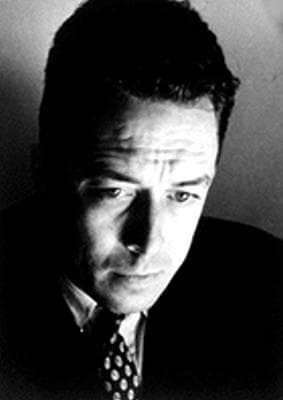
Albert Camus was a French-Algerian philosopher, author, dramatist, and journalist. He was the recipient of the 1957 Nobel Prize in Literature at the age of 44, the second-youngest recipient in history. His works include The Stranger, The Plague, The Myth of Sisyphus, The Fall, and The Rebel.







