“The mind of man, being an image of the Mind of God, can find no rest in any created thing, but must ever be seeking for that which is uncreated.”
— A reflection on human longing for the divine.


Charles Williams (1931)
Genre
Fantasy / Spirituality / Philosophy
Reading Time
244 min
Key Themes
See below
Sign in to track this book
When the Beasts of the Apocalypse appear in the English countryside, a group of people must face their spiritual truths or be destroyed by the power of creation.
The story begins with Anthony Durrant, a young scholar, driving through the countryside. Thinking about Platonic archetypes, he sees a bright golden light and a magnificent, ethereal Lion appear on the road, causing his car to swerve. This event leaves him shaken and curious. Meanwhile, his fiancée, Damaris Tighe, a driven academic, focuses on her thesis, dismissing anything not provable. The Lion's appearance is the first sign that the archetypes, or 'Images,' are coming into the physical world. Anthony, feeling a sense of wonder and a new understanding that something extraordinary is happening, begins to investigate, setting up the spiritual crisis.
After the Lion appears, other archetypes begin to show up. A serpentine Image, representing wisdom, appears to the intellectual Damaris, who struggles to understand it within her rational framework. A majestic Eagle, representing power, appears to the ambitious business magnate, Mr. Foster. The Image of the Dragon, symbolizing chaos and destruction, is seen by the cruel journalist, Quentin Sabot. Each character's encounter with an Image is shaped by their nature and spiritual state, drawing them into the growing supernatural events. Anthony, increasingly aware of the profound shift in reality, tries to understand these appearances, feeling a deep connection to the unfolding spiritual drama.
Mr. Foster, a man driven by a desire for control and worldly success, sees the Eagle as a source of immense power he can use. He tries to control and manipulate the archetypal Eagle, believing its power can be bent to his will to further his business and influence. However, the Eagle, a pure Image of divine authority, cannot be controlled by human will. Instead, Foster's attempt backfires. The Eagle's overwhelming presence and power begin to dissolve his physical form, turning him into a shimmering, indistinct being as he is absorbed into the essence of the archetype he tried to master. His ambition proves to be his downfall, unable to withstand the purity of the spiritual force.
Damaris Tighe, a brilliant but strictly rational academic, meets the Serpent, the Image of wisdom and intellect. Her first reaction is intellectual curiosity, trying to categorize and explain it through her academic frameworks. However, the Serpent, a living archetype, defies her logic. As it begins to absorb her, she experiences a terrifying dissolution of her individual consciousness, her rational world crumbling. She resists, clinging to her intellect, but ultimately finds herself drawn into the Serpent's primal wisdom, losing her identity. Her inability to surrender her intellect and embrace the spiritual truth of the Image leads to her absorption, showing the limits of pure rationality in the face of the divine.
Quentin Sabot, a malicious journalist, is drawn to the Image of the Dragon, which embodies chaos and destruction. His cruelty and desire to inflict pain resonate with the Dragon's nature. Sabot, instead of resisting, enjoys the Dragon's destructive energy, letting it amplify his worst impulses. The Dragon's presence begins to consume him, turning him into a monstrous, draconic being, a physical manifestation of his own wickedness. He becomes a creature of malice, lashing out with destructive force, causing terror and devastation. His willing embrace of evil leads to his complete dehumanization and transformation into a destructive supernatural force.
Amidst the chaos and dissolution, two young schoolgirls, Chloe Burnett and Dora Wilmot, encounter the Image of the Unicorn. The Unicorn, a symbol of purity, innocence, and spiritual grace, appears to them. Unlike the adults who struggle or succumb to the archetypes, the girls, with their simpler, open faith, are not destroyed but embraced and protected by the Unicorn. Its presence shields them from the destructive forces unleashed by the other Images. Their encounter shows the theme of innocence and the ability of pure belief to connect with divine grace, offering a contrast to the complex and often flawed reactions of the adult characters.
Anthony Durrant, having been the first to see the Lion, feels a growing connection to its spiritual power. He struggles to understand the events, his scholarly mind seeking order and meaning in the chaos. He is torn between fear and a deep, almost mystical attraction to the archetypes. He understands that these are not illusions but fundamental truths appearing in the world. The Lion, representing divine power, creativity, and ultimate reality, calls to him, urging him towards a deeper spiritual understanding and a surrender to the divine will. Anthony's journey becomes one of intellectual and spiritual awakening, moving beyond observation to active engagement with the supernatural.
Anthony seeks out Berringer, an older, reclusive scholar known for his philosophical insights, especially into Platonic forms. Berringer, who has long studied archetypes and the spiritual realm, gives Anthony important context and understanding. He explains that the Images are not just symbols but the Platonic forms themselves, pure ideas breaking into the physical world. He clarifies that those who try to control or intellectualize these pure forms are consumed by them, while those who surrender to their true nature, especially the Lion as the ultimate Image of divine love and power, can find salvation. Berringer's wisdom guides Anthony, helping him interpret the terrifying events through a spiritual lens.
As more Images appear and the lines between the physical and spiritual blur, the world itself begins to dissolve. Buildings shimmer, landscapes shift, and reality unravels. The archetypes, pure and powerful, cannot be contained by the material world. Anthony sees various individuals absorbed into their corresponding Images, understanding that resistance is useless and leads to destruction. He realizes that the only path to survival and spiritual integration is not to fight or control but to surrender to the divine will embodied by the Lion. This realization marks a turning point in his spiritual journey, moving him towards accepting a reality beyond human understanding.
In the climax, Anthony, having seen others dissolve and internalized Berringer's wisdom, chooses to surrender himself to the Lion, the ultimate Image of divine love and power. He does not seek to understand or control but simply to be absorbed into its pure essence. This act of spiritual surrender is not destruction but profound integration. As he embraces the Lion, the chaos begins to subside. The world, though changed, is restored to a new kind of order, imbued with a deeper spiritual reality. Anthony emerges from the experience transformed, having found peace and a deep connection to the divine, his journey ending in spiritual illumination.
The Protagonist
From a bewildered observer, Anthony transforms into a spiritually enlightened individual who surrenders to divine will.
The Supporting
Her rigid rationality prevents her from accepting spiritual truth, leading to her dissolution into an archetype.
The Antagonist/Supporting
His attempt to dominate an archetype leads to his physical and spiritual dissolution.
The Antagonist/Supporting
His embrace of cruelty leads to his transformation into a destructive, draconic being.
The Supporting
He remains a steadfast source of wisdom, guiding Anthony towards spiritual enlightenment.
The Supporting
Her innocence allows her to be embraced and protected by a divine archetype.
The Supporting
Her innocence allows her to be embraced and protected by a divine archetype.
The Mentioned
Its manifestation initiates the entire plot and serves as the ultimate goal for spiritual surrender.
The novel explores the idea that behind the everyday physical world is a deeper, spiritual reality that can appear and interact with human consciousness. The sudden appearance of the archetypes—the Lion, Serpent, Eagle, Dragon, and Unicorn—breaks conventional understanding of reality, forcing characters to face a world where Platonic forms are physically present. This challenges their beliefs and shows the limits of purely materialist or rationalist views. The dissolution of individuals and landscapes into their archetypal essences demonstrates the overwhelming power of this spiritual reality.
““The Forms are here,” Berringer said. “They always are. But now they are not merely ideas. They are themselves. And the world breaks.””
A main theme is the different human responses to divine power: the useless attempt to control or intellectualize, versus the freeing act of surrender. Characters like Mr. Foster and Damaris Tighe try to control or rationally dissect the archetypes, leading to their destruction or dissolution. Foster seeks to use the Eagle for worldly power, while Damaris tries to understand the Serpent with her intellect. In contrast, Anthony Durrant, guided by Berringer, learns that true salvation and integration come from surrendering to the divine will, especially to the Lion. This theme shows that spiritual truth cannot be mastered, only embraced.
““You cannot command them. You can only be commanded. Or be consumed.””
The novel criticizes the limits of a purely rational or materialistic approach to life. Damaris Tighe's intellect proves insufficient and destructive when faced with the Serpent, as she cannot intellectualize a spiritual truth. Mr. Foster's ambition and desire for control lead to his demise when he tries to control the Eagle. These characters, representing extremes of human intellect and ambition, show that such qualities, when not tempered by spiritual understanding or humility, are insufficient and even dangerous when faced with the divine. The book suggests that there are truths beyond logic or material gain.
““The mind of man, left to itself, cannot comprehend the Forms.””
The innocence of the schoolgirls, Chloe and Dora, and their meeting with the Unicorn, highlights that purity of heart and simple faith can be more open to divine grace than complex intellect or ambition. While adults struggle or are destroyed, the girls are embraced and protected by the Unicorn, a symbol of purity. This suggests that an uncorrupted, open spirit is better attuned to spiritual realities. Their experience contrasts with the more tragic fates of the adult characters, showing the value of childlike wonder and pure belief in connecting with the sacred.
““The pure in heart… they shall see God.””
The character of Quentin Sabot and his connection with the Dragon explores human evil and its destructive results. Sabot's malice and desire for chaos perfectly match the Dragon's destructive power, leading to his monstrous transformation. This shows how human wickedness can embrace destructive spiritual forces. While the book focuses more on the consequences of evil than redemption for Sabot, Anthony's journey offers a path to redemption through spiritual surrender, contrasting the two extreme responses to the divine.
““He saw the Dragon, and in its horror, he found his own joy.””
Platonic forms that manifest physically, driving the plot and testing characters.
The archetypes (Lion, Serpent, Eagle, Dragon, Unicorn) are the central plot device. They are presented as Platonic Forms, pure ideas that break through into the physical world. Their manifestation drives the entire narrative, forcing characters to confront a new reality. Each archetype embodies a specific quality (divine power, wisdom, dominion, chaos, purity), and characters' reactions to them reveal their true spiritual nature. They act as catalysts for transformation, absorption, or destruction, making them both a narrative engine and a thematic core.
The gradual breakdown of the physical world as the archetypes manifest.
As more archetypes appear, the fabric of the physical world begins to unravel. Buildings shimmer, landscapes shift, and human forms lose their solidity. This 'dissolution' is a powerful visual and thematic device, emphasizing the overwhelming power of the spiritual realm over the material. It creates a sense of escalating tension and urgency, forcing characters to acknowledge the profound shift in their reality. It signifies that the world cannot contain these pure forms and that a new order is emerging, challenging the very perception of existence.
Conversations, particularly with Berringer, that explain the metaphysical concepts.
While the plot unfolds through supernatural events, much of the intellectual and spiritual understanding is conveyed through philosophical dialogue, primarily between Anthony and Berringer. Berringer acts as a guide, explaining the nature of the archetypes, Platonic forms, and the concept of surrender. These conversations serve to illuminate the complex theological and philosophical underpinnings of the story, transforming what might otherwise be mere fantasy into a profound exploration of spiritual truth. This device allows Williams to articulate his ideas directly within the narrative.
Each character's fate is determined by their alignment with a specific archetype.
A key plot device is the direct correlation between a character's inherent nature and the archetype they encounter and are ultimately absorbed by (or protected by). Foster's ambition aligns with the Eagle, Damaris's intellect with the Serpent, Sabot's malice with the Dragon, and the girls' innocence with the Unicorn. Anthony's journey is to align with the ultimate archetype, the Lion. This device provides a clear moral and spiritual framework, demonstrating how internal states directly influence external, supernatural interactions and ultimate destinies within the narrative.
“The mind of man, being an image of the Mind of God, can find no rest in any created thing, but must ever be seeking for that which is uncreated.”
— A reflection on human longing for the divine.
“The world is full of things which are themselves, and yet are also symbols of something else.”
— Discussing the dual nature of reality, both literal and symbolic.
“All things, as they are in themselves, are perfect ideas in the Mind of God.”
— A philosophical assertion about the inherent perfection of creation.
“There are things which are true, and there are things which are not true, and it is important to know the difference.”
— Emphasizing the importance of discernment in understanding reality.
“The lion is the symbol of all power, and all beauty, and all terror.”
— Explaining the multifaceted nature of the archetypal Lion.
“The world is not a machine, but a living organism, full of spiritual forces.”
— Contrasting a mechanistic worldview with a more spiritual understanding.
“To know a thing truly is to know it in its divine aspect.”
— Suggesting that true understanding goes beyond the superficial.
“Fear is the shadow of power, and where there is great power, there is great fear.”
— Linking the concepts of fear and power, particularly divine or primal power.
“The universe is a dance of identities, each seeking its own perfect expression.”
— A poetic description of the dynamic and self-actualizing nature of creation.
“Every man carries within him the potential for both heaven and hell.”
— A statement on human free will and moral potential.
“The great archetypes are not merely ideas; they are living, active presences.”
— Explaining the active and powerful nature of the Platonic forms or archetypes.
“There is a glory in all things, if only we have eyes to see it.”
— A call for a deeper, more appreciative perception of the world.
“To yield to the divine is not to lose oneself, but to find one's true self.”
— Describing the paradox of surrender in spiritual growth.
“The true work of man is to co-operate with the divine creation.”
— Defining humanity's purpose in relation to the divine.
“The world is charged with the grandeur of God, and it is our task to recognize it.”
— An assertion about the immanence of the divine in the world and human responsibility.
Ready to see how well you understood this book? Take our interactive quiz with 10 questions.
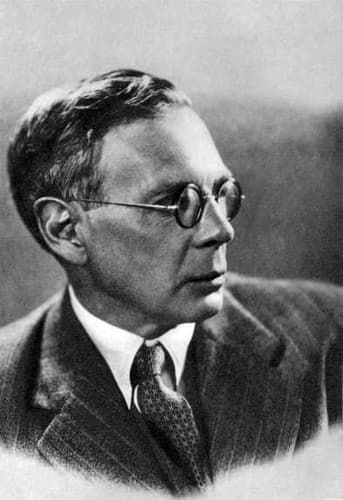
Charles Williams was a British poet, novelist, and theologian, often associated with the Inklings literary group. His most notable works, "The Place of the Lion" and "Descent into Hell," explore profound theological and mystical themes within a compelling fictional narrative. Williams's writing is characterized by its intricate symbolism and exploration of spiritual warfare and divine love.







