“I really like to read books. They always have happy endings. Real life doesn't always have happy endings.”
— Marvin reflecting on his love for books versus reality.

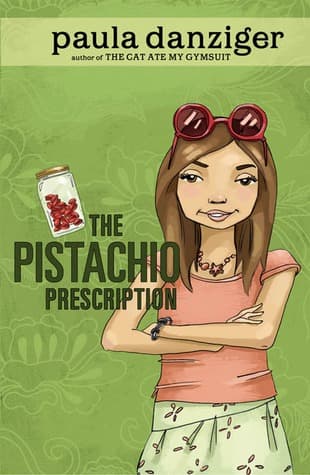
Paula Danziger (1978)
Genre
Children's / Young Adult
Reading Time
90 min
Key Themes
See below
Sign in to track this book
Asthmatic Cassie Stephens finds comfort and a strange cure-all in pistachio nuts, her only relief from a chaotic home and the stress of her first presidential campaign.
Cassie Stephens starts her day in a household constantly at war, mainly between her parents. Her mother, Mrs. Stephens, and her father, Mr. Stephens, argue endlessly, often using Cassie's older brother, Robert, as a pawn. Robert himself is often quiet or sarcastic. Cassie tries to calm things or escape, often going to her room or finding comfort in her secret stash of pistachio nuts. This morning, the conflict is about breakfast choices and perceived insults, leaving Cassie stressed before school. Her asthma is always present, made worse by her emotions.
At school, Cassie tries to act normal despite her home life. She struggles with some subjects, especially math, and feels academic pressure. Her best friend, Sarah, is a constant support and listens to Cassie's problems. Cassie has decided to run for freshman class president, a choice made to prove herself and perhaps gain some control. She works on her campaign speech, often practicing in her room, and asks Sarah for advice. The upcoming election adds more stress to her already full life.
Feeling more anxious and overwhelmed by her family's arguments, school pressures, and the election, Cassie finds an unusual way to cope: pistachio nuts. She finds that peeling and eating the nuts temporarily calms her. The repetitive action and the taste become her personal 'prescription' for stress. She starts buying large amounts, often hiding them, and eats them whenever she feels panic or an asthma flare-up. This habit becomes a secret ritual, a small bit of control in her chaotic world.
Cassie's campaign for class president is harder than she expected. She struggles with public speaking, often feeling shy and not good enough compared to her more outgoing opponents. She tries to connect with classmates, but her nervousness sometimes wins. Sarah helps her with flyers and encourages her, but Cassie still doubts her ability to lead. The pressure to win, along with her existing worries, leads to more pistachio eating. She worries about her speech and how she will appear to the student body, fearing failure and embarrassment.
To deal with their ongoing marriage problems, Cassie's parents start family therapy. However, the sessions seem to do little to ease the tension at home. In fact, their arguments sometimes get worse after therapy, as they bring up old issues or new disagreements. Cassie watches these interactions with a mix of hope and sadness. She wants peace and quiet, but the constant arguments and emotional distance between her parents remain. This ongoing instability at home feeds Cassie's anxiety and makes her rely more on pistachios for comfort.
Cassie's physical health starts to suffer from the stress. Her asthma attacks become more frequent and severe, often triggered by emotional distress. After a particularly bad attack, her parents worry and take her to the doctor. The doctor highlights the link between stress and asthma and suggests ways for Cassie to manage her anxiety. While her parents show concern, they do not fully understand her emotional trouble or how their own conflicts affect her. This medical visit makes Cassie more aware of her physical reactions to stress but does not immediately solve her underlying problems.
Amid the usual family chaos, Cassie has a rare moment of connection with her older brother, Robert. Robert is usually quiet or sarcastic, but one evening, he finds Cassie upset and offers a surprising moment of empathy. They do not talk for long, but his presence and quiet understanding give Cassie a brief break. This interaction is important because it is one of the few times Robert shows his feelings and acknowledges Cassie's, suggesting a deeper, though often hidden, bond between them. It offers a bit of hope for future family understanding.
Election day arrives, and Cassie must give her speech to her classmates. Despite her intense nervousness and a strong urge to hide, she finds her courage. She uses the techniques she has practiced and tries to seem confident. While her speech may not be as polished or loud as some opponents', it comes from the heart, showing her real desire to make a difference. This act of public speaking is a big step for Cassie, forcing her to face her shyness and anxiety, even if she still relies on the comfort of her pistachios beforehand.
The election results are announced, and Cassie does not win the presidency. While disappointed at first, she finds that life goes on, and her friends, especially Sarah, are still supportive. This outcome, though not a victory, provides a moment for reflection. Cassie starts to realize that her self-worth is not only tied to external achievements like winning an election. She also begins to notice the many pistachio shells she has collected, making her question her dependence on them as her only coping method. This marks the start of her journey to find healthier ways to manage stress.
After the election, Cassie makes a conscious effort to eat fewer pistachios. She recognizes that while they offered temporary comfort, they were not a long-term solution. She tries to find other ways to deal with her anxiety, such as talking more openly with Sarah, doing hobbies, and simply acknowledging her feelings without immediately grabbing nuts. This is a slow process, and she still has weak moments, but she is actively trying to break the habit. This change shows a growing maturity and a desire to face her underlying issues more directly.
While her parents' arguments do not completely disappear, Cassie starts to notice small changes in their behavior. There are fewer loud fights, and sometimes, she sees quiet interactions or even a shared glance that suggests a new understanding. The family therapy, though initially seeming ineffective, might slowly be helping. These small improvements, though not a full solution, give Cassie hope that her home life might eventually become more peaceful. This lowers her overall stress and helps her reduce her reliance on pistachios.
As Cassie relies less on pistachios, she starts to find her own voice. She begins to express her feelings and needs more directly, both to her parents and to her friends. While it is still hard, she tries to say when she is uncomfortable during family arguments or to share her worries with Sarah beyond just complaining. This new assertiveness is a big step in her development, showing her moving from passive coping to actively dealing with her problems. She realizes that communication, even imperfect communication, is a more effective long-term strategy than silent self-medication.
The Protagonist
Cassie evolves from a passive observer dependent on a coping mechanism to a more self-aware individual who begins to confront her anxieties and communicate her needs.
The Supporting
Her arc is subtle, showing slight shifts in behavior by the end, suggesting potential for future improvement in her marriage.
The Supporting
His arc is subtle, showing slight shifts in behavior by the end, hinting at potential for future improvement in his marriage.
The Supporting
Shows a brief moment of softening, suggesting he's not entirely detached from his sister's well-being.
The Supporting
Remains a consistent and reliable friend, serving as a stable anchor for Cassie.
The Mentioned
Serves as a catalyst for Cassie and her parents to acknowledge the physical manifestation of her stress.
The novel explores how people, especially children, create coping methods for overwhelming stress. Cassie's use of pistachio nuts is a central image for self-medication, offering temporary relief but not fixing the root causes of her anxiety. The repeated act of shelling and eating nuts symbolizes her effort to bring order and comfort to her chaotic inner and outer world. This theme appears in scenes where Cassie goes to her room with pistachios after a family argument or before a stressful event like her election speech.
“Pistachios were her prescription. They made her feel better, even if only for a little while.”
A main theme is how much parental conflict affects a child's well-being. Cassie's parents' constant arguments create a tense and unpredictable home, directly causing her anxiety and making her asthma worse. The novel shows how children take on their family's problems, leading to emotional distress, physical symptoms, and a desperate search for stability. The therapy sessions, initially not helping, highlight how deep the family's issues are and the slow, hard road to healing. The tension at the breakfast table, a repeated scene, shows this theme.
“Her house was a battleground, and she was always caught in the crossfire.”
The book looks at the many pressures teenagers face, including school expectations, social worries, and the desire for self-worth. Cassie's choice to run for class president, despite her shyness, shows her attempt to gain control and recognition. Her frequent asthma attacks and reliance on pistachios are physical signs of her extreme stress. The story accurately shows the inner thoughts of an anxious teenager, highlighting her self-doubt, fears of failure, and the constant struggle to manage her emotions.
“Sometimes it felt like there was a giant hand squeezing her chest, and she couldn't breathe.”
Throughout the story, Cassie struggles with shyness and tends to avoid conflict. A key theme is her slow journey to finding her voice and learning to stand up for herself. At first, she uses pistachios instead of direct communication, but as she grows, she begins to express her feelings and needs more directly. Her decision to run for president, despite her fears, is an early step in this direction, and her eventual efforts to talk to her parents and reduce her pistachio habit show her growth in self-assertion and healthy communication.
“Maybe talking about it, even if it was hard, was better than just eating another handful of nuts.”
The nuts represent Cassie's coping mechanism and temporary escape.
The pistachio nuts serve as a central symbol in the novel. They represent Cassie's self-medication, a physical manifestation of her need for comfort and control in a chaotic world. The act of shelling them is a ritualistic, repetitive action that provides a sense of focus and distraction from her anxieties. The bright red shells can also symbolize the internal 'red flag' of her distress, while the nut inside offers a fleeting moment of reward. As Cassie's reliance on them lessens, it signifies her progress in finding healthier coping strategies.
The Stephens' home is consistently described as a war zone, highlighting family conflict.
The repeated use of military metaphors, such as the 'battlefield' or 'war zone,' to describe the Stephens' home life effectively conveys the constant tension and conflict Cassie experiences. This device immediately establishes the stressful environment, emphasizing the emotional toll on Cassie. It positions her as a child 'caught in the crossfire,' unable to escape the emotional damage, and justifies her desperate need for a coping mechanism like the pistachios. The metaphor is a powerful way to illustrate the pervasive nature of the family's dysfunction.
Cassie's asthma directly reflects her emotional and psychological state.
Cassie's asthma is not merely a medical condition; it functions as a plot device to physically manifest her internal emotional turmoil. Her asthma attacks are often triggered by stress, particularly during intense family arguments or moments of personal anxiety. This connection highlights the mind-body link and emphasizes the severe impact of her environment on her health. The doctor's diagnosis, linking stress to her condition, serves to validate Cassie's feelings and draw attention to the real consequences of her parents' behavior.
“I really like to read books. They always have happy endings. Real life doesn't always have happy endings.”
— Marvin reflecting on his love for books versus reality.
“I wish I had a dog. Dogs always like you, even if you're not very good at anything.”
— Marvin expressing his desire for unconditional affection.
“Pistachios are good luck. My grandmother told me that. She said if you eat enough pistachios, good things will happen.”
— Marvin explaining his belief in the power of pistachios.
“Sometimes I think grown-ups don't listen very well. They just hear what they want to hear.”
— Marvin's observation about adult communication.
“It's hard to be brave when you're scared. But you have to try, right?”
— Marvin contemplating courage in a difficult situation.
“School is okay, I guess. But it would be better if they let you eat pistachios during class.”
— Marvin's typical thought about school.
“I don't like it when people yell. It makes my ears hurt and my stomach feel funny.”
— Marvin's reaction to conflict or raised voices.
“Maybe if I eat more pistachios, I'll get smarter. Or at least luckier.”
— Marvin's ongoing hope in his pistachio 'prescription'.
“It's hard to make new friends when you're not very good at talking to people.”
— Marvin's struggle with social interaction.
“Sometimes I just want to hide under my bed and never come out.”
— Marvin expressing a desire to escape his problems.
“Even if things are bad, you still have to keep going. That's what books teach you.”
— Marvin drawing strength from his love of stories.
“I wonder if grown-ups ever feel as confused as I do.”
— Marvin's internal question about adult understanding.
“The best thing about pistachios is cracking them open. It's like a little surprise every time.”
— Marvin appreciating the simple joy of his favorite snack.
“It's okay to be different. My grandmother always said that. She said it makes you special.”
— Marvin recalling a comforting message from his grandmother.
Ready to see how well you understood this book? Take our interactive quiz with 10 questions.

Biography coming soon.

Dan Gemeinhart
4.5

Kate O'Hearn
4.4

Jeanne Birdsall
4.4

Jen Wang
4.4
Wendelin Van Draanen
4.3

John Marsden
4.3

Chris Van Allsburg
4.3
Jennifer A. Nielsen
4.2