“What shall I do to be saved?”
— Christian's initial cry as he reads the book and becomes aware of his sin and impending doom.

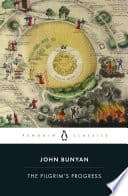
John Bunyan (2009)
Genre
Fantasy / Spirituality
Reading Time
240 min
Key Themes
See below
Sign in to track this book
Christian journeys from the City of Destruction to the Celestial City, facing challenges like the Slough of Despond and Vanity Fair, battling despair, and seeking salvation.
The story begins with the narrator, Bunyan, dreaming of a man named Christian. He wears rags and carries a heavy load on his back. Christian is very upset because he learned from a book (the Bible) that his city, the City of Destruction, will be destroyed by fire. He tries to tell his wife and children, but they think he is crazy. Overwhelmed by his spiritual burden, Christian walks into the fields, crying and asking, "What shall I do to be saved?" There, he meets Evangelist, who points him toward the Wicket-gate as the way to salvation and the Celestial City. Evangelist tells him to escape the coming judgment.
Christian follows Evangelist's directions, but two neighbors, Obstinate and Pliable, join him. Obstinate quickly gives up and returns home. Pliable continues for a short time before both fall into the Slough of Despond, a deep bog filled with doubt and fear. Pliable, discouraged, also leaves the journey. Christian, however, struggles through and is pulled out by Help. Soon after, he meets Mr. Worldly Wiseman, who convinces him that the Wicket-gate is too risky. He suggests an easier path through the village of Morality, guided by Legality and his son Civility, promising to remove Christian's burden there. Christian agrees and turns off the path.
Christian follows Mr. Worldly Wiseman's advice toward the village of Morality. But as he nears Mount Sinai, which overlooks the village, he becomes terrified. The mountain appears to be on fire and threatens to fall on him, reminding him of God's Law and its condemnation. His burden feels heavier than ever. In his despair, Evangelist reappears. He strongly scolds Christian for leaving the right path and listening to the misleading advice of Worldly Wiseman, Legality, and Civility, who offer false hope of salvation through works. Christian, filled with shame and renewed belief, repents and is guided back toward the Wicket-gate by Evangelist.
Christian finally reaches the Wicket-gate and is welcomed by Goodwill, who pulls him in. Goodwill warns him about Beelzebub's castle, from which arrows are shot at those approaching the gate. Goodwill tells Christian to go to the House of the Interpreter for more guidance. Inside the Interpreter's house, Christian sees various symbolic scenes: a man sweeping a dusty room (representing a heart cleaned by the Gospel), a passionate man and a patient man (showing different reactions to God's grace), a fire burning brightly despite water being thrown on it (representing grace in the heart), and a brave man fighting through armed guards to enter a palace (representing the struggle for salvation). These visions deepen Christian's understanding of his spiritual journey.
After leaving the House of the Interpreter, Christian continues on the King's Highway. He eventually sees a Cross and, a bit further, a Sepulchre. As he looks at the Cross, the heavy burden falls from his back and rolls into the Sepulchre, never to be seen again. Overjoyed, Christian meets three Shining Ones who give him new clothes, a sealed scroll to show at the Celestial Gate, and a mark on his forehead. He then continues, encountering Simple, Sloth, and Presumption, who ignore his warnings. He soon arrives at the Hill Difficulty, a steep climb where he must choose between two risky detours, Danger and Destruction, before going up the narrow path.
After climbing the Hill Difficulty, Christian rests at the Palace Beautiful, a spiritual home for pilgrims. There, Discretion, Piety, Prudence, and Charity welcome him. They feed him and show him records of past pilgrims. They also give him spiritual armor—a shield, helmet, sword, and all-prayer—to prepare him for future dangers. Leaving the Palace, Christian goes into the Valley of Humiliation, a dark and dangerous place. Here, he fights the fearsome demon Apollyon, who tries to make him return to the City of Destruction. Christian fights bravely with his sword, the Word of God, and eventually wounds Apollyon, forcing the demon to run away.
After surviving the Valley of Humiliation, Christian enters the even more frightening Valley of the Shadow of Death. This valley is full of traps, pits, monsters, and sounds of sorrow and curses. He walks a narrow path between a deep ditch and a dangerous swamp, with the mouth of hell on one side. Christian struggles with fear and doubt, at one point thinking he hears a demon's voice behind him. He endures this terrible passage by praying and relying on his faith, eventually reaching the morning light. He then encounters Pope and Pagan, two giants who are now powerless. Further on, Christian arrives at Vanity Fair, a town where worldly goods and pleasures are sold, and pilgrims face ridicule and persecution.
At Vanity Fair, Christian meets Faithful, another pilgrim from the City of Destruction. Their unusual clothing and refusal to buy anything at the fair anger the townspeople. They are arrested, mocked, beaten, and put on trial before Judge Hategood. Faithful bravely defends his faith, but he and Christian are accused of disturbing the peace and holding false beliefs. Faithful is condemned and executed, dying a martyr's death, though a chariot takes his soul to the Celestial City. Christian is miraculously saved and escapes. Soon after Faithful's death, Christian is joined by Hopeful, a resident of Vanity Fair who was inspired by Faithful's story and decided to become a pilgrim himself.
Christian and Hopeful continue their journey, eventually leaving the King's Highway because they are tired. They try a shortcut through By-Path Meadow. This detour leads them straight to Giant Despair, who owns Doubting Castle. The Giant and his wife, Diffidence, capture them, beat them, and throw them into a dark, foul-smelling dungeon. For days, they are tormented, starved, and urged to kill themselves by the Giant and his wife. Christian falls into deep despair, regretting the shortcut. However, Christian suddenly remembers he has a key called Promise, which can open any lock in Doubting Castle. With this key, they unlock the dungeon, the castle gates, and escape, returning to the King's Highway.
After escaping Doubting Castle, Christian and Hopeful find comfort and guidance in the Delectable Mountains, a beautiful, green area. Here, the Shepherds—Knowledge, Experience, Watchful, and Sincere—welcome them. They show them various sights: the Mountains of Error and Caution (where they see those who strayed), the path to Hell (a terrifying pit), and a glimpse of the Celestial City through a telescope. The Shepherds give them spiritual food and warn them about future dangers. They then cross the Enchanted Ground, a place meant to make pilgrims sleepy and forget their goal. Hopeful struggles with drowsiness, but Christian keeps him awake by talking about their past experiences and God's faithfulness.
Leaving the Enchanted Ground, Christian and Hopeful enter the Land of Beulah, a pleasant country next to the Celestial City. In this land, the sun always shines, flowers bloom, and the air is filled with singing. They are free from want and fear, and they can hear the sounds of the Celestial City's inhabitants. However, between Beulah and the Celestial City lies the River of Death, a deep, dark river with no bridge. The pilgrims are told they must cross its waters to reach their destination. Christian is terrified by the river's depth and darkness, struggling with fear and doubt, even believing he is sinking.
As Christian struggles in the River of Death, Hopeful encourages him, reminding him of Christ's promises and presence. Christian's faith returns, and he finds solid ground. They both safely cross the river, shedding their mortal clothes. On the other side, two Shining Ones meet them. They greet them with joy and lead them up the 'King's Highway' to the gate of the Celestial City. As they near, they present their sealed scrolls, which are read and accepted. The gate opens, and many heavenly hosts welcome them with trumpets and songs of praise. Christian and Hopeful enter the Celestial City, where they wear white robes and join the eternal celebration, their burdens gone forever.
The Protagonist
From a despairing, sin-burdened man, Christian transforms into a steadfast pilgrim who, through trials and divine grace, achieves eternal salvation.
The Supporting
Serves as a constant, unwavering guide, consistently directing Christian towards the true path.
The Supporting
Remains steadfast in his faith, culminating in a triumphant martyrdom that inspires others.
The Supporting
Converts from a worldly life to a pilgrim, becoming Christian's steadfast and encouraging companion.
The Antagonist
His power is ultimately broken by Christian's renewed faith and the 'key' of Promise.
The Antagonist
Temporarily defeated by Christian's faith and the Word of God, representing the constant spiritual battle faced by believers.
The Supporting
Sways Christian temporarily off the true path, but his deception is exposed by Evangelist.
The Supporting
Begins the journey with Christian but quickly turns back at the first sign of difficulty.
The Supporting
Refuses to engage with Christian's spiritual quest and quickly returns to his worldly life.
This is the main theme, shown by Christian's literal 'burden' on his back, which represents the weight of guilt and sin. His whole journey is a search to get rid of this burden and find eternal salvation from future judgment. The relief he feels at the Cross, where his burden falls away, powerfully shows the Christian idea of atonement and salvation by faith. The constant fight against temptation and despair highlights the ongoing nature of spiritual growth and the need for God's grace to achieve salvation, ending in the joy of the Celestial City.
“What shall I do to be saved?”
The journey is full of dangers, trials, and temptations, showing that the path to salvation is not easy. From the physical dangers of the Slough of Despond and the Valley of the Shadow of Death, to the spiritual fights with Apollyon and Giant Despair, the story constantly emphasizes the difficulty and opposition pilgrims face. Characters like Pliable and Worldly Wiseman warn against weakness and misleading shortcuts, reinforcing that perseverance and watchfulness are vital for reaching the Celestial City.
“The way to Heaven is too straight for them.”
While Christian starts his journey alone, he rarely travels without companions for long. Evangelist guides him repeatedly, the Interpreter teaches him, and the people at the Palace Beautiful prepare him. Faithful and Hopeful offer important companionship, encouragement, and spiritual strength, especially during the trials of Vanity Fair and Doubting Castle. This theme stresses the need for Christian community, mentorship, and accountability in facing the challenges of faith, showing that pilgrims are not meant to walk the difficult path alone.
“He that has a companion, has a master, and he that has a master, has a master indeed.”
Bunyan repeatedly warns against relying on human reason or worldly solutions for spiritual problems. Mr. Worldly Wiseman's advice to seek relief through Legality in the village of Morality shows this, illustrating how trying to achieve salvation through works or social respect leads only to fear under Mount Sinai. Vanity Fair further shows the appeal and danger of worldly pleasures and pursuits, which distract pilgrims from their true goal and often lead to persecution. This theme emphasizes the unique path of the Gospel and the danger of mixing beliefs.
“He that will go to Heaven must needs go by the Wicket-gate, which is the only way.”
Throughout his journey, Christian relies heavily on the 'book' (the Bible) given to him by Evangelist. The 'sword of the Spirit, which is the Word of God,' is his weapon against Apollyon, and the 'key of Promise' unlocks the doors of Doubting Castle. Prayer is his constant help in moments of fear and despair, such as in the Valley of the Shadow of Death and when imprisoned by Giant Despair. These elements reinforce the Puritan belief that the Bible is the highest authority and that prayer is essential in a believer's life for guidance, strength, and deliverance.
“I have a key in my bosom, called Promise, which will, I am persuaded, open any lock in Doubting Castle.”
The entire narrative is a symbolic representation of the Christian spiritual journey.
Bunyan's *The Pilgrim's Progress* is a masterful allegory, where every character, place, and event represents a spiritual concept or struggle. Christian's 'burden' is sin, the 'Slough of Despond' is despair, 'Vanity Fair' is worldly temptation, and the 'Celestial City' is Heaven. This device allows complex theological ideas to be presented in a vivid, narrative form, making abstract spiritual truths accessible and relatable to a wide audience. The allegorical nature is consistent and pervasive, driving the entire plot and character interactions.
The story is framed as a dream experienced by the narrator.
The entire narrative is presented as a dream that Bunyan, the narrator, experiences while in prison. This device serves several functions: it adds a layer of spiritual authority and immediacy, as dreams were often seen as vehicles for divine revelation in Puritan culture. It also provides a narrative frame that allows for the fantastical and symbolic elements of the allegory to unfold naturally, giving the author artistic license to explore the inner landscape of the soul through externalized events. The dream begins and ends with the narrator waking, emphasizing the spiritual reality within the narrative.
Abstract qualities and concepts are given human form and agency.
Personification is a key component of the allegory, bringing abstract ideas to life as characters. For example, 'Giant Despair' embodies the feeling of hopelessness, 'Faithful' represents loyalty and steadfastness, and 'Mr. Worldly Wiseman' personifies the allure of secular pragmatism over spiritual truth. Places also take on personified qualities, like the 'Slough of Despond' representing the bog of despondency. This device makes the spiritual struggles concrete and dramatic, allowing readers to engage with the concepts on a more personal and emotional level.
Objects, places, and actions hold deeper spiritual meanings.
Beyond direct personification, many elements in the story are rich with symbolism. The 'Cross' symbolizes Christ's sacrifice, where Christian's burden of sin is lifted. The 'armor' given at the Palace Beautiful represents spiritual protection. The 'scroll' Christian carries is his assurance of salvation, and the 'River of Death' signifies the final passage from earthly life to eternity. These symbols deepen the theological resonance of the narrative, providing layers of meaning that enrich the reader's understanding of the Christian faith and the pilgrim's journey.
“What shall I do to be saved?”
— Christian's initial cry as he reads the book and becomes aware of his sin and impending doom.
“I seek an inheritance, incorruptible, undefiled, and that fadeth not away.”
— Christian's explanation to Obstinate and Pliable about why he is leaving the City of Destruction.
“He that is down needs fear no fall.”
— A song sung by Valiant-for-Truth in the valley of Humiliation, reflecting on the benefits of being humble.
“Though with great difficulty I am here, yet I do not repent me of all the trouble I have been at to arrive where I am.”
— Christian's reflection on his journey and trials as he nears the Celestial City.
“Then said Christian, I will look again; so he looked and spied a narrow gate, for the way was straight and narrow.”
— Christian finding the Wicket-gate after being directed by Evangelist, symbolizing the difficulty of the righteous path.
“You are of the nature of the Bee, that doth gather honey out of the weed, for your heart is set upon the things of this world.”
— Discretion's assessment of Ignorance, highlighting his worldly focus despite outward religious observance.
“The Lord of the way himself, though he was here, was hated of the men in this town.”
— The explanation given to Christian about why Vanity Fair is so hostile to pilgrims, recalling Christ's rejection.
“For my part, I am not afraid of dragons, nor do I much fear to walk in the dark.”
— Great-heart's confident declaration, showing courage and trust in God's protection.
“He that is a true Pilgrim, when he comes to the end of his journey, comes thither by the way of the Cross.”
— A truth emphasized throughout the journey, particularly by characters like Faithful, linking suffering to salvation.
“I have loved to hear my Lord spoken of; and wherever I have seen the print of his shoe in the earth, there I have coveted to set my foot too.”
— Stand-fast's declaration of his devotion to Christ, expressing a desire to follow in His footsteps.
“Then I saw that there was a way to hell, even from the gates of heaven, as well as from the City of Destruction.”
— Christian's realization after seeing Hypocrisy and Formalist enter the by-path to destruction, despite appearing to be on the right path.
“No man can be a Christian indeed, without going through the Slough of Despond.”
— Christian's reflection on the necessary trials and despair that often precede true conversion.
“Though the way is rough, it is not long.”
— A comforting thought for the pilgrims as they endure hardships, reminding them of the temporary nature of their suffering.
“My sword I give to him that shall succeed me in my pilgrimage, and my courage and skill to him that can get it.”
— Valiant-for-Truth's dying words, passing on his spiritual legacy and virtues.
“And as I was going on my way, I came to a place where I saw a great pit, and in it were many that cried out for help.”
— A vision or experience that reinforces the danger of sin and the need for salvation.
Ready to see how well you understood this book? Take our interactive quiz with 10 questions.
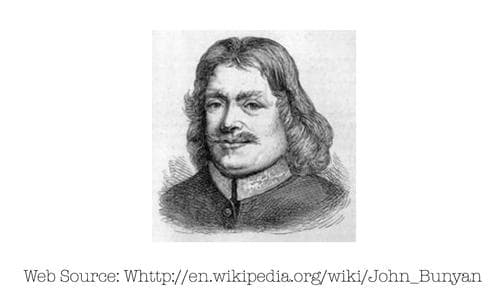
John Bunyan was an English writer and Puritan preacher best remembered as the author of the Christian allegory The Pilgrim's Progress, which also became an influential literary model. In addition to The Pilgrim's Progress, Bunyan wrote nearly sixty titles, many of them expanded sermons.







