“The only way to get rid of a temptation is to yield to it.”
— Lord Henry Wotton advises Dorian Gray on embracing desires.


Oscar Wilde (2015)
Genre
Fantasy / Philosophy
Reading Time
190 min
Key Themes
See below
Sign in to track this book
A beautiful young man's soul decays within a cursed portrait, mirroring the grotesque cost of his hedonistic pursuit of eternal youth and illicit pleasure.
Basil Hallward, a talented painter, is taken with the beauty of young Dorian Gray, whom he considers his muse. He paints a great portrait of Dorian. During a sitting, Lord Henry Wotton, Basil's witty and cynical friend, meets Dorian. Lord Henry, who believes in pleasure, immediately influences Dorian. He talks about how youth and beauty are temporary, telling Dorian to enjoy pleasure and live life fully before his beauty disappears. Dorian is deeply affected by Lord Henry's words, realizing his own beauty will not last.
Standing before Basil's finished painting, Dorian is struck by its beauty and the fact that the portrait will always be young while he will age. In despair and drawn to Lord Henry's ideas, Dorian makes a desperate wish: that the portrait would show age and sin, keeping him young and beautiful forever. He says he would give his soul for this. Unknown to him, this wish comes true, starting the supernatural events of his life. Basil is concerned by Dorian's intensity but thinks it is just youthful drama.
Dorian becomes fascinated with Sibyl Vane, a beautiful young actress in a London theatre. He is charmed by her talent and the pure love she shows in her Shakespeare roles. He proposes marriage, and she, in love, accepts. But when Dorian invites Lord Henry and Basil to see Sibyl perform, she acts terribly. She has lost her talent because her love for Dorian makes her see the stage as false. Disgusted, Dorian cruelly rejects her, saying she has 'killed his love.' When he gets home, he sees the first change in his portrait: a faint sneer on its lips, showing his cruelty.
The next morning, Lord Henry tells Dorian that Sibyl Vane has killed herself with poison after his rejection. At first, Dorian is upset and feels guilty. Lord Henry, however, quickly explains the event as a sad but romantic end to Sibyl's life. He encourages Dorian's pleasure-seeking ideas. Dorian looks at his portrait again and sees the sneer has deepened, and there is cruelty in the eyes. He now understands his wish came true. Instead of being horrified, he accepts the pact, deciding to hide the portrait and live a life of pleasure and sin, while his own looks remain perfect.
Dorian moves the portrait to a locked, unused schoolroom at the top of his house, covering it and keeping the key. This room becomes his secret place. For the next eighteen years, Dorian lives for pleasure and moral corruption. He tries different vices, goes to opium dens, has scandalous affairs, and corrupts young people. His reputation suffers, whispered about in society, but his outward appearance stays young and beautiful. This contrasts with the hidden portrait, which gets more grotesque with each sin, showing his soul's decay.
Before leaving for Paris, Basil Hallward visits Dorian one stormy night. He expresses deep worry about Dorian's ruined reputation and the bad rumors about his corrupting influence. Basil asks Dorian to deny these accusations and to pray for forgiveness. Dorian, in anger, decides to show the truth of his soul. He takes Basil to the locked room and uncovers the hideous portrait. It now looks like a monstrous old man, wrinkled, with a leering mouth and blood-stained hands. Basil is horrified, seeing his painting twisted into pure evil. He tells Dorian to repent. Instead, Dorian grabs a knife and stabs Basil to death, silencing the only person who knew how corrupt he was.
After Basil's murder, Dorian is calm. He remembers Alan Campbell, a brilliant young chemist he had befriended and then ruined. Dorian sends for Campbell, who at first refuses to help. Dorian then shows a letter, revealing a dark secret from Campbell's past, and blackmails him into getting rid of Basil's body. Under pressure, Campbell agrees to use his science to dissolve the body completely, leaving no trace. The task is gruesome for Campbell, but Dorian shows no emotion, only caring about keeping his secret.
Years later, Dorian is at his country estate, Selby Royal, with guests. While hunting, a beater dies in an accident. This reminds Dorian of Sibyl Vane. Unknown to Dorian, Sibyl's brother, James Vane, a sailor, has been looking for the man who caused his sister's death. He had sworn revenge years ago. James hears a woman in an opium den call Dorian 'Prince Charming' and mention his eternal youth. He realizes Dorian Gray is the man he seeks. He stalks Dorian, confronts him with a pistol, but Dorian's youthful looks make James doubt his identity, as he remembers his sister's lover as much younger. Dorian uses this to escape.
After escaping James Vane, Dorian is afraid, knowing James is still hunting him. He sees James's face at a window and is terrified. However, during a shooting party at Selby Royal, James Vane dies in an accident in a thicket. He was lurking in the bushes and mistaken for a rabbit by one of Dorian's guests. Dorian is relieved, thinking he is now safe. James Vane's death, though accidental, makes Dorian feel more detached from the results of his actions, making him believe he is safe.
Dorian tries to do one 'good' thing by deciding not to corrupt a young village girl, Hetty Merton. He tells himself this act of mercy might start to reverse his soul's corruption and thus, the portrait. He goes to the locked room, hoping to see a positive change. But the portrait is even more hideous, showing new hypocrisy and vanity. Realizing that even his 'good' intentions are flawed, and that the portrait will always show his monstrous soul, Dorian, in despair and rage, grabs the same knife he used to murder Basil Hallward and plunges it into the portrait, trying to destroy the evidence of his sins and free himself.
A scream comes from the locked room. Servants, hearing the noise, break down the door. They find the magnificent portrait of Dorian Gray restored to its original, youthful beauty, just as Basil Hallward had painted it. On the floor, next to the portrait, is the body of a dead man, old, withered, and hideous, with a knife in his heart. Only by his rings can the servants identify him as Dorian Gray. The portrait had absorbed all his sins. When it was destroyed, the curse broke, transferring all the age and corruption back to Dorian, causing his instant death in his true, hideous form.
The Protagonist
From innocent beauty to a depraved, soulless hedonist, ending in a grotesque physical transformation that matches his inner decay.
The Antagonist/Supporting
Remains largely unchanged, a consistent force of cynicism and intellectual corruption.
The Supporting
From adoring artist to moral conscience, ultimately becoming a victim of Dorian's depravity.
The Supporting
From talented, innocent artist to heartbroken victim, her death marks a turning point for Dorian.
The Supporting
Driven by revenge, he relentlessly pursues Dorian until his accidental death.
The Supporting
From a brilliant, ruined man to a blackmailed accomplice, ending in suicide.
The Mentioned/Supporting
Remains a static character, a representation of high society.
The Supporting
Remains a static character, representing pragmatic, lower-class concerns.
The main theme looks at the difference between outward appearance and inner morality. Dorian Gray's lasting youth and beauty contrast with his increasingly hideous portrait. The portrait shows his soul's decay from sin and cruelty. The novel asks if beauty can hide evil and suggests that true beauty must be internal. Dorian's physical perfection shows his moral decay because it lets him avoid the social results of his actions, leading to more corruption.
“''As it had revealed to him the loveliness of his own body, so it would reveal to him the horror of his own soul. And it would never alter.''”
The novel examines hedonism (the search for pleasure) and aestheticism (art for art's sake), mainly through Lord Henry Wotton's influence on Dorian. These ideas, while promoting beauty and sensory experience, lead to destructive self-indulgence and a lack of care for others when taken too far without moral limits. Dorian's life is a warning about seeking pleasure without limits. It shows that a life lived only for sensation results in spiritual emptiness, cruelty, and self-destruction. Wilde explores the dangers of separating art and beauty from ethical responsibility.
“''The only way to get rid of a temptation is to yield to it.''”
Wilde explores the connection between art and life. Basil Hallward believes art should show the artist's soul and morality. Lord Henry sees art as a way to experience life aesthetically, without moral judgment. The portrait itself is a strong symbol, blurring the lines between art and reality. It is a painting that becomes a living conscience, a canvas that absorbs Dorian's sinful life. The novel questions art's purpose, its power to influence, and its ability to show or hide truth. Dorian tries to live his life as a work of art, but this leads to his downfall.
“''The portrait was to bear the burden of his shame: that was all.''”
The theme of influence and corruption is central, mainly through Lord Henry's effect on Dorian. Lord Henry's words and cynical view of the world slowly corrupt Dorian's innocent nature, turning him into a monstrous pleasure-seeker. The novel also shows Dorian's own corrupting influence on others, like Alan Campbell and the young men he misleads. This theme suggests that ideas and actions have strong and often terrible effects on those around us. It shows the responsibility that comes with power and charm. The chain of corruption eventually leads back to Dorian's own destruction.
“''There was something terribly enthralling in the personality of the great lord, something terribly dangerous.''”
A magical painting that ages and decays in place of its subject.
The portrait is the central magical element and plot device in the novel. It literally takes on the physical manifestations of Dorian Gray's sins and the passage of time, preserving his youthful beauty while becoming increasingly grotesque. It serves as Dorian's conscience, a visual record of his moral decay, and a constant reminder of his pact. The portrait is not merely a symbol but an active participant in the plot, driving Dorian's actions (hiding it, checking it) and ultimately leading to his demise when he attempts to destroy it, thereby breaking the supernatural bond and transferring the accumulated corruption back to himself.
Witty, often contradictory, statements used to convey philosophical ideas.
Wilde's distinctive style is heavily reliant on epigrams and paradoxes, primarily delivered by Lord Henry Wotton. These concise, memorable, and often contradictory statements serve to challenge conventional morality, provoke thought, and reveal the characters' philosophies. They are not just stylistic flourishes but a key plot device, as Lord Henry's epigrams are what initially captivate and ultimately corrupt Dorian Gray, shaping his worldview. They create a sense of intellectual daring and moral ambiguity, reflecting the aesthetic movement's focus on wit and style over traditional ethics.
A pact with supernatural forces for personal gain, usually at the cost of one's soul.
Dorian Gray's wish for eternal youth and beauty, at the expense of his portrait bearing the marks of age and sin, is a classic Faustian bargain. This literary trope, derived from the legend of Faust, is a central plot device that drives the entire narrative. It establishes the supernatural premise and allows Wilde to explore the moral consequences of unchecked desire and the pursuit of pleasure without ethical boundaries. Dorian essentially sells his soul for superficial gain, and the novel meticulously details the escalating price of this bargain, culminating in his tragic end.
Objects used to represent fleeting beauty, decadence, and corruption.
Wilde frequently uses the symbolism of beautiful, exotic, and often ephemeral objects, particularly flowers and jewels, to reflect Dorian's aesthetic pursuits and his moral decay. The early descriptions of gardens and flowers emphasize beauty. Later, Dorian's obsession with collecting rare jewels and ecclesiastical vestments symbolizes his descent into decadent and superficial pleasures, his search for new sensations, and his detachment from genuine human connection. These objects, while beautiful, are ultimately inanimate and sterile, mirroring the emptiness of Dorian's soul and the artificiality of his life.
“The only way to get rid of a temptation is to yield to it.”
— Lord Henry Wotton advises Dorian Gray on embracing desires.
“I am too fond of reading books to care to write them.”
— Lord Henry expresses his preference for consumption over creation.
“Nowadays people know the price of everything and the value of nothing.”
— Lord Henry critiques modern society's materialism.
“The books that the world calls immoral are books that show the world its own shame.”
— Preface defending art's role in revealing truths.
“To define is to limit.”
— Lord Henry discusses the constraints of categorization.
“There is only one thing in the world worse than being talked about, and that is not being talked about.”
— Lord Henry on the importance of social reputation.
“Experience is merely the name men gave to their mistakes.”
— Lord Henry reflects on learning from errors.
“I can believe anything, provided that it is quite incredible.”
— Lord Henry expresses his skepticism and love for the fantastical.
“The soul is a terrible reality. It can be bought, and sold, and bartered away.”
— Dorian Gray contemplates the corruption of his soul.
“Laughter is not at all a bad beginning for a friendship, and it is far the best ending for one.”
— Lord Henry on the role of humor in relationships.
“Every portrait that is painted with feeling is a portrait of the artist, not of the sitter.”
— Basil Hallward discusses art as self-expression.
“The tragedy of old age is not that one is old, but that one is young.”
— Lord Henry muses on the paradox of aging.
“It is the spectator, and not life, that art really mirrors.”
— Preface statement on art's reflective nature.
“I don't want to be at the mercy of my emotions. I want to use them, to enjoy them, and to dominate them.”
— Dorian Gray expresses his desire for control over his feelings.
Ready to see how well you understood this book? Take our interactive quiz with 10 questions.
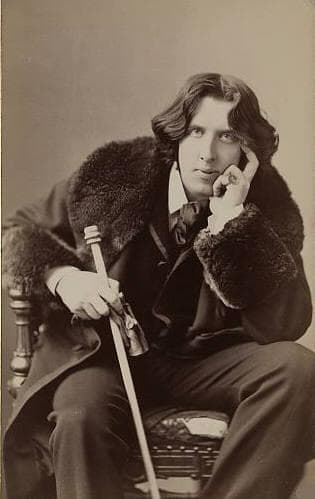
Oscar Fingal O'Fflahertie Wills Wilde was an Irish poet and playwright. After writing in different forms throughout the 1880s, he became one of the most popular playwrights in London in the early 1890s. He is best remembered for his epigrams and plays, his novel The Picture of Dorian Gray, and the circumstances of his criminal conviction for gross indecency for consensual homosexual acts in "one of the first celebrity trials", imprisonment, and early death from meningitis at the age of 46.







