BookBrief
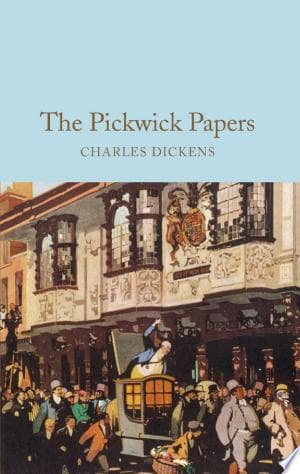
The Pickwick Papers cover
Archivist's Choice

The Pickwick Papers

Charles Dickens (2016)

Genre

Historical Fiction

Reading Time

2000-2500 min (approx. 33-42 hours)

Key Themes

See below

Track Your Reading

Sign in to track this book

Join the kind Samuel Pickwick and his club members on funny trips across 19th-century England, meeting many different people and seeing society's oddities.

Synopsis

The Pickwick Papers follows Samuel Pickwick, a rich, kind, and naive man, and his friends—Tracy Tupman, Augustus Snodgrass, and Nathaniel Winkle—as they travel across 19th-century England. They want to write down their adventures and observations for the new Pickwick Club. They meet many people, from the dishonest Alfred Jingle, who tricks them often, to the clever Sam Weller, who becomes Mr. Pickwick's loyal helper and friend. A main problem starts when Mr. Pickwick's landlady, Mrs. Bardell, sues him for promising to marry her. This misunderstanding is set up by her unfair lawyers, Dodson and Fogg. Mr. Pickwick refuses to pay damages because he believes he is innocent. He ends up in the Fleet Debtors' Prison, where he sees the harsh reality of the legal system and the suffering of those in it. His time in prison, along with Sam Weller's smart plans and the slow revealing of Jingle's past, leads to Mr. Pickwick's release. He then decides to fight injustice. The book ends with various smaller stories wrapping up, including the love lives of some Pickwickians. Mr. Pickwick decides to stop public life and close the Pickwick Club, but he leaves behind a legacy of kindness and honesty.
Reading time
2000-2500 min (approx. 33-42 hours)
Difficulty
Medium
Pacing
Variable
Mood
Humorous, Observational, Satirical, Heartwarming, Socially Conscious
✓ Read this if...
You enjoy classic British humor, episodic narratives, and a sprawling cast of memorable characters, all while exploring social commentary on law and class in Victorian England.
✗ Skip this if...
You prefer tightly plotted, fast-paced novels with a single, clear narrative arc, or find dated language and lengthy descriptions cumbersome.

Plot Summary

The Pickwick Club's Inauguration and First Expedition

The Pickwick Papers begins with the first meeting of the Pickwick Club. Its kind and naive founder, Samuel Pickwick, presents his 'Theory of Tittlebats.' Because of this scientific goal, Mr. Pickwick and his friends—the loving poet Mr. Snodgrass, the sports fan Mr. Winkle, and the always hungry Mr. Tupman—decide to travel across England. They plan to write down what they see about life and manners. Their first trip is to Rochester, where their inexperience and strange habits quickly lead to funny misunderstandings. They meet the quick-tempered Dr. Slammer and Lieutenant Tappleton, which almost leads to a duel. Mr. Pickwick also accidentally gets involved in an adventure at a ladies' boarding school.

Adventures in Dingley Dell and the Arrival of Sam Weller

After their troubles in Rochester, the Pickwickians visit Mr. Wardle's home at Dingley Dell, a pretty country estate. There, they play cricket, go shooting, and celebrate Christmas. They experience the warmth and oddities of country life. Mr. Pickwick, always watching, gets involved in the Wardle family's love stories, including Isabella Wardle running off with Mr. Alfred Jingle, a charming but dishonest trickster. While staying at the White Hart Inn in London and looking for Jingle, Mr. Pickwick meets Sam Weller, a clever boot-cleaner. Mr. Pickwick is impressed by Sam's smartness and common sense, so he hires him as his servant. This choice greatly affects the rest of his adventures, providing a much-needed steady influence and humor.

Jingle's Deceptions and Pickwick's Generosity

Mr. Jingle, a repeated troublemaker, keeps causing problems for the Pickwickians. After failing to run off with Isabella Wardle, Jingle tries to marry Wardle's sister, Rachael, for her money. Mr. Pickwick, with Sam Weller's help, steps in and reveals Jingle's true plans, saving Miss Wardle from a bad marriage. Despite Jingle's repeated dishonesty, Mr. Pickwick, being kind, cannot completely abandon him. Later, when Jingle becomes poor and is jailed for debt, Mr. Pickwick finds out and pays his debts. He arranges for Jingle and his servant, Job Trotter, to move to the West Indies, giving them a new start. This act shows Mr. Pickwick's great generosity and strong belief in second chances.

The Bardell vs. Pickwick Breach of Promise Case

One of the main stories is the famous lawsuit of Bardell vs. Pickwick. Mrs. Bardell, Mr. Pickwick's widowed landlady, misunderstands a simple talk about hiring a new servant (Sam Weller) as a marriage proposal. Her gossiping friends and the dishonest lawyers Dodson and Fogg encourage her to sue Mr. Pickwick for breaking a promise to marry. Mr. Pickwick says he is innocent, and the charge is clearly absurd, but the legal system, shown as corrupt, finds him guilty. The trial itself is a great example of legal tricks and funny misunderstandings, with the lawyers twisting every word and action to their benefit. This event changes things for Mr. Pickwick, forcing him to see the harsh realities outside his protected club.

Pickwick's Imprisonment in the Fleet

After the unfair verdict in the Bardell vs. Pickwick case, Mr. Pickwick firmly refuses to pay the damages given to Mrs. Bardell. He sees it as admitting guilt for something he did not do. He says he will go to the Fleet Prison for debtors rather than give in to what he sees as legal extortion. He keeps his word and is sent to the Fleet. His loyal servant, Sam Weller, purposely gets arrested for a small debt to stay with his master. Inside the Fleet, Mr. Pickwick sees the dirt, sadness, and strange social order of the imprisoned debtors. He gains a deeper understanding of human suffering and unfairness. His time in prison, though hard, makes him more determined and kind.

Adventures of Mr. Winkle and Arabella Allen

While Mr. Pickwick is dealing with his legal problems, Mr. Winkle, the shy and clumsy sportsman of the club, gets more and more involved with Arabella Allen, the charming sister of his friend Ben Allen. Their courtship is secret because Arabella's guardian, Mr. Dowler, disapproves. Eventually, Mr. Winkle and Arabella run off and marry in secret, which at first upsets their friends. Their secret marriage and the later efforts to get Arabella's family's approval, especially her brother's, make up a side story about love, social rules, and family problems. Sam Weller helps them a lot with their marriage and smooths over difficulties, showing how clever he is.

Mr. Pickwick's Release and Mrs. Bardell's Predicament

Mr. Pickwick still refuses to pay the damages, even in the Fleet. His resolve is finally rewarded when Mrs. Bardell, unable to pay her own legal fees to Dodson and Fogg, is herself imprisoned in the Fleet for debt. Seeing her suffering, Mr. Pickwick's kindness overcomes his stubbornness. He realizes that by continuing to resist, he is only making Mrs. Bardell suffer longer and making the dishonest lawyers richer. He arranges his own release by paying the damages and, importantly, also pays Mrs. Bardell's debts, getting her out of prison. This action shows Mr. Pickwick's deep sense of justice and his inability to watch others suffer, even those who have wronged him.

The Weller Family and Tony Weller's Courtship

A notable and funny side story involves Sam Weller's father, Tony Weller, a stout coachman with many thoughts. Tony wants to marry the rich widow Mrs. Susanna Clarke, who owns the Saracen's Head Inn, even though Sam warns him about her controlling nature and her devotion to the 'she-male' (a term for a male preacher). Tony's courtship, his problems with Mrs. Weller's religious passion, and his later efforts to become financially independent from her provide much of the book's humor and social commentary. Sam often gives his father advice, trying to keep him from bad decisions, but he respects his father's independent spirit. This story shows a bit of working-class life and the complexities of marriage and inheritance.

Exposing Dodson and Fogg

Throughout the story, the dishonest law firm of Dodson and Fogg are shown as bad guys, using innocent people and manipulating the legal system for their own gain. After his release from the Fleet, Mr. Pickwick, with Sam Weller and other friends, works to expose their corrupt ways. Mrs. Bardell's difficult situation, caught by her own lawyers, further strengthens Mr. Pickwick's will to see justice done. While they don't get a direct legal win against Dodson and Fogg in the usual way, their reputation is damaged, and the book criticizes their unethical behavior. This story powerfully critiques the legal system of the time and the moral decay it caused.

The Pickwickians' Matrimonial Fates

As the book nears its end, the love stories for the other Pickwickians are finished. Mr. Winkle is happily married to Arabella Allen, and after some initial resistance, her family accepts their marriage. Mr. Snodgrass, the poet, finds love with Emily Wardle, Mr. Wardle's younger daughter from Dingley Dell, and they also marry. Even the always single Mr. Tupman, despite his earlier romantic problems, seems happy as a bachelor, enjoying his friends' company. These endings bring a sense of closure and happiness for the club members, contrasting with the earlier legal and social problems they faced. Mr. Pickwick, though still a bachelor, finds happiness in his friends' joy.

Mr. Pickwick's Retirement and the Club's Dissolution

Having finished his observations and gone through many difficulties, Mr. Pickwick decides to stop active public life. He settles in a quiet house in Dulwich, with his loyal servant, Sam Weller, and Sam's wife, Mary. With Mr. Pickwick's retirement, the Pickwick Club, having done its job and seen its members go their own ways, is officially closed. The members still meet socially, but the formal structure and the spirit of their original trips end. This final act shows a change from the adventurous, observational part of their lives to a more settled and thoughtful existence. It highlights the growth and maturity of Mr. Pickwick and his friends.

The Enduring Legacy of Mr. Pickwick

In his retirement, Mr. Pickwick continues to live a quiet, kind life, surrounded by his friends and the now-married Sam and Mary Weller. He remains a loved figure, known for his generosity, kindness, and unchanging good nature. He often hosts his former club members and continues to offer advice and help to those in need. The book ends with a feeling of peace and happiness, showing the lasting power of friendship, kindness, and moral honesty. Mr. Pickwick's journey, from naive observer to a man deeply familiar with human flaws and suffering, ultimately confirms his place as a truly good and admirable character whose influence goes beyond the book's pages.

Principal Figures

Samuel Pickwick, Esq.

The Protagonist

Mr. Pickwick evolves from a naive, somewhat detached observer to a man deeply engaged with the world's injustices, gaining wisdom and a more profound understanding of human suffering through his experiences.

Sam Weller

The Supporting

Sam remains consistently loyal and shrewd, evolving primarily in his personal life through his marriage to Mary and his continued devotion to Mr. Pickwick.

Alfred Jingle

The Antagonist

Jingle begins as an unrepentant swindler but is ultimately redeemed by Mr. Pickwick's benevolence, offering a chance for a new life abroad.

Tony Weller

The Supporting

Tony navigates a challenging second marriage, eventually securing his financial independence and settling into a comfortable retirement.

Nathaniel Winkle

The Supporting

Winkle transforms from a bumbling, insecure bachelor to a happily married man, finding confidence through love.

Augustus Snodgrass

The Supporting

Snodgrass evolves from an aspiring, somewhat unfulfilled poet to a content, married man, finding his 'poetry' in love and domesticity.

Tracy Tupman

The Supporting

Tupman's romantic pursuits lead to repeated comical failures, eventually settling into a contented bachelorhood, finding happiness in friendship rather than romance.

Mrs. Martha Bardell

The Supporting

Mrs. Bardell transitions from an opportunistic plaintiff to a victim of the legal system, ultimately released by Mr. Pickwick's benevolence.

Dodson and Fogg

The Antagonist

They remain consistently corrupt and unrepentant, serving as a symbol of legal exploitation throughout the narrative.

Themes & Insights

Innocence and Experience

The novel shows Mr. Pickwick's journey from sheltered innocence to a deeper understanding of the world's problems and unfairness. At first, he watches people from a distant, academic view, often misunderstanding things because of his goodness and naiveté, as seen in the Bardell lawsuit. Through his travels, his meetings with dishonest people like Jingle, and especially his time in the Fleet Prison, Mr. Pickwick learns much about human suffering, poverty, and corrupt laws. This experience does not make him less good; it makes him more kind, turning him into a more effective helper, as when he helps Jingle and Mrs. Bardell.

''It is an amiable weakness, sir,' said Sam, 'to be a little soft in the upper storey; but it's a wery dangerous one, at the same time.'

Sam Weller

Friendship and Loyalty

The strong bond between Mr. Pickwick and his club members, especially his relationship with Sam Weller, is key to the novel. The Pickwickians, despite their unique traits and occasional arguments, remain loyal friends, supporting each other through various problems. Sam Weller's strong loyalty to Mr. Pickwick, even joining him in the Fleet Prison, shows this theme. Their friendship is a source of strength, comfort, and moral guidance, helping Mr. Pickwick deal with a difficult world. It suggests that real human connection helps overcome life's hardships.

'You're a real, thorough-bred, gen'l'man, as never was; and if I'd ha' been born a gen'l'man myself, I couldn't ha' done more for you, nor ha' been more proud on you, than I am now.'

Sam Weller

Justice and Injustice (Critique of the Legal System)

Dickens uses the famous Bardell vs. Pickwick lawsuit and Mr. Pickwick's imprisonment in the Fleet to sharply criticize the English legal system of his time. The lawyers Dodson and Fogg are shown as corrupt, using the law for their own benefit and taking advantage of both the person suing and the person being sued. The novel shows how justice is often denied to innocent and poor people, and how the system itself can cause great suffering. Mr. Pickwick's moral stand against paying damages, and his later action to free Mrs. Bardell, highlight the novel's call for a kinder and fairer legal system.

'The law is a ass—a idiot,' said Mr. Bumble. 'If that's the eye of the law, the law is a bachelor; and the worst I wish the law is, that it may be married to a wixen, and have a large family.'

Mr. Bumble (from Oliver Twist, but often associated with Dickens's legal critiques)

Social Class and Mobility

The novel explores the strict social classes of Victorian England, especially through how Mr. Pickwick's upper-middle-class world interacts with the working-class world of Sam and Tony Weller. Sam Weller, despite his humble beginnings, often shows more wit, common sense, and honesty than many of the 'gentlemen' Mr. Pickwick meets. His rise to a trusted position with Mr. Pickwick, and his eventual marriage to Mary, suggests that social movement is possible through merit and character, though within certain limits. The novel subtly questions the idea that upper classes are naturally better and champions the good qualities found in all social groups.

'It's the best thing a man can have, in these times,' said Sam, 'a wery good 'ead o' his own. If he hasn't got that, he'd better not go into the law, nor into any other profession, 'cept he's born to it, and then he's a natural.'

Sam Weller

The Nature of Goodness and Benevolence

Mr. Pickwick shows great goodness and an unchanging spirit of kindness, which sets the moral tone of the novel. Even though he is repeatedly tricked, misunderstood, and unfairly treated, he always chooses kindness and generosity. His decision to pay off Jingle's debts and Mrs. Bardell's debts, even after they have wronged him, shows his amazing ability to forgive and his belief in second chances. This theme suggests that true goodness is not about avoiding worldly experience, but about keeping one's moral honesty and kindness even when facing the worst of human nature, ultimately inspiring others.

'There are very few people,' said Mr. Pickwick, 'who are not made better by a little suffering.'

Samuel Pickwick

Plot Devices & Literary Techniques

Episodic Structure

A series of loosely connected adventures and anecdotes.

The Pickwick Papers is characterized by its episodic, picaresque structure, reflecting its origins as a series of monthly installments. Each chapter or sequence often presents a new location, a new set of characters, and a new adventure for the Pickwickians, with only loose overarching plotlines initially. This structure allows Dickens to introduce a vast array of eccentric characters, satirize various aspects of Victorian society (e.g., legal system, rural life, elections), and explore diverse settings without being constrained by a tightly knit narrative. While the Bardell lawsuit introduces a more focused plot, the episodic nature remains a defining feature, emphasizing the journey of observation.

The Journey/Grand Tour

Characters travel across England, observing life and manners.

The central premise of the Pickwick Club's expeditions, where its members travel across England to record 'observations of character and manners,' serves as a primary plot device. This literal journey allows Dickens to showcase a panoramic view of early Victorian England, introducing readers to diverse landscapes, social classes, and regional customs. The journey facilitates the encounters with various characters, both virtuous and villainous, and provides the framework for the Pickwickians' personal growth. It's a classic picaresque device that justifies the episodic nature and allows for broad social commentary.

Wellerisms

Humorous, often cynical, aphorisms delivered by Sam and Tony Weller.

Wellerisms are a distinctive linguistic device, primarily employed by Sam and Tony Weller. These are often proverbial sayings, typically beginning with a statement followed by an attributed, often absurd or ironic, comparison or anecdote (e.g., '“Vell,” said Sam, “as the Frenchman said, ven he'd got his foot in the trap, “I'm blest if I don't feel uncommon pleasant!”'). This device serves multiple functions: it provides comic relief, offers shrewd social commentary from a working-class perspective, reveals the characters' wit and wisdom, and adds a unique flavor to the dialogue. They are an integral part of the Wellers' characterization and a memorable stylistic hallmark of the novel.

Misunderstanding and Irony

Situations arising from misinterpretations, often leading to comic or dramatic effect.

Misunderstanding is a pervasive plot device throughout The Pickwick Papers, often driving the narrative and generating much of its humor and conflict. From Mr. Pickwick's initial misinterpretation of the duel in Rochester to the central misunderstanding that sparks the Bardell vs. Pickwick lawsuit, characters frequently misread intentions, words, and social cues. This device highlights Mr. Pickwick's naiveté and the inherent absurdity of certain social conventions. Irony, both situational and dramatic, also plays a key role, where the audience is often aware of a truth that the characters are not, or where events unfold contrary to expectation, adding depth to the comedy and critique.

Critical analysis

Notable Quotes

It is an amiable part of human nature, that when any of us are hurrying away from a place where we have been very happy, we are apt to feel a kind of reluctance at parting with the very walls that have witnessed our felicity.

Reflecting on leaving a pleasant place.

‘Poetry’ said Mr. Pickwick, ‘which frequently consists of a series of stanzas, generally four in number, and each comprising the same quantity of words, is a species of composition which has been cultivated by the human mind from a very early period.’

Mr. Pickwick's rather literal definition of poetry.

‘If you ever have a green-house, sir,’ said Sam, ‘that’s the place to look for me.’

Sam Weller's witty response about where he might be found if his master had a greenhouse.

‘Subdue your appetites, my dears, and you’ve conquered human nature.’

A rather simplistic piece of advice given by a character.

It is a pleasant thing to reflect upon, and furnishes a complete answer to those who contend for the superiority of intellect over virtue, that no amount of talent or learning can ever supply the want of an honest heart.

A moral reflection on the importance of virtue.

‘He’s a rum ‘un is the gen’l’m’n as writes the playbooks,’ said Sam, ‘but if I was him I wouldn’t write no more.’

Sam Weller's take on the playwrights of the day.

There are very few moments in a man’s existence when he is more thoroughly conscious that he is a living agent, than when he is in the act of falling—from a great height.

A humorous observation about the sensation of falling.

‘Wery good, sir,’ replied Sam, ‘then we’ll keep on a-callin’ till we gets an answer.’

Sam Weller's determination to get a response.

The whole population of Rochester seemed to be in the streets.

Describing the bustling atmosphere of a town.

A good-humoured, pleasant-faced, stout old gentleman, with a mild benevolence beaming from his spectacles.

Description of Mr. Pickwick.

‘It’s a great advantage to have a good memory, for it saves one from a world of trouble.’

A character's reflection on the benefits of a good memory.

He was a man who could write on any subject, at a moment’s notice, and, what was more, could write on any subject at a moment’s notice, without knowing anything about it.

Description of a particular type of writer.

‘Blessed is the man who, having nothing to say, abstains from giving us wordy evidence of the fact.’

A humorous observation about verbose people.

‘There is no deception in the world so great as that which we practice on ourselves.’

A profound thought about self-deception.

Quiz

Test Your Knowledge

Ready to see how well you understood this book? Take our interactive quiz with 10 questions.

10
Questions
~5
Minutes
?
Best Score

Key Questions (FAQ)

The novel follows the adventures of Samuel Pickwick, Esq., a wealthy, benevolent old gentleman, and the founder and perpetual president of the Pickwick Club. He, along with three fellow Pickwickians—Tracy Tupman, Augustus Snodgrass, and Nathaniel Winkle—travel through England by coach, observing life and recording their experiences for the club's 'Posthumous Papers.' Their journeys lead them into various humorous and often absurd situations.

About the author

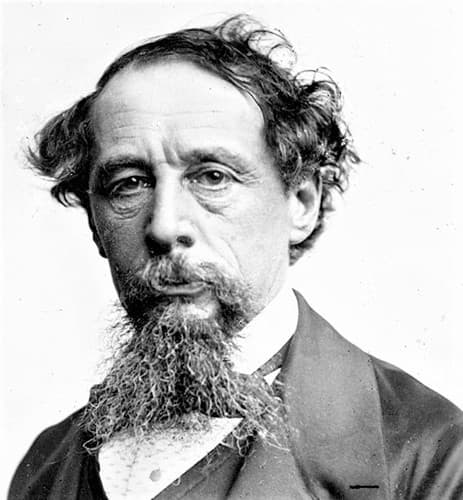
Charles Dickens

Charles John Huffam Dickens was an English writer and social critic who created some of the world's best-known fictional characters and is regarded by many as the greatest novelist of the Victorian era. His works enjoyed unprecedented popularity during his lifetime and, by the 20th century, critics and scholars had recognised him as a literary genius. His novels and short stories are widely read today.