“The piano is a part of me. It's how I speak.”
— Ada's internal monologue, highlighting the piano's role as her voice.

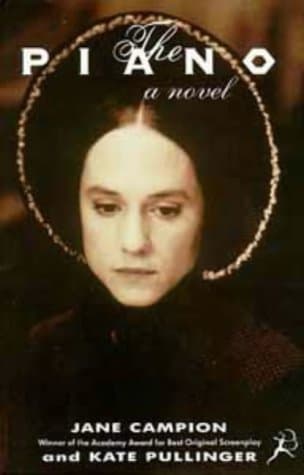
Jane Campion (2010)
Genre
Historical Fiction / Romance
Reading Time
240 min
Key Themes
See below
Sign in to track this book
In 19th-century New Zealand, a mute pianist's arranged marriage unravels into a passionate and dangerous awakening when her instrument becomes the key to forbidden desire and the secrets of her past.
Ada McGrath, a mute Scottish woman, and her young daughter Flora arrive on a remote beach in 19th-century New Zealand. They bring Ada's piano, a symbol of her inner world and her only way to express herself. Ada has been sent for an arranged marriage to Alistair Stewart, a rigid frontiersman who bought land from the Maori. Stewart's first meeting with Ada is awkward; he refuses to move the heavy piano from the beach to their isolated home, calling it an unnecessary burden. Ada, unable to speak, shows her distress through sign language, interpreted by Flora, a lively child. Stewart remains unmoved. The piano is left on the beach, causing Ada deep pain.
Stewart, more concerned with his land than his new wife's feelings, refuses to get Ada's piano. It stays on the beach, exposed to the weather, to Ada's despair. George Baines, a rough but sensitive Englishman who has adopted Maori culture, takes an interest in Ada and the piano. He offers to move the instrument to his cabin. Baines, curious about Ada's silence and her passion for music, proposes a deal: he will give Ada the piano back, not for money, but in exchange for 'lessons,' or specific 'favors' related to the piano. Ada, desperate to have her instrument, reluctantly agrees, though she does not fully understand what Baines's offer means.
Ada begins visiting Baines's cabin, with Flora, to 'earn back' her piano. Baines's 'lessons' quickly become intimate encounters. He asks Ada to play for him, and then for small, personal liberties: to touch her skin, to see her ankle, then her knee. Ada, at first repulsed, finds herself drawn into the strange power dynamic. Her desperate desire for her piano conflicts with her Victorian upbringing. Flora, watching these sessions, is a confused but loyal observer. The piano becomes both a tool of seduction and a way for Ada to express herself, with Baines captivated by her music and her silent intensity.
As Ada continues her visits to Baines, their encounters grow more intimate, moving from touches to more explicit sexual acts. Ada, initially a passive participant driven by her need for the piano, slowly starts to experience a sexual awakening and a connection with Baines that she has never felt with Stewart. Baines, for his part, falls in love with Ada, captivated by her spirit and her music. Stewart, meanwhile, grows suspicious of Ada's frequent absences and her bond with Baines. His possessive nature is stirred, fueled by both jealousy and a sense of insult to his authority. He begins to watch them, his coldness turning to rage.
One day, Flora, curious, follows Ada to Baines's cabin. She sees Ada and Baines engaged in an intimate act, a scene that deeply disturbs her. Overwhelmed by what she has seen, Flora runs back to Stewart and, in a moment of distress, reveals Ada's infidelity. This revelation shatters Stewart's composure. Flora's innocence is broken, and her loyalty to Ada is tested, creating a rift between mother and daughter. Stewart's reaction is swift and brutal, starting a chain of tragic events.
After Flora's revelation, Stewart is consumed by furious rage. He confronts Ada, demanding to know the truth. When Ada, still unable to speak, cannot deny his accusations, Stewart's anger explodes. In a fit of jealous fury, he seizes an axe and chops off one of Ada's fingers, the one with her wedding ring, as a brutal act of 'ownership' and punishment for her perceived betrayal. This horrific act is a stark symbol of his control. Ada is left mutilated and traumatized, her body bearing the physical scars of Stewart's cruelty.
After Stewart's brutal act, Baines finds Ada, gravely wounded and despairing. He is horrified by what Stewart has done and feels responsible for Ada's suffering. Baines tends to her injuries and offers her a chance at a new life with him, away from Stewart's cruelty. He understands her desire for the piano and her need for freedom. Ada, now deeply traumatized but also empowered by her experience, realizes she cannot remain with Stewart. She makes a choice, deciding to leave her arranged marriage and embrace a future with Baines, a future that promises genuine connection and respect, rather than her husband's oppressive control.
Ada, Baines, and Flora prepare to leave the settlement. Baines arranges for their passage on a boat. As the piano is being loaded onto the waka (Maori canoe), Ada, in a symbolic act of liberation, intentionally allows herself to fall overboard, tied to her piano. This is a moment of internal struggle, a choice between life and death, between her past and her future. Baines pulls her back to the surface, and she chooses life and her love for him and Flora. This near-death experience marks a turning point, a cleansing, as she sheds the burdens of her past and embraces a new existence.
Ada, Baines, and Flora settle in a new town, far from the wilderness and Stewart's influence. Baines, understanding Ada's deep connection to her music, has the piano repaired and even creates a new ivory finger for her, allowing her to play again. In this new environment, surrounded by Baines's love, Ada slowly begins to heal. The piano, once a source of both comfort and pain, now represents her freedom. Gradually, Ada starts to speak again, her voice returning in whispers, then words, as she finds her place in a world where she is truly seen and heard.
Flora, initially resentful and confused by her mother's choices, slowly reconciles with Ada, understanding her mother's suffering and her need for love and freedom. Their bond, once strained by Flora's unwitting betrayal, is re-established on a foundation of deeper understanding. Ada's journey to reclaim her voice is gradual but powerful. She practices speaking, her voice growing stronger with each word, showing her resilience and her newfound sense of self. The story ends with Ada playing her piano and speaking, living a life of independence and emotional fulfillment, finally free from the constraints that once silenced her.
The Protagonist
Ada transforms from a repressed, silent woman into an empowered individual who reclaims her voice and agency, both literally and figuratively, through a passionate and unconventional love.
The Supporting
Flora matures from an innocent, sometimes manipulative child into a more understanding and empathetic young girl who reconciles with her mother.
The Antagonist
Stewart's initial coldness escalates into possessive jealousy and ultimately violent, destructive rage, as he fails to control Ada.
The Supporting
Baines evolves from a man driven by sensual desire to a devoted and selfless lover who helps Ada find her freedom and voice.
The Mentioned
N/A (character is deceased, her story is revealed through flashbacks and narrative exposition).
The Supporting
N/A (collective group, not individual character arc).
Ada's muteness is central to the story, a self-imposed prison and a form of protest. Her piano is her true voice, a way to express her emotions and intellect. The struggle to regain her literal voice mirrors her journey to find her independence and express her true self. Stewart's inability to understand her silence highlights his emotional disconnect, while Baines's acceptance allows her to eventually speak again. This theme is powerfully shown when Ada intentionally falls overboard with her piano, choosing between silence and life.
“''It is a great mystery. Why she stopped speaking. Some say she was born dumb, but I don't believe it. She just chose not to speak.'”
The story explores Ada's repressed sexuality and her awakening through her relationship with Baines. Her arranged marriage to Stewart lacks passion, but the sensual agreement with Baines ignites a powerful desire within her. The piano itself becomes a metaphor for her body and her hidden desires, with Baines's 'lessons' linking music and intimacy. This theme challenges Victorian norms that suppressed female sexuality, presenting Ada's journey as a liberation from patriarchal control and a discovery of her own sensual power.
“'I have fallen in love with your mind, your spirit, your silence, and your music. And your body.'”
The remote New Zealand setting and the interactions between European settlers and the indigenous Maori population show the clash of cultures. Stewart represents the rigid, exploitative nature of colonialism, seeing land and people as possessions. Baines, by contrast, has adopted Maori culture, representing a more respectful approach. The harsh landscape itself acts as a character, reflecting the wildness that challenges and shapes the characters, especially Ada's struggle against Victorian society's confines.
“'The only thing I love more than a good cigar is a good piece of land.'”
The theme of possession is explored in many ways: Stewart's ownership of land, his arranged marriage to Ada (whom he sees as property), and his attempts to control her. Ada's piano also becomes an object of possession, first by Stewart's neglect, then by Baines's agreement. Ada's journey is a struggle for freedom—freedom of expression, freedom from an oppressive marriage, and ultimately, freedom to choose her own life and love. Stewart's brutal act of cutting off Ada's finger is the ultimate expression of his desire for ownership, while Ada's choice to abandon him shows her triumph in reclaiming her independence.
“'This is mine! You are mine!'”
A symbol of Ada's voice, identity, and inner world.
The piano is the most significant plot device, acting as an extension of Ada herself. It is her only means of communication and emotional expression, making its abandonment on the beach an act of profound cruelty. It becomes the currency of Baines's sensual bargain, linking Ada's music, body, and desire for freedom. Its eventual repair and Ada's ability to play it again symbolize her healing and the reclamation of her voice and self. The piano's journey mirrors Ada's own, from being abandoned and damaged to being restored and cherished.
A narrative device to heighten Ada's internal world and external struggles.
Ada's inability to speak (or choice not to) is a central device that shapes her character and interactions. It forces other characters to interpret her, often revealing more about themselves than about Ada. It heightens the visual and emotional impact of her piano playing and makes her eventual return to speech incredibly powerful. Her mutism also serves as a metaphor for the societal silencing of women, making her journey to reclaim her voice both literal and symbolic of feminist liberation.
A setting that reflects characters' internal states and challenges.
The wild, remote, and often unforgiving landscape of 19th-century New Zealand is more than just a backdrop; it functions as a plot device. The isolation intensifies the characters' conflicts and desires, forcing them to confront their true selves. The untamed nature mirrors Ada's own wild spirit and her struggle against the confines of Victorian society. The dense bush and treacherous beaches symbolize the emotional and physical challenges Ada faces, while also offering a sense of raw freedom that contrasts with the settlers' rigid social structures.
A filter through which Ada's thoughts are conveyed and often distorted.
Flora's role as Ada's interpreter is a crucial plot device. It provides a means for Ada to communicate with the outside world, but it also introduces a layer of subjectivity and occasional childish embellishment. Flora's interpretations are not always precise, sometimes reflecting her own desires or misunderstandings. This device highlights Ada's isolation and the difficulty of truly knowing her, while also making Flora an integral, albeit sometimes unwitting, participant in the unfolding drama, particularly when she reveals Ada's affair to Stewart.
“The piano is a part of me. It's how I speak.”
— Ada's internal monologue, highlighting the piano's role as her voice.
“I will not be bought, nor sold, nor bartered. I will not be owned.”
— Ada's defiant stance against her marriage and the men in her life.
“Love is a dark and terrible thing, and it will find you out.”
— Flora's observation about the nature of love, echoing the film's themes.
“It is my piano. It is mine.”
— Ada's possessive declaration about her piano after it is taken from her.
“The world is an ocean, and we are just little boats, trying to find our way home.”
— Flora's poetic reflection on life and their journey to New Zealand.
“I felt a great surge of anger, and then a great surge of desire.”
— Baines describing his conflicting emotions towards Ada.
“I have loved you since the first time I saw you.”
— Baines confessing his long-held feelings for Ada.
“Silence is the language of the wilderness.”
— A general observation about the New Zealand landscape and Ada's own silence.
“He wants to own her, but he can't.”
— Flora's understanding of Stewart's desire to control Ada.
“I am a shadow, always following the light.”
— Ada's internal reflection on her existence and search for meaning.
“The piano is my memory, my history, my future.”
— Ada's profound connection to the instrument as a vessel of her life.
“There are things you cannot explain with words.”
— A general theme of the film, particularly regarding Ada's muteness and expression through music.
“The sea is a cruel mistress.”
— A comment on the harshness of the ocean journey and the new land.
“I wished for a life that was mine, truly mine.”
— Ada's longing for autonomy and self-determination.
“He bought a wife, but he didn't buy her soul.”
— A commentary on the transactional nature of Ada's marriage and her enduring spirit.
Ready to see how well you understood this book? Take our interactive quiz with 10 questions.

Biography coming soon.







