“The only thing you can do easily is be wrong, and that's hardly worth the effort.”
— Milo reflects on the difficulty of making good decisions.

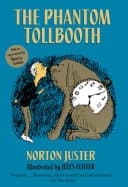
Norton Juster (1988)
Genre
Fantasy / Children's / Young Adult
Reading Time
268 min
Key Themes
See below
Sign in to track this book
A bored young boy named Milo discovers that life is anything but dull when a mysterious tollbooth transports him to a whimsical world of wordplay, puns, and personified concepts, forcing him on a quest to rescue Rhyme and Reason.
Milo, a young boy who finds everything in life dull and pointless, returns home from school to find a mysterious package in his room. Inside, he discovers a genuine turnpike tollbooth, a map, a book of rules, and a small car. With nothing better to do, Milo decides to set it up and drive through. He chooses a destination on the map at random, Dictionopolis, and, after paying the toll with a coin he finds, drives his small car through the tollbooth. The familiar surroundings of his room dissolve, and Milo finds himself on a dusty road in an unknown land, his adventure having begun.
Milo soon finds himself in the Doldrums, a place where thinking and doing are forbidden. He quickly succumbs to the lethargy of the inhabitants, the Lethargarians, until he is rescued by Tock, a watchdog with a literal clock for a body. Tock explains that the Doldrums are a place for those who waste time and encourages Milo to start thinking. Together, they travel to Dictionopolis, the kingdom of words, where Milo attends a Royal Banquet. Here, he meets King Azaz the Unabridged, the Wordmaker, and witnesses the lively, often chaotic, debates between the Duke of Definition, the Minister of Meaning, the Count of Connotation, the Earl of Etymology, and the Undersecretary of Understanding, all of whom are obsessed with words.
During the Royal Banquet, Milo learns about the kingdom's greatest problem: the banishment of Princesses Rhyme and Reason. They were exiled to the Castle in the Air by the warring brothers, King Azaz of Dictionopolis and the Mathemagician of Digitopolis, after the princesses declared that both words and numbers are equally important. Without them, the Lands Beyond have descended into confusion and discord. King Azaz, impressed by Milo's earnestness, tasks him with rescuing the princesses, providing him with a box of all the words he'll ever need. Tock insists on accompanying Milo, and so their dangerous quest officially begins.
Milo and Tock begin their journey, soon encountering the Spelling Bee, a giant bee who can spell any word, and the Humbug, a boastful, insincere insect who joins them on their quest. They travel through the Forest of Sight and Sound, where they meet the Soundkeeper, a woman who has hoarded all sounds, creating a world of silence. Milo helps her realize the importance of releasing sounds, and she allows him to choose a sound to take with him. This encounter shows the theme of appreciating what is often taken for granted and the consequences of hoarding resources, even abstract ones like sound.
The journey continues, leading Milo, Tock, and the Humbug to various peculiar places. They visit the Island of Conclusions, which one reaches by literally jumping to them, a metaphor for making hasty judgments. They also journey through the Mountains of Ignorance, a perilous region inhabited by menacing demons. Here, they encounter the Terrible Trivium, a demon who traps travelers by assigning them endless, pointless tasks, and the Senses Taker, who robs people of their ability to perceive. These encounters show the dangers of thoughtlessness, procrastination, and the insidious nature of ignorance, which drains vitality and purpose.
After navigating through the treacherous landscape, Milo, Tock, and the Humbug finally reach Digitopolis, the kingdom of numbers. Here, they meet the Mathemagician, King Azaz's brother, who is equally obsessed with numbers as Azaz is with words. The Mathemagician lives in a world where numbers are harvested and where concepts like 'infinity' are tangible places. He challenges Milo's understanding of mathematics, demonstrating how numbers can be manipulated and how different perspectives can lead to vastly different conclusions, such as when he shows Milo that a small fraction can be larger than a big whole.
The Mathemagician, still wary of words, initially refuses to help Milo rescue the princesses. However, after Milo demonstrates how words and numbers are interconnected, he reluctantly agrees, giving Milo a magic staff, a pencil that can write anything. Before leaving Digitopolis, they encounter the Dodecahedron, a creature with twelve faces, each expressing a different emotion. The Dodecahedron helps Milo understand that perspective changes everything and that there are always many ways to look at a problem, reinforcing the idea that both words and numbers, and thus logic and creativity, are essential.
Armed with new insights and tools, Milo, Tock, and the Humbug continue their ascent towards the Castle in the Air, which is located atop the treacherous Mountains of Ignorance. They encounter and outsmart several more formidable demons, including the Gelatinous Giant, who tries to make them blend in and be like everyone else, and the Demon of Insincerity, who speaks only in pleasantries while hiding malevolent intentions. Each demon represents a different intellectual or emotional trap, and Milo's growing confidence and understanding of the world allow him to overcome these challenges, often by simply thinking or questioning.
After a harrowing climb and numerous close calls with the demons, Milo, Tock, and the Humbug finally reach the Castle in the Air. They find Princesses Rhyme and Reason patiently waiting, having foreseen their arrival. The princesses, embodying grace and wisdom, express their gratitude to Milo for undertaking such a perilous journey. Their presence immediately brings a sense of calm and clarity to Milo, who has grown significantly throughout his adventure. The stage is set for their return, but the escape from the Castle in the Air, now surrounded by a horde of angry demons, remains a formidable challenge.
With Rhyme and Reason rescued, the group must escape the Castle in the Air, which is now being attacked by all the demons they had previously encountered. The princesses use their wisdom and logic to help Milo and his companions navigate the chaos. They make a daring escape by literally jumping off the castle and falling through the air, only to be caught by a giant bird who carries them back to Dictionopolis. Their return is met with immense joy and celebration. King Azaz and the Mathemagician reconcile, and the Lands Beyond begin to heal, restoring balance and understanding.
With peace restored, Milo bids farewell to his newfound friends, including King Azaz, the Mathemagician, Tock, and the Humbug. The princesses thank him profusely, explaining that his courage and open-mindedness were essential for their rescue. Milo, no longer bored, realizes the impact his journey has had on him. He drives his little car back through the tollbooth, returning to his bedroom. The tollbooth, having served its purpose, vanishes as mysteriously as it appeared. Milo, now seeing the world with fresh eyes, is filled with curiosity and excitement for life, understanding that there's always something interesting to discover.
The Protagonist
Milo transforms from an apathetic, bored child into an engaged, curious, and courageous boy who understands the value of learning and life's wonders.
The Supporting
Tock remains a consistent symbol of responsibility and the wise use of time, serving as a steadfast guide and companion throughout the adventure.
The Supporting
The Humbug remains largely unchanged in his boastfulness but proves his loyalty and even a touch of courage by staying with Milo throughout the quest.
The Supporting
Azaz learns to reconcile with his brother, the Mathemagician, accepting the equal importance of words and numbers.
The Supporting
The Mathemagician learns to reconcile with his brother, King Azaz, accepting the equal importance of numbers and words.
The Supporting
Rhyme is rescued from her banishment, symbolizing the restoration of balance and wisdom to the Lands Beyond.
The Supporting
Reason is rescued from her banishment, symbolizing the restoration of balance and wisdom to the Lands Beyond.
The Supporting
The Soundkeeper learns to release her hoard of sounds, restoring auditory life to her valley.
The Supporting
The Dodecahedron serves as a static character, a living lesson in perspective for Milo.
Milo's journey is about overcoming apathy and embracing the joys of learning. Initially bored with everything, he discovers that the world is full of wonders, words, numbers, and ideas if one only takes the time to explore them. His interactions with characters like the Spelling Bee, the Mathemagician, and the Soundkeeper show the value of knowledge, communication, and sensory experience. The book says that boredom is a choice, and curiosity is the antidote.
“"You must never feel badly about making mistakes... as long as you take the trouble to learn from them. For you often learn more by being wrong for the right reasons than you do by being right for the wrong reasons."”
The central conflict between King Azaz (words) and the Mathemagician (numbers) directly addresses the perceived difference between humanities and sciences. The banishment of Rhyme and Reason symbolizes the chaos that ensues when these two fundamental ways of understanding the world are separated or deemed unequal. Milo's quest is to bring them back together, showing that both logical reasoning (numbers) and creative expression (words) are essential for a balanced and meaningful existence. The book celebrates the power and beauty of both disciplines.
“"Words and numbers are only an artifice for saying what things are and how many there are."”
Milo's initial state of boredom and his encounter with the Lethargarians in the Doldrums are a metaphor for apathy and procrastination. The demons in the Mountains of Ignorance, such as the Terrible Trivium (who assigns pointless tasks) and the Senses Taker (who robs perception), embody the ways in which idleness and lack of engagement can drain one's vitality and purpose. Milo's growth throughout the story shows that active participation and a willingness to think are important for a fulfilling life.
“"You see, 'cause you get there by not thinking, and if you don't stop to think, you can get there very quickly."”
Throughout his journey, Milo is constantly challenged to think critically and consider different perspectives. Encounters like the Dodecahedron, who has twelve faces, or the Mathemagician's demonstration that a small fraction can be larger than a big whole, teach Milo that truth can be relative and that there are many ways to look at a situation. The book encourages readers to question assumptions, avoid hasty judgments (like jumping to Conclusions), and appreciate the complexity of ideas.
“"You'll find that things are not always as they seem in this place."”
The entire premise of the story, a tollbooth appearing in a child's bedroom that leads to a fantastical world, shows the power of imagination. The Lands Beyond are a whimsical, literal interpretation of abstract concepts, where words are eaten and numbers are harvested. Milo's ability to engage with this world, and ultimately to change it, comes from his willingness to open his mind and embrace the imaginative possibilities presented to him, demonstrating that imagination is a vital tool for understanding and enjoying life.
“"For you see, the only thing you can do easily is be wrong, and that's hardly worth the effort."”
The magical gateway to the Lands Beyond.
The mysterious tollbooth that appears in Milo's room serves as the primary portal device, transporting him from his mundane reality into the fantastical world of the Lands Beyond. It symbolizes the sudden, unexpected opportunities for adventure and learning that can arise, particularly when one is open to them. Its eventual disappearance after Milo's return suggests that its purpose was to awaken his inner curiosity and that the 'magic' now resides within him, allowing him to find wonder in his own world.
Giving human qualities to abstract concepts and objects.
The book extensively uses personification to make abstract concepts tangible and engaging. Words are literally eaten in Dictionopolis, and numbers are harvested in Digitopolis. Characters like Tock (a watchdog with a clock body), the Spelling Bee, and the Humbug are anthropomorphic animals or insects that embody specific traits or ideas. This device allows complex themes like the value of time, the power of language, and the dangers of ignorance to be explored in a whimsical and accessible manner for young readers.
The extensive use of literal interpretations of idioms and phrases.
Juster's narrative is saturated with clever puns, idioms, and figures of speech that are taken literally. Milo 'jumps to Conclusions' by literally leaping onto an island. He meets a 'watchdog' who has a clock in his side (Tock). This device is central to the humor and the thematic exploration of language. It highlights the nuances and potential pitfalls of communication, while also demonstrating the richness and imaginative power of words themselves, especially within Dictionopolis.
Characters and places representing abstract ideas.
The entire journey is an extended allegory for a child's intellectual and emotional development. The Doldrums represent apathy, the Mountains of Ignorance symbolize intellectual laziness, and the various demons embody different forms of intellectual and emotional traps (e.g., the Terrible Trivium as procrastination, the Senses Taker as disengagement). Princesses Rhyme and Reason are allegorical figures for wisdom, balance, and sound judgment. This allows the book to convey profound philosophical messages through a fantastical adventure.
Physical representations of abstract linguistic and mathematical concepts.
In Dictionopolis, words are sold, bought, and literally eaten at the Word Market, while in Digitopolis, numbers are mined and harvested. These imaginative settings serve as powerful metaphors for how we consume, create, and value language and mathematics. They make the abstract concepts of communication and calculation tangible, allowing Milo (and the reader) to understand their importance and the potential for both abundance and scarcity, depending on how they are managed and appreciated.
“The only thing you can do easily is be wrong, and that's hardly worth the effort.”
— Milo reflects on the difficulty of making good decisions.
“Expectations are like a giant rubber band. You can stretch them pretty far, but they always snap back.”
— The whether man explains the nature of expectations in Expectations.
“There's a lot of things you can do with words besides talk.”
— The Spelling Bee demonstrates how words can be used for various purposes, not just communication.
“You can learn a lot from a mistake, but it's much harder to learn from a success.”
— Humbug offers this insight on the value of errors.
“It's not enough to know what something means. You have to know what it doesn't mean.”
— A comment on the nuances of understanding and definition.
“Pointless things are always interesting. That's why they're pointless.”
— Milo's observation about the allure of the seemingly useless.
“You must never feel badly about making a mistake... as long as you take the trouble to learn from it.”
— The King of Dictionopolis reassures Milo after a mishap.
“The most important reason for going from one place to another is to see what's in between.”
— Tock, the watchdog, emphasizes the journey over the destination.
“Everything is there for a purpose, if only we can find it.”
— A hopeful outlook on the order and meaning of the world.
“You see, time is a gift, not a loan. You can't give it back.”
— Tock explains the irreversible nature of time.
“We're not just going to sit here and do nothing. We're going to think.”
— Milo decides on a plan of action when faced with a challenge.
“It's bad enough that you have to do something, but to have to choose which one is really awful.”
— Milo expresses the difficulty of making choices.
“There are more things in heaven and earth, Horatio, than are dreamt of in your philosophy.”
— A literary allusion used to suggest the vastness of the unknown.
“The Dodecahedron explained that if you can only make sense out of things by understanding how they work, then you'll never make sense out of anything.”
— A paradoxical statement on the nature of understanding.
Ready to see how well you understood this book? Take our interactive quiz with 10 questions.
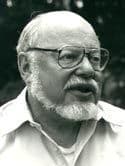
Norton Juster was an American academic, architect, and writer. He was best known as an author of children's books, notably for The Phantom Tollbooth and The Dot and the Line.







