“You must be very careful, my dear. The Opera ghost is not a myth.”
— Madame Giry warns Meg and Christine about the Opera Ghost.

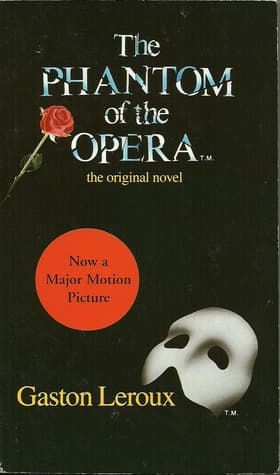
Gaston Leroux (2009)
Genre
Fantasy / Historical Fiction / Mystery / Romance
Reading Time
360 min
Key Themes
See below
Sign in to track this book
Beneath the gilded glamour of the Paris Opera House, a disfigured musical genius's obsessive love for a young soprano unravels into a terrifying ballet of abduction, murder, and heart-wrenching choices.
Monsieur Richard and Monsieur Moncharmin become managers of the Paris Opéra, replacing Monsieur Lefèvre. They immediately hear about the 'Opéra Ghost,' a mysterious being said to haunt the building and demand a private box (Box 5) and a salary. The managers first think these claims are jokes, but strange accidents and disappearances, including the stagehand Joseph Buquet found dead, increase staff superstitions. Carlotta, the lead singer, gets threatening letters, and the managers are pressured to meet the Ghost's demands to keep peace and stop more problems with performances.
Christine Daaé, a young, Swedish chorus girl with a beautiful but unrefined voice, has practiced with a mysterious 'Angel of Music' she believes is her late father's spirit. When the Opéra Ghost causes Carlotta to get sick during a performance, Christine gets to take the lead in 'Faust.' Her performance is a big success, charming the audience and critics with her new vocal skill. Raoul de Chagny, a viscount and childhood friend, is among those captivated. He recognizes Christine and falls deeply in love with her.
Raoul, charmed by Christine's performance, visits her dressing room to renew their childhood friendship and say how much he admires her. Christine is happy at first but becomes upset when Raoul mentions her 'Angel of Music.' She tells him not to speak of it and sends him away. Raoul then hears a male voice in her dressing room after she thinks he has left. Looking through the keyhole, Raoul sees no one but hears the mysterious voice talking to Christine, confirming his suspicion that her 'Angel' is a real, unseen person. This meeting leaves Raoul disturbed and suspicious.
After her successful performance, Christine is led by the 'Angel of Music,' who is Erik, the deformed genius haunting the Opéra. He takes her through secret passages and by boat across an underground lake to his elaborate home under the opera house. There, Erik shows his true, monstrous face to Christine, horrifying her. He tells her he loves her and wants her to be his wife, showing his musical talent and how much he controls the Opéra. Christine is trapped, a prisoner in his dark world, drawn by his music but disgusted by his appearance and possessiveness.
Erik, after days of keeping Christine captive and charming her with his music, lets her return to the surface world. He says she must never see Raoul again and remain loyal to him. Christine, shaken but free for now, struggles with her experience. She meets Raoul on the Opéra roof, telling him about the Phantom and his terrifying power. Erik, hidden and listening, is angered by their conversation and Christine's apparent betrayal. He promises revenge, increasing his threats against Christine, Raoul, and the entire Opéra company, demanding Christine's complete devotion.
During a large masquerade ball at the Opéra, Erik makes a frightening entrance, dressed as the Red Death. He publicly confronts Christine, calling her his bride and warning Raoul to stay away. This dramatic display increases fear of the Opéra Ghost among staff and guests. Raoul, seeing Erik's possessive actions and Christine's fear, becomes more determined to protect her, but also realizes the depth of Erik's obsession and their danger. The ball ends in chaos, with Erik disappearing as mysteriously as he arrived, leaving a strong feeling of dread.
The new managers, tired of the Ghost's demands and problems, decide to set a trap for him. They refuse to pay his salary and ignore his request for Box 5. During a performance where Carlotta is singing, the Ghost causes a series of frightening events: Carlotta makes a croaking sound during her song, the chandelier falls, and panic starts. The managers' attempts to catch him fail, as Erik seems to be everywhere and nowhere. These events only increase the fear and chaos in the Opéra, strengthening the belief in the Ghost's powers and his dangerous influence.
Christine and Raoul secretly plan to run away after her last performance as Marguerite in 'Faust.' However, during the performance, Erik takes Christine from her dressing room, and she disappears into a secret passage. Raoul, desperate, is approached by a mysterious man known only as 'the Persian' (Daroga), who says he knows Erik's secrets and the passages under the Opéra. The Persian, who has a past connection to Erik, agrees to guide Raoul through the dangerous, booby-trapped catacombs to rescue Christine from Erik before it is too late.
Guided by the Persian, Raoul goes into the dangerous underworld of the Opéra. They go through hidden passages, secret doors, and deadly traps, including a 'torture chamber' of mirrors and a 'scorpion and grasshopper' room, all designed by Erik to protect his home. The Persian, knowing Erik's talent for engineering and his cruel nature, warns Raoul at every turn. They barely escape several life-threatening situations, showing Erik's cleverness and his complete control over his underground domain, as they get closer to the Phantom's inner rooms and Christine.
Raoul and the Persian eventually get trapped in Erik's torture chamber. There, they see Erik give Christine an ultimatum: she must agree to marry him, or he will cause an explosion that will destroy the entire Opéra and kill everyone inside, including Raoul and the Persian. Christine, facing this terrible choice, and seeing Raoul's suffering, makes the sacrifice. She kisses Erik's forehead, showing pity and some affection, which deeply affects the Phantom.
Christine's kiss and act of kindness deeply affect Erik, who has never known true human kindness. Overwhelmed by this unexpected gentleness, Erik makes a selfless decision. He releases Christine and Raoul, letting them escape from his home and the coming explosion. He tells Christine that he will 'live no more than they.' The Persian later finds Erik's body in his home; he died of a broken heart. Erik leaves his ring for Christine, a symbol of his tragic love, and the Persian buries him in an unmarked grave, making his story a legend.
The Antagonist/Tragic Figure
Erik's arc is one of tragic isolation and a desperate, ultimately failed, attempt to find love, culminating in a moment of selfless sacrifice and death.
The Protagonist
Christine transforms from a naive, almost passive character into one who makes a courageous, compassionate choice under extreme duress.
The Supporting/Love Interest
Raoul evolves from a romantic suitor into a determined, albeit sometimes rash, hero willing to risk his life for Christine.
The Supporting
The Persian serves primarily as a plot device and wise guide, his character remaining consistent as a knowledgeable and brave ally.
The Supporting
Madame Giry remains a steadfast, if fearful, servant of the Phantom throughout the narrative.
The Supporting
Meg remains a supportive friend to Christine, serving as a sounding board and a source of information about the Opéra's goings-on.
The Supporting
Carlotta's arc is one of public humiliation and professional decline due to the Phantom's machinations.
The Supporting
They remain largely static characters, serving as foils to the Phantom's power and the growing terror within the Opéra.
The Mentioned
His death is a catalyst for fear and belief in the Opéra Ghost's malevolent power.
This theme is central to the novel, exploring how physical appearance affects how society accepts people and how people see themselves. Erik's horrific deformity has caused him to live hidden, making him a monster to the world, despite his great artistic talent. Christine, beautiful and pure, likes his musical talent but is repulsed by his face. The contrast shows society's superficiality and questions what truly makes something 'monstrous' – Erik's face or the cruelty of a world that rejects him. Christine's final act of pity, seeing past his ugliness, offers a moment of spiritual beauty that goes beyond physical looks.
“He was not a demon, but a man, and he was the most unhappy man in the whole world!”
The novel explores the destructive side of obsessive love through Erik's infatuation with Christine. His love is not gentle or unselfish, but possessive and violent, driven by a desperate need for acceptance and a fear of being left alone. He sees Christine as something to own and control, using manipulation, threats, and abduction to force her into his world. This differs from Raoul's more traditional, though sometimes naive, romantic love. Erik's actions show how love, when twisted by obsession and insecurity, can become a terrifying force that harms both the loved one and the lover.
“I am mad, I am a monster, and I am in love with you, Christine!”
Art, especially music, is both beautiful and a tool for manipulation in the novel. Erik is a music genius, composing operas and teaching Christine to sing with unmatched skill. His talent is clear, and through his music, he first connects with Christine, presenting himself as her 'Angel of Music.' However, this talent is twisted by his isolation and deformity, becoming a way to control and trap. The Opéra itself, a grand place of art, becomes a stage for his deceptions and a prison for Christine, showing how art can be both uplifting and corrupting.
“He was the Angel of Music! He had given her his soul, and she had given him her heart.”
The story constantly blurs the lines between the supernatural and reality, fueling the mystery and fear. The Opéra Ghost is first seen as a spirit haunting the building, leading to widespread superstition among staff. However, as the story continues, it becomes clear that the 'ghost' is a man, Erik, who uses his talent for engineering, ventriloquism, and illusion to create the appearance of the supernatural. This interplay keeps characters and readers guessing, showing how fear and human cleverness can create an almost supernatural terror, rooting the gothic elements in a chilling reality.
“The Opéra Ghost, of course, existed!”
Erik's character is defined by deep isolation and loneliness. His deformity has forced him to live hidden from the world, leading to deep emotional and psychological scars. He wants connection and love but cannot achieve it in a healthy way because of his appearance and his own twisted methods. His underground home beneath the Opéra is a physical sign of his isolation, a solitary kingdom built for his talent and his sadness. This theme explores the damaging effect of societal rejection and the desperate actions one might take to escape the pain of being completely alone.
“Poor, unhappy Erik! Shall we pity him? Shall we curse him? He asked only to be a man, but he was forced to be a monster.”
The Paris Opéra's labyrinthine structure and hidden passages serve as Erik's domain and a central stage for the drama.
The Paris Opéra is more than just a setting; it functions as a character itself. Its vast, intricate architecture, secret passages, subterranean lakes, and hidden rooms are integral to Erik's existence and his ability to manipulate events. The building's grandeur and mystery mirror the complex, hidden depths of Erik's character. Its labyrinthine nature allows Erik to move unseen, creating the illusion of a ghost and providing the perfect stage for his artistic genius and his terrifying traps. The Opéra is both a sanctuary for art and a prison for its inhabitants, especially Christine.
The story is presented as a journalistic investigation, blurring the lines between fact and fiction.
The novel is framed as a journalistic investigation by the author, Gaston Leroux, who claims to have uncovered the truth behind the Opéra Ghost legend. He presents 'evidence' such as police reports, testimonies, and Erik's own confessions (found in the Persian's notes), creating a sense of realism and mystery. This device allows Leroux to withhold information, build suspense, and play with the reader's perception of what is real and what is fantastical. It enhances the gothic atmosphere by making the extraordinary events seem plausible, drawing the reader deeper into the enigma of the Phantom.
A physical and symbolic representation of Erik's hidden identity and desire for normalcy.
Erik's mask is a crucial symbol and plot device. Physically, it conceals his horrific deformity, allowing him to interact (albeit limitedly) with the world above ground without causing widespread panic. Symbolically, it represents his hidden identity, his desire for normalcy, and the barrier between his true self and society. The moment Christine removes his mask is a pivotal point, revealing his monstrous face and sealing her fate. The mask is not just a disguise; it is a manifestation of his shame, his longing for acceptance, and the tragedy of his existence.
Music is used by Erik to enchant, control, and communicate with Christine.
Music is a powerful plot device, serving as Erik's primary tool for connection and control. He uses his unparalleled musical genius to teach Christine, drawing her into his world and making her believe he is her 'Angel of Music.' His compositions and his voice have a hypnotic effect on her, representing both his artistic brilliance and his insidious manipulation. The music acts as a siren's call, luring Christine into his dark domain and illustrating the profound, almost supernatural, power of art to influence human emotions and actions.
“You must be very careful, my dear. The Opera ghost is not a myth.”
— Madame Giry warns Meg and Christine about the Opera Ghost.
“He is a monster, and I am his prisoner!”
— Christine Daaé expresses her fear and perceived captivity by the Phantom.
“If I am the Phantom, it is because man's hatred has made me so.”
— The Phantom explains his transformation and bitterness to Christine.
“Poor, unhappy Erik! Shall we pity him? Shall we hate him? He was a monster, but he loved.”
— The narrator reflects on the Phantom's tragic nature at the end of the story.
“I am not a man, I am the Opera Ghost!”
— The Phantom's declaration of his unique and terrifying identity.
“His heart was full of a love that was never returned.”
— A description of the Phantom's unrequited love for Christine.
“The world is so small, and I am so big.”
— The Phantom expresses his feeling of being an outcast despite his grand abilities.
“There are times when I am so happy that I could almost die.”
— Christine Daaé expresses her joy, often in contrast to her fear.
“He was a living corpse.”
— A description of the Phantom's physical appearance and the horror it evokes.
“No one ever saw him weep. He was too proud.”
— A detail about the Phantom's stoicism and hidden pain.
“I tore off my mask so that I might feel a little more human.”
— The Phantom reveals his vulnerability and desire for acceptance.
“Love is a madness, and it is a madness that I embrace.”
— The Phantom's intense and obsessive view of his love for Christine.
“She was singing, but it was not her usual song. It was a song of tears.”
— Christine's emotional performance, influenced by the Phantom.
“He wore a mask, a black mask, and was dressed in evening clothes.”
— A description of the Phantom's iconic appearance.
Ready to see how well you understood this book? Take our interactive quiz with 10 questions.
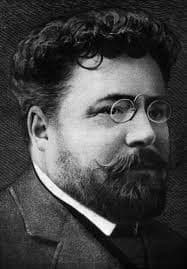
Biography coming soon.







