“The future is already here – it's just not evenly distributed.”
— A general observation on technological advancement and its spread, though often misattributed to Gibson himself, it aligns with his themes.

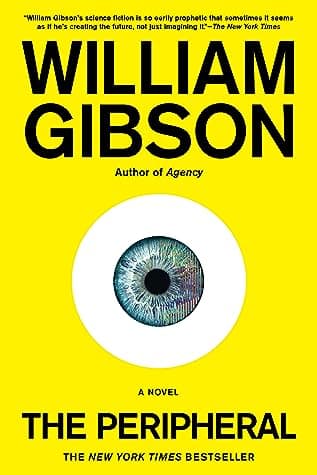
William Gibson (2014)
Genre
Thriller / Science Fiction
Reading Time
10-12 hours
Key Themes
See below
Sign in to track this book
In a future where past and present collide, a small-town gamer stumbles into a murder in a virtual London, unknowingly intertwining her fate with a publicist seventy years in the future, as both their realities unravel with dangerous consequences.
Flynne Fisher lives in a rural, near-future America, dealing with poverty and a sick mother. Her veteran brother, Burton, has neurological damage from his time in the Haptic Recon unit. Burton asks Flynne to cover his security shift in what he calls a new virtual reality game. The 'game' involves monitoring a party in a futuristic, deserted London. Flynne, using an avatar (a 'peripheral'), sees the murder of a young woman named Aelita West by a mysterious man. Disturbed, Flynne tells Burton, who realizes this was not a game but a real event in a different timeline. The 'game' was a portal to the future, and Flynne has become a witness to a real crime.
In a much later London, seventy years after Flynne's time, Wilf Netherton, a publicist, is contacted by Lev Zubov, a powerful Russian 'klept' (a wealthy individual from the future). Zubov's niece, Aelita West, has disappeared, and her last known activity was a 'data-raid' into the past – specifically, Flynne's timeline. Inspector Ainsley Lowbeer, a highly intelligent investigator from the Metropolitan Police, takes an interest in the case, suspecting foul play and a break of the rules for interacting with the past. Wilf is tasked by Zubov with retrieving Aelita's data from the 'stub' (Flynne's timeline), a task that quickly grows when Lowbeer's investigation reveals the murder Flynne witnessed.
Back in Flynne's timeline, her family and friends experience strange, increasing threats. Their dog is killed, and a drone tries to assassinate Flynne and Burton. This is done by antagonists from the future who want to hide Aelita's murder and eliminate the witness. Wilf and his allies in the future realize Flynne is in great danger because she witnessed the event. They send resources to protect Flynne's stub, including advanced weaponry and information, using the 'peripheral' technology to communicate and interact across timelines. Flynne and Burton, along with their community, realize they are caught in a conflict beyond their understanding, with their lives at risk.
To protect Flynne, the future sends a sophisticated, human-like peripheral to her. This peripheral, controlled by Wilf and his team, allows direct communication and physical interaction with Flynne's world. Flynne, Burton, and their local allies, including Conner, a fellow veteran, adapt to this new reality. The peripheral becomes a tool for defense against the future's assassins, who continue trying to eliminate Flynne. The arrival of this technology also subtly changes Flynne's world, as information and resources from the future flow into their economically struggling region, creating an unusual form of aid and dependence.
As the investigation into Aelita's murder continues, Wilf and Lowbeer learn more about her radical beliefs and her connection to a group trying to expose the truth about the 'Jackpot' – a series of ecological disasters, pandemics, and social collapses that reduced humanity between Flynne's time and Wilf's. Aelita believed that the wealthy elite of the future were involved in or caused the Jackpot and were hiding this information. Her 'data-raid' into Flynne's stub was an attempt to gather evidence and potentially influence the past, a dangerous and forbidden act with consequences for both timelines. Her murder resulted from her efforts to expose these secrets.
Conner, using a future-tech drone provided by Wilf's team, gets revenge on the corrupt local sheriff and his deputies who had harassed him and other veterans. This act, while satisfying, shows the dangers of introducing advanced technology into Flynne's less developed world. At the same time, a more sophisticated drone attack, from the forces in the future who murdered Aelita, targets Flynne's home directly. Flynne and her allies, including Burton and Conner, use all their resources, both local and future-supplied, to defend themselves in a tense and violent fight.
To help the investigation and understand the threat, Flynne's consciousness is transferred into a peripheral in Wilf's London. This allows her to experience the future firsthand, including its advanced technology, rich society, and the reality of the Jackpot's aftermath. She meets Wilf, Lowbeer, and other key figures. This direct interaction gives Flynne important information and allows her to contribute her unique perspective as a witness to Aelita's murder and someone from the 'stub' timeline. Her presence in the future further connects the two timelines.
Inspector Lowbeer, with Flynne's direct testimony and her investigative skills, uncovers the full details of Aelita West's murder. She identifies Hamdo, a subordinate of Lev Zubov, as the perpetrator, acting under the subtle manipulation of Dr. Nodal, a powerful and ruthless figure. Nodal, a member of the 'klept' elite, wanted to silence Aelita to prevent her from exposing the truth about the Jackpot and the future's manipulations of the past. Lowbeer's investigation reveals a complex web of lies and power struggles within the future's elite, with Flynne's stub caught in the middle.
Armed with evidence, Inspector Lowbeer confronts Dr. Nodal. Through cunning and intimidation, Lowbeer exposes Nodal's role in Aelita's murder and his attempts to manipulate the timelines for his own gain. Nodal, realizing he is trapped, tries to escape but is stopped by Lowbeer's forces. This confrontation brings justice for Aelita and neutralizes the main threat to Flynne's stub. The future's powerful figures acknowledge Lowbeer's authority and the consequences of their actions, especially regarding the ethical limits of interacting with the past.
With Nodal eliminated and the immediate threat resolved, Lowbeer and Zubov agree to protect Flynne's stub. They provide substantial, controlled resources to her timeline, isolating and nurturing it into a unique, prosperous future, safe from the full devastation of the Jackpot. Flynne returns to her original body, but the experience has changed her. Her community, now benefiting from future technology and knowledge, begins to thrive in unexpected ways. The future, through its interaction with Flynne's past, has created a new, divergent timeline, a 'stub' that offers a glimpse of an alternative, more hopeful path for humanity.
The Protagonist
Flynne transforms from a quiet, struggling young woman into a courageous and vital cross-temporal agent, gaining confidence and a broader understanding of existence.
The Supporting
Burton initially struggles with his past injuries but finds renewed purpose in protecting his family and community against future threats.
The Supporting
Wilf evolves from a somewhat detached, cynical publicist into a more morally engaged individual, committed to justice and the protection of an innocent past.
The Supporting
Lowbeer maintains her position as a powerful and effective force for order and justice, asserting her authority over the 'klepts'.
The Supporting
Zubov, initially concerned with reputation and control, ultimately cooperates with Lowbeer to secure his interests and the stability of the timelines.
The Mentioned
Her actions and subsequent murder catalyze the entire narrative, posthumously serving as a catalyst for change.
The Supporting
Conner finds a new purpose and agency in defending his friends and community, using advanced technology to overcome his physical limitations.
The Antagonist
Nodal rises as a shadowy manipulator but is ultimately exposed and defeated by Lowbeer, leading to his downfall.
The Supporting
Hamdo acts as the physical agent of Aelita's murder, becoming a key piece of evidence in Lowbeer's investigation.
The novel explores 'stubs' – parallel timelines created by opening a connection to the past. It investigates how actions in the future (Wilf's time) can influence the past (Flynne's time) without changing the future's own history. Aelita West's murder and the protection of Flynne's stub show the creation of a divergent, unique future for Flynne's world, separate from the 'Jackpot' that devastated Wilf's. This theme raises questions about fate, free will, and the ethics of temporal manipulation, as seen in Lowbeer's strict rules for non-interference.
““The past,” Wilf said, “is a foreign country. They do things differently there.””
Flynne's journey explores identity, especially through her use of peripherals. When she uses a peripheral in future London, her consciousness is projected into another body, challenging ideas of self and embodiment. She lives in a different time, a different social class, and even a different physical form. This extends to the idea of 'avatars' and how digital presence shapes perception and interaction. Her experiences make her redefine who she is, both in her own world and as a link between timelines.
““You’re a peripheral, Flynne. You’re a remote. Your consciousness is here, in this body, but your body is still back in your stub.””
The novel presents a contrast between Flynne's impoverished, struggling near-future American town and Wilf's opulent, post-Jackpot London. The future is controlled by 'klepts' – a wealthy, powerful elite who survived global catastrophes (the 'Jackpot') and now live in luxury, often at others' expense, including manipulating past timelines. The difference in resources, technology, and quality of life between the two timelines highlights social inequality, class struggle, and the long-term effects of environmental and societal collapse. Aelita's activism against the 'klepts' addresses this societal imbalance.
““The Jackpot,” Lowbeer said. “A century of cumulative catastrophe. Ecological collapse, resource depletion, famines, pandemics, system failures, and localized wars.””
Advanced technology, especially the 'peripherals' and the ability to connect to 'stubs', drives the plot and raises ethical questions. The future's ability to observe and subtly influence the past creates a moral problem: should they intervene, and how much? Aelita's murder and the targeting of Flynne show the dangers of unchecked power and the misuse of advanced technology. Lowbeer enforces ethical boundaries and prevents catastrophic temporal interference, showing the need for responsibility alongside innovation.
““It’s not time travel,” Lowbeer said. “It’s the creation of an alternate past. A stub. A branch off the main trunk.””
Memory and trauma are clear in Burton and Conner's experiences as veterans. Their neurological damage and PTSD from Haptic Recon shape their lives and actions. Flynne's sharp memory of Aelita's murder is important to the plot, serving as the main evidence. The novel explores how past events, both personal and global (like the Jackpot), leave lasting marks and influence present and future actions, showing the weight of history and personal experience.
““He’s got some kind of neurological damage from the Marines’ elite Haptic Recon unit. Makes him fast, makes him dangerous, makes him kind of crazy.””
Remote-controlled, human-like avatars used for interaction across timelines.
Peripherals are advanced robotic bodies, often indistinguishable from humans, that can be remotely controlled by a human consciousness. They are the primary means by which characters from future London interact with Flynne's 'stub' timeline, and vice-versa. Flynne uses a peripheral to witness Aelita's murder, and later, her consciousness is transferred into a peripheral in the future. This device allows for the physical bridging of temporal gaps, enabling the plot to unfold across two distinct eras and raising questions about embodiment, identity, and the nature of consciousness.
Alternate timelines created by opening communication with the past.
A 'stub' is a divergent timeline created when a connection (like the one established by the future with Flynne's time) is opened to the past. It's not true time travel that alters the future's own history; instead, it creates a new, branching reality. The future's actions and interventions in Flynne's stub allow it to develop into a unique, more prosperous timeline, untouched by the full devastation of the 'Jackpot'. This concept is central to the novel's exploration of causality and the ethical responsibilities of temporal interaction, as the future treats stubs like delicate experiments or protected preserves.
A series of global catastrophes that decimated humanity between Flynne's and Wilf's eras.
The 'Jackpot' refers to a century of ecological disasters, pandemics, resource depletion, and localized wars that drastically reduced the human population and reshaped the world between Flynne's near-future and Wilf's distant future. It serves as a crucial backstory, explaining the drastically altered society of the future, its reduced population, and the extreme wealth disparity. Aelita's investigation into the Jackpot's true causes and the 'klepts'' role in it is the primary catalyst for her murder, making it a pivotal historical event that drives the future's motivations and anxieties.
An elite military unit whose veterans suffer from neurological damage.
Haptic Recon is an elite military unit in Flynne's near-future, of which Burton and Conner are veterans. The unit's advanced neurological implants, designed to enhance combat performance, have left its members with chronic neurological damage and PTSD. This device explains Burton's condition, his combat prowess, and the strong bond among the veterans. It also provides a ready-made group of skilled, resourceful, and often overlooked individuals who become crucial allies in defending Flynne's stub against the future's threats, highlighting the human cost of advanced military technology.
The ultra-wealthy elite of future London who survived the Jackpot.
'Klepts' is a derogatory term for the powerful, extremely wealthy families and individuals who dominate future London society. They represent the ultimate survivors of the Jackpot, having consolidated power and resources. Their actions, motivations, and internal power struggles (like those involving Lev Zubov and Dr. Nodal) are central to the future's side of the plot. They are often amoral and self-serving, willing to manipulate timelines and people to protect their status, embodying the theme of extreme social stratification and the corrupting influence of unchecked power.
“The future is already here – it's just not evenly distributed.”
— A general observation on technological advancement and its spread, though often misattributed to Gibson himself, it aligns with his themes.
“The past, she thought, was like a Russian doll. You opened one, there was another inside. You opened that, there was another.”
— Flynne reflecting on history and the layers of events and their consequences.
“She was learning that the future wasn't something that happened, but something that was made, and that she was making it.”
— Flynne's growing understanding of her agency and impact on events across timelines.
“The things that made you happy were the things that broke your heart.”
— A poignant observation on the nature of joy and sorrow, often intertwined.
“It was like looking at a future that had already happened, and wondering what you could have done differently.”
— Flynne's experience interacting with the 'jacks' and seeing the consequences of past choices.
“The past was a place. The future was a place. And she was standing in the doorway between them.”
— Flynne's realization of her unique position bridging different timelines.
“You don't get to choose your friends. You get to choose your enemies.”
— A cynical but practical outlook on relationships and conflict, particularly relevant in the high-stakes world of the future.
“The future was a dark mirror, and she was seeing herself in it, reflected from a different angle.”
— Flynne's perception of the future and how it reveals aspects of her own self and potential.
“History was a story told by the winners, but the future was a story told by the survivors.”
— A commentary on the narrative power of different groups across time.
“She was starting to understand that the world was not just one thing, but many things, layered and folded.”
— Flynne's broadening perspective on the complex nature of reality due to her experiences with the 'jacks'.
“It wasn't that the future was worse, it was just… different. And sometimes different was worse enough.”
— A character's resignation or acceptance of the altered state of the future, despite its complexities.
“The past was a foreign country; they did things differently there. The future was a foreign country too, but it hadn't happened yet.”
— A play on a classic saying, highlighting the alien nature of both past and future from a present perspective.
“Memory, she was learning, wasn't just about what had happened, but about what might happen next.”
— Flynne's evolving understanding of memory as not just recall, but a tool for prediction and foresight.
Ready to see how well you understood this book? Take our interactive quiz with 10 questions.
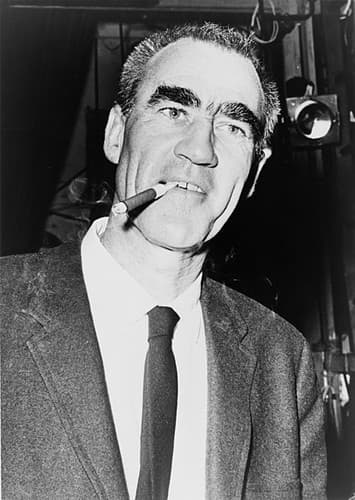
William Ford Gibson is an American-Canadian speculative fiction writer and essayist widely credited with pioneering the science fiction subgenre known as cyberpunk. Beginning his writing career in the late 1970s, his early works were noir, near-future stories that explored the effects of technology, cybernetics, and computer networks on humans—a "combination of lowlife and high tech"—and helped to create an iconography for the information age before the ubiquity of the Internet in the 1990s. Gibson coined the term "cyberspace" for "widespread, interconnected digital technology" in his short story "Burning Chrome" (1982), and later popularized the concept in his acclaimed debut novel Neuromancer (1984). These early works of Gibson's have been credited with "renovating" science fiction literature in the 1980s.







