“It was a place where stories, once told, became real, and where the boundaries between author and character, creator and creation, were constantly blurring.”
— Describing the unique nature of the fictional town of 'Oaxaca' within the book.

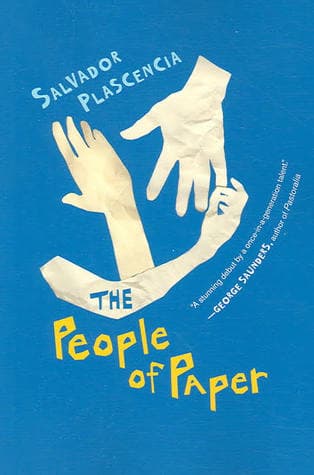
Salvador Plascencia (2005)
Genre
Literary Fiction / Fantasy
Reading Time
240 min
Key Themes
See below
Sign in to track this book
In a paper world, a grieving author tears characters from their stories, starting a war between fiction and reality, while a paper Jesus seeks redemption and renegade Santas plan a revolution.
The story begins with Saturn, a former boxer, living in a world where people are made of paper. Saturn falls in love with Merced de Papel. Their romance is passionate, but one day, Merced disappears. Saturn is heartbroken and searches for her. He soon learns that his life, including Merced's disappearance, is controlled by a reclusive author. This author, known as the 'Scissor-Man,' uses scissors to cut characters from his story for his own amusement.
We meet Federico de la Fe, a sad and religious man whose life changed after his wife died. In his grief, Federico finds comfort in a paper Virgin Mary. He becomes her guardian and carries the delicate paper icon with him. Federico believes the Virgin of the Paper has spiritual power and can offer protection and guidance in their fragile, paper world. His faith and the Virgin's influence become central to his life, drawing others to him and opposing the author's destructive actions.
To escape the Scissor-Man's edits and deletions, a group of marginalized characters bands together. This group includes the 'faceless' – characters whose features the author removed – and the 'erased' – those partially or fully cut from the story. They create a hidden city called Ampersand, a sanctuary built on resistance and self-determination. Ampersand becomes a symbol of hope and defiance, a place where characters can exist outside the author's direct control, trying to create their own destinies and protect themselves. This city represents a rebellion against the oppressive narrative.
Driven by love, Saturn's search for Merced grows. His journey is dangerous, with the author subtly — and sometimes openly — interfering. The Scissor-Man, watching Saturn's struggle, takes an interest in his suffering, often adding obstacles or changing the landscape. Saturn starts to understand the author's power, realizing that even his memories and perceptions can be manipulated. This realization fuels his desperation and his anger towards his unseen creator, pushing him to seek radical solutions to regain control and find his lost love.
Among Ampersand's inhabitants are the 'faceless,' characters whose facial features the author cut away. They wander with blank faces, struggling with loss and anonymity. Their goal is to regain their faces, and with them, their identities and ability to express themselves. They believe that by resisting the author's deletions, they can reclaim their personhood. Their struggle highlights the theme of identity and the importance of self-definition in a world where external forces threaten to diminish one's existence. They are a symbol of rebellion against narrative control.
Federico de la Fe continues his pilgrimage, carrying his paper Virgin Mary. His devotion and the Virgin's perceived miracles attract a following. People, desperate for hope and protection, are drawn to Federico and his icon, believing she can offer comfort from the author's unpredictable will. This growing following around the Virgin of the Paper does not go unnoticed by the Scissor-Man. The author, watching his creations, becomes intrigued by Federico's faith and the Virgin's influence, seeing it as a challenge to his authority.
As his characters, especially those in Ampersand, show more resistance and self-determination, the Scissor-Man becomes agitated. Their attempts to write their own stories and escape his control anger him. In response, he increases his destructive actions, making more drastic and cruel edits. He cuts out limbs, deletes memories, and adds chaotic elements to the story, all to reassert his power. These experiments are not just malicious; they also reflect his artistic frustrations and a desperate need to maintain control over his paper world, even if it means tearing it apart.
Through determination, Saturn breaks through the narrative barriers and finds the author's hidden sanctuary. This is a key moment, as a character directly confronts their creator, going beyond the limits of their fictional reality. Saturn's journey takes him to a place where the paper world and the author's 'real' world meet, a space where creation and destruction are clear. This discovery is both terrifying and empowering, offering Saturn a direct path to confront the source of his suffering and possibly reclaim what was taken from him.
The story builds to a confrontation between Saturn and the Scissor-Man. Saturn, driven by love and anger, challenges his creator. At the same time, Federico de la Fe and his followers arrive, bringing the Virgin of the Paper. In an act of defiance, the Virgin of the Paper makes a sacrifice, allowing herself to be cut or altered in a way that weakens the author's power. This act is a personal and symbolic sacrifice, reducing the author's control over the paper world and offering hope for freedom.
After the confrontation and the Virgin's sacrifice, the Scissor-Man's power is diminished. He can no longer arbitrarily cut and delete characters. While he still exists, his authority is challenged. The characters, especially those from Ampersand, use this chance to begin rewriting their own reality. They mend their torn pages, reclaim their erased features, and start to build a world where their destinies are their own. However, the scars of the author's actions remain, reminding them of their fragile existence and the ongoing struggle for self-determination. Merced's fate, while still unclear, is now potentially within Saturn's grasp to define.
The Protagonist
From a heartbroken and manipulated character, Saturn evolves into a determined challenger of his own creator, fighting for his love and his right to self-determination.
The Catalyst/Lost Love
Her 'erasure' by the author acts as the primary catalyst for Saturn's rebellion, and her potential return symbolizes the characters' reclaiming of their own narratives.
The Antagonist
Initially an omnipotent and unchallenged ruler of his narrative, his power is gradually diminished by his characters' defiance, forcing him to confront the limits of his authority.
The Supporting/Spiritual Leader
From a grieving widower, Federico becomes a spiritual leader whose faith and the Virgin's influence play a crucial role in challenging the author's control.
The Symbolic/Supporting
From a discovered artifact, she becomes a symbol of hope and ultimately makes a sacrifice that diminishes the author's power.
The Supporting/Collective
They evolve from anonymous victims to a unified force within Ampersand, actively seeking to reclaim their identities and resist the author's erasure.
The Supporting/Collective
They move from being victims of deletion to active participants in the collective resistance, fighting for their right to exist within the story.
This theme explores the power between creator and creation, with the Scissor-Man as the author who shapes and destroys his characters. The novel questions the ethics of such power, showing the suffering caused by arbitrary decisions. The characters' rebellion, especially Ampersand's creation and Saturn's confrontation, represents a fight for freedom against narrative control. It makes readers consider the responsibility of creation and the fragility of fictional worlds when controlled by a whimsical hand.
“He held the scissors, and with them, he held their very breath.”
A main theme is the characters' search to define themselves outside the author's rules. The 'faceless' characters, stripped of identity, embody this struggle, as do the 'erased' who fight for their existence. Ampersand's creation is a collective act of self-determination, a place where characters try to write their own stories. Saturn's pursuit of Merced is also a fight for his personal story, refusing the author's version of his fate. This theme highlights the human desire for individuality and freedom, even in a world where existence is dictated by an external force.
“To not have a face was to not have a story, to be a blank page waiting for someone else's cruel hand.”
Despite the harsh realities from the Scissor-Man, love and faith are strong forces of resistance and hope. Saturn's love for Merced drives his journey, giving him strength to challenge his creator. Federico de la Fe's faith in the Virgin of the Paper provides comfort and inspires a community, offering a spiritual alternative to the author's control. These themes suggest that emotional and spiritual connections can overcome physical manipulation and narrative erasure, providing meaning and purpose in a chaotic world. They are anchors in a world constantly being rewritten.
“Love was the only story they truly owned, the one the Scissor-Man could never fully cut away.”
The novel is metafictional, constantly drawing attention to its own construction as a story. The author as a character in the narrative, literally cutting and pasting, breaks down the illusion of fiction. It blurs the lines between author, reader, and character, inviting the audience to consider how storytelling works. The fragility of the paper world and its inhabitants is a metaphor for the precariousness of any narrative, subject to its creator's whims. This theme encourages a critical look at how stories are made and their power.
“He sharpened his scissors, ready to snip away another inconvenient subplot.”
The literal embodiment of the author as a character within the narrative.
This device is a highly metafictional element, making the author a direct, active participant and antagonist in the story. The Scissor-Man's physical actions—cutting, pasting, and editing—directly translate to events within the paper world. This blurs the line between the 'real' world of the author and the 'fictional' world of the characters, allowing for a direct exploration of authorship, narrative control, and the ethics of creation. He serves as a constant reminder of the constructed nature of the story, inviting readers to question the omnipotence of any author.
The literal material composition of the characters and their environment.
The concept of characters and their world being made of paper is a powerful metaphorical device. It immediately conveys fragility, vulnerability, and the ease with which they can be manipulated, torn, or erased. This physical reality directly supports the theme of authorship and control, as the Scissor-Man's tools (scissors, glue) have a literal impact. It also allows for unique visual and sensory descriptions, emphasizing the precariousness of existence and making the characters' struggles for survival and self-preservation more visceral and immediate. Their paper nature is both their greatest weakness and a symbol of their potential for transformation and re-writing.
A hidden city founded by marginalized characters as a sanctuary from the author's control.
Ampersand functions as a symbolic and literal plot device for rebellion and self-determination. It is a physical manifestation of the characters' collective desire for autonomy, a place where they can attempt to exist outside the direct influence of the Scissor-Man. Its very name, representing connection and addition, stands in opposition to the author's acts of cutting and deletion. The city provides a focal point for the resistance, a community that nurtures the 'faceless' and 'erased,' and a source of hope that challenges the author's absolute authority, demonstrating that collective action can create new narratives.
A miraculous paper icon that embodies faith and offers a counter-force to the author's power.
The Virgin of the Paper serves as a powerful symbol and a key plot device for introducing elements of faith and the miraculous into a world dictated by a cynical author. She represents an alternative source of power and meaning, one that is not controlled by the Scissor-Man. Her perceived miracles inspire hope and gather a following, directly challenging the author's monopoly on reality. Her ultimate sacrifice is a pivotal moment, as it directly impacts the author's power, suggesting that belief and spiritual devotion can have tangible effects even in a metafictional world, providing a spiritual counterpoint to the author's material manipulation.
“It was a place where stories, once told, became real, and where the boundaries between author and character, creator and creation, were constantly blurring.”
— Describing the unique nature of the fictional town of 'Oaxaca' within the book.
“To write was to kill, to give life was to take it away, for every character born required the sacrifice of the author's own breath.”
— A reflection on the act of creation and its inherent cost to the author.
“The tattoo was a map, not of a place, but of a life, each line a road taken, each shade a memory.”
— Referring to the intricate tattoos on the character Federico de la Fe.
“They were paper people, fragile and easily torn, yet capable of enduring more than flesh and blood.”
— A general observation about the characters and their unique existence.
“Love, he realized, was not a fixed point but a constantly shifting landscape, always requiring new maps.”
— One character's evolving understanding of love.
“The past, like a shadow, followed them, sometimes long and distorted, sometimes short and sharp, but always there.”
— Reflecting on the inescapable presence of history and past events.
“Every page turned was a step closer to an ending, and every ending was a new beginning, if one only knew where to look.”
— A meta-commentary on the structure of stories and life.
“He carried his loneliness like a heavy cloak, visible to all, yet understood by none.”
— Describing the character Federico de la Fe's internal state.
“The sun, in Oaxaca, did not merely shine; it burned, it bleached, it revealed every hidden crease and flaw.”
— Describing the intense atmosphere and revealing nature of the setting.
“To be forgotten, he thought, was a fate worse than death, for it erased not just a life, but the very possibility of having lived.”
— A character contemplating the fear of oblivion.
“The world was a book, and they were merely words, arranged and rearranged by an unseen hand.”
— A philosophical observation on the nature of reality and free will.
“Silence, in that place, was not an absence of sound but a presence, a heavy, listening thing.”
— Describing the profound and significant silence experienced in certain moments.
“The tears, when they came, were not of sorrow but of recognition, of seeing oneself reflected in the shattered pieces of another.”
— A moment of profound empathy and self-discovery.
“He knew then that true magic lay not in changing the world, but in changing how one saw it.”
— A character's realization about the nature of magic and perspective.
Ready to see how well you understood this book? Take our interactive quiz with 10 questions.







