“Now that I'm dead, I know everything.”
— Penelope's opening line, setting the tone for her narration from the afterlife.

Margaret Atwood (2005)
Genre
Literary Fiction / Fantasy / Historical Fiction
Reading Time
90 min
Key Themes
See below
Sign in to track this book
Margaret Atwood reclaims the ancient myth of Odysseus's return through the eyes of Penelope and her twelve hanged maids, revealing untold truths and injustices behind the epic.
Penelope, speaking from Hades, begins her story, reflecting on her life and the skewed perception of her faithfulness. She immediately states her desire to tell her 'true' story, contrasting it with the heroic epic by men like Homer. She introduces the chorus of her twelve hanged maids, who often interrupt her narrative with their laments, songs, and criticisms, reminding the audience and Penelope of their tragic fate. Their ghostly presence is a constant reminder of the injustice they suffered and the unresolved questions about their deaths. Penelope acknowledges their suffering but maintains her own version of events, hinting at the complexities and hidden motives that led to their demise.
Penelope describes her childhood, marked by an unsettling incident where her father, Icarius, threw her into the sea. She was rescued by ducks, which she later interprets as an omen of her resilience. Her mother, Periboea, is portrayed as largely ineffective. Penelope is considered a 'prize' in a race for her hand in marriage, which Odysseus wins through clever manipulation. Their marriage is presented as a strategic alliance, with Odysseus's reputation for cunning already established. Penelope feels a sense of duty and pragmatic affection for him, rather than passionate love, and she quickly learns to navigate his complex nature and the demands of their household.
The narrative shifts to the events leading up to the Trojan War. Helen, Penelope's beautiful and famously promiscuous cousin, is abducted by Paris, sparking the conflict. Odysseus tries to avoid joining the war by feigning madness, sowing salt in his fields. However, Palamedes exposes his deception by placing Telemachus, Odysseus and Penelope's infant son, in front of the plow. Forced to go, Odysseus entrusts Penelope with the management of Ithaca and the raising of Telemachus, warning her about the suitors who will inevitably appear. This departure begins Penelope's twenty-year ordeal.
With Odysseus gone, suitors begin to arrive, drawn by Penelope's status as a wealthy queen and the perceived power vacuum. They are portrayed as gluttonous, demanding, and disrespectful, consuming Ithaca's resources and harassing Penelope and her household. To fend them off, Penelope devises her famous weaving trick: she promises to choose a new husband once she finishes weaving a shroud for Laertes, Odysseus's father. Each night, however, she secretly unravels her day's work, prolonging the deception. This tactic shows her intelligence and resourcefulness in the face of overwhelming pressure, but also her increasing isolation and vulnerability.
Telemachus grows into a young man under the constant shadow of the suitors' presence. He becomes increasingly frustrated by their drain on his family's wealth and their disrespect towards his mother and the household. He sees Penelope's weaving trick as ineffective, and he chafes under her authority, feeling powerless to rid their home of the unwanted guests. Their relationship becomes strained, with Telemachus accusing Penelope of being weak, and Penelope viewing him as naive. This generational conflict shows Penelope's difficult position, caught between protecting her son and maintaining the household.
Throughout Penelope's narrative, the chorus of maids interjects with their own songs and commentary, offering a different perspective. They describe their miserable lives as servants, forced to cater to the suitors' whims and often subjected to their abuse. They reveal how some of them were coerced into sleeping with the suitors, either out of fear, for small favors, or simply because they had no choice. They express resentment towards Penelope, believing she did not adequately protect them and that she used them as pawns. Their voices highlight the class divide and the vulnerability of women with no power or status in ancient society.
After twenty years, Odysseus finally returns to Ithaca, disguised as a beggar, as foretold by the gods. He is recognized only by his old dog, Argos, and his loyal nurse, Eurycleia, who identifies him by a scar on his leg while washing his feet. Penelope, cautious and wary after years of deception, tests the disguised Odysseus with a series of questions, particularly about the details of his old bed, which only he would know. This scene, a moment in the original epic, is presented by Penelope as a calculated act of verification on her part, rather than a spontaneous recognition of her beloved husband.
Odysseus, with the help of Telemachus and a few loyal swineherds and cowherds, orchestrates the brutal slaughter of all the suitors. The palace becomes a scene of carnage as Odysseus, having revealed his true identity, wields his bow and arrows against the unsuspecting men. The maids' chorus observes this event with a mixture of fear and grim satisfaction, noting the sheer violence and swiftness of the retribution. Penelope remains largely upstairs during the initial massacre, only descending once the fighting is over, maintaining a degree of detachment that the maids find suspicious. The sheer scale of the violence shows the dramatic shift in power.
Immediately after the slaughter of the suitors, Odysseus commands Telemachus to hang the twelve maids who were seen consorting with the suitors. Telemachus carries out the order without hesitation, stringing them up like 'a row of thrushes.' The maids vehemently deny any true disloyalty, arguing they were forced or manipulated, and express their outrage at Penelope for not intervening. Penelope, in her narrative, offers a complex justification: she claims they were punished for fraternizing with the enemy, revealing secrets, and undermining her authority, but the maids insist their actions were a matter of survival, not treachery. This act is the central mystery Atwood explores.
Penelope tries to justify her role, or lack thereof, in the maids' deaths. She argues that allowing them to be 'seduced' by the suitors was a necessary evil to gather intelligence and maintain control over the unruly household. She also suggests that some of the maids were genuinely disloyal and deserved their fate. The maids, however, reject her excuses. They accuse her of being self-serving, indifferent to their plight, and ultimately complicit in their murder. They argue that their low social status made them expendable, and that Penelope failed in her duty to protect them. Their ghostly chorus serves as a perpetual reminder of her perceived betrayal.
Penelope recounts her life with Odysseus after his return. While outwardly they resume their roles as king and queen, the undercurrent of their twenty-year separation and the trauma of the suitors' reign lingers. Odysseus continues his travels and adventures, and Penelope maintains the household. She acknowledges the persistent rumors about her infidelity and the maids' supposed treachery, highlighting how women's reputations are easily tarnished. Eventually, both Penelope and Odysseus die – Odysseus in a later adventure, and Penelope of old age. Even in the afterlife, Penelope remains preoccupied with setting the record straight and grappling with the judgment of others.
In the final sections, the chorus of maids delivers their verdict. They continue to haunt Penelope in the Underworld, performing a 'trial' where they accuse her of hypocrisy, selfishness, and complicity in their deaths. They symbolize the voices of the oppressed and the forgotten, challenging the grand narratives of heroes and queens. They also extend their indictment to the patriarchal system itself, which allowed such injustices to occur. Their persistent presence and unceasing lament ensure that Penelope can never truly escape the consequences of her actions, or inactions, and the questions surrounding their tragic fate. Their story acts as a counter-narrative to the dominant epic.
The Protagonist
Penelope's arc involves her post-mortem re-evaluation of her life, moving from a defensive stance to a more nuanced, though still self-justifying, understanding of her role in the maids' tragedy and the patriarchal society she inhabited.
The Chorus/Supporting/Antagonists (to Penelope's narrative)
Their arc is one of posthumous agency, moving from silent victims to active accusers, ensuring their story and suffering are not forgotten.
The Supporting/Antagonist (in the maids' eyes)
Odysseus's arc is largely pre-determined by the original myth; he returns, reclaims his kingdom, and punishes his enemies, with Atwood focusing on the consequences of his actions rather than his internal development.
The Supporting
Telemachus's arc is from a frustrated boy to a complicit agent of patriarchal violence, solidifying his role as his father's heir.
The Supporting/Mentioned
Helen's arc is largely static, serving as a catalyst for events and a point of comparison for Penelope.
The Supporting
Eurycleia's arc is largely static, serving as a constant presence of loyalty and tradition.
The Mentioned/Antagonist
Antinous's arc is that of a tyrannical antagonist who meets a violent end.
The Mentioned
Icarius's arc is minimal, primarily serving as an origin point for Penelope's childhood trauma.
Atwood's novel explores how history is written and by whom. Penelope, speaking from the afterlife, explicitly challenges Homer's epic, asserting her right to tell her 'true' story. The chorus of maids complicates this further, offering a more marginalized perspective, revealing the biases in official histories. The contrasting narratives highlight that truth is subjective and often shaped by power dynamics. This theme appears in Penelope's constant refutation of her 'faithful wife' image and the maids' insistence on their innocence, directly contradicting the established myth.
“Now that all the others have run out of air, it's my turn to do a little story-making. It's time for a fresh approach. To us, citizens of the underworld, the story of Penelope and Odysseus is not a romance but a tragedy.”
The novel examines the patriarchal structures of ancient Greece and their impact on women. Penelope, despite her royal status, is constrained by male expectations, forced to navigate a world where her worth is tied to her beauty, fertility, and faithfulness. Her 'agency' is often expressed through cunning and manipulation, such as the weaving trick, rather than overt power. The maids represent the extreme end of this oppression, being entirely subject to male whims and ultimately executed without due process. The story exposes the double standards, the objectification of women, and the violence in a male-dominated society, highlighting how women are often blamed for circumstances beyond their control.
“The stories were made up by men, to account for the way things were. They were for men, to comfort men, to instruct men, to delight men, to give men a good name.”
The divide between Penelope and her maids is a central element, illustrating the rigid social hierarchy and the expendability of the lower classes. Penelope, while oppressed by patriarchy, also benefits from and participates in the system that subjugates her servants. The maids' chorus constantly reminds the reader of their precarious position, their lack of rights, and their forced complicity with the suitors. Their hanging is a brutal demonstration of how those at the bottom of the social ladder are sacrificed to maintain order and the reputation of those at the top. The novel critiques the idea that all women share the same experience under patriarchy, showing how class distinctions create different levels of vulnerability.
“We were dirty, we were cheap, we were expendable. We were the ones who got done in, by the ones who could afford to pay.”
The novel questions the nature of justice, particularly in the context of Odysseus's violent return. While the suitors' slaughter is presented as a heroic act of retribution in the original epic, Atwood's version forces a re-evaluation. The justice given to the maids is problematic, as their 'crimes' are ambiguous and their punishment disproportionate. The maids' continuous lament and their 'trial' of Penelope in the underworld suggest that true justice has not been served. The story challenges the idea of 'heroic' violence and prompts reflection on who defines justice and for whom.
“What was the point of all that heroism, if it was to end in such a sordid piece of butchery?”
Penelope's entire narrative is an act of memory and an attempt to reconcile with her past, particularly the hanging of the maids. Her defensiveness and constant re-framing of events suggest a deep-seated guilt or at least an awareness of moral ambiguity. The maids' relentless haunting of her in the afterlife serves as a perpetual reminder of her perceived complicity, preventing her from finding peace. This theme explores how past actions, especially those involving injustice, can continue to weigh on the conscience, even beyond death. It is a psychological exploration of the burden of memory and the search for absolution.
“The others have run out of air. It's my turn to do a little story-making.”
Penelope narrates her story from the Underworld after her death.
This device immediately establishes a unique perspective, allowing Penelope to reflect on her entire life with the benefit of hindsight and the freedom to challenge established narratives without fear of earthly repercussions. It empowers her to be a critical, self-aware, and sometimes defensive narrator, directly engaging with her own myth. This perspective also allows for the inclusion of the ghostly chorus of maids, as they all share the same afterlife plane, facilitating their interjections and counter-narratives without breaking the narrative's internal logic.
The twelve hanged maids act as a Greek chorus, offering commentary, songs, and counter-arguments.
The chorus serves multiple functions: it acts as a collective conscience, a source of dramatic irony, and a direct challenge to Penelope's subjectivity. Their songs and chants break up Penelope's prose, adding poetic and emotional weight. More critically, they represent the marginalized and silenced voices, providing a stark counter-narrative to Penelope's and Homer's versions of events. They ensure that the reader is constantly reminded of the injustice and tragedy that befell them, preventing Penelope from fully controlling the narrative and highlighting the class and gender dynamics at play.
The novel directly engages with and subverts Homer's 'The Odyssey.'
Atwood uses 'The Odyssey' as a foundational text, but intentionally re-interprets and challenges its events and characterizations. By giving voice to Penelope and the maids, she deconstructs the heroic narrative and exposes its patriarchal biases. This device invites readers familiar with the original myth to re-examine their understanding of the characters and plot, highlighting the constructed nature of myths and historical accounts. It's not merely a retelling, but an active critical engagement with the source material, questioning its 'truth' and offering alternative perspectives on well-known events like the weaving trick and the maids' hanging.
Modern language, concepts, and cultural references appear in the ancient setting.
Atwood sprinkles modern language, slang, and cultural references (e.g., 'chick flick,' legal proceedings, vaudeville acts) throughout the narrative. This device serves to bridge the gap between ancient and contemporary audiences, making the themes of patriarchy, justice, and narrative relevance accessible and relatable. It also creates a sense of playful irreverence, undermining the solemnity of the epic tradition and emphasizing the timelessness of the social issues explored. The anachronisms highlight that the problems faced by Penelope and the maids are not confined to the distant past but resonate in the present.
“Now that I'm dead, I know everything.”
— Penelope's opening line, setting the tone for her narration from the afterlife.
“The stories were always about the men, as if the men were the only ones who had any adventures. As if the women were just there to keep the beds warm, and do the laundry.”
— Penelope reflecting on the traditional telling of the Odysseus myth.
“We were the ones who were there, and we saw what happened. We were the ones who were hanged, and we know who did it.”
— The Maids speaking in their chorus, asserting their perspective on their own deaths.
“What was I, after all? Only a wife. Only a woman. Only a thing.”
— Penelope contemplating her perceived worth and status within her society.
“I was a good wife, I was a good mother, I was a good queen. I did my duty.”
— Penelope listing her virtues and her adherence to societal expectations.
“We told each other stories, and the stories became our lives.”
— Penelope describing how narratives shaped her and the women around her.
“The world is full of tricksters. Be careful of them.”
— Penelope's mother warning her about the deceitful nature of men, including Odysseus.
“We danced, we sang, we told our stories. We were the Maids. We were the ones who knew.”
— The Maids emphasizing their collective identity and their unique knowledge of events.
“He was a man of many twists and turns. He was a man of many words. He was a man of many women.”
— Penelope's characterization of Odysseus, highlighting his complexity and infidelity.
“There are two sides to every story, and I am the side that has been ignored.”
— Penelope asserting her right to tell her own version of the myth.
“We were dirt. We were trash. We were nothing. But we saw everything.”
— The Maids reflecting on their low social status despite their crucial role as observers.
“You can never trust a hero. They're always up to something.”
— Penelope's cynical view of heroic figures, born from her experiences.
“And so we dangle. And so we sway. And so we sing our song.”
— The Maids' chilling description of their fate, delivered in their characteristic chorus.
“The past is a story we tell ourselves. But the past is also a story that tells us.”
— Penelope musing on the reciprocal relationship between narrative and history.
Ready to see how well you understood this book? Take our interactive quiz with 10 questions.
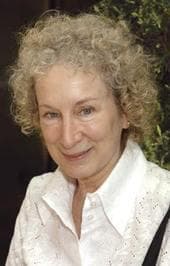
Margaret Eleanor Atwood is a Canadian poet, novelist, literary critic, essayist, teacher, environmental activist, and inventor. Since 1961, she has published eighteen books of poetry, eighteen novels, eleven books of non-fiction, nine collections of short fiction, eight children's books, two graphic novels, and a number of small press editions of both poetry and fiction. Atwood has won numerous awards and honors for her writing, including two Booker Prizes, the Arthur C. Clarke Award, the Governor General's Award, the Franz Kafka Prize, Princess of Asturias Awards, and the National Book Critics and PEN Center USA Lifetime Achievement Awards. A number of her works have been adapted for film and television.







