“The law is a business, not a profession.”
— Reflection on the legal system's commercialization.

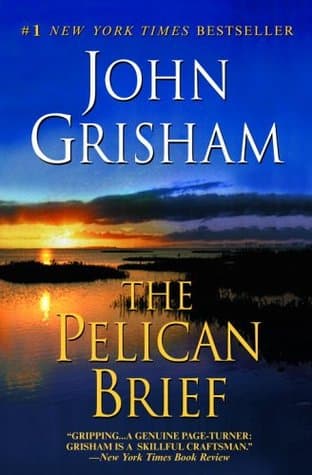
John Grisham (1992)
Genre
Thriller / Mystery
Reading Time
800 min
Key Themes
See below
Sign in to track this book
A brilliant but dangerous legal brief by a young law student unravels a conspiracy reaching the highest levels of power, forcing her into a desperate flight for survival with a tenacious journalist.
Justice Rosenberg, an elderly liberal, is found dead in his Georgetown home, apparently of natural causes. Hours later, the younger, conservative Justice Jensen is also found dead in a Washington D.C. porno theater, garroted. The deaths of two Supreme Court Justices, one liberal and one conservative, on the same night, immediately cause national alarm and a large FBI investigation. The President, facing re-election, worries about the implications and how the public will see the security of the nation's highest judicial figures. The FBI mobilizes, but with no clear motive or connection between the victims, the case remains a mystery.
Darby Shaw, a law student at Tulane University, is disturbed by the assassinations. Driven by curiosity and her relationship with her law professor, Thomas Callahan, she begins to research possible motives. After weeks of study, she writes a speculative legal brief, called the 'Pelican Brief,' outlining a theory for the murders. Her brief suggests the assassinations were not random, but planned by a powerful individual seeking to use a specific Supreme Court case about oil drilling in Louisiana wetlands, a case that would soon go before the court. She shares this brief with Callahan, who then gives it to his friend, Gavin Verheek, an FBI lawyer.
Soon after receiving the brief, Gavin Verheek is killed by a car bomb in Washington D.C. This death is initially thought to be random violence. Back in New Orleans, Darby Shaw and Thomas Callahan go out to dinner. As they leave, Callahan's car explodes, killing him instantly and injuring Darby. Realizing the brief must be the cause, Darby flees the scene in shock and terror. She understands that someone powerful wants her dead because of her theory. She goes into hiding, using her legal knowledge and quick thinking to avoid the authorities and the unknown killers pursuing her, cutting off all ties to her previous life.
Recognizing the danger and that she cannot trust the authorities, who she suspects are involved, Darby contacts Gray Grantham, an investigative reporter for The Washington Post. She remembers reading his articles and believes he is trustworthy and determined enough to find the truth. Using a burner phone and coded messages, she contacts Grantham, hinting at a major story about the Supreme Court assassinations. Grantham, initially skeptical, becomes interested by her warnings and the urgency in her voice, sensing a story bigger than he could imagine.
Grantham, prompted by Darby's calls, begins his own investigation, looking into the assassinations and Gavin Verheek's mysterious death. He interviews various sources, piecing together information. Eventually, Darby agrees to meet him, under very careful conditions. During their secret meeting, she gives him the 'Pelican Brief,' detailing her theory about Victor Mattiece, a wealthy oil magnate who stands to lose billions if the Supreme Court rules against his drilling interests in the Louisiana wetlands. Grantham is shocked by the brief's detailed and incriminating content, realizing the immense danger they are both in.
As Grantham checks the information in the 'Pelican Brief,' he and Darby discover that Mattiece hired Khamel, an international assassin, to kill Justices Rosenberg and Jensen. They also find evidence that the President's Chief of Staff, Fletcher Coal, and even the President, know about Mattiece's involvement and are actively covering it up to protect the President's re-election and avoid a national scandal. The FBI director, Denton Voyles, also knows about the cover-up and is being pressured by the White House to control the story and hide the truth.
Darby and Grantham realize that Khamel is the key to proving Mattiece's involvement. They use their combined resources to track the assassin's movements and identify his network. They discover that Khamel is a professional and elusive killer, making him very difficult to find. Their search leads them through various leads and dead ends, always aware that Khamel is also hunting them. The stakes rise as they get closer to finding the assassin, knowing that one wrong move could cost them their lives.
As Darby and Grantham get closer to the truth, the White House, especially Fletcher Coal, increases its efforts to discredit them and stop the story. They leak false information to the press, portray Darby as a mentally unstable fugitive, and pressure the FBI to shut down Grantham's investigation. The President, fearing political fallout, becomes more paranoid and desperate to control the story. Denton Voyles, the FBI Director, is caught between his duty and pressure from the Oval Office, making Darby and Grantham's efforts to expose the truth harder.
Darby and Grantham gather enough clear evidence, including proof of Mattiece's financial transactions and Khamel's involvement, to confirm the 'Pelican Brief.' Grantham prepares to publish the story in The Washington Post, knowing it will cause a political earthquake. Darby, still a wanted fugitive, remains in hiding, constantly changing her appearance and location. She understands that even after the story breaks, her life will be in danger until Mattiece and his network are dismantled. The tension builds as Grantham finishes his article, knowing the huge consequences of its release.
Grantham's article, detailing the entire conspiracy, is published, causing shockwaves through Washington D.C. and the nation. The President's approval ratings drop, Fletcher Coal resigns, and a special prosecutor is appointed to investigate. Victor Mattiece's empire begins to crumble under scrutiny, and Khamel is eventually located and killed by federal agents. While justice begins, Darby Shaw's personal safety remains a concern. With her identity compromised and her life still in danger, she is secretly helped to disappear, finding refuge in a tropical paradise, where she can finally live without fear. Her role in uncovering the truth changes her life forever.
The Protagonist
Darby evolves from an intellectually curious law student into a hunted, resourceful survivor, ultimately becoming the catalyst for exposing a vast government conspiracy.
The Supporting
Grantham's career-defining story transforms him from a respected reporter into a national figure who exposes high-level corruption.
The Antagonist
Mattiece's unchecked power and greed lead to his eventual downfall and the destruction of his empire.
The Antagonist
Khamel remains a relentless killing machine until his eventual capture and death, never deviating from his ruthless mission.
The Supporting
Callahan's character arc is tragically cut short, serving as a pivotal sacrifice that propels Darby into action.
The Antagonist
Coal's relentless pursuit of a cover-up ultimately leads to his public disgrace and resignation.
The Supporting
The President's complicity in the cover-up leads to a significant decline in his public standing and a damaged legacy.
The Supporting
Voyles navigates the treacherous political landscape, ultimately choosing to uphold justice despite intense pressure from the President.
The Mentioned
Verheek's brief appearance and swift demise serve as a critical plot device, igniting the main conflict.
The novel shows how power, especially political and corporate power, can corrupt individuals and institutions. Victor Mattiece's wealth lets him arrange the assassination of Supreme Court Justices to protect his financial empire. At the same time, the President and his Chief of Staff, Fletcher Coal, actively cover up to protect the President's re-election, showing how seeking political power can lead to moral compromises. The FBI, pressured by the White House, must also navigate these corrupting influences, showing how fragile justice is when faced with established power.
“"The White House knew. They had to know. And they had chosen to bury it, to protect the President."”
A central theme is the tension between seeking justice and the instinct for self-preservation. Darby Shaw, after seeing her mentor murdered and narrowly escaping death, must leave her normal life and go into hiding. Despite the danger and constant threat, she chooses to seek justice by exposing the truth, rather than just disappearing. Gray Grantham also risks his career and safety to publish the story. This theme explores the moral courage needed to fight for what is right, even when it means sacrificing personal safety and comfort.
“"She wanted to disappear, to vanish, but a stronger force pulled her toward justice, a dangerous, relentless current."”
The novel highlights the role of investigative journalism in holding power accountable. When Darby Shaw cannot trust official channels, she turns to Gray Grantham and The Washington Post. Through Grantham's investigation and the publication of his article, the truth about the assassinations and the government cover-up is revealed. This theme shows the press's role in a democracy, demonstrating how a free and determined press can expose corruption and ensure transparency, even under great pressure and danger.
“"The truth, once published, had a way of cutting through all the lies."”
Darby Shaw's journey explores identity and anonymity. After attempts on her life, she must shed her former identity, adopting disguises, new names, and constantly changing locations to evade her pursuers. This transformation shows the loss of self that comes with being a fugitive and the psychological cost of living in constant fear. Her struggle to remain anonymous while trying to expose the truth highlights the paradox of her situation: she must remain unseen to survive, yet she must reveal a dangerous truth to achieve justice.
“"Darby Shaw was dead. A new person, a shadow, had taken her place."”
Given that Darby is a law student and the plot involves a Supreme Court case, the novel explores the legal system's complexities and vulnerabilities. Mattiece uses the potential outcome of a Supreme Court ruling to justify murder, showing how the law, meant to ensure justice, can become a battleground for powerful interests. Darby's 'Pelican Brief' is a legal analysis, showing how a deep understanding of the law can uncover truths, but also how the system can be manipulated or violently bypassed by those who consider themselves above it.
“"The law, she knew, was a fragile thing, easily bent by money and power."”
A speculative legal document that serves as the central MacGuffin and catalyst for the plot.
The 'Pelican Brief' is a legal document compiled by Darby Shaw, outlining a highly speculative, yet ultimately accurate, theory for the Supreme Court assassinations. It serves as the central MacGuffin of the story, the object that everyone is either trying to find or suppress. Its existence triggers the entire chain of events: Callahan's death, Darby's flight, and the subsequent hunt for her. The brief is not merely a piece of paper; it embodies the dangerous truth that threatens to expose a vast conspiracy, driving the actions of both the protagonists and antagonists throughout the novel.
A mysterious and highly effective killer who represents the direct, ever-present threat.
Khamel, the professional assassin, functions as a personification of the direct and deadly threat looming over Darby Shaw. For much of the novel, he is an unseen, almost mythical figure whose presence is felt through the murders he commits and the constant fear he instills. This device heightens the suspense and sense of vulnerability for Darby, as she knows a highly skilled killer is relentlessly pursuing her. Khamel's anonymity and efficiency make him a terrifying force, symbolizing the ruthless power of Victor Mattiece and the conspiracy's willingness to eliminate any obstacle.
A powerful institutional antagonist that adds layers of political intrigue and systemic betrayal.
The White House, specifically the President and his Chief of Staff, Fletcher Coal, serves as a powerful institutional antagonist, providing a secondary layer of conflict beyond Mattiece and Khamel. This device introduces themes of political corruption, cover-ups, and the abuse of power at the highest levels of government. It complicates Darby and Grantham's efforts, as they cannot simply rely on official channels for justice. The White House's involvement elevates the stakes from a criminal conspiracy to a national scandal, making the exposure of the truth far more difficult and dangerous.
A recurring narrative technique that emphasizes the danger and secrecy of the protagonists' mission.
Throughout the novel, Darby Shaw and Gray Grantham rely heavily on clandestine meetings, burner phones, and coded messages to communicate and exchange information. This narrative device effectively conveys the constant danger they face and the necessity of secrecy. It builds suspense, as each meeting or phone call carries the risk of exposure and death. This technique also highlights Darby's resourcefulness and Grantham's journalistic cunning, as they navigate a world where trust is scarce and every interaction could be their last, reinforcing the high stakes of their investigation.
“The law is a business, not a profession.”
— Reflection on the legal system's commercialization.
“Justice is blind, but it can still smell money.”
— Commentary on how wealth influences legal outcomes.
“Fear is a great motivator, but it's a lousy companion.”
— Darby Shaw's realization while on the run.
“In Washington, the truth is whatever you can make people believe.”
— Observation about political manipulation.
“Sometimes the only way to stay alive is to disappear.”
— Darby's decision to go into hiding.
“Power doesn't corrupt; it reveals.”
— Insight into the nature of authority and character.
“The truth is like a diamond; it has many facets, and everyone sees a different one.”
— Discussion about the complexity of uncovering facts.
“In the end, it's not about who's right, but who's left.”
— Reflection on survival in a dangerous situation.
“A good lawyer knows the law; a great lawyer knows the judge.”
— Cynical view of legal practice.
“The most dangerous lies are the ones we tell ourselves.”
— Darby's introspection during her investigation.
“When you're chasing the truth, be careful not to become the prey.”
— Warning about the risks of investigation.
“In the shadows of power, the innocent are often the first to fall.”
— Observation about collateral damage in political schemes.
“Trust is a luxury you can't afford when your life is on the line.”
— Darby's cautious approach while evading threats.
“The system is designed to protect itself, not the people in it.”
— Critique of institutional self-preservation.
Ready to see how well you understood this book? Take our interactive quiz with 10 questions.

Biography coming soon.







