“Kino was a man young and strong and healthy and of a proud race, but the poverty of a thousand years was like a pall over him.”
— Introducing Kino and his family's humble circumstances.

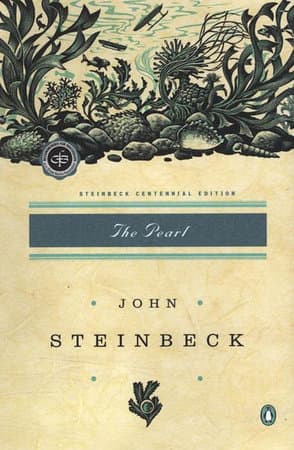
John Steinbeck (1947)
Genre
Historical Fiction
Reading Time
90 min
Key Themes
See below
Sign in to track this book
A poor diver's discovery of a perfect pearl destroys his simple life, bringing greed and violence that tests his family's love and will to survive.
The story begins with Kino, a poor pearl diver, and his wife, Juana, in their brush house in La Paz, Mexico, with their infant son, Coyotito. Their peaceful morning breaks when a scorpion stings Coyotito. Juana tries to suck the poison, and neighbors gather. Desperate, they take Coyotito to the doctor in the stone city, knowing the wealthy colonialist doctor rarely treats the poor. The doctor's servant meets them with disdain and refuses treatment, saying the doctor is too busy.
After the doctor's rejection, Juana insists on traditional remedies, applying a poultice to Coyotito's shoulder. Fear for their son's life remains. Kino, determined to find a way to pay the doctor or secure his family's future, takes his canoe to the oyster beds with Juana and Coyotito. Juana prays for a pearl large enough to pay for treatment. Diving into the murky waters, Kino finds a large oyster. Opening it, he discovers an immense, flawless pearl, 'as large as a sea gull's egg,' gleaming with an otherworldly light. He calls it the 'Pearl of the World'.
News of Kino's discovery spreads quickly through the village. Neighbors, previously indifferent, now gather at Kino's brush house, their eyes showing awe and envy. Kino and Juana begin to imagine their future changed by the pearl. Kino dreams of a proper church marriage, new clothes, a rifle, and an education for Coyotito, allowing him to escape their people's poverty and subjugation. The pearl, which first meant hope, now holds all their deepest desires for a better life and freedom from oppression.
The doctor who refused to treat Coyotito now arrives at Kino's brush house, feigning concern for the baby. He gives a mysterious white powder, claiming it will prevent further harm, then returns later to give an antidote. Kino, suspicious but desperate, allows the treatment. The doctor's true motive is clear: he wants to find the pearl. Later, an intruder tries to steal the pearl, causing Kino to hide it more securely and signaling the start of dangers his new wealth brings. The community's attitude shifts from admiration to veiled jealousy and suspicion.
Kino, with his brother Juan Tomás and other villagers, goes to the city to sell the pearl. The pearl buyers, a seemingly independent group, are a cartel, all working for one unseen master. Each buyer, after examining the pearl with feigned indifference, offers Kino a very low price, claiming it is too large, 'fool's gold,' or has a blemish. Kino, despite his lack of formal education, senses their deception and refuses to sell. He states he will go to the capital for a fair price, a decision that fills his community with both admiration and fear.
After the failed attempt to sell the pearl, tension in Kino's household rises. Juana, sensing the pearl's growing evil, urges Kino to throw it back into the sea, seeing it as a source of misfortune. Kino, however, remains fixed on the dreams it promises. That night, another intruder tries to steal the pearl from its hiding place under Kino's sleeping mat. Kino fights him off violently, drawing blood. The incident confirms Juana's belief that the pearl is cursed, bringing only danger and suffering to their family.
Driven by her growing fear, Juana secretly takes the pearl and tries to throw it into the ocean. Kino, awakening, pursues her, intercepts her on the beach, and violently beats her, leaving her bruised and humiliated. As he returns, more attackers ambush him. In the struggle, Kino kills one of the men. In the chaos, his canoe, his most valuable possession, is smashed, and his brush house is set on fire. They are now homeless, murderers, and outcasts, all because of the pearl.
With their home destroyed and Kino a murderer, they must flee. Juan Tomás helps them prepare, providing food and a knife. Under cover of darkness, Kino, Juana, and Coyotito escape into the rugged mountains, heading north. Kino believes they can outrun their pursuers. However, they soon discover they are being tracked by three men: two on foot and one on horseback, armed with a rifle. The family must move stealthily, hiding during the day and traveling at night, their hope lessening with each mile.
Kino and Juana find refuge in a cave high in the mountains. As night falls, Kino decides to confront the trackers. He leaves Juana and Coyotito hidden in the cave and stalks the three men, who have camped near a pool of water. Just as Kino makes his move, one of the trackers hears a sound and fires his rifle towards the cave. Kino attacks, killing all three men in a brutal struggle. However, when he returns to Juana, he finds her cradling Coyotito, who has been shot in the head, a casualty of the tracker's blind shot. The pearl has claimed their son.
With their son dead and dreams shattered, Kino and Juana, united in grief, return to La Paz. They walk side-by-side, bound by immense suffering, Juana carrying Coyotito's lifeless body, and Kino clutching the pearl. The villagers watch in stunned silence, recognizing the profound tragedy. Reaching the shore, Kino takes the 'Pearl of the World' and, with a powerful, deliberate motion, throws it back into the ocean, watching it sink into the depths, its malevolent beauty returned to the indifferent sea. The pearl's promise of hope has been utterly corrupted, leaving only desolation.
The Protagonist
Kino transforms from a simple, content family man into a desperate, violent figure driven by the pearl's corrupting influence, ultimately losing everything he held dear.
The Supporting
Juana remains steadfast in her intuition about the pearl's evil, enduring Kino's violence and the loss of their son with quiet strength, ultimately sharing his disillusionment.
The Supporting
Coyotito's role is primarily symbolic; his life is endangered early, driving the plot, and his death signifies the ultimate tragedy brought by the pearl.
The Supporting
Juan Tomás consistently offers cautionary wisdom and loyal support to Kino, remaining a steadfast anchor of their community and traditions.
The Antagonist
The Doctor's character remains static, serving as an embodiment of colonial greed and class prejudice, unchanged by the events.
The Antagonist
The Pearl Buyers serve as a collective antagonist, their static greed and deception driving Kino to reject the established system.
The Antagonist
The Trackers are a force of nature, representing the inescapable consequences of Kino's actions, and their role is to drive the tragic climax.
The Mentioned
Apolonia's character remains static, providing support and representing community ties.
A central theme of 'The Pearl' is how sudden wealth can corrupt human nature and destroy lives. Initially, Kino dreams of education for Coyotito, a church wedding, and a rifle — all seemingly good things. However, the pearl quickly changes him, making him paranoid, violent, and possessive. The pearl attracts envy, deceit, and murder from external forces like the doctor and pearl buyers, and internally, it breaks the peace within Kino's family. Juana's intuitive understanding that the pearl is evil, and Kino's descent into savagery, show how greed can strip away humanity, replacing love and community with isolation and violence, leading to Coyotito's death.
“And the pearl was ugly; it was gray, like a malignant growth. And Kino saw that the pearl was evil.”
The novel shows the systemic social and economic injustice faced by the indigenous people of La Paz by their colonial oppressors. The wealthy doctor's refusal to treat Coyotito due to Kino's poverty, contrasted with his sudden interest after the pearl's discovery, shows this. The pearl buyers, a cartel pretending to be independent merchants, conspire to cheat Kino, ensuring that the wealth from the poor divers stays with the colonial elite. Kino's desperate fight for a fair price and his eventual flight highlight the powerlessness of the oppressed against a deeply entrenched, exploitative system that denies them dignity and economic mobility. The story critiques the inequalities of a society built on racial and class divisions.
“In the town they knew about the pearl, and they knew how large it was. And they knew that Kino was a poor man. And they knew that he had not been to school. And they knew that he would be cheated.”
The theme explores how greed and violence shatter the natural harmony and innocence that first define Kino's life. The opening scenes show a simple, almost Edenic existence in tune with nature. Coyotito, as an infant, embodies this innocence, and his scorpion sting is the first break. The pearl, a natural object, becomes 'ugly' and 'malignant' through human desire. The violence Kino inflicts on Juana, the destruction of his canoe (his connection to the sea), and the burning of his brush house (his connection to the land) symbolize the destruction of his simple, natural life. Coyotito's death, an innocent life extinguished by the violence brought by the pearl, means the complete loss of hope and the irreversible corruption of their world, leaving desolation both physically and spiritually.
“He looked at his pearl, and in it he saw the hazy little imps that were the trackers, and he saw Coyotito lying dead in the cave.”
The story considers whether Kino's destiny is predetermined by his circumstances or shaped by his choices. The scorpion sting and the discovery of the pearl feel like acts of fate, starting a chain of events. However, Kino's decisions — to keep the pearl, to reject the buyers' offers, to fight his attackers, and to flee — are acts of free will that drive the tragedy forward. Juana, with her premonitions, often represents a fatalistic view, sensing the pearl's evil regardless of Kino's intentions. Yet, Kino's stubborn defiance against the system, while ultimately disastrous, also suggests a struggle against a predetermined life of poverty. The ending, where the pearl returns to the sea, can be seen as an act of free will, a conscious rejection of the destructive path, or a final acceptance of a tragic, unavoidable fate.
“It is not good to want a thing too much. It sometimes happens that you get it, and then you are sorry.”
The pearl symbolizes both hope and the corrupting nature of wealth.
The pearl is the central symbol of the novella, embodying a complex duality. Initially, it symbolizes hope, a chance for Kino to escape poverty, educate his son, and secure a better future for his family. It represents dreams and possibilities. However, as the narrative progresses, its symbolism shifts dramatically, becoming a potent symbol of greed, evil, and destruction. It attracts envy, violence, and ultimately leads to the demise of Kino's innocence, his family's peace, and finally, his son's life. The pearl's 'malignant' glow reflects the corruption it brings, transforming from a natural wonder into a source of human suffering and despair.
Hints and clues throughout the story that predict future tragic events.
Steinbeck masterfully uses foreshadowing to build tension and suggest the inevitable tragic outcome. Juana's early premonitions that the pearl is evil and should be thrown back into the sea are direct warnings. The 'song of evil' that begins to accompany the 'song of the family' in Kino's mind, and the initial violence he experiences, all hint at the escalating dangers. The doctor's sudden interest, the pearl buyers' conspiracy, and the repeated attempts to steal the pearl all serve as escalating warnings that the pearl's promise is leading to ruin, preparing the reader for the eventual devastation of Kino's family and dreams.
Auditory motifs representing Kino's emotional state and the forces at play.
Kino experiences his world through 'songs' that play in his mind, a key literary device reflecting his internal state and the spiritual dimension of the narrative. The 'Song of the Family' represents peace, security, and love. After the pearl's discovery, this song is often intertwined with, and eventually overshadowed by, the 'Song of Evil' or the 'Song of the Enemy,' which signifies danger, greed, and malevolence. These auditory motifs externalize Kino's growing paranoia, his internal struggle, and the insidious influence of the pearl, allowing the reader to understand his emotional and psychological journey without explicit narration of his thoughts.
The use of animal comparisons to describe characters' primal instincts and the natural world.
Steinbeck frequently employs animal imagery to emphasize the primal, instinctual nature of his characters, particularly Kino, and to highlight the raw, untamed aspects of their struggle. Kino is often described with animalistic terms, such as 'crouching like a tiger' or 'his teeth were bared.' This imagery underscores his transformation from a simple man into a desperate, feral figure fighting for survival and his family. The scorpion that stings Coyotito is an immediate symbol of arbitrary evil in the natural world. This device connects the characters to the natural world, but also emphasizes the regression to primal instincts when faced with extreme pressure and the corrupting influence of greed.
“Kino was a man young and strong and healthy and of a proud race, but the poverty of a thousand years was like a pall over him.”
— Introducing Kino and his family's humble circumstances.
“And the music of the pearl was in the house, a little song of what might be, a little song of triumph.”
— After Kino finds the great pearl.
“This pearl is like a sin! It will destroy us, I tell you. It is the pearl of the devil.”
— Juana's growing fear and premonition about the pearl's influence.
“And the music of the pearl was no longer sweet and lovely, but dark and fierce and complex.”
— As the pearl begins to bring trouble instead of joy.
“Every man suddenly became related to Kino's pearl, and Kino's pearl went into the dreams of everyone.”
— The widespread impact and desire the pearl creates in the village.
“He knew that the old life was gone forever. A dead thing cannot be revived.”
— Kino realizing the irreversible changes the pearl has brought to his life.
“It is not good to have a pearl. This is not a pearl of the world. This is a pearl of the devil.”
— Juana's repeated warnings to Kino about the pearl's malevolent nature.
“A man with a pearl is a man, and he is a god, and he is a man again.”
— The shifting power and status Kino experiences due to the pearl.
“The pearl was his soul; it was his life. If he lost it, he would lose his life.”
— Kino's intense attachment and identification with the pearl.
“The wind blew fierce and strong, and it was the wind of the world, and it was the wind of the people, and it was the wind of the pearl.”
— During their flight, emphasizing the forces working against them.
“For it is said that humans are never satisfied, that you give them one thing and they want something more.”
— A commentary on human greed and insatiability.
“And the music of the family sounded in his head, the song of the family, warm and soft and lovely.”
— Kino's thoughts before finding the pearl, reflecting on his peaceful life.
“He struck her in the face with his clenched fist and she fell among the boulders, and he kicked her in the side.”
— Kino's violent reaction when Juana tries to throw the pearl back into the sea.
“And Kino looked at Juana, his wife, and an instrument of God was in her hand.”
— After Juana saves Kino from an attacker, showing her strength and resilience.
Ready to see how well you understood this book? Take our interactive quiz with 10 questions.
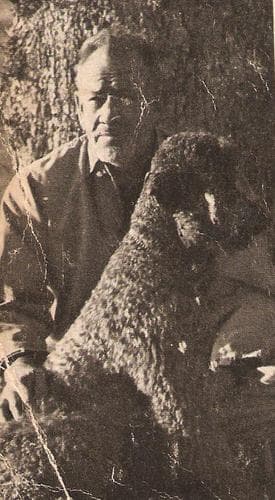
John Ernst Steinbeck was an American writer. He won the 1962 Nobel Prize in Literature "for his realistic and imaginative writings, combining as they do sympathetic humor and keen social perception". He has been called "a giant of American letters."







