“The past is never really gone. It just waits for the opportune moment to reappear.”
— Cotton Malone reflecting on the nature of history and its impact on the present.

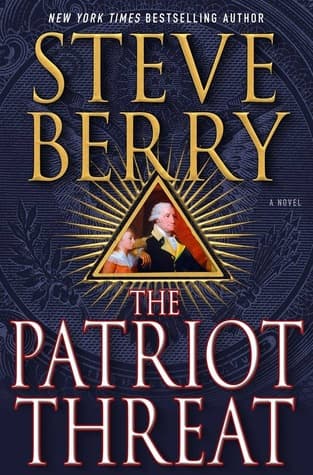
Steve Berry (2015)
Genre
Thriller / Historical Fiction / Mystery
Reading Time
450 min
Key Themes
See below
Sign in to track this book
A retired Justice Department agent races across Europe to recover explosive Treasury files that could expose the illegality of the 16th Amendment and dismantle the US income tax system, all while uncovering a conspiracy rooted in forgotten history and the secrets of the dollar bill.
Cotton Malone, a former Magellan Billet agent now running a rare bookshop in Copenhagen, receives an urgent call from his former boss, Stephanie Nelle. She needs his help tracking a North Korean operative, Hoang, who has stolen sensitive Treasury Department files. The trail leads Cotton to Venice, Italy, where he becomes involved in a dangerous pursuit through the city's canals and historic sites. Hoang is not just a thief; he possesses information that could destabilize the American financial system, potentially exposing a flaw in the 16th Amendment and the legality of federal income tax. Cotton reluctantly agrees to help, driven by duty and the serious implications of Hoang's actions.
Cotton's pursuit of Hoang in Venice quickly turns violent, with multiple agencies and shadowy figures also seeking the Treasury files. Cotton learns that Hoang is not working for North Korea but is a defector trying to reveal a truth. The files contain evidence suggesting that the ratification of the 16th Amendment, which established the federal income tax, was flawed, potentially making it unconstitutional. Hoang has a key piece of this puzzle, a clue within the files themselves, which points to a historical conspiracy involving President Franklin D. Roosevelt and former Treasury Secretary Andrew Mellon. Cotton realizes the stakes are higher than he first imagined, involving the foundation of American finance.
Following leads from the stolen files and Hoang's clues, Cotton and Stephanie Nelle travel to Brussels, Belgium. Their investigation focuses on the historical context of the 16th Amendment's ratification in 1913. They uncover evidence of irregularities and possible manipulation during the amendment's passage through various state legislatures. The main issue is whether the states truly ratified the amendment as presented, or if discrepancies in wording or process could invalidate its legality. They face resistance and attempts to obstruct their research, indicating powerful forces want to keep these historical secrets hidden. Cotton begins to understand the depth of the conspiracy.
The investigation focuses on Andrew Mellon, a prominent industrialist and former Secretary of the Treasury. His financial dealings and political influence during the early 20th century are central to the conspiracy. Cotton and Stephanie discover that Mellon may have played a role in orchestrating the flawed ratification of the 16th Amendment, possibly benefiting from its implementation. They examine historical archives, letters, and financial records, trying to understand Mellon's motives and methods. The story includes historical flashbacks, showing Mellon's interactions with President Roosevelt and other figures, revealing his desire to protect his wealth and influence, even at the cost of legal integrity.
A painting in the National Gallery of Art in Washington D.C. becomes a critical piece of the puzzle. Cotton and Stephanie realize that the painting, chosen by Mellon, contains a subtle but significant clue related to the 16th Amendment. Through careful analysis and research, they decipher the hidden message within the artwork, which further supports the theory of a flawed ratification process. This discovery shows the intricate planning of those involved in the original conspiracy, using art to preserve a secret truth. The painting acts as a silent record of the historical deception, waiting for someone to understand its meaning.
Further investigation leads Cotton and Stephanie to examine the design of the one-dollar bill. They uncover symbolic elements and subtle alterations made to the bill around the 16th Amendment's ratification. These serve as another layer of the hidden message. When combined with information from the stolen files and the painting, these elements create a compelling story of a deliberate effort to obscure the truth about the income tax. The dollar bill, a symbol of American finance, ironically carries the clues to its potential undoing, acting as a historical trail for those astute enough to follow it.
The twenty-four-hour chase ends in the remote highlands of Croatia. Cotton, Stephanie, and their adversaries converge on a secluded location where the final pieces of the puzzle are expected. Hoang, still alive and determined to expose the truth, makes a final stand against those who want to silence him. The Croatian landscape becomes the setting for a violent confrontation, with gunfire and close-quarters combat. Cotton must protect Hoang and the evidence while fending off government agents and shadowy operatives who will stop at nothing to prevent the information from becoming public. The stakes are immense, potentially affecting every American citizen.
In the chaotic climax in Croatia, Cotton secures the crucial evidence Hoang had been protecting. This evidence, a combination of historical documents, eyewitness accounts, and deciphered clues from the painting and the dollar bill, strongly suggests that the 16th Amendment was not properly ratified according to constitutional requirements. The implications are staggering: if true, the federal income tax, as it has existed for decades, could be deemed illegal. Cotton and Stephanie face the task of deciding how to release this information, knowing that it could cause widespread panic and undermine the American financial system. The truth, however, is now clear.
After the events in Croatia, information about the 16th Amendment's flawed ratification slowly surfaces, creating a ripple effect across the United States. While the full legal and political consequences are unknown, doubt has been sown. Cotton Malone returns to his quiet life in Copenhagen, but the experience changes him, making him aware of the forces that shape history and protect secrets. Stephanie Nelle navigates the political fallout within the Justice Department, facing pressure to either suppress or investigate the claims. The book concludes with the unsettling realization that a fundamental aspect of American life might be built on a constitutional lie.
The Protagonist
Cotton reluctantly re-enters the world of espionage, confronting a deep historical conspiracy that challenges his understanding of American law and governance, reaffirming his role as a protector of truth.
The Supporting
Stephanie navigates the political minefield of a potential constitutional crisis, demonstrating her leadership and commitment to exposing the truth, regardless of the consequences.
The Supporting
Hoang transitions from a perceived enemy to a crucial ally, sacrificing himself to ensure the truth about the 16th Amendment is revealed.
The Historical Antagonist/Mentioned
Mellon's historical actions are revealed to be the root of the conspiracy, his legacy challenged by the unfolding events.
The Historical Figure/Mentioned
Roosevelt's historical context provides a backdrop for the conspiracy, showing the political landscape that allowed such a secret to form.
The Antagonist
Ramzi serves as a persistent physical threat to the protagonists, ultimately failing to prevent the truth from emerging.
This theme explores how power and wealth can lead individuals and institutions to manipulate systems for personal gain, even at the expense of legal and constitutional integrity. The novel suggests that figures like Andrew Mellon may have used their influence to orchestrate a flawed ratification of the 16th Amendment, ensuring a system that benefited them. This manipulation shows the dangers of unchecked power and the lengths powerful entities will go to protect their interests, as seen in the shadowy forces trying to silence Hoang and Cotton.
“History is written by the victors, and sometimes, the powerful ensure that certain truths are never allowed to win.”
The novel focuses on the pursuit of a historical truth – the potential illegality of the federal income tax. Cotton Malone, Stephanie Nelle, and Hoang are driven to uncover and expose this truth, despite the dangers and potential for societal upheaval. The story shows that truth, once revealed, can have far-reaching and unpredictable consequences, challenging established norms and institutions. The characters grapple with the ethical dilemma of exposing a truth that could destabilize the nation, highlighting the weight of such revelations.
“Some secrets are best left buried, not because they are inherently evil, but because their unearthing can shatter foundations.”
A core theme is that even fundamental constitutional laws can be vulnerable to historical manipulation and bureaucratic oversight. The entire premise rests on the possibility that the 16th Amendment, the basis for federal income tax, was not properly ratified. This raises questions about the legal system's integrity and the importance of adhering to constitutional procedures. The novel makes readers consider how easily foundational laws could be undermined and how a nation's financial structure could be built on a flawed legal basis.
“The law is only as strong as the process by which it was forged.”
The book examines historical revisionism, suggesting that official narratives can be incomplete or deliberately misleading. It proposes a historical conspiracy dating back to the early 20th century, where key figures allegedly concealed the flawed ratification of the 16th Amendment. This theme explores how powerful individuals and institutions can shape historical understanding to serve their own ends, and how the 'official' version of events may hide a more complex and unsettling truth. The use of hidden clues in paintings and currency further emphasizes the secret nature of this historical deception.
“History is not what happened, but what people remember. And sometimes, what they are allowed to remember.”
The stolen Treasury files containing evidence of the 16th Amendment's flawed ratification.
The stolen Treasury Department files, initially possessed by Hoang, serve as the primary MacGuffin. These files are the central object of desire and pursuit for nearly all factions in the story – Cotton Malone, Stephanie Nelle, and various antagonists. While the specific contents are gradually revealed, their initial importance lies in driving the plot forward and instigating the chase across Europe. The files represent the tangible evidence of the historical conspiracy, making them invaluable to both those seeking to expose the truth and those wishing to suppress it.
Interspersed scenes depicting past events related to the 16th Amendment.
The novel frequently employs historical flashbacks, transporting the reader to the early 20th century, particularly the period surrounding the ratification of the 16th Amendment. These flashbacks show interactions between figures like Andrew Mellon and Franklin D. Roosevelt, providing crucial context and revealing the alleged machinations behind the amendment's passage. This device allows Berry to weave his signature blend of historical fact and speculation, gradually unveiling the layers of the conspiracy and demonstrating how the past directly impacts the present-day stakes.
Hidden messages in objects like a painting and the one-dollar bill.
A significant plot device involves the use of cryptic clues and symbolism embedded in seemingly innocuous objects. The painting in the National Gallery of Art and the design elements of the one-dollar bill are revealed to contain hidden messages related to the 16th Amendment's flawed ratification. These clues require careful deciphering by Cotton Malone, adding a puzzle-solving element to the thriller. This device heightens the mystery and underscores the long-term planning and secrecy of the historical conspiracy, making the discovery of truth a process of intricate interpretation.
“The past is never really gone. It just waits for the opportune moment to reappear.”
— Cotton Malone reflecting on the nature of history and its impact on the present.
“Sometimes the greatest truths are hidden in plain sight, obscured by the very obviousness of their existence.”
— Malone pondering a clue that seems too simple to be significant.
“Trust is a fragile thing, easily shattered and almost impossible to fully repair.”
— Stephanie Nelle considering the betrayals she has witnessed in her career.
“Power, unchecked, invariably corrupts. And absolute power corrupts absolutely.”
— A character discussing the motivations behind a villain's actions.
“History is written by the victors, but the truth often lies with the vanquished.”
— Malone contemplating an alternative historical narrative.
“The greatest weapon in any conflict is not a gun or a bomb, but information.”
— A spy explaining the importance of intelligence gathering.
“Every secret has a shelf life, and eventually, all will be revealed.”
— A character anticipating the exposure of hidden agendas.
“Fear is a powerful motivator, capable of driving people to acts of both courage and cowardice.”
— Observing how different individuals react under pressure.
“The lines between patriotism and extremism can blur, especially when fueled by righteous indignation.”
— Exploring the complex motivations of a group acting on what they believe is right.
“Sometimes you have to break the rules to uphold justice.”
— Malone making a difficult decision to achieve a greater good.
“The past holds the keys to the future, if only we know how to unlock its secrets.”
— The overarching theme of using historical clues to solve present-day problems.
“There are no coincidences in a world driven by power and ambition, only meticulously planned events.”
— A character dismissing the idea of chance in a high-stakes conspiracy.
“The most dangerous lies are the ones we tell ourselves.”
— An internal reflection on self-deception and its consequences.
“Freedom is not a gift, but a constant struggle, requiring vigilance and sacrifice.”
— A character articulating the cost of liberty.
Ready to see how well you understood this book? Take our interactive quiz with 10 questions.

Biography coming soon.







