“Human natur' is a fittin' name for a creatur' that is half devil and half angel.”
— Spoken by Leatherstocking, reflecting on the complexities of human morality.

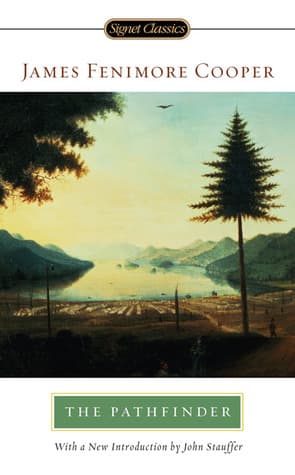
James Fenimore Cooper (2017)
Genre
Historical Fiction
Reading Time
17-20 hours
Key Themes
See below
Sign in to track this book
In the 1750s Great Lakes, legendary frontiersman Natty Bumppo guides a party through dangerous waters and shifting loyalties, as a new America struggles to define itself.
The story begins in the wilderness of upstate New York during the French and Indian War. Jasper Western, a young, skilled Great Lakes sailor, guides a small party toward Fort Oswego. His companions are Mabel Dunham, a young woman traveling to meet her father, Sergeant Dunham; Arrowhead, a Tuscarora warrior; and his wife, Dew-of-June. Their journey is dangerous, with constant threats of French and Indian attacks. Jasper shows his knowledge of the forest and courage, guiding them through the terrain, though they see signs of hostile activity.
As the party continues, Natty Bumppo, the Pathfinder, and his Mohican friend, Chingachgook, join them. Natty is a frontiersman known for his tracking skills and understanding of the wilderness. His presence brings security to Mabel and her companions, as he can read the forest and anticipate danger. The group's journey to Oswego continues, with Natty and Chingachgook leading, their experience helping them avoid ambushes and keep Mabel and the others safe.
At Fort Oswego, Mabel Dunham reunites with her father, Sergeant Dunham. The fort is a busy military outpost, and Mabel meets various officers and soldiers, including Lieutenant Muir, a Scottish officer, and Captain Charles Cap, Mabel's eccentric naval uncle. The Pathfinder, despite his rough appearance, is impressed by Mabel's beauty and spirit. He feels drawn to her but struggles to express his feelings. Mabel sees him as a respected, older friend.
Sergeant Dunham, a loving but practical father, worries about Mabel's future. He believes she should marry someone who can offer security. He sees potential husbands in Jasper Western, Lieutenant Muir, and even the Pathfinder, whom he respects. The sergeant encourages Mabel to consider these men, trying to guide her toward a choice he thinks best for her, which creates romantic tension among the characters.
A mission is planned to investigate a suspected French and Indian camp on an island in Lake Ontario. The Pathfinder, with his tracking skills, is chosen to lead a scouting party. Jasper Western, Sergeant Dunham, Mabel, Chingachgook, and Arrowhead join this dangerous trip. The lake journey is constantly threatened by enemy patrols. The Pathfinder's leadership and sharp senses are tested as they navigate the waters and approach the enemy's likely position, showing his command of both land and water.
The scouting party is ambushed by French and hostile Indians. During the fight, Arrowhead is revealed as a traitor, working with the French. His betrayal endangers everyone, putting Mabel and Sergeant Dunham in danger. The Pathfinder, Jasper, and Chingachgook fight to protect their friends. The battle is fierce, showing the realities of frontier war and the constant threat of deception. Dew-of-June, Arrowhead's wife, dies in the chaos.
After the ambush and Arrowhead's betrayal, suspicion falls on Jasper Western. Circumstantial evidence, including his role as the original guide and past connections, is used by Lieutenant Muir and others who are jealous of Jasper or his affection for Mabel. Jasper is accused of treason and arrested. Despite the Pathfinder's defense and Mabel's belief in Jasper's innocence, military authorities are swayed by the evidence. This accusation causes distress, especially for Mabel, who feels a strong connection to Jasper.
Believing it his duty and encouraged by Sergeant Dunham, the Pathfinder proposes marriage to Mabel. He expresses his admiration and love, noting his ability to care for her in the wilderness. However, Mabel, while respecting Natty as a friend, gently declines. Her heart belongs to Jasper Western. This moment is painful for Natty, who accepts her decision with stoicism, showing his respect for Mabel's feelings and his goodness, despite his heartbreak.
The truth about Arrowhead's treachery eventually comes out, clearing Jasper Western's name. Jasper is then free to act. He leads a successful mission to rescue Sergeant Dunham and Mabel, who have again been captured by French and Indians. This heroic act confirms his innocence and establishes him as a brave and trustworthy leader. His actions during the rescue show his skill and courage, proving him worthy of Mabel's affection and everyone's respect. The Pathfinder, despite his personal feelings, helps Jasper, prioritizing Mabel's safety.
With Jasper's name cleared and his bravery proven, Mabel Dunham and Jasper Western marry. Their union is happy, symbolizing a new beginning on the frontier. The Pathfinder, though saddened by Mabel's choice, accepts it with his usual grace. He realizes his place is in the wilderness, not in settled society. He says goodbye to Mabel and Jasper, returning to the forests with Chingachgook, continuing his life as a solitary hunter and scout, a true pathfinder of the American wilderness, committed to its wild beauty and freedom.
The Protagonist
Natty experiences unrequited love for Mabel, forcing him to confront his place in society versus the wilderness and ultimately accepting his solitary destiny.
The Protagonist
Mabel matures from a naive young woman into a courageous individual who understands her own heart and chooses her path in love and life.
The Supporting/Love Interest
Jasper overcomes false accusations and proves his honor and bravery, earning Mabel's love and establishing himself as a true hero.
The Supporting
Sergeant Dunham learns to trust Mabel's judgment in matters of the heart, even when it differs from his own pragmatic desires.
The Supporting
Chingachgook remains a steadfast and loyal companion, a symbol of enduring friendship and the fading native way of life.
The Supporting
Captain Cap remains largely unchanged, serving as a static character who provides comic relief and a contrasting perspective.
The Supporting/Antagonist
Lieutenant Muir's efforts to win Mabel and undermine Jasper ultimately fail, revealing his less honorable character.
The Antagonist
Arrowhead reveals his true treacherous nature, leading to his downfall and the death of his wife.
The Mentioned
Dew-of-June is a passive character whose tragic death highlights the collateral damage of frontier warfare and betrayal.
This theme is central to the novel, shown most clearly by Natty Bumppo. Natty represents the wilderness, with his understanding of nature, his moral code from natural law, and his unease with society's rules. In contrast, characters like Captain Cap represent the rigid rules of civilization. Mabel Dunham stands between these two worlds. Fort Oswego, with its military hierarchy, contrasts with the freedom and danger of the surrounding forests and lakes, showing the tension between these ways of life.
““The earth is the Lord’s, and the fullness thereof; but the wilderness is man’s, to be improved and tilled by the sweat of his brow, and not to be left a waste and a desert, for the beasts of the field and the wild savage to roam over.””
The theme of unrequited love is explored through Natty Bumppo's affection for Mabel Dunham. Despite his love and desire to care for her, Mabel loves Jasper Western. Natty's reaction to this rejection is not bitter, but shows his noble character. He accepts her decision with dignity, putting her happiness first. His selfless actions, such as helping Jasper in the rescue after his heartbreak, show a deep capacity for love and sacrifice, highlighting his moral integrity.
““I am not the man for you, Mabel. I am a creature of the woods, and you are a child of the settlements. Our paths would never lie together.””
The novel explores honor and integrity, often contrasting true moral character with appearances or social status. Jasper Western's unjust accusation of treason is an example; despite the evidence, his honor and courage are revealed through his actions. The Pathfinder, with his commitment to truth and justice, is the story's moral guide, always speaking his mind and defending the innocent. Conversely, characters like Arrowhead represent betrayal, emphasizing the importance of genuine moral uprightness in a world of deception.
““There is a law in the woods, as well as in the settlements, though it may not be printed in books, or expounded by them that wear gowns.””
The Pathfinder shows different kinds of heroism. Natty Bumppo's heroism comes from skill, knowledge of nature, moral strength, and selflessness. His bravery is quiet but deep, shown by his ability to navigate danger and protect others. Jasper Western, on the other hand, shows a more traditional heroism, defined by daring acts, leadership in battle, and decisive action, especially in rescuing Mabel and Sergeant Dunham. The novel suggests that true heroism is not just physical strength but also character, loyalty, and willingness to sacrifice for others, whether in the wilderness or in society.
““A man is known by his acts, and not by his words.””
A romantic rivalry between Natty, Jasper, and Lieutenant Muir for Mabel's affection.
The love triangle between Natty Bumppo, Jasper Western, and Lieutenant Muir, all vying for Mabel Dunham's hand, drives much of the novel's romantic tension and character development. It highlights the different qualities each man possesses and forces Mabel to confront her own desires and values. For Natty, it's a test of his ability to integrate into society and his personal desires. For Jasper, it's a motivation to prove his worth. For Lieutenant Muir, it exposes his less honorable intentions. Ultimately, it serves to clarify Mabel's affections and solidify the heroic status of her chosen suitor.
The journey through the wilderness and across the Great Lakes, fraught with danger.
The perilous journey is a recurring plot device, beginning with Mabel's initial travel to Oswego and continuing with the various scouting missions and rescue attempts. These journeys are not merely means of transportation but are crucial for developing character, showcasing the protagonists' skills (especially Natty's and Jasper's), and creating suspense. The constant threat of ambush by French and Indian forces, the challenges of navigating the unforgiving terrain and waters, and the need for constant vigilance all serve to heighten the stakes and demonstrate the brutal realities of frontier life during wartime.
Jasper Western is falsely accused of treason, creating a dramatic conflict.
The false accusation of treason against Jasper Western is a key plot device that generates significant conflict and suspense. It allows for a dramatic test of Jasper's character and the loyalty of his friends, particularly Natty and Mabel. This device highlights the dangers of circumstantial evidence and prejudice, while also providing an opportunity for Jasper to heroically clear his name. It ultimately serves to separate the true villains (Arrowhead) from the honorable characters and reinforces the themes of justice and integrity within the narrative.
Native characters like Chingachgook and Arrowhead provide crucial wilderness expertise or act as antagonists.
The inclusion of Native American characters as guides and scouts is a significant plot device. Chingachgook, as Natty's loyal companion, provides invaluable tracking and fighting skills essential for survival and navigation. He embodies a noble and wise connection to the land. Conversely, Arrowhead's role as a treacherous guide subverts this expectation, introducing an element of betrayal and danger. These characters not only offer practical assistance or opposition but also serve to highlight the complex and often brutal realities of inter-cultural relations during the French and Indian War, and the profound knowledge of the land held by its indigenous inhabitants.
“Human natur' is a fittin' name for a creatur' that is half devil and half angel.”
— Spoken by Leatherstocking, reflecting on the complexities of human morality.
“The greatest enemy of truth is very often not the lie—deliberate, contrived and dishonest—but the myth—persistent, persuasive and unrealistic.”
— A general observation on the difficulty of discerning truth, often attributed to the narrator.
“There is a great difference between a man's being able to do a thing, and his knowing how to do it.”
— Leatherstocking explaining the difference between raw ability and skilled knowledge.
“The creatur' that is made for the woods, loves the woods, and finds his comforts in the woods.”
— Leatherstocking expressing his deep connection and affinity for wilderness.
“It's a gift to be able to read the signs of the forest, and a greater gift to be able to act on them.”
— Discussing the intuitive understanding and practical application of wilderness knowledge.
“The best path is often the one that seems most difficult at first.”
— A piece of wisdom offered when characters are debating routes through challenging terrain.
“A man's word is his bond, especially when given in the face of danger.”
— Emphasizing the importance of honor and keeping promises in perilous situations.
“There's a Providence that watches over the innocent, even in the heart of the wilderness.”
— A character expressing faith in divine protection amidst dangers.
“The eye of the woodsman sees what the common eye overlooks.”
— Highlighting the trained observational skills of those accustomed to the forest.
“It is not always by the strength of the arm that battles are won, but by the cunning of the mind.”
— Discussing strategy and intelligence in warfare or conflict.
“The heart has reasons that reason knows not of.”
— A reflection on the often irrational but powerful motivations of love and emotion.
“Silence is often the best answer to a fool.”
— A piece of advice given on how to deal with contentious or foolish remarks.
“The frontier is a place where a man must depend on himself, and on God.”
— Describing the self-reliance and spiritual fortitude required for life on the frontier.
“True courage is not the absence of fear, but the triumph over it.”
— A character reflecting on the nature of bravery in the face of danger.
Ready to see how well you understood this book? Take our interactive quiz with 10 questions.
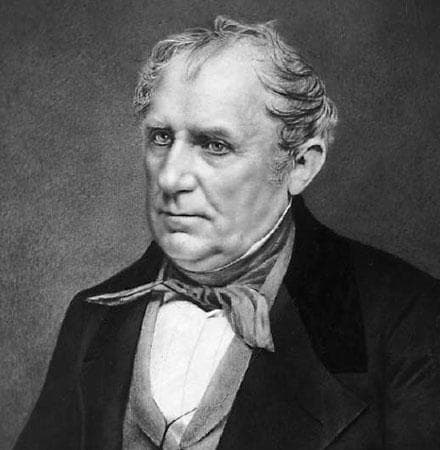
James Fenimore Cooper was an American writer of the first half of the 19th century, whose historical romances depicting colonial and indigenous characters from the 17th to the 19th centuries brought him fame and fortune. He lived much of his boyhood and the last fifteen years of life in Cooperstown, New York, which was founded by his father William Cooper on property that he owned. Cooper became a member of the Episcopal Church shortly before his death and contributed generously to it. He attended Yale University for three years, where he was a member of the Linonian Society.







