“It seems to me that if you killed a man, you wouldn't get to heaven, and if you went to hell, you'd probably meet him again.”
— A character's cynical view on the afterlife and consequences.

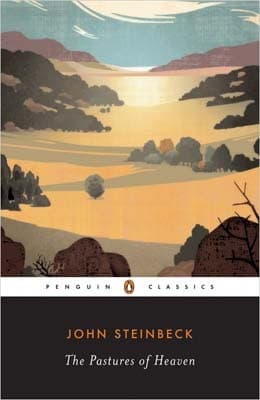
John Steinbeck (1932)
Genre
Historical Fiction
Reading Time
240 min
Key Themes
See below
Sign in to track this book
In a fertile California valley, a collection of eccentric families chase their American dreams, their lives intertwined with the land's rhythms and the subtle, often humorous, ironies of fate.
The story opens with the discovery of the 'Pastures of Heaven' valley by a Spanish corporal, who abandons his post to settle there. Generations later, the valley is a thriving agricultural community. The main catalyst for the various narratives is the arrival of the Munroe family, led by Bert Munroe. Bert purchases the old Battle farm, drawn to the valley's beauty and its history. Unbeknownst to them, the Munroe family carries a strange, almost supernatural curse: every venture they undertake, no matter how well-intentioned, results in disaster or misfortune for those around them. This curse, though never explicitly stated as such, becomes the underlying force that subtly unravels the lives of the other valley residents.
Tularecito is a young boy with a large head and small body, residing at the local poor farm run by Mrs. Whiteside. He is mentally challenged but possesses a remarkable talent for drawing, particularly grotesque and fantastical creatures. His drawings, however, are seen as disturbing by Mrs. Whiteside, who tries to 'normalize' him by forcing him to draw conventional subjects. Tularecito's only solace comes from a traveling showman who briefly recognizes his unique gift. After a series of misunderstandings and a violent outburst when his drawings are destroyed, Tularecito is sent to an asylum. His potential for artistic expression is tragically stifled by the valley's inability to comprehend his difference.
Rosa and Maria Lopez, two attractive and hardworking sisters, establish a successful tamale stand and laundry service. Their business thrives, and they are generally well-regarded. However, the arrival of the Munroe family coincides with a shift in the valley's perception of them. Bert Munroe's casual friendliness is misinterpreted by the sisters as romantic interest, and by the community as scandalous behavior. The valley's gossip and moral judgments, fueled by the subtle influence of the Munroe's presence, lead to their business failing and their eventual departure from the valley. Their reputations are unjustly ruined by insinuation rather than fact.
Helen Van Deventer is a devoted mother to her frail, sickly son, Robbie. She is fiercely protective, shielding him from the outside world and believing he is too delicate for normal life. Bert Munroe, with his well-meaning but misguided attempts to be friendly, tries to engage Robbie in typical boyish activities. This perceived intrusion into her carefully constructed world for Robbie drives Helen to extreme measures. She becomes increasingly paranoid, isolating Robbie further, convinced that the valley's influence is harmful. The story culminates in Robbie's death, leaving Helen consumed by grief and a profound sense of loss, intensified by her own choices.
Mrs. Whiteside is a stern, pious woman who runs the poor farm with an iron fist, convinced of her moral superiority. Her son, William, dreams of escaping her control and marrying a young woman named Mae, but Mae is intimidated by Mrs. Whiteside. Bert Munroe's arrival brings Mae to the poor farm to work, inadvertently placing her directly under Mrs. Whiteside's watchful eye. Bert, in his usual innocent way, tries to facilitate William and Mae's romance, which only serves to inflame Mrs. Whiteside's suspicions and intensify her grip. Ultimately, Mae leaves, and William remains trapped, unable to break free from his mother's domineering influence. This shows the Munroe's unsettling effect.
The Battle Farm, the property purchased by Bert Munroe, holds a significant history in the Pastures of Heaven. It was originally owned by a family whose lives were marked by a series of misfortunes and eccentricities, contributing to the local lore of the farm being 'cursed.' Bert Munroe, however, sees only its beauty and potential, dismissing the superstitions. His acquisition of the farm is the direct catalyst for the Munroe family's entry into the valley, and their subsequent interactions with the residents. The farm's past subtly foreshadows the troubles that will follow in the Munroe's wake, linking their personal 'curse' to the land itself.
The Wicks family, particularly Mrs. Wicks, is obsessed with social status and maintaining appearances. They host an annual bridge party, a crucial event for their standing in the community. Bert Munroe, wanting to be a good neighbor, offers to help with the preparations, specifically by setting up an elaborate outdoor lighting system. However, his amateur electrical work results in a catastrophic short circuit, plunging the party into darkness and causing a general uproar. The Wicks' carefully constructed social facade crumbles, and they become the subject of ridicule, their aspirations shattered by Bert's unintended blunder. This is another example of the Munroe's destructive innocence.
Edna, a young girl, deeply loves her horse, a seemingly untamable animal that only she can ride. Bert Munroe, observing this unique bond, believes he can 'fix' the horse and make it more manageable for Edna, intending to be helpful. His attempts to break the horse, however, are misguided and ultimately lead to the horse being injured or becoming unrideable for Edna. This act, meant as a kindness, instead breaks Edna's spirit and her special connection with the animal, leaving her heartbroken and resentful. This highlights the destructive nature of the Munroe's interventions even when driven by good intentions.
Pat Humbert is a man consumed by a singular, decades-long obsession: to avenge the perceived slight of a local landowner who once cheated his father out of a small piece of land. He meticulously plans his revenge, saving money and waiting for the perfect opportunity. Bert Munroe, through a series of innocent but ill-timed conversations, inadvertently provides Pat with the information and the final push he needs to execute his plan. Pat successfully carries out his revenge, but the satisfaction is hollow, and his life remains stagnant. He ironically achieves his goal through the Munroe's unwitting aid, yet finds no true resolution or happiness.
Raymond Banks is a contented bachelor who finds joy and purpose in raising chickens. His life is simple, predictable, and fulfilling. Bert Munroe, observing Raymond's successful poultry operation, offers him advice on how to expand and modernize, convinced he is helping Raymond achieve greater prosperity. Raymond, swayed by Bert's enthusiasm, invests in new equipment and a larger flock. However, the expansion proves overwhelming and ultimately unprofitable, leading to financial strain and the loss of his peaceful lifestyle. Raymond's simple happiness is disrupted, and he finds himself burdened rather than enriched by the Munroe's 'help.'
After a series of subtle and overt misfortunes befall the residents of the Pastures of Heaven, all indirectly linked to the Munroe family's presence, Bert Munroe decides to sell the farm. He reflects on his time in the valley, genuinely believing he has been a good neighbor and that his family has brought only positive changes. The Munroe family departs, oblivious to the trail of ruined lives and shattered dreams they leave behind. The final scene shows them on a bus, discussing their next move, still convinced of their own good fortune and innocent of the widespread havoc they caused. This encapsulates the central irony of the narrative.
The Catalyst/Antagonist (unwitting)
Bert remains largely unchanged, never realizing the negative impact he has, departing the valley as optimistic and oblivious as he arrived.
The Supporting
Tularecito's artistic spirit is crushed, and he is institutionalized, his potential for expression tragically unfulfilled.
The Supporting
Mrs. Whiteside remains a static character, her rigid beliefs unchallenged by the events around her, continuing to exert control.
The Supporting
Helen's protectiveness intensifies, leading to Robbie's death and her profound, isolated grief.
The Supporting
Robbie remains a static, isolated figure, ultimately succumbing to his illness, a victim of his mother's love.
The Supporting
Rosa's efforts to build a life are thwarted by external judgment, forcing her to leave the valley.
The Supporting
Maria's efforts to build a life are thwarted by external judgment, forcing her to leave the valley.
The Supporting
Pat achieves his revenge with the Munroe's unwitting help, but finds no fulfillment, remaining a solitary figure.
The Supporting
Raymond's simple contentment is shattered by attempts to 'improve' his life, leaving him burdened and unhappy.
The Supporting
Their social standing is irrevocably damaged, leading to their humiliation.
A central theme is the irony that the Munroe family, with their genuinely good intentions and desire to help, consistently brings ruin and misfortune to the lives of those around them. Bert Munroe's attempts to 'improve' Raymond Banks' chicken farm lead to Raymond's financial ruin. His friendliness towards the Lopez sisters is misinterpreted, destroying their business and reputation. This theme suggests that even the purest motives can have devastating consequences when coupled with a lack of understanding or an inability to see beyond one's own perspective, subtly implying a curse or an inherent flaw in the Munroe's interaction with the world.
“It was the Munroe curse, that everything they touched went wrong, and not through any meanness of their own.”
The novel repeatedly demonstrates how easily people misunderstand each other's actions and motives, leading to tragic outcomes. The valley residents misinterpret the Munroe's casual friendliness as romantic interest or malicious intent, while the Munroes, in turn, fail to grasp the nuanced lives and sensitivities of their neighbors. Tularecito's artistic talent is seen as grotesque deviance by Mrs. Whiteside. The Lopez sisters' success is viewed with suspicion. This pervasive miscommunication and inability to empathize creates a social environment ripe for gossip, prejudice, and destruction, highlighting the fragility of human connection.
“The people in the Pastures of Heaven were not evil people. They were simply people, and they had a way of misunderstanding almost everything.”
The valley, named 'The Pastures of Heaven,' initially appears as an idyllic, fertile, and peaceful place. However, beneath this surface, the lives of its inhabitants are filled with quiet desperation, unfulfilled dreams, and ultimately, tragedy. The Munroe family's arrival shatters this illusion, revealing the underlying flaws and vulnerabilities of the community. The novel suggests that no place, no matter how beautiful or seemingly perfect, can escape the complexities and inherent sorrows of human nature. The 'heaven' is only an illusion, easily disrupted by external forces or internal failings.
“It was a place where one might live forever, and never grow old, and never be sad. But that was before the Munroes came.”
Many characters in the Pastures of Heaven struggle against the conformity and judgment of the community. Tularecito's unique artistic talent is not only misunderstood but actively suppressed by Mrs. Whiteside, who tries to force him into conventionality. The Lopez sisters are driven out because their independent success and perceived 'forwardness' clash with the valley's moralistic expectations. This theme explores how communities, even seemingly benevolent ones, can stifle creativity, independence, and any form of expression that deviates from the norm, leading to the marginalization or destruction of those who are different.
“There was no room in the Pastures of Heaven for a different thing.”
An unstated, but pervasive, force of misfortune tied to the Munroe family.
The 'Munroe Curse' is not a literal magical curse, but a powerful plot device that drives the narrative. It manifests as a consistent pattern where every well-intentioned action by a Munroe family member leads to unforeseen and often catastrophic consequences for others. This device creates dramatic irony, as the Munroes remain oblivious to the havoc they wreak, while the reader sees the direct cause-and-effect. It serves as a metaphorical representation of how good intentions, without understanding or foresight, can be profoundly destructive, and it links the seemingly disparate stories into a cohesive whole, demonstrating a shared tragic catalyst.
A series of interconnected short stories, each focusing on a different valley resident.
The novel employs an episodic structure, presenting the lives of various valley residents as distinct, yet interconnected, short stories. Each chapter focuses on a different family or individual, with the Munroe family's arrival and actions serving as the common thread that subtly (or overtly) impacts each character's fate. This structure allows Steinbeck to explore a wide range of human experiences and social dynamics within a confined setting, showcasing the varied ways the 'Munroe curse' manifests. It emphasizes the collective impact of the Munroe's presence on the community, rather than a single, overarching plot.
The contrast between the Munroe's perception and the actual outcome of their actions.
Dramatic irony is a pervasive plot device throughout the novel. The Munroe family consistently believes they are doing good, being helpful, and improving the lives of their neighbors. However, the reader is privy to the actual, often disastrous, consequences of their actions. This creates a poignant and often darkly humorous tension, as the reader understands the impending doom or the tragedy that has just occurred, while the Munroes remain blissfully unaware. This irony underscores the novel's central theme about the destructive nature of good intentions and the subjective nature of truth and perception.
The Pastures of Heaven represents broader human society and its flaws.
The valley of the Pastures of Heaven functions as a microcosm, a small, self-contained world that reflects larger societal issues and human characteristics. Its isolation allows Steinbeck to examine human nature in a concentrated form, exploring themes like community judgment, the suppression of individuality, the illusion of paradise, and the impact of external forces on established ways of life. The residents, with their diverse personalities and struggles, represent archetypes of humanity, making their individual stories resonate with universal truths about human experience and social interaction.
“It seems to me that if you killed a man, you wouldn't get to heaven, and if you went to hell, you'd probably meet him again.”
— A character's cynical view on the afterlife and consequences.
“Nearly all children are good. It's the adults who are the trouble.”
— Reflecting on the innocence of youth versus adult complexities.
“The Pastures of Heaven, as the people called them, were seven small farms, each one a little paradise, and each one cursed.”
— Introducing the central theme and setting of the interconnected stories.
“He had a way of looking at a man, not with suspicion, but with a kind of mild, sorrowful judgment, as though he knew all your past sins and pitied them.”
— Describing a character's perceptive and empathetic gaze.
“When a man has a farm, he has a reason for living. When he hasn't, he's only half a man.”
— Highlighting the importance of land ownership and purpose for some characters.
“The children's world was a much more orderly and logical place than the adults' world, for in the children's world, things had consequences and punishments, while in the adults' world, things merely happened.”
— Contrasting the perceived order of childhood with the chaos of adulthood.
“It was just a question of time before everything went wrong, and the longer it took, the worse it would be.”
— A prevailing sense of impending doom or misfortune that hangs over the community.
“There are some people who can't stand to see anyone else happy, and they'll do anything to spoil it.”
— Observing human nature's darker side, particularly envy and malice.
“His mind was a tangled skein of memories, some bright, some dark, and all of them pulling him in different directions.”
— Describing a character grappling with a complex and conflicting past.
“They were all caught in the same net, woven by circumstance and accident and the strange twisted threads of human desire.”
— A metaphorical description of the interconnected fates of the characters.
“Some men are born to be unlucky, and some men are born to bring bad luck to others.”
— A fatalistic view on luck and its impact on individuals and those around them.
“The world was full of little things that could hurt you, if you weren't careful.”
— A cautionary thought about the pervasive dangers and vulnerabilities in life.
“He had a kind of loneliness that was not merely the absence of people, but the absence of hope.”
— Describing a profound and internal sense of despair rather than just solitude.
“The Pastures of Heaven were cursed with a strange, dark magic, not of witches or spells, but of human nature itself.”
— Reinforcing the idea that the 'curse' is inherent in human flaws, not supernatural forces.
Ready to see how well you understood this book? Take our interactive quiz with 10 questions.
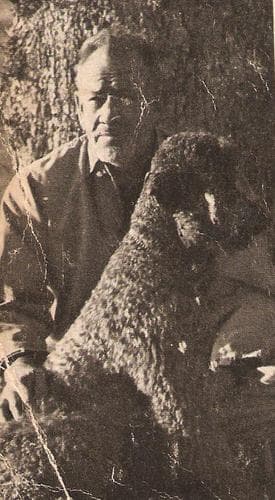
John Ernst Steinbeck was an American writer. He won the 1962 Nobel Prize in Literature "for his realistic and imaginative writings, combining as they do sympathetic humor and keen social perception". He has been called "a giant of American letters."