BookBrief
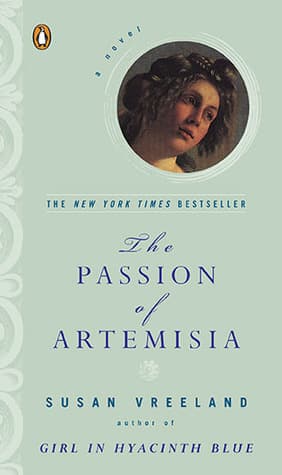
The Passion of Artemisia cover
Archivist's Choice

The Passion of Artemisia

Susan Vreeland (2002)

Genre

Historical Fiction / Creativity

Reading Time

9-11 hours

Key Themes

See below

Track Your Reading

Sign in to track this book

Artemisia Gentileschi's paintings gave voice to her trauma and triumphs, challenging a patriarchal age that tried to silence her.

Synopsis

In 17th-century Rome, young Artemisia Gentileschi is a talented painter in her father Orazio's studio. Her life changes after her tutor, Agostino Tassi, rapes her. Despite public shame, Artemisia and her father seek justice, leading to a trial where Artemisia endures torture to prove her story. Acquitted but hurt, she marries Pietro Antonio di Vincenzo and moves to Florence for a fresh start. There, she balances motherhood with building her career, gaining support from the Medicis and befriending Galileo. Her career takes her back to Rome, where she faces changing fortunes and struggles for recognition in the male-dominated art world. Later, in Naples, she refines her style. She eventually travels to London to work for King Charles I, reuniting with her father and solidifying her international reputation. Through a life marked by personal tragedy and artistic success, Artemisia maintains her independence and vision, creating powerful, often feminist, works that challenge the norms of her time, leaving a lasting mark as one of history's most important female artists.
Reading time
9-11 hours
Difficulty
Medium
Pacing
Moderate
Mood
Inspiring, Resilient, Artistic, Reflective, Challenging
✓ Read this if...
You are fascinated by the lives of historical female artists, the challenges they faced, and the creative process, especially during the Baroque period.
✗ Skip this if...
You prefer fast-paced thrillers or lighthearted romance; this is a more reflective and at times somber historical narrative.

Plot Summary

A Painter's Daughter

The story begins in 17th-century Rome, introducing young Artemisia Gentileschi, daughter of the respected painter Orazio Gentileschi. Unlike other girls her age, Artemisia spends her days in her father's studio, watching his work and secretly practicing her own drawing and painting. Orazio, seeing her early talent, eventually allows her to help him, grinding pigments and preparing canvases. He teaches her art basics, from perspective to anatomy, often using live models. Artemisia learns quickly and with passion, rapidly developing her skills, showing a special ability to capture emotion and dramatic light. Her early works, though similar to her father's style, already suggest a unique vision.

The Tutor and the Treachery

As Artemisia's skill grows, Orazio looks for a tutor to teach her advanced perspective, a skill he feels he cannot fully teach. He hires Agostino Tassi, a fellow painter and acquaintance, to instruct her privately. Tassi, a man with a questionable reputation, begins his lessons with Artemisia. During one of these sessions, he sexually assaults and rapes her. Artemisia, traumatized and shamed, at first struggles with what happened. Her father, finding out the truth, is furious and heartbroken. He decides to seek justice for his daughter, a brave and scandalous decision for the time, starting a public trial that will forever affect Artemisia's life and career.

The Trial

Orazio files a formal complaint against Agostino Tassi, leading to a public trial. Artemisia is forced to testify in court, enduring invasive questions and public scrutiny that are deeply shaming. To confirm her testimony, she is subjected to a painful torture device called the sibille, which tightens cords around her fingers, threatening to damage her painting hand. Despite the pain and distress, Artemisia bravely sticks to her account of the rape. Tassi, though found guilty, receives a light sentence that he mostly avoids, showing the unfairness of the era. The trial leaves Artemisia deeply hurt but also fuels a strong desire within her to express her experiences through her art.

A New Beginning in Florence

After the scandal of the trial, Orazio arranges a marriage for Artemisia with Pierantonio di Vincenzo Stiattesi, a Florentine artist and minor nobleman. The marriage, mainly for convenience, allows Artemisia to escape the gossip of Rome and start fresh in Florence. She quickly finds patrons among the city's elite, including the powerful Medici family, and gains recognition for her powerful and dramatic paintings, especially those showing strong female figures from mythology and the Bible. She also becomes friends with Galileo Galilei, engaging in intellectual talks and expanding her view of the world. This period marks a big step towards her artistic independence and a growing reputation.

Motherhood and Artistic Struggle

In Florence, Artemisia gives birth to several children, though only one daughter, Prudenzia, lives to adulthood. She struggles with the roles of wife, mother, and professional artist in a society that gave little support to women pursuing careers. Her husband, Pierantonio, proves to be a poor money manager, accumulating debts that Artemisia often has to pay with her painting commissions. Despite these home and money problems, Artemisia's art flourishes. Her paintings, often showing female strength and suffering, connect deeply with her patrons. She uses her art to process her past trauma and assert her voice in a male-dominated world.

Return to Rome and Shifting Fortunes

After several years in Florence, Artemisia decides to return to Rome, seeking to advance her career in the center of the art world. She sets up her own studio and continues to receive important commissions, strengthening her reputation as a formidable artist. However, her relationship with her father, Orazio, remains difficult, complicated by the past and their artistic rivalry. She also experiences financial problems and struggles to secure steady patronage. Despite these challenges, Artemisia's artistic vision continues to grow, producing some of her most famous works, including powerful depictions of Judith and Holofernes, often seen as reflections of her own experiences and strength.

The Neapolitan Period

Seeking new chances and a more stable environment, Artemisia moves to Naples, a busy art center. Here, she finds a thriving art market and an audience for her work. She collaborates with other well-known artists and sets up a successful workshop, employing assistants to help her manage the increasing demand for her paintings. Naples offers her a sense of community and professional respect that she had often sought. Her style continues to change, adding elements of Neapolitan Baroque, while still keeping her dramatic flair and focus on strong female characters. This period is a time of significant output and artistic influence for Artemisia.

London and the King's Court

Towards the end of her career, Artemisia travels to London, where her elderly father, Orazio, works for King Charles I. This reunion, though short, allows them to collaborate on a big commission: the ceiling paintings for the Queen's House in Greenwich. Working with her father, Artemisia contributes her talent to these grand projects. While in London, she also paints portraits for the English nobility. This period gives her a look into the rich world of the English court and further cements her international reputation. However, her time in London is cut short by her father's declining health and eventual death, prompting her return to Italy.

Later Years and Legacy

After her time in London, Artemisia returns to Naples, where she lives out the rest of her life. She continues to paint a lot, securing commissions and keeping her independent studio. Despite the societal limits and personal hardships she faced throughout her life, Artemisia never stopped creating, producing works that are both technically brilliant and emotionally deep. She teaches her daughter, Prudenzia, to paint, hoping to pass on her skills and passion. Though her fame lessened somewhat after her death, her work shows her extraordinary talent, strength, and her commitment to her artistic vision.

The Artist's Vision

Throughout her life and career, Artemisia Gentileschi consistently put a powerful and distinct vision into her paintings. Her works, especially those showing strong, often suffering, female figures like Judith, Susanna, and Cleopatra, are not just biblical or mythological scenes; they are personal expressions of strength, revenge, and the female experience. She challenged norms by showing women with power and emotional depth, often using herself as a model. Her masterful use of chiaroscuro, learned from Caravaggio, increases the dramatic effect of her compositions. Artemisia's art became her voice, a way she processed trauma, asserted her identity, and ultimately, made a lasting place for herself in art history, defying the limits placed on women of her time.

Principal Figures

Artemisia Gentileschi

The Protagonist

Artemisia transforms from a naive, talented apprentice into a self-assured, independent master painter, using her art to process trauma and assert her identity.

Orazio Gentileschi

The Supporting

Orazio struggles to balance his role as a protective father with his artistic rivalry and the societal pressures that impact his daughter.

Agostino Tassi

The Antagonist

Tassi remains largely unrepentant, representing the unpunished injustice Artemisia faces.

Pierantonio di Vincenzo Stiattesi

The Supporting

Pierantonio struggles with his role as husband to a famous artist, often failing to provide the stability Artemisia needs.

Galileo Galilei

The Supporting

Galileo serves as a steadfast intellectual companion, offering a perspective outside the art world.

Cosimo II de' Medici

The Supporting

Cosimo provides a period of stability and recognition for Artemisia's career in Florence.

Prudenzia Gentileschi

The Supporting

Prudenzia grows up under her mother's influence, potentially inheriting her artistic legacy.

Tuzia

The Supporting

Tuzia's wavering loyalty in the trial demonstrates the complex social pressures of the time.

Themes & Insights

Female Resilience and Agency

The novel shows Artemisia's strength in the face of trauma, public judgment, and gender bias. Despite being raped and enduring a shaming public trial, she refuses to let these events define her. Instead, she puts her pain and anger into her art, creating powerful works that show female strength and power, often depicting biblical heroines in moments of triumph or defiance. Her resolve to build a career as a master painter, despite being a woman in a male-dominated field, shows her strong spirit. This theme is key to her paintings of Judith slaying Holofernes, where the female figure is active and powerful.

I will show the world what a woman can do.

Artemisia Gentileschi

Art as a Means of Expression and Healing

For Artemisia, painting is not just a job but a crucial way to express her deepest emotions, experiences, and traumas. Her art becomes a form of release and a way to tell her own story. The novel details how her personal suffering, especially the rape and trial, directly influences her choice of subjects and the intensity with which she portrays them. Her powerful, often violent, depictions of women like Judith, Susanna, and Lucretia are seen as reflections of her own struggles and a way to process her pain, anger, and desire for justice. Through her brushstrokes, she turns her personal anguish into universal statements of female experience and strength.

I paint my own story onto the canvas.

Artemisia Gentileschi

The Struggle for Recognition and Independence

The novel clearly shows the big challenges Artemisia faces in getting recognized and staying independent as a female artist in 17th-century Italy. She constantly fights against societal expectations that women should stay at home, the doubt of male artists, and the difficulties of getting support and fair pay. Her fight for artistic independence is linked to her desire for personal freedom, often clashing with her father's ego and her husband's poor money management. From setting up her own studio to negotiating commissions, every step of her career shows her constant pursuit of professional legitimacy and self-reliance.

A woman's hand can hold a brush as firmly as a man's, and perhaps with more passion.

Artemisia Gentileschi

Justice and Injustice in a Patriarchal Society

The theme of justice, or its absence, is clearly shown through Artemisia's rape and the trial. The novel reveals the deep biases of the legal system and society, where a victim is publicly shamed and even tortured to prove her truth, while her attacker often faces few consequences. Artemisia's experience shows how women's voices were silenced and their suffering ignored. Her later art can be seen as a form of symbolic justice, where she reclaims power and gives voice to the wronged through her art, challenging the system that failed her.

The law may not give me justice, but my brush will.

Artemisia Gentileschi

Plot Devices & Literary Techniques

Historical Fictionalization

Weaves known historical facts with imaginative narrative.

Vreeland takes the documented life events of Artemisia Gentileschi, such as her rape, the trial, her travels, and her major commissions, and richly embellishes them with plausible internal thoughts, dialogues, and sensory details. This device allows the author to bring a historical figure to life, making her struggles and triumphs relatable and emotionally resonant, filling in the gaps where historical records are silent. It creates an immersive experience that transports the reader to 17th-century Italy and into Artemisia's mind, making her personal and artistic journey vivid.

First-Person Perspective (Implied)

The narrative is deeply embedded in Artemisia's viewpoint.

While not strictly first-person, the narrative is almost entirely filtered through Artemisia's experiences, perceptions, and emotions. This deep point of view allows the reader to intimately understand her motivations, her trauma, her artistic process, and her fierce determination. We witness her world, her art, and her personal struggles from her unique vantage point, fostering strong empathy and providing insight into the inner life of a woman who defied her era. This device ensures that her voice and perspective remain central to the story.

Art as Symbolism

Artemisia's paintings directly reflect her inner world and experiences.

Artemisia's artworks, particularly her depictions of strong, often vengeful, female figures (like Judith and Holofernes, Susanna and the Elders), serve as powerful symbols of her own life, trauma, and resilience. The novel intricately connects the creation of these paintings to specific events or emotional states in her life, making her art a direct commentary on her experiences. This device allows the author to explore Artemisia's psychological landscape and her journey of healing and empowerment through the visual language of her art, making the paintings themselves characters in her story.

Chiaroscuro (Literary)

The narrative uses stark contrasts of light and shadow to highlight emotional extremes.

Just as Artemisia's paintings famously employ chiaroscuro (dramatic contrasts between light and dark), the novel's narrative style often mirrors this technique. It highlights the stark contrasts in Artemisia's life: moments of artistic brilliance against periods of deep despair, public adulation versus private suffering, and the bright promise of her talent against the dark shadow of trauma. This literary chiaroscuro emphasizes the emotional intensity of her experiences and the dramatic forces at play in her life, reflecting her artistic style within the prose itself.

Critical analysis

Notable Quotes

A woman's mind is like a rich field, Signor Gentileschi. If it is tilled and planted, it will yield a hundredfold. If it is left fallow, it will grow weeds.

Artemisia's father, Orazio Gentileschi, reflecting on her potential and the limitations placed on women.

I will show you what a woman can do.

Artemisia's defiant resolve to pursue her art despite societal obstacles.

The canvas waits, like a lover, for my touch.

Artemisia's intimate and passionate relationship with her painting.

Pain is a color, too. A deep, dark red, like the blood of a saint.

Artemisia's understanding of how her personal suffering informs her artistic expression.

A woman must paint what she knows, not what she is told to know.

Artemisia's belief in painting from her own experience and perspective.

My brush is my sword, and my canvas is my battlefield.

Artemisia's fighting spirit and her commitment to her art as a form of struggle.

To be a woman and an artist is to be twice a rebel.

Artemisia's recognition of the dual challenges she faces.

Light can be cruel as well as kind.

Artemisia's nuanced understanding of light in her paintings, reflecting life's complexities.

A good painter does not just copy; he interprets.

Artemisia's father teaching her about the interpretive nature of art.

The world will always try to put a woman in her place. It is up to us to refuse.

Artemisia's unwavering resolve to defy societal expectations.

My paintings are not merely pretty pictures; they are stories of endurance.

Artemisia's view of her work as narratives of strength and survival.

Color is emotion made visible.

Artemisia's deep connection between color and feeling in her art.

Genius has no gender.

A central theme of the book, challenging the patriarchal views of artistic talent.

Every stroke is a breath, a heartbeat, a moment lived.

Artemisia's immersive and vital connection to the act of painting.

To truly see is to understand the soul beneath the skin.

Artemisia's profound insight into portraiture and human understanding.

Quiz

Test Your Knowledge

Ready to see how well you understood this book? Take our interactive quiz with 10 questions.

10
Questions
~5
Minutes
?
Best Score

Key Questions (FAQ)

Artemisia's central conflict is her struggle for recognition and acceptance as a professional female painter in a male-dominated 17th-century art world, constantly battling societal expectations, the aftermath of her rape, and the need to prove her artistic legitimacy despite her gender and personal history.

About the author






