“We were so young, and we were so in love. We were so happy.”
— Hadley reflects on her early days with Ernest in Paris.

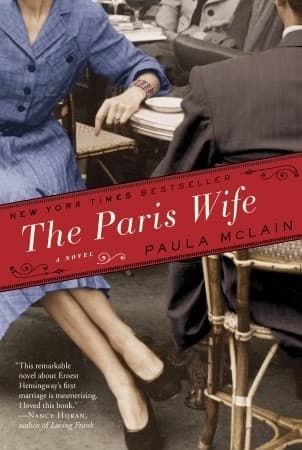
Paula McLain (2011)
Genre
Historical Fiction / Romance
Reading Time
420 min
Key Themes
See below
Sign in to track this book
In 1920s Paris, Hadley Richardson navigates the exhilarating rise and devastating fall of her marriage to Ernest Hemingway, a love story from the Lost Generation.
In Chicago, 1920, Hadley Richardson, a twenty-eight-year-old woman with a quiet life and a past marked by loss, believes her chance at love has passed. Her friend Kate Smith introduces her to Ernest Hemingway, a charismatic and driven young man, still recovering from war injuries. Despite their age difference and her initial reservations, Hadley is captivated by Ernest's passion for writing and his personality. Their courtship is swift and intense. Ernest proposes to Hadley, promising her a life of adventure and the chance to support his literary career, especially in Paris, a city he idealizes for its artistic freedom.
After their wedding, Hadley and Ernest move to Paris in December 1921, settling into a small apartment in the Latin Quarter. They quickly join the bohemian expatriate community, befriending other aspiring artists and writers. Ernest begins working as a foreign correspondent for the Toronto Star, but his true passion remains fiction. Hadley dedicates herself to supporting his writing, managing their meager finances, and creating a stable home. They spend their days exploring the city, attending literary salons, and discussing ideas with figures like Gertrude Stein and Ezra Pound, all while navigating their new life and Ernest's demanding artistic temperament.
Hadley and Ernest are welcomed into Gertrude Stein's literary circle. Stein mentors Ernest and becomes a friend to Hadley. They frequent Stein's salon, meeting other prominent figures of the 'Lost Generation' such as Ezra Pound, James Joyce, and eventually F. Scott and Zelda Fitzgerald. Hadley observes the dynamic personalities and intense discussions, often feeling pride in Ernest's growing reputation. This period offers intellectual stimulation, late-night conversations, and the freedom of Jazz Age Paris, which fuels Ernest's ambition and subtly tests their marriage.
Ernest's ambition drives him to dedicate himself entirely to his fiction. He plans a trip to Spain, hoping to focus on his writing away from Paris. Hadley, ever supportive, packs his entire collection of manuscripts, including early drafts of short stories and his first novel, to send to him. However, during her train journey to meet him in Lausanne, Switzerland, a valise containing all of Ernest's original works is stolen. The loss devastates Ernest, almost crippling his spirit. Hadley feels immense guilt, and though Ernest tries to reassure her, the incident leaves a deep scar, showing the preciousness of his work and the vulnerability of their shared dreams.
Despite Ernest's growing connections and publications, the Hemingways often face financial hardship. They move to a smaller, colder apartment, and Hadley frequently pawns her jewelry to make ends meet. Amidst these struggles, Hadley discovers she is pregnant. The news brings a mix of joy and apprehension, as they realize the added responsibilities of parenthood. Ernest, while excited, becomes even more intensely focused on his writing, feeling pressure to provide for his family. Their life continues to be a blend of artistic pursuit, social engagement, and constant negotiation of their limited budget.
In October 1923, Hadley gives birth to their son, John Hadley Nicanor Hemingway, whom they nickname 'Bumby.' His arrival brings immense joy and a new dimension to their marriage. Hadley embraces motherhood, finding contentment in caring for Bumby, even as she continues to support Ernest's writing. Ernest, too, is moved by fatherhood, though his commitment to his craft remains paramount. The family briefly moves to Toronto for Ernest to work, but they soon realize Paris is where they belong, returning to the city that fuels Ernest's artistic vision, now with a child.
Ernest begins writing 'The Sun Also Rises,' drawing heavily on his experiences within their expatriate circle, particularly during a trip to Pamplona, Spain, for the bullfights with friends. Hadley witnesses firsthand how Ernest transforms their shared life, their friends' dramas, and the atmosphere of Paris and Spain into his fiction. She sees reflections of herself and their companions in his characters, a process that is both fascinating and, at times, unsettling. The novel becomes the central focus of Ernest's life, consuming his energy and attention, and Hadley continues to be his sounding board and emotional support.
Pauline Pfeiffer, a wealthy and stylish fashion journalist for Vogue, enters the Hemingways' social circle and quickly becomes a close friend to both Hadley and Ernest. Pauline is sophisticated, intelligent, and financially independent, offering a different kind of companionship. She often joins them on trips, including skiing excursions and visits to the French Riviera. Hadley initially welcomes Pauline's presence, appreciating her vivacity and the way she can ease some of the financial burdens on the family. However, a subtle shift begins to occur between Ernest and Pauline, which Hadley, at first, chooses to ignore, attributing it to their shared interests and the open nature of their social group.
As 'The Sun Also Rises' finds success, Ernest's confidence and ambition soar. His relationship with Pauline Pfeiffer intensifies, becoming increasingly public and undeniable to Hadley and their friends. Pauline, despite her friendship with Hadley, makes herself indispensable to Ernest, traveling with him, typing his manuscripts, and offering him the financial security Hadley cannot. Hadley tries to maintain her composure and deny the obvious, but the emotional distance between her and Ernest grows. The betrayal is deeply painful, challenging her sense of self and the foundation of their marriage, which she had believed to be unbreakable.
The situation becomes unbearable when Ernest suggests Hadley and Pauline both remain in his life. Hadley, devastated by the disrespect and betrayal, refuses. She confronts Ernest directly, asserting her dignity and demanding a clear resolution. Despite her enduring love for him, she acknowledges that their marriage cannot survive this deception. They agree to a separation, with Hadley setting a condition: if Ernest still wishes to be with Pauline after 100 days, she will grant him a divorce. This period of waiting is agonizing for Hadley, but ultimately solidifies her decision to move forward.
After the 100 days, Ernest confirms his desire to marry Pauline. Hadley grants him a divorce, receiving a significant portion of the royalties from 'The Sun Also Rises' and future works as part of the settlement, ensuring her financial stability. She leaves Paris with Bumby, returning to a quieter life, though forever changed by her experiences. The novel concludes with Hadley reflecting on her time with Ernest, the intense love they shared, the life they built in Paris, and the sadness of their unraveling. Despite the pain, she carries the memories of their early love, understanding their impact on each other's lives and Ernest's literary legacy.
The Protagonist
She transforms from a shy, self-effacing woman into a resilient individual who finds her voice and self-worth despite profound heartbreak.
The Antagonist/Love Interest
His ambition and talent propel him to literary success, but his increasing self-absorption and infidelity lead to the destruction of his first marriage.
The Supporting
She transitions from a seemingly innocuous friend to the primary catalyst for the dissolution of Hadley's marriage.
The Supporting
She serves as a consistent, though sometimes challenging, mentor to Ernest and a friend to Hadley, observing the unfolding drama of their marriage.
The Supporting
He remains a significant literary peer and friend to Ernest, his own struggles often mirroring or contrasting with those of the Hemingways.
The Supporting
Her character illustrates the excesses and potential pitfalls of the Lost Generation lifestyle, serving as a foil to Hadley's more grounded nature.
The Supporting
His birth marks a significant turning point in the marriage, adding responsibility and joy, but also highlighting the growing cracks when the family unit is threatened.
The Mentioned
Her brief appearance serves to initiate the central plot of Hadley meeting Ernest.
The novel explores how Ernest Hemingway's relentless artistic ambition, while leading to literary greatness, comes at a significant personal cost, particularly to his marriage and Hadley's happiness. Ernest's dedication to his craft is portrayed as both admirable and destructive, as he prioritizes his writing above all else, including his wife's emotional well-being. This theme is evident in scenes where Hadley sacrifices her desires to support his work, the loss of his manuscripts, and ultimately, his decision to pursue Pauline, who he believes can better support his career.
““I loved him and he loved me, and that was that. But even then, I knew that his love for me was tangled up in his love for the words, for the stories he would tell, and that the words would always win.””
At its heart, the novel is a story of profound betrayal – not just Ernest's infidelity with Pauline, but also the betrayal of the trust and shared dreams between Hadley and Ernest. The loss extends beyond the marriage to the loss of an idealized love, a life in Paris, and a sense of self for Hadley. The theft of Ernest's manuscripts early in the story foreshadows this greater loss, symbolizing precious things that can be irrevocably taken away. The emotional toll of Ernest's actions on Hadley is central to the narrative, highlighting the devastating impact of infidelity on a once-strong bond.
““You can’t take back the words you say, and you can’t take back the love you give, even if it’s wasted.””
Hadley's journey throughout the novel is tied to her search for identity and self-worth, often overshadowed by Ernest's personality and ambition. Initially, she finds purpose in supporting Ernest and creating a home, but as his success grows and his attention shifts, she struggles to maintain her sense of self. The betrayal forces her to confront who she is independently of Ernest. Her decision to divorce him, despite her love, is an act of reclaiming her identity and asserting her own value, moving beyond being merely 'The Paris Wife.'
““I wanted to be enough. I wanted to be everything he needed, but I wasn't. And I had to accept that.””
The atmosphere of Jazz Age Paris is a backdrop and a character in itself. The 'Lost Generation' lifestyle, with its emphasis on artistic freedom, heavy drinking, casual affairs, and intellectual pursuits, both fuels Ernest's creativity and contributes to the erosion of traditional marital values. The novel portrays the intoxicating appeal of this era, but also its dangers, as constant temptations and loose morals contribute to the unraveling of Hadley and Ernest's marriage. The glamour and intellectual stimulation are intertwined with recklessness and emotional irresponsibility.
““Paris was a grand, beautiful, dangerous thing. It was a city that promised everything and delivered on its promises, sometimes with a hidden cost.””
The story is told entirely from Hadley Richardson's perspective.
This device allows the reader to experience the events, emotions, and internal struggles of the protagonist intimately. By filtering the entire narrative through Hadley's eyes, the author emphasizes her subjective experience of love, betrayal, and the challenges of being married to a literary giant. It creates a strong sense of empathy for Hadley and positions Ernest as a complex, sometimes elusive figure seen through the lens of her affection and eventual heartbreak, rather than an objective portrayal.
The early loss of Ernest's work hints at future, greater losses.
The incident where Hadley accidentally loses Ernest's early manuscripts serves as a powerful piece of foreshadowing. It establishes the immense value and fragility of Ernest's work, and Hadley's central role in protecting it. More significantly, it subtly prefigures the later, far greater loss: the destruction of their marriage and the betrayal of their shared life, suggesting that even the most precious things can be irrevocably taken away, often with Hadley bearing the brunt of the emotional fallout.
The cultural and social backdrop of Jazz Age Paris and its literary figures.
The novel is deeply embedded in the historical context of the 'Lost Generation' in 1920s Paris. This device is crucial for understanding the characters' motivations, the bohemian lifestyle, and the prevailing attitudes towards art, relationships, and morality. The presence of real historical figures like Gertrude Stein, Ezra Pound, and the Fitzgeralds grounds the fictionalized narrative in reality, adding depth and authenticity. It also highlights how the specific cultural environment contributed to both the flourishing of Ernest's talent and the challenges faced by his marriage.
The city of Paris represents both opportunity and corruption.
Paris is not merely a setting but functions as a symbolic character in the novel. Initially, it represents hope, artistic freedom, and the promise of a new life for Hadley and Ernest. It is the crucible where Ernest's talent is forged and their love deepens. However, as the story progresses, Paris also comes to symbolize the temptations, excesses, and moral ambiguities of the Jazz Age, ultimately contributing to the unraveling of their marriage. Its beauty and allure are intertwined with its capacity for corruption and heartbreak.
“We were so young, and we were so in love. We were so happy.”
— Hadley reflects on her early days with Ernest in Paris.
“You belong to me, Hadley. You always have.”
— Ernest's possessive declaration to Hadley early in their marriage.
“Paris was a grand city, a place where people lived with a certain kind of hunger, an appetite for life that was both exhilarating and dangerous.”
— Hadley's initial impressions of Paris and its bohemian atmosphere.
“How could I have been so blind? How could I have given him everything, only to find myself with nothing?”
— Hadley's despair after the trunk of manuscripts is lost.
“We were all drinking too much, laughing too loud, trying to outrun something we couldn't name.”
— Describing the expatriate lifestyle and their attempts to escape their pasts.
“There was a certain kind of freedom in being poor in Paris, a lightness that came from having nothing to lose.”
— Hadley's perspective on their early financial struggles.
“He wanted to be a great writer, and I wanted to be the woman who helped him become one.”
— Hadley reflects on her role in Ernest's ambitions.
“The memory of it was a knife in my gut, twisting with every breath.”
— Hadley's painful recollection of Ernest's infidelity.
“Maybe it was easier to break things than to try and mend them.”
— Hadley's somber thought about the dissolution of her marriage.
“You can't live a full life until you've tasted everything, good and bad.”
— A reflection on the experiences and challenges of life.
“I loved him, I still did, but there was a part of me that was tired of being loved so fiercely, so selfishly.”
— Hadley's internal conflict about her feelings for Ernest despite his flaws.
“The truth was, I hadn't lost him. I had given him away.”
— Hadley's acceptance of her role in the end of her marriage.
“Sometimes, the hardest thing to do is to let go of what you thought was meant to be.”
— Hadley's struggle to move on after her divorce.
“He was a hurricane, and I was the house he blew through.”
— Hadley's metaphorical description of Ernest's impact on her life.
Ready to see how well you understood this book? Take our interactive quiz with 10 questions.

Biography coming soon.







