“The Pale Horse is a place of evil, a place where the dead walk.”
— Description of the titular inn, setting a sinister tone for the mystery.

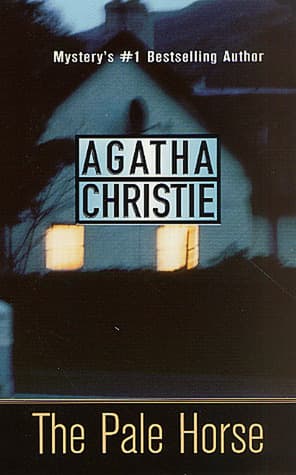
Agatha Christie (1952)
Genre
Thriller / Mystery
Reading Time
288 min
Key Themes
See below
Sign in to track this book
A dying confession, a murdered priest, and a cryptic list of names plunge Mark Easterbrook into a sinister world where an ancient evil may be orchestrating modern-day murders.
The story begins with the murder of Father Gorman, a Catholic priest, in a London fog. Before his death, he had visited a dying woman, Mrs. Davis, who confessed her fear that she was being 'stopped' and gave him a list of names to investigate. Father Gorman hid the list in his shoe, where the police later found it. Mark Easterbrook, a young historian and writer, learns of the priest's murder and the strange list at a party. He is interested, especially by the random nature of the names, and feels a personal connection to the unfolding mystery. The police, initially confused by the list, do not know its sinister meaning, but Mark's curiosity leads him to find the truth behind the names.
Mark Easterbrook, driven by a growing sense of unease, starts investigating the names on Father Gorman's list. He learns that one of the names, a man named Osborne, has recently died. His investigation leads him to a small village called Much Deeping, where he meets Ginger Corrigan. Ginger, independent, is also investigating a death — that of her godmother, who was also on the list. Their paths meet, and they decide to work together. Mark also visits the 'Pale Horse' inn in Much Deeping, a place rumored to be associated with dark practices and a group of witches. This location immediately seems important to him, hinting at the supernatural or at least a very unusual criminal enterprise.
Mark and Ginger continue their investigation, focusing on the people at the Pale Horse. They meet Thyrza Grey, a striking and intelligent woman who claims to be a white witch, and her associate, Sybil Stamfordis, who has psychic abilities. A third woman, Bella Webb, is a village herbalist and fortune-teller, adding to the mystical atmosphere of the place. Mark observes their practices, which include séances and predictions, and tries to figure out if they are genuine practitioners of the occult or orchestrators of a more ordinary, yet deadly, scheme. He is suspicious of Thyrza's intellect and control, sensing a calculated evil under her calm exterior. The village itself seems to hold a strange power, with many residents believing in the 'witches' abilities.
Through his persistent inquiries and observation, Mark eventually uncovers the true nature of the 'Pale Horse' operation. It is not about genuine witchcraft, but rather a sophisticated and untraceable method of murder-for-hire. Clients pay the 'witches' to 'curse' individuals, who then mysteriously die from seemingly natural causes or accidents. The 'witches' act as intermediaries, arranging for the actual killings to be carried out by a network of operatives, making it very difficult to trace back to the original client or the Pale Horse itself. This realization horrifies Mark, as he understands the terrifying efficiency and deniability of the scheme. He now knows that the names on Father Gorman's list are not victims of a curse, but of a carefully planned murder syndicate.
Mark tries to share his findings with the police, especially Inspector Lejeune, but struggles to be taken seriously. The police are skeptical of his theories, especially given the seemingly supernatural elements surrounding the Pale Horse and the lack of solid evidence linking the deaths directly to the 'witches.' The victims' deaths appear to be natural, making it difficult for the police to pursue a murder investigation. Mark grows frustrated by their inability to understand the clever nature of the crime. He realizes he needs clear proof, not just suspicion, to expose the syndicate and stop further deaths. This forces him to take more risks and investigate the criminal underworld further.
Realizing the police need more than just his word, Mark, with the help of Ginger Corrigan and his friend Ariadne Oliver, a crime novelist, makes a daring plan. They decide to create a 'target' for the Pale Horse, a person whose death would clearly be suspicious and could be directly linked to the organization. This plan involves setting up a carefully arranged trap, hoping to expose the methods and perpetrators of the murders. Mark understands the immense danger involved, as he would be directly challenging a ruthless criminal enterprise. The success of their plan depends on the 'witches' taking the bait and performing their 'service' on the chosen victim, providing the necessary evidence for the police.
Ariadne Oliver, with her understanding of criminal psychology and plot construction, helps greatly in devising the trap. She helps Mark create a convincing scenario for a 'client' to approach the Pale Horse with a request for a murder. The chosen 'victim' for their scheme is Poppy Stirling, a young woman who works at a hair salon, chosen for her seemingly ordinary background, which would make her death appear natural to outsiders, yet suspicious to those who know. The plan is to have a 'client' (one of Mark's contacts) approach the Pale Horse, requesting Poppy's death. This would allow them to observe the process and gather evidence, hoping to catch the real perpetrators or at least establish a pattern.
The trap is set. Mark's contact approaches the Pale Horse, requesting the 'removal' of Poppy Stirling. However, the cunning of the Pale Horse operatives is underestimated. Instead of Poppy, it is Ginger Corrigan, who has been working closely with Mark, who suddenly falls gravely ill. This unexpected event causes Mark to panic. He realizes that the 'witches' have either seen through their deception or cleverly manipulated the situation to target someone who was genuinely investigating them. Ginger's life is in danger, and Mark is gripped by fear and guilt, knowing his plan has backfired in the most devastating way possible. He must now race against time to save Ginger and still expose the killers.
As Ginger lies critically ill, Mark, with a desperate surge of insight, finally understands the puzzle. He realizes that the 'witches' are merely a front, and the true mastermind behind the murders is not one of them, but rather a seemingly harmless character he has encountered: Mr. Venables. Venables, a physically disabled man confined to a wheelchair, uses a subtle, untraceable poison administered through a seemingly innocent touch or object. The 'witches' merely provide the psychological cover and misdirection, making victims believe they are cursed, thus hiding the real method of death. The poison causes symptoms mimicking various natural illnesses, making it impossible for doctors to detect foul play. Mark also discovers that the 'client' who initiated the 'curse' on Ginger was actually a pawn, unknowingly manipulated by Venables.
Armed with his newfound knowledge, Mark confronts Mr. Venables, presenting the evidence and explaining the ingenious method of poisoning, which involves thallium, a heavy metal that causes symptoms mimicking various diseases. Venables, realizing he has been exposed, tries to escape but is apprehended by the police, who have finally been convinced by Mark's careful detective work and the specific details of the poison. Ginger Corrigan, who was indeed suffering from thallium poisoning, receives the correct medical treatment and slowly recovers. The Pale Horse syndicate is dismantled, and justice is served. Mark reflects on the terrifying cleverness of the crime and the fine line between belief and manipulation. He and Ginger, having faced death together, develop a deeper bond.
The Protagonist
Mark transforms from a detached observer to an active participant, risking his life to expose a deadly criminal enterprise and ultimately bringing justice to the victims.
The Supporting
Ginger evolves from an independent investigator to a close, trusting partner with Mark, demonstrating her courage and resilience in the face of grave danger.
The Antagonist
Thyrza maintains her enigmatic facade throughout, serving as a key misdirection and demonstrating the power of psychological manipulation.
The Supporting
Sybil remains a consistent figure in the Pale Horse, contributing to the mystical facade that masks the true criminal activities.
The Supporting
Bella remains consistent in her role as a local purveyor of folk magic, unknowingly or knowingly assisting in the larger criminal enterprise.
The Antagonist
Venables is revealed as the true antagonist, his unassuming exterior cracking to expose a ruthless and calculating killer.
The Supporting
Ariadne acts as a consistent source of wisdom and practical advice, helping to guide Mark towards the truth.
The Mentioned
Father Gorman's brief but significant action of acquiring and hiding the list sets the entire mystery in motion.
The Supporting
Lejeune moves from skepticism to belief as Mark provides compelling evidence, eventually leading the arrest of the true killer.
This theme is central to 'The Pale Horse', as almost every aspect of the crime relies on elaborate deception. The 'witches' at the Pale Horse create an illusion of supernatural power to mask ordinary, yet deadly, poisoning. Mr. Venables, the true mastermind, uses his physical disability and unassuming demeanor as a disguise, appearing harmless while orchestrating multiple murders. Mark Easterbrook's struggle to convince the police shows how readily people accept superficial explanations over darker truths. The entire plot is a gradual removal of layers of deception to reveal the grim reality beneath.
“"The whole point of it, you see, is that it looks like something else."”
The book explores how evil can appear in subtle, insidious ways, rather than overt violence. The murders are not brutal acts but carefully orchestrated poisonings designed to look like natural deaths, showing a cold, calculating form of malevolence. The 'witches' use fear and superstition, while the true killer, Mr. Venables, is chilling in his detached, intellectual approach to murder. The theme questions whether evil is inherent or a product of opportunity and cunning, suggesting that the most dangerous evil can hide behind the most harmless appearances, making it particularly difficult to detect and combat.
“"Wickedness...such wickedness....Stopped....It must be stopped...."”
A significant tension in the novel comes from the clash between ancient superstitions and modern scientific understanding. The Pale Horse actively creates an atmosphere of witchcraft and curses, playing on people's fears and beliefs in the supernatural. This is a brilliant misdirection, making the victims and even investigators attribute deaths to mystical forces. However, Mark Easterbrook, with his scientific and rational mind, eventually uncovers the scientific truth: a sophisticated method of poisoning (thallium) that cleverly mimics natural diseases. The book shows how belief in the supernatural can be used to hide highly rational, yet evil, criminal acts, making it harder for conventional law enforcement to intervene.
“"They don't kill people by witchcraft. They kill them by poison. And the poison is thallium."”
The pursuit of justice for the victims on Father Gorman's list drives Mark Easterbrook's relentless investigation. The initial inability of the police to identify the deaths as murders, because they appeared natural, shows a loophole in the justice system that the criminals exploit. Mark's determination to bring the perpetrators to account, even when facing skepticism and personal danger, shows the importance of individual moral responsibility. The ultimate resolution, with the unmasking and arrest of Mr. Venables, reinforces the idea that even the most cunning and untraceable crimes can eventually be brought to light and punished, restoring order and accountability.
“"It was a beautiful crime, so simple and so ingenious that it could hardly fail."”
A crucial macguffin that initiates the entire investigation.
Father Gorman's list of seemingly unconnected names serves as the primary macguffin of the story. It is the catalyst for Mark Easterbrook's investigation and the central mystery that he must unravel. The list's randomness initially baffles the police, but Mark's persistence in finding connections between the names ultimately leads him to the Pale Horse and the truth behind the murders. It is a classic Christie device: a seemingly innocuous object or piece of information that holds the key to a vast criminal enterprise, driving the plot forward and giving the protagonist a concrete goal.
An elaborate red herring designed to mislead investigators and victims.
The presence of Thyrza Grey, Sybil Stamfordis, and Bella Webb, operating as a 'witch's coven' at the Pale Horse, is a masterful red herring. Their séances, predictions, and talk of curses are designed to make victims believe they are dying from supernatural causes, thus diverting any suspicion of foul play. This misdirection also initially confuses the police and Mark, making them consider occult explanations before he uncovers the scientific truth. It plays on human superstition and fear, proving an effective smokescreen for the real, much more mundane, yet deadly, method of murder.
The scientific, untraceable method of murder that mimics natural causes.
The use of thallium poisoning is the ingenious plot device that makes the Pale Horse murders so difficult to detect. Thallium, a heavy metal, causes a range of symptoms—hair loss, neurological issues, gastrointestinal problems—that closely mimic various natural illnesses and diseases. This makes it almost impossible for doctors to diagnose as poisoning, allowing the perpetrators to commit murder without leaving obvious forensic evidence. It's a key element that bridges the gap between the supernatural appearance of the deaths and their scientific reality, showcasing Christie's cleverness in integrating scientific detail into her mysteries.
The killer's appearance as a harmless, physically disabled man.
Mr. Venables's character is a classic example of the 'unassuming villain' trope. His physical disability and quiet demeanor make him the least suspected character, effectively hiding his true nature as a brilliant and ruthless mastermind. This device creates a shocking reveal, challenging the reader's assumptions and demonstrating how appearances can be profoundly deceiving. It highlights that evil does not always manifest in obvious, physically threatening forms, but can reside in the most unexpected and seemingly vulnerable individuals, making them all the more dangerous.
“The Pale Horse is a place of evil, a place where the dead walk.”
— Description of the titular inn, setting a sinister tone for the mystery.
“There is no such thing as a coincidence in a murder case.”
— Reflection by the protagonist or detective on the nature of crime.
“People see what they expect to see, and that is the greatest danger of all.”
— Observation on human perception and its role in solving mysteries.
“The past is never dead. It's not even past.”
— A character musing on how history influences present events.
“In every village, there is a pale horse, waiting.”
— Metaphorical statement about hidden dangers in seemingly ordinary places.
“Fear is a weapon, and some know how to wield it better than others.”
— Comment on the psychological aspects of crime and manipulation.
“The truth is often a stranger thing than fiction.”
— Reflection on the unexpected twists in the investigation.
“A name on a list is a death sentence, if you know how to read it.”
— Reference to the central plot device of a list of names linked to deaths.
“Evil does not always wear a monstrous face; sometimes it smiles and offers tea.”
— Observation on the banality and hidden nature of evil in the story.
“The dead have their secrets, and the living are left to uncover them.”
— Theme of uncovering past crimes and hidden truths.
“In the end, it is not the weapon but the mind that commits the crime.”
— Insight into the psychological motives behind murder.
“A village is a microcosm of the world, with all its virtues and vices.”
— Reflection on the setting as a representation of broader human society.
“The pale horse rides when justice sleeps.”
— Poetic statement linking the theme to neglect or corruption.
Ready to see how well you understood this book? Take our interactive quiz with 10 questions.
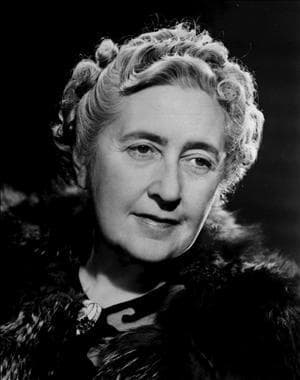
Dame Agatha Mary Clarissa Christie, Lady Mallowan, was an English writer known for her 66 detective novels and 14 short story collections, particularly those revolving around fictional detectives Hercule Poirot and Miss Marple. She also wrote the world's longest-running play, the murder mystery The Mousetrap, which has been performed in the West End since 1952. A writer during the "Golden Age of Detective Fiction", Christie has been called the "Queen of Crime". She also wrote six novels under the pseudonym Mary Westmacott. In 1971, she was made a Dame (DBE) by Queen Elizabeth II for her contributions to literature. Guinness World Records lists Christie as the best-selling fiction writer of all time, her novels having sold more than two billion copies.







