“What a woman doesn't know, she doesn't grieve over.”
— Panchali's mother giving advice about marriage and ignorance.

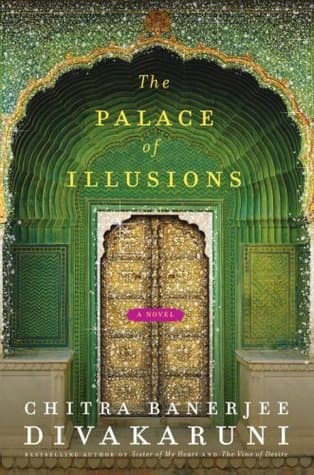
Chitra Banerjee Divakaruni (2008)
Genre
Fantasy / Historical Fiction
Reading Time
7-8 hours
Key Themes
See below
Sign in to track this book
Born of fire and bound to five warrior brothers, Panchaali navigates a world of gods, war, and forbidden desire, defiantly reshaping an ancient epic from the heart of a woman.
Panchaali, also known as Draupadi, is born from a sacrificial fire alongside her brother Dhri. Her father, King Drupada of Panchaal, had performed the yagna to gain a son who would avenge his humiliation by Drona. Panchaali is beautiful, intelligent, and independent from a young age, often questioning societal norms. She forms a close bond with her brother and learns statecraft from her father, a privilege usually denied to girls. From childhood, she knows a prophecy foretelling her destiny to change history, but also to face much suffering. She wants a husband who is a true warrior, a man of strength and honor, and struggles with the limits placed upon her as a woman in a patriarchal society, even as she secretly observes political discussions.
King Drupada arranges a swayamvara for Panchaali, a ceremony where she can choose her husband from eligible princes. The challenge is to string a powerful bow and hit a fish's eye while looking only at its reflection in oil. Many powerful kings, including Duryodhan and Karna, fail. Karna, a warrior, is denied the chance to compete due to his low birth. Arjuna, disguised as a Brahmin, succeeds in the challenge, much to Panchaali's delight, as she likes his skill and grace. However, when Arjuna returns to his mother Kunti with his brothers, he exclaims he has won a prize. Kunti, without looking, instructs him to share it equally among his five brothers. This leads to the decision that Panchaali must marry all five Pandava brothers, a fate she initially resists but accepts.
After their marriage, the Pandavas are given a barren piece of land by their uncle, Dhritarashtra, to establish their own kingdom. With the help of the architect Maya and the guidance of Lord Krishna, they build the city of Indraprastha, a place of beauty and prosperity. Central to this city is the Palace of Illusions, a marvel of architecture with optical illusions that confuse visitors. During a visit, Duryodhan, the eldest Kaurava prince, mistakes a clear floor for water and lifts his garments, then falls into a real pool of water. Panchaali, seeing this, laughs and says, 'A blind man's son is blind,' referring to Duryodhan's father, Dhritarashtra, who was born blind. This public humiliation deeply wounds Duryodhan and fuels his resentment towards Panchaali and the Pandavas, starting a chain of events that will lead to war.
The Kauravas, led by Duryodhan and his manipulative uncle Shakuni, invite Yudhishthir, the eldest Pandava, to a game of dice. Yudhishthir, bound by the rule of accepting a challenge and his weakness for gambling, loses everything: his wealth, his kingdom of Indraprastha, his brothers, and finally, Panchaali herself. Drunk with power, Duryodhan orders his brother Dushasan to drag Panchaali into the assembly hall and disrobe her publicly. Panchaali, in her menstrual state and wearing only one garment, pleads for justice, questioning if she can be gambled away when Yudhishthir had already lost himself. As Dushasan tries to strip her, she prays to Krishna, who miraculously supplies an endless length of fabric, protecting her modesty. This humiliation fuels Panchaali's vow of vengeance and becomes a reason for the Kurukshetra War.
Following the game of dice, the Pandavas and Panchaali are forced into thirteen years of exile: twelve years in the forest and one year in disguise. Life in the forest is harsh, a contrast to their luxurious life in Indraprastha. Panchaali, used to comfort, struggles with the lack of things but endures with strength, often helping her husbands emotionally. During this time, she often reminds them of their sworn promises to avenge her humiliation and reclaim their kingdom. Bhima, in particular, vows to break Duryodhan's thighs and rip Dushasan's arm. Arjuna leaves for a period to gain divine weapons. The years of exile strengthen their resolve and deepen Panchaali's desire for retribution, especially against Duryodhan and Karna, who she believes wronged her most deeply.
After twelve years in the forest, the Pandavas and Panchaali begin their thirteenth year of exile, which they must spend unknown, without their true identities being discovered. They find refuge in the Matsya Kingdom, ruled by King Virata. Each Pandava takes on a different role: Yudhishthir becomes a dice master, Bhima a cook, Arjuna a eunuch dance teacher (Brihannala), Nakula a horse trainer, and Sahadeva a cattle keeper. Panchaali becomes Sairandhri, a maidservant to Queen Sudeshna. During this time, she faces unwanted advances from Kichaka, the queen's powerful brother, who is attracted to her beauty. Bhima, at Panchaali's request, kills Kichaka, ensuring their secret is kept. Their unknown year tests their patience and cunning, as discovery would mean another twelve years of exile.
After their thirteen years of exile, the Pandavas return to claim their rightful share of the kingdom. However, Duryodhan, full of hatred and pride, refuses to give them any land. Lord Krishna, acting as an envoy, tries to find a peaceful solution, proposing various compromises, including just five villages for the Pandavas. Duryodhan, however, remains firm, declaring, 'I will not give them even as much land as can be covered by the point of a needle.' All diplomatic efforts fail, and it becomes clear that war is the only option. Panchaali, having endured years of humiliation and wanting justice, strongly supports war, believing it is the only way to restore their honor and punish the Kauravas for their wrongs.
The Kurukshetra War begins, pitting family against family, and former teachers against students. It is an eighteen-day battle, with massive armies clashing on the plains of Kurukshetra. Panchaali stays in the background, watching from afar, her heart torn by the destruction and loss. She sees her husbands fighting, but also the deaths of many beloved figures, including Bhishma, Drona, and her own brother Dhri. The war has moral dilemmas, deceit, and much suffering on both sides. Panchaali's initial desire for vengeance is replaced by sorrow and the heavy cost of war, even as she remembers her vow against Dushasan and Duryodhan.
Towards the end of the war, Panchaali's two major vows are fulfilled. Bhima, in a brutal act of vengeance, breaks Duryodhan's thighs with his mace, fulfilling his oath to punish Duryodhan for his insult. Earlier, he had also torn off Dushasan's arm and crushed his chest, bringing Panchaali some satisfaction for the public disrobing. Panchaali washes her hair with Dushasan's blood, symbolically cleaning her humiliation. However, the victory is far from joyous. The war has claimed countless lives, including all of her sons and almost all of the Pandavas' allies. The fulfillment of her vows brings little comfort, leaving her with emptiness and the heavy burden of survivor's guilt. The 'victory' feels empty, overshadowed by the immense loss.
After the war, the Pandavas take the throne of Hastinapur, but the kingdom is a desolate place, and the victory feels like a defeat. Panchaali is crowned empress, but she is sad for her lost sons and the millions who died. She thinks about her life, her choices, and the role of fate. Her relationship with Krishna grows, as he offers her comfort and philosophical insights, helping her to understand the larger cosmic plan. She confesses her hidden desires and regrets to him. Panchaali realizes that her quest for vengeance, though right, led to unimaginable suffering. She deals with the complexities of dharma and karma, seeking meaning in the ruins of her life and empire, and preparing for the final journey.
Years after the war, the Pandavas and Panchaali decide to give up their kingdom and go on the Great Departure, a pilgrimage to the Himalayas, hoping to attain moksha, liberation from the cycle of rebirth. One by one, as they journey, each of the Pandavas and Panchaali fall, because of their past sins. Panchaali is the first to fall, due to her favoritism towards Arjuna and her pride. As she lies dying, she finally understands the meaning of Krishna's teachings and how all events are connected. She thinks about her entire life, her loves, her hates, and her strong spirit, finding peace and a deeper understanding of dharma, realizing that her life, though full of suffering, also had purpose and deep experience. Her spirit moves on, having achieved a complete understanding of her existence.
The Protagonist
From a proud princess seeking a warrior husband, she evolves into a queen enduring humiliation and exile, ultimately finding bittersweet victory and spiritual understanding.
The Supporting
Remains a constant, wise presence, guiding Panchaali towards understanding and acceptance of her destiny and the larger cosmic plan.
The Supporting/Antagonist
From a rejected suitor and loyal friend, he becomes a tragic warrior fighting against his unknown brothers, ultimately dying for his loyalty.
The Supporting
His journey is one of grappling with the consequences of his adherence to dharma and his gambling addiction, ultimately leading to a more profound understanding of justice.
The Supporting
From a powerful warrior, he becomes the instrument of Panchaali's vengeance, fulfilling his oaths with brutal force.
The Supporting
From a celebrated warrior, he faces moral crises and divine guidance, becoming a more introspective and spiritually aware individual.
The Antagonist
Remains steadfast in his pride and hatred, leading to his ultimate downfall and the destruction of his lineage.
The Supporting
From a queen and mother, she endures hardship and the tragic consequences of her past, living with the burden of her secrets.
The Antagonist
Remains a consistently malicious and manipulative force, ultimately contributing to the destruction of the Kuru dynasty.
The Supporting
From a king seeking revenge, he witnesses his daughter's rise and fall, and ultimately perishes in the great war.
Panchaali's journey is one of self-discovery, dealing with her fiery birth, her unique marriage, and her role in a patriarchal society. She constantly questions who she is beyond her roles as daughter, wife, and queen. Her internal thoughts show her struggle to define herself amidst societal expectations and the prophecies about her. The humiliation at the dice game forces her to face her weaknesses and find inner strength, while her reflections in exile and after the war lead to a deeper understanding of her purpose and the nature of existence.
“What was I, Draupadi, if not the sum of my husbands?”
The novel explores the tension between predetermined destiny and individual choices. Panchaali knows prophecies about her life from childhood, suggesting a fated path. However, her strong will and active participation in events, from her insistence on vengeance to her personal reflections, show the impact of free will. Krishna often speaks of dharma and the cosmic plan, implying a larger design, yet characters like Duryodhan and Panchaali make choices that shape their destinies. The book suggests a complex interplay where fate sets the stage, but individual actions determine the drama.
“Sometimes I felt as if a great hand was guiding my life, pushing me along a path I hadn't chosen.”
The search for justice and the results of vengeance are central to the story. Panchaali's public disrobing creates a strong desire for retribution, leading to the Kurukshetra War. While her desire for justice is understandable, the war's devastating cost raises questions about the true price of vengeance. The novel explores whether revenge truly brings satisfaction or merely leads to more suffering. Panchaali's ultimate realization is that even righteous vengeance can leave a bitter, empty victory, making her question what justice truly means.
“I had demanded vengeance, and it had been granted. But what was it, this victory, if it tasted of ashes?”
Told from Panchaali's perspective, the novel offers a critique of patriarchal structures and the limited roles available to women, even queens. Panchaali, despite her intelligence and strength, is subject to male decisions, from her polyandrous marriage to her being gambled away. She constantly navigates a world where men hold ultimate power, but she also uses her influence, wit, and emotional strength to shape events. Her defiance during the disrobing, her insistence on vengeance, and her behind-the-scenes influence show how women can exert power even within restrictive systems.
“How could a woman be a king, when she was merely a prize to be won, a pawn to be gambled?”
Panchaali's complex emotional life is a key theme. Her love for her five husbands, particularly Arjuna, is explored with nuance, showing the challenges and rewards of polyandry. She deals with desire, including her secret attraction to Karna, and the sacrifices she makes for her family and kingdom. The novel looks at the different facets of love—passionate, dutiful, familial—and how these emotions drive characters' actions. Her sacrifices, from enduring exile to losing her sons, show the emotional cost of her destiny.
“A woman's heart, I had learned, was a palace with many rooms, and each husband claimed one.”
Reimagining the epic through a female protagonist's intimate perspective.
The entire novel is narrated in the first person by Panchaali (Draupadi), offering an intimate and subjective reinterpretation of the Mahabharata. This device allows readers to experience the epic's events, emotions, and moral dilemmas through the eyes of a woman who was historically marginalized in traditional retellings. It provides unique insights into her inner thoughts, struggles, desires, and frustrations, giving voice to a character whose agency and perspective were often overlooked, thereby transforming the reader's understanding of the familiar story.
A symbolic setting reflecting deception, perception, and the nature of reality.
The magnificent palace built for the Pandavas in Indraprastha is not just a setting but a powerful symbol. Its optical illusions, which confuse visitors by making water appear solid and solid ground appear as water, directly lead to Duryodhan's humiliation and Panchaali's fateful laugh. Symbolically, the palace represents the deceptive nature of appearances, the subjectivity of perception, and the illusions that govern human lives and relationships. It foreshadows the larger 'illusions' of power, justice, and friendship that permeate the epic, where truth is often obscured and reality is open to interpretation.
Foreshadowing major events and highlighting the role of fate.
Throughout the novel, Panchaali's life is marked by prophecies and omens, starting from her fiery birth and the pronouncements about her future. These include predictions of her unusual marriage, her role in a great war, and the suffering she will endure. This device serves to foreshadow major plot points, creating a sense of inevitability and heightening dramatic tension. It also emphasizes the theme of fate versus free will, as Panchaali and other characters grapple with their destined paths while making choices that either align with or resist these predictions.
Revealing Panchaali's inner world and weaving her past with the present.
The narrative extensively uses Panchaali's internal monologues and flashbacks. Her introspective thoughts offer deep insights into her motivations, fears, and complex emotions, particularly regarding her husbands, Karna, and Krishna. Flashbacks, often triggered by present events, allow the story to move non-linearly, connecting past experiences to her current state of mind and revealing the long-term impact of key events like her childhood, the swayamvara, and the dice game. This enhances character depth and provides a rich tapestry of her psychological journey.
“What a woman doesn't know, she doesn't grieve over.”
— Panchali's mother giving advice about marriage and ignorance.
“A woman's life is a series of compromises. Compromises you make with yourself, with your dreams, with your desires, with the men around you.”
— Panchali reflecting on the nature of a woman's existence.
“The past, she knew, was a country she could never truly leave. It was a part of her, woven into the very fabric of her being.”
— Panchali contemplating the inescapable influence of her past.
“Love is not a game, it's a war. And I am a warrior.”
— Panchali's passionate declaration about the intensity of her feelings.
“Perhaps all women are a little mad.”
— Panchali's internal thought, reflecting on the complexities and pressures faced by women.
“Sometimes, the greatest strength is not in fighting, but in enduring.”
— A realization by Panchali about the different forms of power.
“How strange it was, to love a man so much that you would rather see him dead than with another.”
— Panchali's intense and possessive feelings about Karna.
“The gods play dice with our lives, and we, mere mortals, are but their pawns.”
— Panchali's reflection on destiny and the power of the divine.
“A man's worth is not in his birth, but in his deeds.”
— Karna's perspective on meritocracy versus lineage, a central theme for his character.
“There are some wounds that never heal, no matter how much time passes.”
— Panchali's enduring pain over past betrayals and losses.
“What use is a palace if the heart within it is empty?”
— Panchali's realization about the emptiness of material wealth without love or fulfillment.
“We are all prisoners of our choices, and of the choices of those who came before us.”
— Panchali reflecting on the chain of cause and effect in her life and the lives of others.
“The greatest battles are not fought on the battlefield, but in the heart.”
— Panchali's internal struggle with her emotions, desires, and duties.
Ready to see how well you understood this book? Take our interactive quiz with 10 questions.

Chitra Banerjee Divakaruni is an Indian-American author celebrated for her evocative novels that explore the lives of women and the intersection of cultures. Her notable works include 'The Palace of Illusions,' a reimagining of the Mahabharata, and 'The Mistress of Spices.' Divakaruni's writing often blends mythology, history, and magical realism to create rich, immersive narratives.







