“The wind, a mischievous invisible hand, would snatch at her dupatta, threatening to carry it away into the vast, indifferent sky.”
— Reflecting on Feroza's early life in the mountain village.

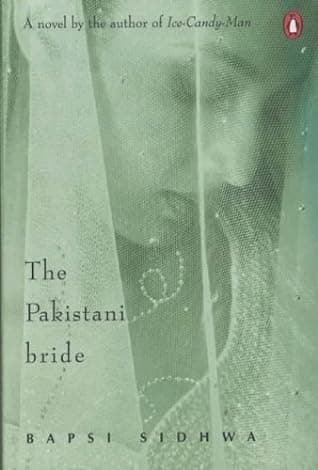
Bapsi Sidhwa (2000)
Genre
Historical Fiction
Reading Time
4-5 hours (estimated for a typical novel length)
Key Themes
See below
Sign in to track this book
In 1940s Pakistan, a spirited Lahore orphan, married off to a mountain tribesman by her nostalgic adoptive father, flees her brutal new life, choosing a perilous escape over a fate worse than death.
The story begins with Qasim, a strong and kind Pathan man, finding the only survivor of a massacre in a Kashmiri village: a five-year-old girl named Zaitoon. Her family died during the Partition violence. Despite his initial hesitation, Qasim adopts Zaitoon and brings her to Lahore, a busy, modern city in new Pakistan. He raises her, giving her a comfortable life and a good education, protecting her from his past and the tribal customs of his mountain heritage. Zaitoon grows up used to city life, unaware of the cultural difference between her and Qasim's roots.
Years pass, and Zaitoon becomes a beautiful, educated young woman in Lahore, living a relatively liberal urban life. Qasim builds a successful business and gains wealth. But despite his success, he feels a growing pull towards his ancestral village in the remote mountains, a place of old traditions and a sharp contrast to Lahore. He often remembers the simplicity of his tribal life, and a sense of duty to his heritage begins to override his contentment in the city. This growing nostalgia sets the stage for a major decision about Zaitoon's future.
Driven by his nostalgia and a wish to reconnect with his roots, Qasim makes a sudden and important decision. He promises Zaitoon in marriage to a man from his own tribe, without Zaitoon knowing or agreeing. This act is rooted in Pathan tradition, where family honor and tribal ties often dictate such arrangements. He sees this marriage as a way to strengthen his bond with his people and ensure Zaitoon's place in what he believes is a more honorable way of life, despite her upbringing and lack of understanding of this world.
Zaitoon, at first confused and worried, is eventually convinced by Qasim's sincere requests and his belief that this marriage is for her good. She reluctantly agrees to the journey to the remote mountain village, a place completely new to her. The journey itself is hard, taking them far from the comforts of Lahore into a harsh, wild landscape. As they travel deeper into the mountains, Zaitoon becomes more aware of the cultural differences and the primitive conditions of her future home, a sharp contrast to her city upbringing.
Upon arrival, Zaitoon marries Sakhi, a strong but stern Pathan. The wedding is traditional and simple, without the joy Zaitoon might have expected. Her new life is immediately difficult; she must follow strict tribal customs, do hard physical labor, and obey her husband's absolute authority. Sakhi, though not openly cruel at first, represents the rigid, patriarchal values of his community. Zaitoon feels trapped in a world where her voice and wishes mean little, leading to deep unhappiness.
Zaitoon's initial worry quickly turns into despair. She struggles to adapt to the primitive life, the lack of modern things, and the demanding expectations placed on her. Her husband, Sakhi, becomes increasingly harsh. He sees her Lahore upbringing as a weakness and tries to break her spirit, using physical and emotional abuse to show his power. Zaitoon's pleas to Qasim are mostly ignored, as he is blinded by his loyalty to tribal customs and his belief that she will eventually adapt. The once loving bond between Zaitoon and Qasim becomes strained.
The constant cruelty and the suffocating environment push Zaitoon to her limit. She realizes that her life in the mountains is a slow death, without love, respect, or freedom. Even though she knows the severe consequences of running away—tribal law means death for a runaway wife—Zaitoon makes the desperate decision to escape. Her longing for the life she knew in Lahore and her will to survive overcome her fear of punishment. This decision marks a major change, as she chooses to act for herself over submitting, even if it means risking her life.
Zaitoon's escape is full of danger. She flees at night, crossing the difficult mountain terrain alone, facing the weather, hunger, and the constant threat of being found. Her journey shows her resilience and desperation. She meets different people along the way; some offer brief moments of kindness, others pose new threats. The vast, unforgiving landscape reflects her inner struggle and the great odds against her. Each step away from the village is a step towards an uncertain, possibly fatal, freedom.
When they discover Zaitoon is gone, Sakhi and his family, driven by tribal honor and a wish for revenge, immediately begin a relentless pursuit. They are determined to uphold the tribal code, which demands the death of a runaway wife. The chase across the rugged land is intense. Eventually, they catch Zaitoon, leading to a violent confrontation. The scene shows the brutal realities of tribal justice and the extreme measures taken to enforce it, leaving Zaitoon's fate in danger.
Qasim, finally understanding the terrible results of his actions and seeing the brutal pursuit of Zaitoon, is filled with guilt. He rushes to intervene, trying to protect the girl he once adopted and loved. His intervention leads to a tense standoff with Sakhi and the other tribesmen, as he tries to negotiate or forcibly prevent Zaitoon's execution. This moment highlights Qasim's internal conflict between his loyalty to tradition and his deep fatherly love for Zaitoon, showing his deep regret for having condemned her to such a fate.
Because of Qasim's intervention, Zaitoon's immediate execution is stopped, but she is left deeply hurt, both physically and emotionally. The novel ends without a clear 'happily ever after,' instead focusing on the lasting impact of her ordeal. She survives, but her spirit is changed by the trauma of her marriage and escape. The ending leaves Zaitoon's long-term future unclear, suggesting that while she has escaped physical death, she must now deal with the psychological wounds and the challenge of rebuilding a life in a world where she has been deeply betrayed and brutalized. The ending is more about survival than victory.
The Protagonist
Zaitoon transforms from a sheltered, innocent girl into a hardened survivor, forced to fight for her life and autonomy against oppressive traditions.
The Supporting/Conflicted Figure
Qasim moves from a benevolent protector to an unwitting agent of Zaitoon's suffering, ultimately realizing his tragic mistake and attempting to atone for it.
The Antagonist
Sakhi remains largely static, a symbol of unyielding tradition and patriarchal cruelty, his actions driving Zaitoon's desperation.
The Supporting
Miriam's role is brief but significant, offering a moment of hope and human connection in Zaitoon's darkest hour.
The Supporting/Mentioned
Karim remains a steadfast figure of tribal tradition.
The Mentioned
His character serves as a reference point for the contrasting lifestyles.
The Mentioned/Collective Antagonist
They remain static, embodying the immutable force of tradition.
The novel shows a clear contrast between modern city life (Lahore) and old tribal customs (the Pathan mountains). Zaitoon, raised in a city, is forced into a primitive, patriarchal society where women have no rights. Qasim's internal struggle between his love for Zaitoon and his loyalty to his traditional heritage shows this theme. The journey from Lahore to the mountains is not just geographical but a deep cultural shift, highlighting the differences in values, freedom, and justice between these two worlds.
“For Zaitoon, giving up the civilized city life she remembers to become the bride of this hard, inscrutable husband proves traumatic to the point where she decides to run away...”
A main theme is the control of women within a strict patriarchal system. Zaitoon's marriage is arranged without her consent, her voice is silenced, and her body is subject to her husband's will. The tribal code demands her absolute obedience and punishes any attempt at independence with death. Sakhi's abuse and the community's approval of it show the extreme power imbalance. The novel reveals how cultural 'honor' is often kept through controlling women, taking away their individuality and basic human rights, making their lives uncertain and dependent.
“She knew that by the tribal code the punishment for such an act is death.”
Zaitoon feels deep betrayal, mostly from her adoptive father, Qasim. His well-meaning but mistaken decision to marry her into his tribe, driven by his own longing and cultural loyalty, breaks her trust and leads to her suffering. The image of Qasim as her protector is replaced by the reality of him enabling her oppression. This theme explores the tragic results of misplaced loyalty and the disappointment that happens when those closest to us fail to protect us, especially when cultural norms override personal bonds.
“He impulsively, he promises Zaitoon in marriage to a man of his tribe.”
Zaitoon's journey is a search for freedom and to reclaim who she is. Stripped of her city life, her education, and her independence, she struggles to keep a sense of self in a world that tries to erase it. Her desperate escape is an ultimate act of defiance, a refusal to be defined and limited by the brutal traditions forced upon her. Her flight is not just from a physical place but from a stifling identity, as she tries to reclaim her independence and decide her own fate, even when facing death.
“Zaitoon, a new bride, is desperately unhappy in her marriage and is contemplating the ultimate escape—the one from which there is no return.”
The novel examines how deeply held traditions and the idea of 'honor' can control individual lives and lead to tragic outcomes. Qasim's actions are largely driven by his adherence to tribal honor and his wish to reconnect with his heritage, even at Zaitoon's expense. The tribal code of justice, especially for runaway wives, shows how honor can be put before individual well-being and basic human rights, leading to brutal punishments. This theme questions the cost of upholding tradition when it conflicts with compassion and justice.
“Impulsively, he promises Zaitoon in marriage to a man of his tribe.”
The physical journey from Lahore to the mountains symbolizes Zaitoon's cultural and personal transformation.
The arduous journey Zaitoon undertakes from the vibrant city of Lahore to the remote, harsh mountain village serves as a powerful metaphor. It represents her descent from a life of relative freedom and modernity into a world of oppressive tradition and brutality. Each step of the physical journey strips her of her urban comforts and exposes her to the stark realities of her new existence, mirroring her internal transformation from an innocent, trusting girl to a desperate survivor. The return journey, though perilous, symbolizes her fight to reclaim her agency.
Zaitoon's urban upbringing and Sakhi's tribal nature highlight their contrasting worlds.
Zaitoon and Sakhi act as foil characters, their contrasting backgrounds and values emphasizing the novel's central conflict. Zaitoon, with her Lahore education and aspirations, represents modernity, individuality, and female agency. Sakhi, as the embodiment of rigid tribal patriarchy, represents ancient customs, male dominance, and collective honor. Their marriage is not just a union of two people but a violent clash of two irreconcilable worlds, making Zaitoon's suffering more acute and highlighting the cultural chasm at the heart of the story.
Early hints of Qasim's nostalgia and the tribal code subtly predict Zaitoon's tragic fate.
The novel employs foreshadowing through Qasim's increasing nostalgia for his mountain heritage and the gradual revelation of the strict, unforgiving nature of tribal law. From the outset, the reader is made aware of the cultural gap between Zaitoon's upbringing and Qasim's roots. This subtle buildup of cultural tension and the mention of harsh customs hints at the tragic outcome of Qasim's decision, creating a sense of impending doom and making Zaitoon's eventual suffering feel tragically inevitable rather than arbitrary.
The mountains represent both Qasim's heritage and Zaitoon's entrapment.
The remote, rugged mountains serve as a powerful symbol throughout the novel. For Qasim, they represent his ancestral heritage, honor, and a simpler, more 'authentic' way of life. For Zaitoon, however, they quickly become a symbol of her entrapment, isolation, and the harsh, unyielding nature of the tribal laws that bind her. The physical inaccessibility and unforgiving landscape of the mountains mirror the psychological and cultural barriers that Zaitoon faces, symbolizing the vast, insurmountable obstacles to her freedom and happiness.
“The wind, a mischievous invisible hand, would snatch at her dupatta, threatening to carry it away into the vast, indifferent sky.”
— Reflecting on Feroza's early life in the mountain village.
“She was like a bird with clipped wings, still dreaming of flight even as she pecked at the dust.”
— Describing Feroza's constrained existence after her marriage.
“A woman's honor, they said, was like a fragile glass, easily shattered, impossible to mend.”
— Highlighting societal views on female honor and reputation.
“The mountains, ancient and silent, watched over them, privy to their joys and their sorrows, their brief lives and their long deaths.”
— Setting the scene in the remote, tribal areas.
“Love, she learned, was not always a gentle rain, but sometimes a scorching sun that withered everything in its path.”
— Feroza's disillusionment with her marriage.
“He saw her not as a woman, but as a vessel, a bearer of his name and his children, nothing more.”
— Characterizing Qasim's perception of Feroza.
“The city was a bewildering kaleidoscope of noise and faces, a place where she felt both exhilarated and utterly lost.”
— Feroza's initial impressions of Lahore.
“Freedom, for a woman, was a whispered word, a dangerous dream that could cost her everything.”
— Exploring the theme of female autonomy in the novel.
“Her spirit, though bruised, refused to break. It was a stubborn, defiant thing, clinging to life with a fierce tenacity.”
— Feroza's resilience in the face of adversity.
“The past was a shadow that followed you, no matter how fast you ran, no matter how far you travelled.”
— Feroza's attempts to escape her past.
“Every step she took was a rebellion, a silent scream against the injustice that had been inflicted upon her.”
— Feroza's journey towards asserting her independence.
“Silence, in their culture, was often a more potent weapon than words.”
— Observing the dynamics of communication and power within the tribal community.
“She learned that the heart, like a river, could carve new paths, even through the hardest of stones.”
— Feroza's capacity for emotional healing and change.
Ready to see how well you understood this book? Take our interactive quiz with 10 questions.

Bapsi Sidhwa is a Pakistani-American novelist celebrated for her witty and insightful portrayals of Pakistani society. Her notable works include "The Pakistani Bride" and "An American Brat," which often explore themes of cultural identity, gender, and tradition. Sidhwa's writing is characterized by its sharp humor and engaging narrative voice.







