“There are some wounds that are so deep that they never heal, and the only thing you can do is learn to live with them.”
— Fleur Pillager reflecting on past traumas.

Louise Erdrich (2005)
Genre
Literary Fiction / Historical Fiction
Reading Time
360 min
Key Themes
See below
Sign in to track this book
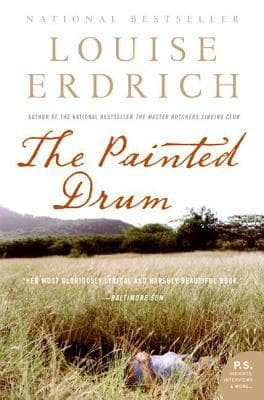
An Ojibwe drum, found during an appraisal, leads to a journey through generations, showing the connections between mothers, daughters, and heritage.
Faye Travers, an Ojibwe woman working as an appraiser in New Hampshire, is asked to catalog the estate of Bernard Shaawano, who recently died. Among the items, she finds a moose-skin and cedar drum. The drum reminds her of one her mother, Elsie, had talked about. Faye feels a connection to the object, knowing its spiritual meaning. She learns Shaawano's family had ties to a North Dakota Indian agent, which might explain the drum's origin. Feeling a strong pull, Faye decides to take the drum from the estate, believing it belongs elsewhere, perhaps with its people.
Faye's decision to take the drum begins a journey of discovery. She feels she must return it to the Ojibwe community in North Dakota, to a place she connects with her heritage. As she travels, the story shifts, showing the drum's long and complex history. It is a powerful, sacred object, passed down through generations, often bringing both comfort and trouble to its keepers. The drum's journey is linked to the lives of several Ojibwe families, showing themes of displacement, strength, and the lasting power of cultural items. Faye's personal search to understand the drum becomes a way to connect with her own ancestors.
The story goes into the early life of Bernard Shaawano, the man whose estate Faye appraised. Bernard, as a child, lived on a reservation in North Dakota where his father was an Indian agent. The drum comes into the Shaawano family's possession in unclear ways. Bernard's father, wanting to 'civilize' the Ojibwe or perhaps just collect items, gets the drum. This act is shown as cultural appropriation, separating the drum from its owners and its sacred purpose. Young Bernard, not fully understanding its meaning, sees the drum arrive and the quiet tension it creates.
The story goes back in time to the drum's creation, focusing on a young Ojibwe woman named Anna. Anna is deep in grief after her infant daughter dies from illness during a harsh winter. Wanting to talk to her lost child and honor her memory, Anna is guided by visions and ancestral knowledge. She carefully makes the moose-skin and cedar drum, filling it with her love, sorrow, and spiritual longing. The drum is not just an instrument but a way for her grief and a means to connect with the spirit world, showing the bond between mother and child.
After its creation, the drum becomes important to Anna's life and her community's spiritual well-being. She uses it in ceremonies, finding comfort and a way to turn her grief into healing. The drum's beat brings comfort and connection to the ancestors, helping others mourn and find spiritual guidance. However, its power and sacredness also draw the attention of outsiders, especially the white settlers and government agents who see Indigenous spiritual practices with suspicion and a desire for control. This hints at the drum's eventual removal from its original place and the challenges the Ojibwe people face.
The drum is eventually taken from Anna, a painful reminder of her past losses. This act is a violation, not just of an object, but of a spiritual connection. The story moves between Anna's pain in the past and Faye's growing understanding in the present. Faye starts to put together the drum's history, realizing its link to her own family and community. The story shows that Anna is Faye's ancestor, joining their lives across generations through the drum. The drum becomes a clear link to a stolen past and helps Faye on her journey of reclaiming.
As Faye continues her journey, she looks for her mother, Elsie, who lives on the reservation. Elsie, a wise and strong woman, knows the drum right away, confirming Faye's feeling. Elsie shares her memories and stories about the drum, saying it had been an important, almost mythical, object in their family's oral history. She tells how the drum's loss had been a quiet sorrow for generations, a symbol of what their people had lost. Elsie's stories give Faye important pieces of the puzzle, showing the drum's spiritual and cultural importance to their family line.
Faye brings the drum back to the Ojibwe reservation in North Dakota. Her arrival with the drum is met with awe, respect, and a sense of coming home. The community knows the drum's meaning, not just as an object, but as a living part of their heritage. Faye, guided by Elsie and other elders, begins to learn the customs and ceremonies for the drum. This homecoming is a moment of cultural reclaiming, as the drum returns to its spiritual and community place, representing a reawakening of traditions and a connection to ancestral spirits.
Once returned, the drum becomes a center for healing and cultural renewal on the reservation. It is used in ceremonies, teachings, and community gatherings, bringing people together and reminding them of their shared history and strength. The drum's rhythms spread through the community, inspiring storytelling, song, and traditional practices that had been lost. For Faye, seeing the drum's effect changes her, making her identity and purpose clearer. The drum, made from grief, now helps collective healing and strengthens the bonds within the Ojibwe nation, joining past and present.
The novel ends with the drum back in the Ojibwe community, its sacred purpose restored. Faye, having finished her task, stays connected to the drum and her heritage. Her journey from appraiser to guardian of her people's history shows her own change. The drum's story, from its creation by Anna in grief to its return by Faye, shows the cycle of life, loss, and renewal. It is a symbol of Indigenous strength, the lasting power of cultural identity, and the connection between objects, memory, and the human spirit, meant to continue its song for future generations.
The Protagonist
Faye transforms from a somewhat detached appraiser to a guardian of her people's history, finding her identity through the drum's journey.
The Major Supporting Character/Ancestral Figure
Anna channels her overwhelming grief into the creation of a sacred object, finding a means of spiritual connection and healing for her community.
The Supporting Character
Elsie helps Faye understand the drum's history and her own identity, ensuring the drum's proper return and re-integration.
The Supporting Character/Catalyst
Bernard's life and death serve as a vessel for the drum's temporary holding, inadvertently initiating its return to its true home.
The Antagonist/Historical Figure
His act of appropriation initiates the drum's displacement and the central conflict of its journey back to its people.
The Supporting/Mentioned
Her death prompts the creation of the drum, making her an eternal spiritual presence within the object.
The Mentioned/Ancestral
Their ancestral presence reinforces the drum's deep roots within the Ojibwe community over generations.
The Central Object/Character
The drum is created, lost, and ultimately returned, embodying the cycle of grief, loss, reclamation, and healing.
The novel explores how identity comes from ancestry and cultural heritage. Faye Travers, at first separate from her Ojibwe roots, finds herself through her connection to the drum. The drum, as a link to her ancestors like Anna and Elsie, helps Faye understand who she is. Stories from the past, passed down, are important in defining the characters' sense of self and their place in the Ojibwe community, showing that identity is not just individual but also communal and historical.
““The drum was not merely an object; it was a living memory, a heartbeat that connected the generations.””
Grief is a main theme, clear in Anna's story. The drum is made from Anna's sorrow after her infant daughter's death, a way for her to mourn and talk with the spirit world. But the novel also shows how grief can become healing and strength. The drum, at first a response to personal sadness, becomes an instrument of group healing for the Ojibwe community when it returns. This shows how shared cultural practices can help process individual and group suffering.
““She had fashioned it out of her own grief, a hollow space filled with the memory of a heartbeat.””
The drum's journey from being taken to being returned is a metaphor for cultural reclaiming. The Indian agent taking the drum shows the historical trauma and loss for Indigenous peoples. Faye's search to return the drum represents Indigenous communities' ongoing efforts to reclaim their heritage, languages, and spiritual practices. The novel celebrates the Ojibwe people's strength; despite oppression, they keep their culture and work for its preservation and renewal, with the drum a symbol of this lasting spirit.
““The drum had come home, a heartbeat returning to its body, a song finding its way back to the singers.””
The painted drum itself is central to this theme. It is not just an object but a living container of memory, history, and spiritual power. It carries the stories of those who made it, owned it, and were touched by it across generations. The drum links to the past, letting characters like Faye and Elsie connect with their ancestors and understand their experiences. The novel shows how certain objects can hold collective memory, serving as reminders of cultural identity, historical events, and the spiritual world, moving through time and space.
““Every beat was a whisper of the past, a story carried on the wind, a memory brought to life.””
The novel explores the strong bonds between mothers and daughters across generations. Anna's love and grief for her lost daughter make her create the drum, forming a spiritual connection beyond death. In the present, Faye's relationship with her mother, Elsie, is important to her understanding of the drum and her heritage. Elsie's wisdom and storytelling guide Faye, deepening their bond and connecting Faye to a line of strong Ojibwe women. These relationships show how culture, wisdom, and emotional legacies pass from one generation to the next.
““A mother's love, even in absence, could echo through generations, a drumbeat in the blood.””
The story jumps between different time periods, often centuries apart.
Erdrich employs a non-linear narrative structure, moving fluidly between Faye's contemporary quest to return the drum and the distant past of Anna's life and the drum's creation. This device allows the reader to understand the full scope of the drum's history and its impact on multiple generations simultaneously. By interweaving these timelines, the novel emphasizes the enduring nature of history and memory, showing how past events continue to shape the present and future for the characters and the Ojibwe community.
The drum serves as the central symbol and a living entity.
The painted drum is not merely a plot device but the core symbolic heart of the novel. It represents Indigenous identity, resilience, spiritual connection, cultural memory, and the enduring power of grief and healing. It acts as a physical embodiment of the Ojibwe spirit, a repository of ancestral voices, and a bridge between the physical and spiritual worlds. Its journey of loss and return is a direct metaphor for the historical experiences of Indigenous peoples in North America, making it a powerful and multifaceted symbol.
Stories and memories passed down orally are central to understanding the drum's history.
The transmission of knowledge through storytelling is a key narrative device, reflecting the importance of oral tradition in Indigenous cultures. Elsie's recounts of the drum's history and her family's connection to it are crucial for Faye's understanding. These stories fill in the gaps that written history often ignores, providing a rich, personal, and spiritual context for the drum's significance. This device highlights the power of spoken word in preserving culture, history, and identity across generations, especially in the absence of written records.
Faye's physical and spiritual journey to return the drum.
Faye's decision to take the drum from the estate and return it to its rightful home initiates a classic quest narrative. This journey is not just a physical one across states but also a profound spiritual and emotional exploration for Faye. Along the way, she encounters obstacles, gains knowledge, and undergoes a significant transformation. The journey serves as a structural backbone for the plot, allowing for the unfolding of the drum's history and Faye's personal growth as she reconnects with her heritage.
“There are some wounds that are so deep that they never heal, and the only thing you can do is learn to live with them.”
— Fleur Pillager reflecting on past traumas.
“The past is a drum, and the drum is always beating. You can't outrun the rhythm.”
— A character's meditation on the inescapable nature of history and memory.
“Sometimes the only way to hold onto something is to let it go.”
— A lesson learned about love and possession.
“The world is full of invisible things, and they are often the most powerful.”
— Exploration of spiritual beliefs and unseen forces.
“Grief is a house with many rooms, and you will visit them all.”
— A poignant description of the grieving process.
“We carry our ancestors in our bones, their stories in our blood.”
— Emphasis on ancestral connection and heritage.
“Love is not a gentle thing. It is a wild, untamed beast.”
— A character's passionate view on the nature of love.
“The truth is a tricky thing. It changes depending on who's telling it.”
— Commentary on subjective truth and storytelling.
“There are moments when the world opens up and shows you its true face.”
— Describing a profound, revelatory experience.
“A drum is not just wood and hide; it's a living thing, a voice.”
— Reflecting on the sacred significance of the drum.
“Some secrets are meant to stay buried, like seeds waiting for the right season.”
— Discussing the timing and nature of revealing secrets.
“The river remembers everything. It flows through time, carrying all the stories.”
— Metaphorical connection between nature and historical memory.
“To truly listen is to open yourself to another's world, to let their song enter your heart.”
— A profound statement on empathy and understanding.
“We are all just trying to find our way home, even if we don't know where home is anymore.”
— A universal sentiment about belonging and searching.
Ready to see how well you understood this book? Take our interactive quiz with 10 questions.

Karen Louise Erdrich is an American author of novels, poetry, and children's books featuring Native American characters and settings. She is an enrolled member of the Turtle Mountain Band of Chippewa Indians, a federally recognized tribe of Ojibwe people.







