“Dark is exciting. It's when you can see the stars.”
— Plop the baby owl learns from a little boy that the dark can be a time of wonder and adventure.

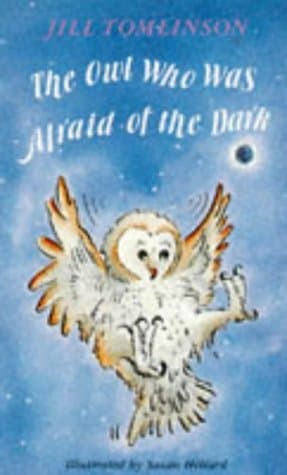
Jill Tomlinson (1968)
Genre
Fantasy / Children's
Reading Time
90 min
Key Themes
See below
Sign in to track this book
A baby barn owl named Plop is afraid of the dark. With help from friendly creatures, he faces his fear and discovers the wonders of the night.
Plop, a young barn owl, is born into a world where his family, including Mummy and Daddy Owl, are nocturnal and love the dark. But Plop is different; he is very afraid of the dark. Every evening, as the sun sets and the world outside their nest in a tree hole grows dim, Plop hides in the back of the nest. He refuses to come out and learn to hunt. His Mummy Owl tries to encourage him. She explains that the dark is 'beautiful' and 'fun,' but Plop only replies, 'I don't like it.' He watches his parents fly off into the night with a mix of longing and worry. He wishes he could be like them but is too scared to go out.
Mummy Owl worries about Plop's fear and makes a plan. She tells Plop that he needs to leave their tree and ask people what they think of the dark. Plop is unsure at first, but Mummy Owl says it is the only way he will learn. She explains that people have different ideas and might show him things she cannot. With a gentle push, she tells him to be brave and start his search. Plop, still scared but also curious and wanting to please his mother, takes his first flight down towards the ground, ready to meet new people.
Plop first meets a young boy waiting for the evening. Plop asks him, 'Are you afraid of the dark?' The boy laughs and says he loves the dark because that is when fireworks happen. He describes the bright colors and loud sounds that light up the night sky, making the dark a time of celebration and excitement. Plop listens closely, forgetting his fear for a moment as he imagines the show. The boy's excitement for fireworks starts Plop wondering if the dark is not so bad after all when something so beautiful can happen in it.
Next, Plop meets an old lady sitting on a park bench. He asks her, 'Are you afraid of the dark?' The old lady smiles and tells him she loves the dark because it is peaceful and quiet. It is the best time for sleeping and resting after a long day. She explains how the dark brings calm and lets everyone recharge. Plop, who often struggles to sleep because of his fear, finds this idea comforting. He starts to see the dark not just as no light, but as a time of calm and needed rest. This is very different from his earlier worries.
Plop then flies towards a group of people by a campfire. He asks one of the campers, 'Are you afraid of the dark?' The camper explains that they love the dark because it is the best time for telling scary stories, playing hide-and-seek, and singing songs by the fire. They describe the warm glow of the fire against the blackness, creating a cozy and fun atmosphere. Plop watches their happy interactions and the friendship the dark brings to their activities. This meeting shows Plop that the dark can be a setting for fun, shared experiences, and imaginative play, not just something to fear.
Later, Plop sees a little girl looking up at the sky. He asks her, 'Are you afraid of the dark?' She giggles and explains that the dark is wonderful because that is when the stars appear. She tells him about making wishes on the first star she sees and how the moon shines brightly. Her simple wonder and appreciation for the night sky's beauty interest Plop. He looks up himself, seeing the twinkling stars for the first time without fear. He starts to understand the magic and size that the dark shows, opening his eyes to a new kind of beauty.
Plop's journey continues, and he meets a man with a large telescope. When asked about the dark, the man explains that the dark is needed for stargazing and exploring the universe. He describes distant galaxies, planets, and star groups, showing Plop the wonders that can only be seen after the sun sets. Plop is amazed by the scientific and impressive parts of the night. This meeting expands Plop's understanding of the dark's use and greatness. His fear seems less important compared to the vastness the dark reveals.
Plop flies back to his nest, feeling much less afraid. He meets a Mummy Cat with her kittens. He asks her, 'Are you afraid of the dark?' The Mummy Cat explains that the dark is important for many animals, including her. It is the best time for hunting and finding food for her family. She describes how their eyes are made for the night, making them good hunters. Plop realizes that the dark is not just for human activities but is a vital part of nature and the survival of many creatures, like owls. This practical idea helps him connect the dark to his own owl nature.
Finally, Plop meets a friendly policeman on his route. He asks the policeman, 'Are you afraid of the dark?' The policeman explains that the dark is when he does his important job of keeping people safe and watching over the town while everyone sleeps. He describes how he uses his flashlight to see in the darkness, making sure there is peace and order. This meeting shows Plop that the dark can be a time for responsibility and protection, where dedicated people work to keep everyone safe. It adds another layer of purpose and meaning to the night, removing any remaining ideas of it being only dangerous.
After meeting all these different people and hearing their varied, positive ideas about the dark, Plop flies back to his nest. His heart is full of new understanding and courage. He excitedly tells his Mummy Owl about all the wonderful things he learned: fireworks, sleep, games, stars, the universe, hunting, and safety. He no longer says, 'I don't like it.' Instead, he says, 'It's beautiful!' and 'It's fun!' He is finally ready to use his natural owl instincts. That night, Plop bravely flies out of the nest, eager to explore the dark for himself. His fear is completely gone, replaced by curiosity and joy.
The Protagonist
Plop transforms from a fearful, hesitant owlet into a brave, curious young owl who embraces the night.
The Supporting
Mummy Owl remains a constant source of wisdom and encouragement, successfully guiding Plop to overcome his fear.
The Supporting
Daddy Owl remains a consistent, comforting presence, embodying the natural state Plop eventually achieves.
The Supporting
The Boy provides the first positive perspective on the dark, initiating Plop's journey of understanding.
The Supporting
The Old Lady offers a peaceful perspective, helping Plop see the dark as a time for rest.
The Supporting
The Campers show Plop the fun and social side of the dark, expanding his understanding beyond fear.
The Supporting
The Girl introduces Plop to the aesthetic beauty of the night sky and the magic of stars.
The Supporting
The Man with the Telescope broadens Plop's view, showing him the scientific and grand scale of the dark.
The Supporting
Mummy Cat helps Plop understand the practical, survival-based importance of the dark for animals.
The Supporting
The Policeman provides a final perspective, showing Plop that the dark can be a time for safety and order.
The main idea is Plop's journey to conquer his fear of the dark. Through a series of meetings, Plop learns to change how he sees the night, moving from fear to acceptance and finally, to joy. Each person he meets offers a different positive aspect of the dark, slowly reducing his fear. This idea shows how understanding and experience help overcome worries. It shows that what is feared can often be beautiful or useful when seen differently.
“'I don't like it,' said Plop. 'It's too dark.'”
The book shows how different people have different ideas about the same thing – the dark. Plop's Mummy Owl wisely sends him to ask people what they think of the dark. She knows that understanding comes from diverse views. From the boy's excitement for fireworks to the old lady's appreciation for peace, each character gives a unique way for Plop to see the night. This idea highlights the importance of empathy and expanding one's understanding by listening to others' experiences.
“Mummy Owl said, 'Go down and ask them what they think about the dark.'”
Beyond just overcoming fear, Plop's journey shows the dark's beauty and practical use. He discovers the wonder of stars, the peace of a quiet night, the excitement of fireworks, and the need for darkness for animals like the Mummy Cat to hunt. The man with the telescope further expands this by showing the scientific marvels visible only at night. This idea encourages appreciation for nature and its cycles. It shows that every part of nature, even the seemingly 'dark' ones, has a purpose and its own charm.
“'The dark is wonderful,' said the little girl, 'because that's when the stars come out.'”
Plop's quest is like a child's journey towards growing up and becoming independent. At first, he depends on his parents and is paralyzed by fear. He is encouraged to venture out on his own. Each meeting is a step towards self-discovery and building confidence. By the end of the book, Plop is no longer a fearful owlet but a brave young owl ready to use his natural instincts and explore the world independently. This idea celebrates growing up and learning to navigate the world on one's own.
“He flew right out of the hole in the tree, and into the dark.”
A series of distinct encounters forming a journey.
The book employs an episodic structure where Plop's journey consists of a series of separate, self-contained encounters with different characters. Each episode presents a new perspective on the dark, contributing cumulatively to Plop's understanding and character development. This structure allows for a clear progression of his learning and makes the narrative accessible for young readers, as each chapter offers a distinct 'lesson' about the dark.
Plop's recurring question 'Are you afraid of the dark?'
Plop consistently asks every character he meets, 'Are you afraid of the dark?' This repeated question serves as a central motif and a narrative anchor. It highlights Plop's initial preoccupation with his fear and acts as a catalyst for each character to share their unique perspective. The repetition also reinforces the theme of seeking understanding and provides a rhythmic quality to the narrative, making it memorable for young readers.
Giving human qualities to animal characters.
The primary plot device is anthropomorphism, as Plop and his owl parents exhibit human-like emotions, speech, and thought processes (e.g., Plop's fear, Mummy Owl's wise advice). This allows young readers to connect with the characters and their struggles on a relatable level, making complex themes like overcoming fear more accessible and engaging. Plop's journey to understand the dark is made possible by his ability to communicate directly with humans and process their diverse viewpoints.
The dark symbolizes the unknown, while light symbolizes understanding.
The 'dark' in the story symbolizes the unknown, fear, and the challenges one faces, while 'light' (or the absence of fear) represents understanding, comfort, and acceptance. Plop's journey is a metaphorical movement from the darkness of his fear into the 'light' of knowledge and appreciation for the night. The fireworks, stars, and campfire light all serve as literal and symbolic illuminations within the dark, showing its hidden beauty and utility.
“Dark is exciting. It's when you can see the stars.”
— Plop the baby owl learns from a little boy that the dark can be a time of wonder and adventure.
“Dark is kind. It wraps you up and keeps you safe.”
— Plop hears from an old lady who finds comfort in the darkness of night.
“Dark is necessary. Without it, we wouldn't have the stars.”
— An astronomer explains to Plop how darkness is essential for the beauty of the night sky.
“I'm a barn owl and I'm supposed to be afraid of the dark.”
— Plop's initial complaint to his mother about his fear, highlighting his identity conflict.
“Dark is fun. It's when you can play hide-and-seek.”
— A young girl tells Plop about the games children play in the dark.
“You'll never know what the dark is like until you try it.”
— Plop's mother encourages him to venture out and experience the night for himself.
“Dark is beautiful. It's when the moon comes out.”
— Plop observes the moonlit night and starts to appreciate its beauty.
“I think I'm beginning to like the dark.”
— Plop's realization after his encounters, showing his growth and change of heart.
“Dark is mysterious. It holds secrets and surprises.”
— A storyteller shares tales with Plop about the mysteries of the night.
“Everyone is afraid of something, but you don't have to stay afraid.”
— A wise character advises Plop on facing and overcoming fears.
“Dark is for dreaming. It's when you can imagine anything.”
— Plop learns from a dreamer about the creative possibilities of the dark.
“Look at the night sky. It's full of light, even in the dark.”
— Plop is shown how darkness contrasts with the light of stars and the moon.
“I'm not afraid anymore. Dark is wonderful!”
— Plop's final declaration, embracing the dark after his journey of discovery.
Ready to see how well you understood this book? Take our interactive quiz with 10 questions.







