“The best arguments in the world won't change a person's mind. The only thing that can do that is a good story.”
— A character reflects on the power of narrative over logic in environmental activism.

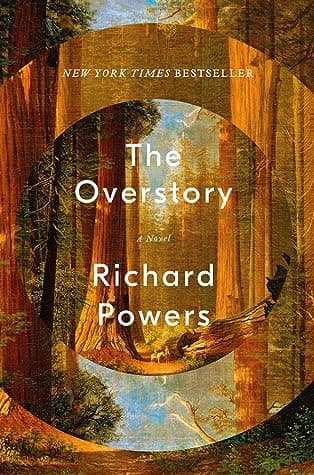
Richard Powers (2018)
Genre
Literary Fiction / Historical Fiction
Reading Time
1200 min
Key Themes
See below
Sign in to track this book
Through the lives of different strangers, 'The Overstory' shows humanity's strong, often destructive, link to the old, smart world of trees, asking us to rethink our place in nature's ongoing problems.
The story starts by showing individual characters through short scenes that highlight their first experiences with trees. Patricia Westerford, a shy scientist, discovers how trees communicate. Nick Hoel's family history involves a chestnut tree photographed every month for a hundred years. Mimi Ma moves to the US with a mulberry sapling. Adam Appich's early life includes a childhood incident with a falling tree. Ray Brink and Dorothy Cazaly's relationship starts under a tree. Douglas Pavlicek, a Vietnam veteran, survives a plane crash into a banyan tree. Olivia Vandergriff has a near-death vision of light and trees. Neelay Mehta creates a virtual world based on biological networks. Each character's path is set by these first, often strange, encounters, hinting at how they will eventually come together in a larger story about how people relate to nature.
Olivia Vandergriff, after a suicide attempt and a clear vision of a tree-like network of light, feels she must leave her old life and follow an inner call. She starts traveling, drawn by an unexplained pull towards the old forests of the Pacific Northwest. Her journey leads her to environmental activists, including Douglas Pavlicek, who, still affected by his Vietnam experiences and his banyan tree encounter, has found a new purpose in protecting old-growth trees. They join a growing movement of tree-sitters and protesters fighting against logging companies, forming a new community united by their respect for nature and their willingness to act directly to save it.
Olivia, Douglas, and other activists, including Adam Appich and Mimi Ma, get deeply involved in the timber conflicts of the Pacific Northwest. They set up complex tree-sits in old redwoods, dealing with bad weather and police harassment to stop logging. Olivia, now called 'Maidenhair,' and Douglas, 'Watchman,' become key figures in the resistance. Mimi Ma, using her engineering skills, helps build platforms and systems for the tree-sits. Adam Appich records their struggles, first as an academic observer, but slowly becoming more committed. Their actions go from peaceful protest to more disruptive methods, driven by a growing sense of urgency and hopelessness over the destruction of the forests.
Feeling frustrated by how slowly things change and the constant destruction of the forests, some activists, including Olivia and Douglas, use more extreme methods, like destroying logging equipment. These acts aim to make logging too expensive, but they also get the attention of federal authorities. When a mill burns down, the group is suspected. Olivia, Douglas, and Adam are arrested and charged with crimes, including arson and conspiracy. The legal fight is intense, showing the conflict between environmental beliefs and property rights, and making the characters face the personal costs of their beliefs.
While the activism happens, Patricia Westerford, a smart but socially awkward botanist, spends her life studying trees. Her research shows that trees communicate through underground fungal networks, sharing food and information. She calls this the 'wood wide web.' She publishes her findings, but other scientists, who believe nature is only about competition, strongly reject and make fun of her work. Accused of giving trees human traits and not being careful enough, Patricia is pushed aside, her career seemingly ruined. She leaves academia, continuing her quiet research alone, sure of what she saw despite the professional criticism.
Ray Brink, a patent lawyer, and Dorothy Cazaly, a careful proofreader, share a deep, lasting love that started under a tree. Their relationship has quiet routines and mutual respect. As they get older, Dorothy becomes interested in environmentalism, first by reading. This slowly changes Ray's belief in human cleverness and progress. She starts to question if human society is sustainable and how much damage people do to the planet, disturbing Ray's comfortable view of the world. Their talks show a wider societal awakening to environmental worries, as Dorothy's growing awareness brings a subtle tension into their otherwise peaceful life.
Neelay Mehta, a genius who spent his childhood recovering from a fall from a tree, becomes a brilliant video game creator. He makes a new virtual world called 'UNDO,' designed to copy and explore the complex, connected patterns in nature, especially the 'wood wide web' he hears about from Patricia Westerford's ignored research. His goal is to create a digital ecosystem that can teach players about the deep intelligence and connection of nature. Neelay's work, driven by a wish to understand and recreate nature's beauty, accidentally becomes a link between human technology and the wisdom of old forests.
After their legal problems, the activists' lives go in different directions. Douglas Pavlicek, released from prison, quietly dedicates himself to protecting trees, becoming a silent guardian. Adam Appich, after serving time, uses his academic background to study human psychology, especially what makes people act or not act on environmental issues, trying to understand the 'overstory' of human behavior. Mimi Ma, after her own legal struggles, finds a new purpose in engineering solutions for sustainable living. Their experiences in the timber conflicts, though costly, strengthen their commitment to the environment, but through different ways than their earlier direct actions.
Decades after she was first ignored, Patricia Westerford's work on tree communication is finally recognized and praised, thanks to new scientific discoveries that confirm her findings. Her book, 'The Secret Forest,' sells many copies, starting a global discussion about how smart and connected trees are. She wins many awards and becomes a respected figure, traveling the world to share her ideas. Her being proven right marks a big change in scientific and public understanding, leading to more appreciation for nature and new conservation efforts worldwide. Her journey from outsider to respected expert shows the novel's main message about listening to nature.
Later in their lives, the characters' stories continue to connect in subtle ways. Patricia's book influences Neelay's game design and Dorothy's environmental awareness. Adam Appich, now a psychologist, studies the very urges that drove his past activism. Douglas continues his quiet work, a living example of dedication. The novel ends with a feeling of both loss and fragile hope. While much has been destroyed, recognizing the 'overstory' – the big, connected life of trees – offers a way forward. The characters, alone and together, show humanity waking up to its place in this larger, slower, smarter world, suggesting that real wisdom means listening to the old voices of the forest.
The Protagonist
From an ostracized scientist whose theories are dismissed, she becomes a revered figure whose work fundamentally shifts humanity's understanding of the natural world.
The Supporting
From a detached artist observing the world, he becomes a participant in protecting it, driven by a deep family legacy.
The Supporting
From an engineer focused on human systems, she evolves into an environmental activist and then an engineer focused on sustainable natural systems.
The Supporting
From an academic observer, he becomes an active participant in environmental resistance, then uses his experiences to further his psychological understanding of human-nature interactions.
The Supporting
His traditional, human-centric worldview is slowly but surely expanded by his wife's ecological awareness, leading to a late-life re-evaluation of progress.
The Supporting
From a precise proofreader, she becomes an ardent, late-life environmentalist, pushing her husband to confront difficult truths.
The Supporting
From a traumatized war veteran, he finds purpose and healing in defending trees, becoming a fierce, self-sacrificing environmental activist.
The Protagonist
From a lost college student, she transforms into a charismatic and radical environmental activist, guided by a profound spiritual connection to trees.
The Supporting
From a solitary prodigy, he channels his intellect into creating a digital world that reflects and teaches the interconnectedness of nature.
This idea is central to the novel, explored through Patricia Westerford's scientific discoveries about trees communicating through underground fungal networks, and reflected in the connected lives of the human characters. The 'wood wide web' is a literal and symbolic way to show how all life, human and non-human, relies deeply on each other. Neelay Mehta's virtual world, 'UNDO,' tries to copy this natural network digitally, further showing that individual lives and species are not separate but part of a larger, complex system. The characters coming together in activism or shared understanding illustrates this human connection.
“There are no individuals in a forest. No separate lives. Each tree is a record of its past. It is a record of all the things that have happened to it. The forest is a record of all the trees. And all the trees are connected.”
The novel shows how people often fail to see and respect the complex intelligence and slow wisdom of nature, especially trees. Patricia Westerford being ignored by scientists for her theories on tree communication shows this blindness. Characters like Ray Brink first represent a human-centered view focused on progress, only to have it challenged by others' deep environmental awareness. Destroying old forests for quick money further shows this idea, portraying a species that often acts without understanding the complex systems it is breaking apart.
“The greatest flaw in the human design is that it cannot see what it is part of.”
Much of the story focuses on the Pacific Northwest timber conflicts, where characters like Olivia Vandergriff, Douglas Pavlicek, Nick Hoel, and Mimi Ma take part in environmental activism. From tree-sitting to sabotage, their actions come from a desperate effort to save old forests from being destroyed. The theme explores the moral difficulties of such resistance, the personal sacrifices involved, and the conflict between laws and environmental needs. It asks what counts as fair action when faced with huge environmental damage, and the different forms resistance can take, from direct action to quiet, lifelong commitment.
“A thing is a thing, not what is said about it. We are not protecting trees. We are trees.”
The novel itself shows the power of stories, connecting different narratives that eventually form a larger 'overstory.' The Hoel family's generational photos of their chestnut tree, Patricia Westerford's influential book 'The Secret Forest,' and Neelay Mehta's story-rich video game 'UNDO' all show how stories—whether personal, scientific, or digital—can shape understanding and pass knowledge through time. The characters' individual impacts, especially their link to trees, add to a collective story that aims to change how people think and inspire a new relationship with nature. This theme highlights the novel's own story structure and goal.
“The best arguments in the world won’t change a person’s mind. The only thing that can do that is a good story.”
The novel constantly compares the short nature of human lives with the vast, slow, and lasting timescale of trees and forests. The long lives of redwoods and sequoias put human history into perspective, showing how short-sighted human actions are. The Hoel family's hundred years of photographing a chestnut tree is one clear example of trying to grasp 'tree time.' This theme encourages readers to take a wider view of existence, recognizing the old wisdom and strength in nature. It indirectly criticizes the fast pace of modern human life and its separation from natural cycles.
“Trees are the earth’s endless effort to speak to the listening heaven.”
The narrative unfolds through seemingly disparate character stories that gradually converge.
The novel begins with nine distinct, self-contained vignettes, each introducing a character and their unique connection to trees. These individual 'fables' are initially separate but gradually begin to intertwine, first through shared themes and later through direct interaction among the characters. This structure mirrors the interconnectedness of a forest, where individual trees contribute to a larger, complex ecosystem. It allows Powers to explore the central themes from various angles and demonstrate how seemingly unrelated lives are part of a larger 'overstory' of human-nature interaction.
Trees represent life, connection, wisdom, resilience, and the 'other' world.
Trees are not just a setting but the central symbolic element of the novel. They symbolize deep time, enduring life, and the profound interconnectedness of all living things (the 'wood wide web'). Individual trees, like the Hoel family's chestnut, Douglas's banyan, or Mimi's mulberry, carry personal histories and emotional weight. Ancient forests represent wisdom, resilience, and a non-human intelligence that humanity struggles to comprehend. The destruction of trees symbolizes humanity's self-destructive tendencies and its blindness to the sacredness of nature.
The concept of an overarching, interconnected narrative beyond individual lives.
The 'overstory' is both the literal upper canopy of a forest and a powerful metaphor for the novel's overarching theme. It represents the larger, slower, more complex system of life on Earth, of which humans are only a small, often oblivious, part. The narrative itself aims to reveal this 'overstory' by connecting the individual human stories into a grander narrative about humanity's relationship with the natural world. It suggests that true understanding comes from seeing beyond individual events to the deeper patterns and connections that govern existence.
Integrating detailed scientific concepts directly into the plot and character development.
Richard Powers masterfully weaves complex scientific concepts, particularly those related to dendrology, botany, and ecology, directly into the narrative. Patricia Westerford's research on tree communication and mycorrhizal networks is not merely background information but drives her character arc and influences other characters. Neelay Mehta's virtual world is built upon these scientific principles. This device grounds the speculative and spiritual elements of the story in scientific reality, inviting readers to engage with the natural world through both empirical understanding and a sense of wonder, making the science itself a compelling part of the plot.
“The best arguments in the world won't change a person's mind. The only thing that can do that is a good story.”
— A character reflects on the power of narrative over logic in environmental activism.
“What you make from a tree should be at least as miraculous as what you cut down.”
— A reflection on human use of trees and the responsibility to create something meaningful.
“A tree is a thing that happens to the air.”
— A poetic description of a tree's relationship with its environment.
“The world is failing precisely because no novel can make the contest for the world seem as compelling as the struggles between a few lost people.”
— A meta-commentary on the challenge of writing about ecological crises.
“You and the tree in your backyard come from a common ancestor. A billion and a half years ago, the two of you parted ways.”
— A scientific explanation of the shared evolutionary history between humans and trees.
“The most wondrous products of four billion years of life need help.”
— A call to action for protecting biodiversity and ancient ecosystems.
“There are no individuals in a forest, no separable events. The bird and the branch it sits on are a joint thing.”
— A philosophical observation about the interconnectedness of forest ecosystems.
“To be human is to confuse a satisfying story with a meaningful one.”
— A critique of how humans often prioritize narrative comfort over deeper truths.
“The tree is saying things, in words before words.”
— A description of how trees communicate through chemical and fungal networks.
“What we care for, we grow to resemble.”
— A reflection on how human values and attachments shape identity.
“The law is a blunt instrument. It can't make people care.”
— A character discusses the limitations of legal approaches to environmental protection.
“You can't see what you don't understand. And what you don't understand, you can't love.”
— A meditation on the relationship between knowledge, perception, and compassion.
“The first meaning in any life is that it continues.”
— A simple yet profound statement about the fundamental drive of all living things.
“The planet's lungs will fill again, long after we're gone.”
— A perspective on Earth's resilience and the temporary nature of human existence.
Ready to see how well you understood this book? Take our interactive quiz with 10 questions.
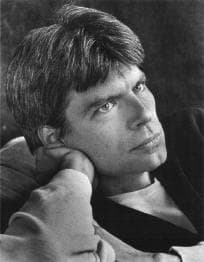
Richard Powers is an American novelist whose works explore the effects of modern science and technology. His novel The Echo Maker won the 2006 National Book Award for Fiction. He has also won many other awards over the course of his career, including a MacArthur Fellowship. As of 2023, Powers has published thirteen novels and has taught at the University of Illinois and Stanford University. He won the 2019 Pulitzer Prize for Fiction for The Overstory.







