“Fear is a powerful enemy, but it can also be a powerful ally if you learn to control it.”
— Halt advising Will during a perilous situation.

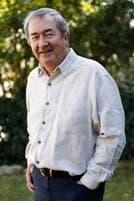
John Flanagan (2011)
Genre
Fantasy / Children's / Historical Fiction / Young Adult
Reading Time
360 min
Key Themes
See below
Sign in to track this book
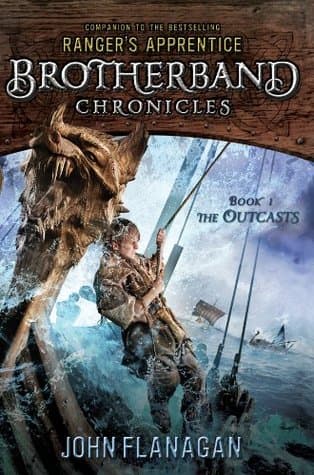
Undersized Skandian outcasts use cleverness and teamwork to prove their worth in a society that values strength, navigating icy seas and rivals to forge a lasting bond.
In the Skandian port of Hallasholm, young Hal Mikkelson is different. He is smaller and smarter than other Skandian boys, often building things instead of fighting. His father, Mikkel, a respected wolfship captain, died heroically. Hal's mother, Karina, raised him. Hal's inventive mind is often misunderstood, but his best friend, Stig, always defends him. As Brotherband training nears, where boys learn seafaring and combat, others view Hal with doubt, especially the arrogant Tursgud, Erak's son, who leads the strong 'Wolves' brotherband. Hal's unique problem-solving, like his new sail designs, hints at his unusual leadership.
The Brotherband selection ceremony happens, led by Oberjarl Erak. Boys are chosen for crews based on strength and perceived ability. Hal, Stig, and other boys considered too weak, small, or clumsy – including the big but gentle Thorn, the quiet twins Ingvar and Jesper, the agile Edvin, and the playful Ulf and Wulf – are chosen last. To everyone's surprise, Erak announces these 'outcasts' will form their own Brotherband, the 'Herons,' and Hal Mikkelson will lead them. The other two Brotherbands, the 'Wolves' led by Tursgud, and the 'Sharks' led by Rolf, mock this decision. The Herons get an old boat and little equipment, expected to fail.
Hal leads the Herons in training. Instead of traditional brute force, Hal focuses on teamwork, individual strengths, and strategic thinking. He introduces his 'tanja' sail design, a triangular sail that lets them sail closer to the wind, greatly improving their movement. He also designs a unique steering oar system. At first, the crew is doubtful, especially Stig, who struggles with Hal's intellectual approach. But Hal's quiet determination and the practical benefits of his ideas slowly win them over. They learn to work as a team, practicing complex moves and building a bond that the other, more competitive, Brotherbands lack. Thorn, despite his size, shows skill in precise tasks, and the twins are surprisingly quick.
The Herons face constant challenges, from their own inexperience and from deliberate sabotage and taunts by the Wolves and Sharks. During early training, they often finish last, confirming the idea that they are inferior. Tursgud, especially, tries to humiliate them. Hal's patience is tested, and Stig's temper often flares. However, things change during a practice boarding exercise where, despite their physical disadvantages, the Herons outsmart and outmaneuver a larger, stronger crew through coordinated action and clever tactics. This small win starts to build their confidence and their belief in Hal's leadership, showing that their unusual approach works.
Thorn, a disgraced former Skandian warrior and skilled sailor, is assigned to mentor the Herons. He is troubled by a past event where he lost an eye and a hand due to cowardice during a raid, and he struggles with drinking and feeling like a failure. He initially sees the Herons as hopeless, like he sees himself. However, as he watches Hal's new leadership and the boys' developing teamwork, he starts to see their potential. He begins to stop drinking and actively helps, teaching them important sailing and combat skills. Thorn's rough exterior hides a strong sense of honor, and he finds new purpose in helping these outcasts succeed, seeing his own desire for redemption in their struggle.
The annual Skandian Games begin, a series of contests to test Brotherband skills in sailing, combat, and seamanship. The first events include races, boarding exercises, and weapon drills. The Wolves, with their strength and aggressive tactics, win the early combat events. The Sharks, known for being cunning, also do well. The Herons, despite their improved teamwork, still struggle in direct fights due to their physical disadvantages. However, during a sailing race, Hal's tanja sail design helps them get ahead when sailing against the wind, showing their unique strength. This unexpected success earns them some respect and surprises the other competitors, especially Tursgud and Rolf.
As the Games continue, the Herons keep using Hal's new designs and their synchronized teamwork. In a difficult navigation challenge through a dangerous group of islands, their better movement with the tanja sail allows them to go through tight passages and outpace the other ships, winning a big victory. During a boarding exercise against the Sharks, instead of a direct fight, Hal plans to use the ship's speed and the Herons' quickness to disable the enemy ship's rigging and steering, stopping them without much combat. These tactical wins, from thinking rather than force, start to change public opinion and frustrate the other Brotherbands who rely on old ways.
The final event of the Skandian Games is a long sea race around a dangerous island. The Herons, with their steady performance, are now considered strong competitors. During the race, the Herons' better sailing against the wind gives them an early lead. Angry at their success, Tursgud, leading the Wolves, tries to sabotage them. He moves his ship to cut off the Herons, trying to ram them and damage their rigging. Many people see this clear foul play, including Erak, who is disgusted by his son's dishonorable behavior. The Herons avoid the worst damage, but Tursgud's actions confirm his arrogant and dishonest nature, showing the clear difference between his leadership and Hal's.
Despite Tursgud's attempts to sabotage them, the Herons' endurance and superior sailing skills ultimately lead them to victory in the final race. They cross the finish line first, to the surprise and cheers of the crowd. Oberjarl Erak, who had initially dismissed them, has to accept their undeniable success. He publicly praises Hal's cleverness and the Herons' teamwork, declaring them the winners of the Brotherband Games. Tursgud and the Wolves are punished for their unsportsmanlike conduct. This win is a triumph for Hal and his crew, showing that strength comes in many forms, and that intelligence, strategy, and unity can overcome force and prejudice.
After their victory, the Herons are no longer seen as outcasts but as a respected Brotherband. They earn the right to paint their ship with their own emblem, the Heron, and are recognized as a legitimate wolfship crew. Thorn, having found his purpose, is officially restored to an honored position, leaving his past shame behind. Hal's leadership is celebrated, and his new designs are recognized as valuable to the Skandian fleet. The book ends with the Herons, now confident and united, looking forward to future adventures, having shown that even the most unlikely people can achieve great things when they work together and use their unique strengths. They are ready to sail into the wider world, showing the true Skandian spirit of ingenuity and courage.
The Protagonist
Hal transforms from an underestimated 'outcast' into a respected leader, proving that intellect and innovation are as valuable as strength in Skandian society.
The Supporting
Stig learns to temper his hot-headedness and embrace strategic thinking, becoming a crucial and dependable support for Hal.
The Supporting
Thorn overcomes his alcoholism and self-loathing, finding redemption and purpose by mentoring the Herons and reclaiming his honor.
The Antagonist
Tursgud's arrogance and reliance on brute force lead to his public humiliation, forcing him to confront the limitations of his traditional mindset.
The Supporting
Erak shifts from traditional skepticism to open admiration, recognizing that Skandia needs to embrace innovation alongside tradition.
The Supporting
Ingvar overcomes his clumsiness and self-doubt to become a valuable, strong, and reliable member of the Heron crew.
The Supporting
Jesper hones his natural agility and quickness, becoming an indispensable asset for the Herons in tasks requiring speed and precision.
The Supporting
Ulf and Wulf channel their mischievous tendencies into valuable contributions for the Herons, proving their worth through agility and cunning.
The Supporting
Karina remains a steadfast source of support and wisdom for Hal, helping him navigate his path as an outsider.
Identity is a main theme, especially for Hal, who is an outcast because of his mixed background and intelligence in a society that values physical strength. The entire Heron Brotherband struggles with being seen as 'misfits.' The book explores how they create a new, shared identity based on teamwork, cleverness, and respect. It shows that true belonging comes from shared goals and acceptance, not from fitting in with old ways. Thorn's journey to regain his identity as a warrior also fits this theme.
““They were the Herons. And they were going to prove themselves, no matter what anyone else thought.””
This theme appears in the conflict between Hal's new methods and the traditional Skandian focus on force and old seafaring ways. Hal's 'tanja' sail and strategic thinking challenge the established norms represented by Tursgud and, at first, Erak. The book suggests that while tradition has value, real progress and strength come from accepting new ideas and adapting. Hal's victory shows how innovation can overcome difficult challenges, suggesting that mixing old and new ideas is best for a successful society.
““Hal’s mind worked differently. While other boys thought of ways to hit harder, Hal thought of ways to sail faster, or steer better, or outwit an opponent.””
The Herons' success depends entirely on their ability to work as a team, which is different from the more individual or aggressive approaches of the Wolves and Sharks. Hal purposely creates an environment where each member's unique skills, even unusual ones, are valued and used in a group strategy. This theme shows that a diverse group, when united and working for a common goal, can beat physically stronger opponents, demonstrating the power of working together and supporting each other.
““There were no stars in the Heron Brotherband. There were only Herons.””
Thorn's story is the main example of this theme. Troubled by his past mistakes and disgrace, he gets a second chance to prove himself and regain his honor by mentoring the Herons. His change from a drinking, self-pitying person to a respected leader and mentor shows that personal redemption is possible. The Herons themselves, as a group of 'outcasts,' also get a second chance to show what they can do, proving that past judgments do not define one's future.
““He’d been given a chance to make amends, to be a man again. He wouldn’t waste it.””
The Herons face constant unfair treatment from the other Brotherbands and the larger Skandian community because of their perceived weaknesses and Hal's mixed background. Tursgud's bullying and the general scorn directed at the 'outcasts' show the dangers of judging people based on superficial traits or old ideas. The Herons' final win forces their community to face its biases and accept that strength and value can be found in unexpected places, promoting tolerance and open-mindedness.
““They called them the outcasts. But Hal knew they were more than that.””
Hal's innovative triangular sail design that allows for superior maneuverability.
The tanja sail is a pivotal plot device, representing Hal's ingenuity and the Herons' innovative approach. Unlike traditional square Skandian sails, the tanja's triangular shape allows the ship to sail much closer to the wind, giving the Herons a significant advantage in races and tactical maneuvers. It directly symbolizes the theme of innovation overcoming tradition and acts as a tangible manifestation of Hal's intellectual prowess that ultimately leads to the Herons' success in the Brotherband Games. Its development and implementation are central to many of their victories.
The dilapidated ship assigned to the Herons, which they transform into a formidable vessel.
The Heron ship itself serves as a powerful symbol. Initially a worn-out, neglected vessel, it mirrors the 'outcast' status of its crew. As Hal and the Herons meticulously repair, modify, and improve it with their innovations (like the tanja sail and custom steering oar), the ship transforms into a fast, agile, and effective fighting and sailing vessel. This transformation parallels the crew's own development from a collection of misfits into a cohesive, formidable Brotherband, illustrating the theme of finding strength in unexpected places and the power of hard work and ingenuity.
A series of competitive trials that serve as the primary conflict and testing ground for the characters.
The Brotherband Games are the central narrative structure of the book, providing the framework for the plot's progression. These annual competitions, encompassing sailing, combat, and seamanship, serve as the ultimate test for the newly formed Brotherbands. They create a clear goal for the Herons and provide numerous opportunities for conflict, character development, and the demonstration of their unique skills and teamwork. The Games allow the Herons to prove their worth, challenging societal expectations and leading to their eventual recognition by Oberjarl Erak and the Skandian community.
Physical scars that symbolize Thorn's past trauma and journey towards redemption.
Thorn's missing eye and hand are more than just physical characteristics; they are powerful symbols of his past disgrace and the trauma he carries. These injuries are a constant reminder of his failure and the reason for his self-imposed exile and alcoholism. As he begins to mentor the Herons and finds purpose, these physical scars become less about his past shame and more about his resilience and the wisdom gained from his experiences. They visually represent the theme of redemption and the idea that one can overcome past failures.
“Fear is a powerful enemy, but it can also be a powerful ally if you learn to control it.”
— Halt advising Will during a perilous situation.
“Always remember that courage is not the absence of fear, but rather the judgment that something else is more important than fear.”
— Gilan explaining the nature of courage to Horace.
“A good Ranger knows when to fight and when to fade into the background. The trick is knowing the difference.”
— Halt reflecting on Ranger tactics.
“Sometimes the best way to solve a problem is to make it someone else's problem.”
— Will making a mischievous plan.
“It's not about how strong you are, it's about how smart you are, and how well you use what you've got.”
— Halt emphasizing the importance of wit over brute strength.
“The world is full of people who will tell you what you can't do. Don't listen to them.”
— Jenny encouraging another apprentice.
“Never underestimate the power of a good meal and a warm fire.”
— Will appreciating simple comforts after a long journey.
“Trust is earned, not given. And once it's broken, it's very hard to mend.”
— Halt discussing the importance of loyalty and trust.
“Even the smallest of us can make a difference.”
— Alyss reassuring a younger character.
“Learning isn't just about books; it's about observing, listening, and experiencing.”
— Crowley talking about the broader aspects of education.
“There's no such thing as a fair fight. There's only a fight you win and a fight you lose.”
— Halt giving pragmatic advice on combat.
“Sometimes the most dangerous weapon is the one you don't see coming.”
— Will realizing the unexpected nature of a threat.
“A leader doesn't just give orders; a leader inspires, protects, and takes responsibility.”
— Horace reflecting on the qualities of good leadership.
“The forest has eyes and ears, if you know how to look and listen.”
— Halt teaching Will about wilderness awareness.
“It's not where you come from that defines you, but what you choose to do.”
— A character reflecting on their origins and future.
Ready to see how well you understood this book? Take our interactive quiz with 10 questions.
Biography coming soon.







