“It’s hard to tell what’s important in life until you’ve lived a bit of it.”
— Arthur reflecting on life's lessons and the passage of time.

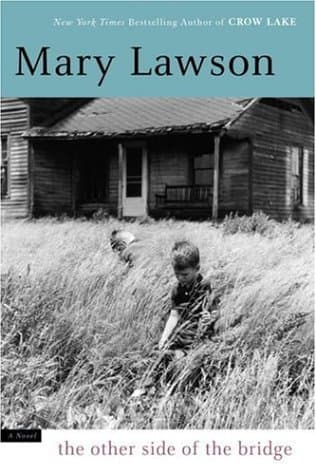
Mary Lawson (2006)
Genre
Literary Fiction / Historical Fiction / Relationships
Reading Time
360 min
Key Themes
See below
Sign in to track this book
In a remote 1930s farming town, the jealousy between two brothers over a woman starts a generational tragedy, showing the power of obsession and the reach of war.
In the mid-1930s, Arthur Dunn lives a life of duty on his family's farm in Struan, Ontario, alongside his younger brother, Jake. Arthur is responsible and steady, expected to inherit the farm. One day, while working, he meets Laura, a young woman who has recently arrived in the community to work for the local doctor. There is an unspoken connection between them. Arthur, usually reserved, is drawn to her open nature. He gives her a ride home, and for a brief moment, as they share a simple meal of sandwiches by the river, Arthur feels contentment and hope, a rare feeling in his demanding life. This encounter starts a subtle shift in Arthur's world, hinting at possibilities beyond the farm.
Following their initial meeting, Jake, with his charismatic nature, quickly enters Laura's life, pursuing her with an intensity that Arthur lacks. Laura, perhaps overwhelmed or drawn to Jake's charm, becomes involved with him. Their relationship progresses quickly, and Laura soon finds herself pregnant. This unexpected turn of events forces Laura to make a difficult decision. Despite her deeper, though unacknowledged, feelings for Arthur, she chooses to marry Jake, believing it is the right thing to do for her unborn child and to avoid scandal in the small community of Struan. This decision affects both brothers, solidifying Jake's claim on Laura and leaving Arthur to silently bear his disappointment and unrequited love.
Laura's marriage to Jake is not happy. Jake's impulsive and often cruel nature, coupled with his jealousy, makes their life together difficult. He frequently suspects Laura of harboring feelings for Arthur, leading to arguments and a strained atmosphere. Despite the tension, Laura gives birth to a son, Ian. Arthur, the reliable and dutiful brother, remains a constant presence in Laura's and Ian's lives. He helps on the farm, offers support, and provides a quiet, steady friendship to Laura, often buffering against Jake's moods. His unspoken love for Laura persists, showing in his unwavering care for her and his nephew, Ian, subtly undermining Jake's position as husband and father.
As the 1940s unfold, World War II's impact slowly reaches the remote community of Struan. The war effort calls young men to enlist, and the pressure to serve mounts. Jake, always seeking excitement and an escape from farm life and his strained marriage, sees an opportunity. He enlists in the army, leaving Laura and young Ian behind. His departure is a mix of bravado and a desire to escape his responsibilities. For Laura, Jake's absence brings a complicated sense of relief and apprehension, while Arthur takes on more of the farm's burdens, now responsible for his family and the well-being of Laura and Ian in Jake's stead.
With Jake gone to war, Arthur manages the farm alone and supports Laura and Ian. He works tirelessly, dedicating himself completely to their well-being, showing the steadfastness that Jake always lacked. During this time, Laura and Arthur's relationship deepens, becoming a quiet companionship. Laura sees Arthur's devotion and selfless nature firsthand, and her respect and affection for him grow into a love she had suppressed. They share a comfortable intimacy, raising Ian together, and for a period, they form a makeshift family unit, finding solace and strength in each other's presence, even as the war continues.
The war ends, and Jake returns to Struan, a changed man. While physically unharmed, he is scarred by his experiences, showing signs of trauma and instability. His return breaks the peace and emotional intimacy that Arthur and Laura had built in his absence. Jake is immediately suspicious of their closeness, his jealousy reignited. The unspoken love between Arthur and Laura becomes a tension, creating an unbearable atmosphere in the household. Jake's presence brings back old patterns of conflict and resentment, making life on the farm difficult and dangerous for everyone.
The tensions between Arthur and Jake boil over during an argument on the bridge leading to their farm. Jake, fueled by alcohol and his jealousy, attacks Arthur with a knife, stabbing him in the foot. The injury is severe, leaving Arthur incapacitated and showing Jake's instability. This act of violence is a turning point, making it clear that Jake's jealousy and resentment have reached a destructive level. The incident damages the already strained relationship between the brothers, and the community deals with the violence within the Dunn family.
Years pass, and Ian grows into a young man in the 1950s, aware of the unspoken animosity and unresolved conflicts that permeate his family home. He adores his Uncle Arthur, who is a steady and loving presence, providing the stability and affection that his father, Jake, often withholds. Ian also loves his mother, Laura, but senses her sorrow and the burden she carries. He is confused and hurt by his father's erratic behavior and outbursts, never fully understanding the history that shapes his parents' marriage and his uncle's role in their lives. The legacy of jealousy and unrequited love influences Ian's own perceptions of relationships and morality.
The unresolved tension between Jake and Arthur culminates in a final, tragic confrontation. Jake, consumed by his jealousy and a sense of inadequacy, corners Arthur on the bridge. In a struggle, Jake attempts to attack Arthur again, but in the chaos, Jake falls from the bridge into the river below. Arthur, despite their history, attempts to save him, but it is too late. Jake drowns, ending his troubled life and the bitter rivalry that defined the brothers' relationship. This event leaves Arthur, Laura, and Ian to grapple with grief, guilt, and the legacy of Jake's life and death.
Following Jake's death, the community of Struan mourns and speculates. Ian, now a young adult, is affected by the loss of his father, even as he deals with the truth about his difficult character. He struggles to reconcile his love for his father with the knowledge of Jake's cruelty and the tensions with Arthur. Laura, now a widow, finds solace in Arthur's continued presence, but the shadow of their shared past remains. Ian eventually understands the web of love, jealousy, and sacrifice that defined his family, realizing that life is rarely simple. He begins to find his own path, carrying the weight of his family's history but also the strength derived from their enduring love.
The Protagonist
Arthur's arc is one of silent endurance and self-sacrifice, ultimately finding a measure of peace after years of unspoken love and rivalry.
The Antagonist/Protagonist
Jake's arc is a downward spiral, fueled by jealousy and unresolved trauma, culminating in his tragic death.
The Protagonist/Supporting
Laura's arc is one of enduring hardship and finding quiet resilience, ultimately finding a measure of peace after years of emotional turmoil.
The Protagonist/Narrator (implied)
Ian's arc involves coming to terms with his family's tragic history and forging his own understanding of right and wrong.
The Supporting
His arc is largely static, representing the unchanging demands of farm life and parental expectations.
The Supporting
Her arc is one of quiet suffering and attempts to mediate, without significant personal development.
The Supporting
A static character, serving as a pillar of the community and an external observer.
The Mentioned
A static, minor character, primarily serving a narrative function.
The novel's central theme is the destructive power of jealousy and the rivalry between Arthur and Jake Dunn. Jake's insecurity and envy of Arthur's steady nature and Laura's unspoken affection drive much of the plot. This shows in Jake's pursuit of Laura, his cruel treatment of her, and his violent acts towards Arthur, such as the knife incident on the bridge. The rivalry is a wound that consumes Jake and casts a shadow over the entire family, affecting Laura and Ian for generations. It shows how unchecked emotions lead to tragic consequences, shaping destinies and destroying relationships.
“Or was he merely surprised at how easy it was to give in to an impulse, and carry through the thought which lay in your mind? Simply to do whatever you wanted to do, and damn the consequences.”
Arthur's unspoken love for Laura is a display of unrequited love and self-sacrifice. From their first meeting, Arthur is drawn to Laura, but his quiet nature and sense of duty prevent him from pursuing her. After she marries Jake, Arthur dedicates his life to silently supporting Laura and Ian, showing a deep, selfless love that asks for nothing in return. His actions throughout the novel—taking on the farm's burdens, protecting Laura from Jake's cruelty, and caring for Ian—are all expressions of this enduring affection. This theme explores the quiet heroism of enduring love and the cost of personal sacrifice for the well-being of others.
“He would never be able to leave her. He would never be able to leave the farm, or his brother, or his brother's wife and child. He was rooted.”
The conflict between personal desire and the demands of duty is a theme, particularly for Arthur. He is torn between his longing for Laura and his sense of responsibility to his family, the farm, and his brother. His life is defined by duty—to his parents, to the land, and eventually, to Laura and Ian after Jake's departure. This struggle is evident in his inability to express his feelings for Laura and his commitment to supporting her despite his own heartbreak. The novel explores societal expectations placed on individuals, especially in a rural setting, and how these obligations suppress personal happiness and lead to emotional sacrifices.
“Arthur knew, with the kind of certainty that made his stomach clench, that his life was laid out for him, a long, straight road with few deviations.”
World War II is a backdrop, impacting the characters, especially Jake. His war experiences are not detailed but are shown through their psychological consequences. Jake returns from the front a changed man, more volatile, aggressive, and traumatized. His post-war behavior, including his intensified jealousy and violent outbursts, is from the unseen scars of combat. The war's influence extends beyond Jake, affecting the entire family and the community, as it disrupts lives and reshapes relationships. The novel shows how the horrors of war ripple through generations, leaving emotional damage and altering personal destinies.
“He had come back from the war, but a part of him had not.”
The novel examines the nature of family bonds, particularly between siblings. Despite the intense rivalry and animosity, there is an underlying connection between Arthur and Jake. The story looks at how family members are linked, even through pain and betrayal. After Jake's death, the theme of forgiveness and reconciliation appears, as Ian struggles to understand and forgive his father, and Arthur deals with his own complex feelings. It explores the idea that family is not always about love and harmony, but also about shared history, responsibility, and the process of healing.
“It was impossible to hate someone you had known since birth, impossible to completely dismiss them.”
Alternating between characters and time periods to provide a comprehensive view.
The novel employs a shifting narrative focus, primarily between Arthur's perspective in the earlier timeline (the 1930s-1940s) and Ian's perspective in the later timeline (the 1950s). This allows the reader to witness the genesis of the conflict through Arthur's eyes and then observe its long-term consequences and the struggle for understanding through Ian's. The narrative also occasionally dips into Laura's internal world. This technique provides a multifaceted understanding of the characters' motivations and the unfolding drama, revealing how past events reverberate into the future and offering different emotional insights into the same events.
A recurring symbol representing connection, division, and fateful encounters.
The bridge, particularly the one leading to the Dunn farm, serves as a powerful and recurring symbol throughout the novel. It initially represents a connection—the path to the farm, where Laura first encounters Arthur. Later, it becomes a site of division and conflict, notably when Jake attacks Arthur with a knife, and ultimately, where Jake meets his tragic end. The bridge symbolizes the literal and metaphorical crossings and divides between the brothers, their relationships, and the significant turning points in their lives. It represents both the ties that bind and the chasms that separate them, a place where destinies are forged and broken.
Hints of future tragedy and the audience's awareness of unspoken truths.
Lawson masterfully uses foreshadowing to build tension and a sense of impending tragedy, particularly regarding the escalating rivalry between Arthur and Jake. Small details or fleeting thoughts often hint at the dark path Jake is on or the sacrifices Arthur will make. Dramatic irony is also present, as the reader often understands the unspoken affections between Arthur and Laura, or the true nature of Jake's jealousy, before the characters fully acknowledge it or before its full impact is felt. This technique keeps the reader engaged, creating a sense of apprehension and inevitability as the plot unfolds towards its tragic climax.
The remote Ontario farm community shapes characters and intensifies conflicts.
The remote, rural setting of Struan, Ontario, in the mid-20th century, is more than just a backdrop; it is a crucial plot device. The isolation of the farming community intensifies the personal dramas, as there is little escape from family conflicts and community scrutiny. The harsh realities of farm life demand hard work and resilience, shaping the characters' stoicism and sense of duty. The limited opportunities and social conservatism of the era contribute to characters making choices based on necessity rather than desire, such as Laura marrying Jake. The insular nature of the community means that secrets and grudges fester, often leading to explosive consequences within the confined social space.
“It’s hard to tell what’s important in life until you’ve lived a bit of it.”
— Arthur reflecting on life's lessons and the passage of time.
“Some things, once broken, can never truly be put back together.”
— A general observation about relationships and trust after a significant event.
“The past is never really gone, is it? It just waits for you to turn around and look at it again.”
— Ian grappling with memories of his childhood and family secrets.
“You can love someone with all your heart and still not understand them.”
— Mildred contemplating the complexities of her relationship with Arthur.
“It’s funny how a small decision can change the whole course of your life.”
— Arthur considering a pivotal moment in his youth and its long-term impact.
“Grief is a strange thing. It comes in waves, even years later.”
— Mildred experiencing a resurgence of sadness for past losses.
“Sometimes the hardest thing to do is to forgive yourself.”
— Ian struggling with guilt over his past actions and choices.
“People always think they know what’s best for others, even when they don’t know half the story.”
— Mildred reflecting on the judgments and perceptions of small-town life.
“The silence between them was not empty, but full of all the things they couldn’t say.”
— Describing the unspoken tensions and history between two characters.
“You carry your family with you, whether you want to or not.”
— Ian realizing the inescapable influence of his family background.
“Hope is a fragile thing, easily broken but hard to live without.”
— A character facing a difficult situation, clinging to a glimmer of optimism.
“It wasn't the big events that shaped you, but the quiet, everyday ones.”
— Arthur musing on the subtle influences that form a person's character.
“The truth has a way of coming out, eventually, even if it takes a lifetime.”
— Uncovering long-held secrets within the family.
“Sometimes, the biggest battles are fought inside your own head.”
— A character dealing with internal conflict and emotional turmoil.
Ready to see how well you understood this book? Take our interactive quiz with 10 questions.







