“It's a dog's life, and mine's pretty good, all things considered.”
— Hank reflecting on his existence.

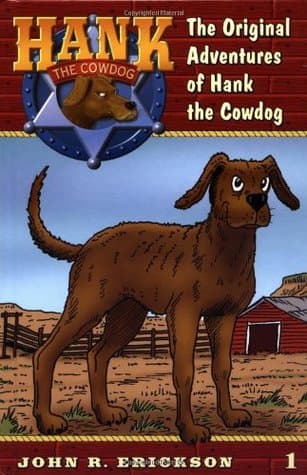
John R. Erickson (1983)
Genre
Children's / Mystery
Reading Time
120 min
Key Themes
See below
Sign in to track this book
Accused of a crime he didn't commit, Hank the Cowdog, Head of Ranch Security, must sniff out the real killer and clear his good name before he's branded an outlaw for good.
The story begins with Hank the Cowdog, Head of Ranch Security, waking up to a peaceful morning on the ranch. This peace ends when he finds a terrible scene in the chicken house: several chickens have been killed, their feathers everywhere. Hank immediately suspects foul play and takes charge of the investigation, despite the initial confusion and the strong smell of skunk. He suspects a coyote, a badger, or a fox, and starts looking for clues, sniffing around to understand what happened. His deputy, Drover, a small and often scared dog, cares more about napping than investigating.
After the chicken deaths, Sally May, the ranch wife, finds Hank covered in chicken feathers and wrongly thinks he is the killer. Despite Hank's internal claims of innocence and his attempts to explain (which she cannot understand), she gets angry and chases him with a broom. Feeling wronged, Hank decides to leave the ranch. He believes that by leaving, he can find more proof to clear his name and show his loyalty. He sets off into the unknown, leaving the ranch's comforts and his duties as Head of Security.
Now an 'outlaw,' Hank goes into the wide prairie around the ranch. He quickly learns that life outside the ranch's safety is much harder than he thought. He struggles to find food and shelter, and he feels lonely. During his travels, he meets a grumpy badger named Buster, who is protective of his territory. Hank tries to be friends with Buster, but Buster is not interested and warns Hank to stay away. This meeting shows Hank's vulnerability and lack of experience in the wild, making him face the harshness of his new, independent life.
While looking for a place to rest, Hank finds a group of coyotes. He cleverly hides and listens to their talk. To his surprise, he hears them bragging about raiding the ranch's chicken house. It becomes clear that the coyotes, led by a clever individual, were the ones who killed the chickens, not Hank. This news fills Hank with anger and relief — anger at the coyotes for framing him, and relief that he now has the key evidence to clear his name. He realizes he must find a way to expose their guilt.
With the truth, Hank plans to bring the coyotes to justice and prove his innocence to the ranch residents. He decides the best way is to lure the coyotes back to the ranch, where their guilt will be obvious. He imagines a situation where the ranch hands will catch the coyotes in the act, clearing his name. This plan needs courage and cleverness, as Hank knows he will be in danger by willingly interacting with the group of predators. He starts his plan, hoping his efforts will succeed.
With his plan in mind, Hank carefully heads back toward the ranch. He approaches his former home with apprehension and determination, knowing Sally May still considers him an outlaw. He avoids direct contact with the humans, instead focusing on watching the ranch and getting ready for the coyotes' arrival. He sees Drover, who seems unaware of Hank's problems, and longs for the comfort of his doghouse. The return carries risk, but Hank is resolved to clear his name and get his job back as Head of Ranch Security.
Hank carries out his plan, using his knowledge of the ranch and the coyotes' habits. He creates a disturbance that gets the coyote pack's attention, leading them directly toward the ranch. The coyotes, confident they can raid the chicken house again, fall into Hank's trap. Hank, acting as bait and guide, skillfully directs their movement, making sure they head toward a place where the ranch hands can see them. The tension builds as the coyotes approach, unaware of the coming danger and Hank's clever scheme.
As the coyotes enter the ranch property, the ranch hands, alerted by the noise Hank made, are ready. A chase begins, and the coyotes are caught trying to raid the chicken house again. The ranch hands, seeing the coyotes, finally realize that Hank was not responsible for the first chicken killings. The truth is out, and Hank's name is cleared. He watches as the coyotes are dealt with, feeling a deep sense of relief. His bold plan has worked, and justice has been served on the ranch.
With the coyotes caught, Hank is welcomed back to the ranch as a hero. Sally May, realizing her mistake, apologizes (in her human way), and the ranch hands praise his bravery. His job as Head of Ranch Security is officially reinstated, much to his satisfaction. He returns to his doghouse, tired but proud, knowing he has not only cleared his name but also protected the ranch from more predator attacks. Drover, as always, greets him, unaware of the big adventure Hank just had. Hank settles back into his routine, his reputation restored and improved.
As things calm down, Hank thinks about his recent adventure. He remembers the events, focusing on his bravery, cleverness, and strong dedication to his role as Head of Ranch Security. Despite the difficulties and unfair accusations, Hank's self-belief and commitment to justice never weakened. He reminds himself and the reader how important his job is and the vital part he plays in protecting the ranch. He ends his story by confirming his identity and purpose, ready for any new challenges, always watchful and always Hank the Cowdog.
The Protagonist
Hank starts as an unjustly accused outcast and, through his own investigative efforts and bravery, becomes a celebrated hero, reaffirming his role and identity.
The Supporting
Drover remains largely unchanged, serving as a consistent, grounding presence for Hank.
The Supporting
Sally May's perception of Hank shifts from an accused nuisance to a recognized hero.
The Supporting
Loper's understanding of the chicken murders evolves as the true culprits are revealed.
The Antagonist
The coyotes successfully commit a crime, are exposed by Hank, and are eventually apprehended.
The Mentioned
Buster's role is static; he serves as a brief obstacle for Hank.
A main theme is seeking justice when misunderstood. Hank is wrongly accused of the chicken murders by Sally May because of indirect evidence (feathers on his face) and humans not understanding dog language. This makes him leave the ranch and actively investigate to clear his name. His resolve to expose the real culprits—the coyotes—drives the plot, showing that truth can win even when initial judgments are wrong, as when the ranch hands finally see the coyotes in action.
“It's a tough life, being the Head of Ranch Security, especially when nobody appreciates your genius.”
Hank's strong loyalty to the ranch and his sense of duty as Head of Ranch Security are most important. Even when unfairly sent away, his main goal is to protect the ranch and prove his worth. He does not abandon his post; instead, he uses his 'outlaw' status to gather information and plan to save the ranch from more attacks. This theme is clear in his internal struggles and his eventual return to protect the very people who banished him, showing a deep commitment to his responsibilities.
“A good Head of Ranch Security never gives up, even when the chips are down and his name is mud.”
The story often plays with the difference between how Hank sees himself and his actions versus how others (especially humans) see him. Hank sees himself as a smart, fearless detective, while Sally May first sees him as the chicken killer. His internal thoughts are full of self-praise, which often creates humor with the actual events or his less-than-heroic actions. This theme is key in the initial accusation and later clearing of his name, as the humans' view of Hank changes greatly once the coyote attack is revealed.
“They just don't understand the complex mind of a Head of Ranch Security.”
When Hank is forced to leave the ranch, he faces the harsh realities of life in the wild, which is a strong contrast to the safety and comfort of his home life. His meetings with the territorial badger and his struggle to find food show the dangers and difficulties of being an 'outlaw.' This brief time in the wild makes him appreciate the ranch and his role there more, ultimately strengthening his desire to return and protect his home, rather than live a solitary, dangerous life.
“The wild was no place for a dog of my stature, a dog with responsibilities.”
Giving human characteristics and motivations to animal characters.
The entire series relies on anthropomorphism, allowing Hank to narrate his thoughts, feelings, and elaborate theories in human-like language. This device is crucial for the humor and character development, enabling the reader to understand Hank's self-perception, his misguided deductions, and his internal struggles. It allows for comedic misunderstandings between Hank and the human characters, as they cannot understand his complex internal monologues, only his barks and actions. This makes Hank a relatable and engaging protagonist, despite being a dog.
The story is told entirely from Hank the Cowdog's point of view.
The narrative is presented exclusively through Hank's internal monologue and observations, providing a unique and often humorous perspective on ranch life and mystery-solving. This device allows the reader to experience events through Hank's exaggerated self-importance and often flawed logic, creating much of the book's comedic tone. It also highlights the communication barrier between animals and humans, as the reader is privy to Hank's 'genius' plans and interpretations that the human characters completely miss.
A misleading clue used to distract the protagonist and audience.
The initial discovery of Hank covered in chicken feathers, coupled with the assumption that he is a dog, serves as a significant red herring. This leads Sally May (and initially the reader) to believe Hank is the culprit, thereby driving the plot forward as Hank is forced to flee and clear his name. This device creates suspense and allows for Hank's heroic journey to unfold, delaying the revelation of the true perpetrators (the coyotes) until Hank's own investigation uncovers them.
When the audience knows more than the characters.
Dramatic irony is frequently used, particularly in the interactions between Hank and the human characters. The reader is privy to Hank's elaborate thoughts, his self-proclaimed brilliance, and his 'security' operations, while the humans remain largely unaware or misinterpret his actions. For example, when Hank is 'interrogating' a fence post, the reader understands his internal dialogue, while a human watching would simply see a dog barking at inanimate objects. This creates humor and emphasizes the communication gap, highlighting Hank's unique perspective.
“It's a dog's life, and mine's pretty good, all things considered.”
— Hank reflecting on his existence.
“I am the Head of Ranch Security. It's a tough job, but somebody's got to do it.”
— Hank introducing himself and his role.
“The wind was blowing out of the north, which is a good direction for mysterious smells.”
— Hank investigating a new scent.
“You can't have a good mystery without a good villain.”
— Hank musing about the elements of a mystery.
“My brain works pretty fast, especially when I'm scared.”
— Hank in a moment of peril.
“Sometimes a dog just needs to sing. It's good for the soul.”
— Hank expressing himself through howls.
“As Head of Ranch Security, I must always be prepared for the unexpected.”
— Hank preparing for a patrol.
“The world is full of strange and wonderful things, and most of them smell pretty interesting.”
— Hank exploring his surroundings.
“I'm not just a pretty face, you know. I've got brains too.”
— Hank asserting his intelligence.
“A good detective always follows his nose.”
— Hank describing his investigative method.
“Danger! Intrigue! Suspense! It was all part of the job.”
— Hank encountering a challenging situation.
“You can never be too careful when you're dealing with unknown forces of evil.”
— Hank contemplating a potential threat.
“My reputation precedes me, which is a good thing, because sometimes I'm a little slow on the uptake.”
— Hank acknowledging his own quirks.
Ready to see how well you understood this book? Take our interactive quiz with 10 questions.
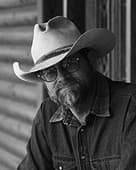
Biography coming soon.
Dan Gemeinhart
4.5
Kate O'Hearn
4.4

Jeanne Birdsall
4.4

Jen Wang
4.4
Wendelin Van Draanen
4.3

John Marsden
4.3

Chris Van Allsburg
4.3
Jennifer A. Nielsen
4.2