“The wind is the breath of the world. It is the voice of the Creator, and it speaks to us always, if we listen.”
— Bird, a Huron elder, reflects on the natural world.

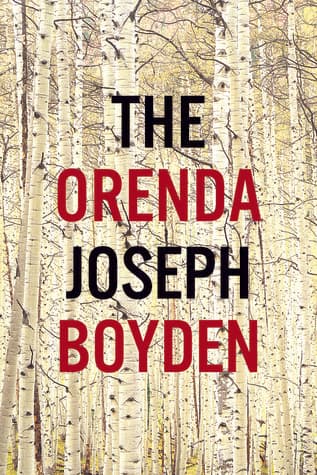
Joseph Boyden (2013)
Genre
Literary Fiction / Historical Fiction
Reading Time
10-12 hours
Key Themes
See below
Sign in to track this book
In the brutal 17th-century Canadian wilderness, a Huron warrior, his Iroquois captive, and a Jesuit missionary navigate a violent clash of cultures and beliefs as empires collide.
In the winter of 1634, Bird, a Huron warrior, leads a raid on an Iroquois village, seeking revenge. The attack is swift and brutal. Amidst the chaos, Bird finds and captures an eight-year-old Iroquois girl. He intends to offer her to his sister, Gosling, to replace her lost child. The girl, later named Snow Falls, is traumatized and resentful, but Bird sees in her a reflection of his own lost daughter, a hope amidst the violence. This act begins a series of events that will connect their lives with a new, disruptive force.
Christophe, a Jesuit missionary, arrives in the Huron village from France, sent to convert the 'savages' to Christianity. He is accompanied by his young assistant, Samuel. Christophe dedicates himself to learning the Huron language and customs, believing that understanding their culture will help introduce them to God. He receives a mix of curiosity and suspicion. Bird, as a leader, watches Christophe closely, intrigued by his faith and rituals, but wary of the changes his teachings could bring. Snow Falls, still a captive, also observes Christophe with detached curiosity, seeing his presence as another unsettling part of her new life.
Snow Falls struggles with her captivity. She initially refuses to eat, speak, or acknowledge her new Huron family, especially Gosling, who tries to care for her. Her hatred for Bird is strong, fueled by the massacre. Over time, however, youth's resilience and Gosling's kindness begin to soften her. She observes Huron customs, learns their language, and starts to participate in village life, though reluctantly. Bird, despite her continued animosity, treats her with paternal affection, seeing her as a replacement for his lost daughter. This complex relationship, built on violence but softened by a desire for family, shapes her assimilation.
Christophe begins his mission, preaching about Jesus Christ and the Christian God. He builds a small chapel and holds sermons, often using stories to explain his faith. While some Huron are curious, many, including Bird, remain skeptical. Bird, a man rooted in his ancestors' spiritual traditions and the orenda's power, questions Christophe's God and the rejection of their own spirits. Christophe's insistence on monogamy and original sin conflicts with Huron societal norms and spiritual understanding, creating tension. Snow Falls, observing these clashes, finds herself between her past traditions and the missionary's new ideas.
As years pass, the Huron face increasing external pressures. Iroquois raids become more frequent and devastating, driven by revenge and control over trade routes. These raids bring violence and new diseases from Europeans. Smallpox and measles, to which Indigenous people have no immunity, begin to decimate the Huron population, causing panic and weakening their resistance. Christophe, ironically, often receives blame for these misfortunes, as his God seems to bring sickness rather than salvation, increasing distrust between him and many Huron.
Snow Falls, now a young woman, has integrated into Huron society. She speaks their language, understands their customs, and participates in their rituals. However, her Iroquois heritage remains. She secretly practices some Iroquois traditions and holds complex feelings toward her captors. Her relationship with Bird has become a mix of respect and lingering resentment. When Iroquois war parties appear, her loyalties are tested. She experiences deep internal conflict, trying to reconcile her past with her present, and the love she has for her adopted family with the memory of her true family's massacre. This internal struggle reflects the larger conflict between the two nations.
Christophe endures significant trials. He contracts several illnesses, including a severe fever that nearly kills him. The constant skepticism and hostility from some Huron, along with the devastating impact of European diseases, begin to challenge his faith. He questions whether he serves God's will or brings destruction. His connection with Bird deepens into a complex friendship built on mutual respect despite their different beliefs. Christophe also forms a bond with Snow Falls, seeing her as a potential convert, but also recognizing her spiritual resilience rooted in her Indigenous beliefs.
The war between the Huron and Iroquois intensifies. The Iroquois, now armed with Dutch firearms and growing in numbers, launch devastating attacks that threaten the Huron Nation. Villages burn, people are killed or captured, and the Huron are pushed to their limits. Bird leads his warriors with courage and skill, but the tide turns against them. The violence and destruction are relentless, forcing the Huron to make desperate decisions about their survival. Snow Falls witnesses the horrors of this escalating war, solidifying her understanding of the deep animosity between the tribes.
In a desperate attempt to survive, some Huron leaders consider alliances and betrayals. During a fierce Iroquois assault, a tragic event occurs where Bird makes a difficult decision, or is forced into one, resulting in a significant loss. This moment highlights the impossible choices the Huron face as their world crumbles. Christophe, witnessing the brutality and despair, further questions humanity and divine will. Snow Falls, now deeply invested in her adopted people's fate, is profoundly affected by these losses, solidifying her sense of belonging, even amidst the chaos.
Despite Bird's efforts and his people's resilience, the Huron Nation is overwhelmed. The relentless Iroquois attacks and devastating European diseases are too much to withstand. Villages are abandoned, many Huron are killed, and survivors scatter, some joining other tribes, others fleeing for refuge. This marks the tragic end of a once powerful nation. Christophe, witnessing the destruction of the people he sought to save, grapples with his mission's failure and the human cost of colonial expansion and inter-tribal warfare. Snow Falls, now a woman, navigates a world irrevocably changed, carrying the weight of both her Iroquois past and her Huron present.
After the Huron's dispersal, Snow Falls, having survived the destruction, must decide her future. She is no longer just an Iroquois captive or a Huron adopted daughter; she embodies both. Her experiences have shaped her into a unique individual, understanding the complexities and traumas of both cultures. She chooses to embrace her dual identity, seeking to carry forward the lessons and memories of those she has lost. Her survival and choices represent the enduring spirit of Indigenous peoples, even in the face of immense loss and cultural upheaval. She becomes a bridge between worlds, embodying the resilience and transformation born from conflict.
Bird, the warrior, eventually dies, showing his commitment to his people and their way of life, even in defeat. His legacy is one of courage, leadership, and a deep connection to the orenda. Christophe, having witnessed the Huron's destruction and his presence's impact, reflects on his mission's true nature. He grapples with his faith's unintended consequences and the irreversible changes he helped bring. He is a changed man, no longer the naive missionary, but one who has seen this new world's beauty and brutality, and the great cost of cultural collision. His final thoughts are a somber acknowledgement of the world he helped to break.
The Protagonist
Bird evolves from a warrior seeking revenge to a leader desperately fighting for his people's survival, eventually accepting the inevitable decline while maintaining his spiritual integrity.
The Protagonist
Snow Falls transforms from a traumatized captive to a resilient young woman who embraces a dual identity, becoming a bridge between two worlds.
The Protagonist
Christophe's unwavering faith is severely tested by the realities of his mission, evolving from an idealistic missionary to a man grappling with the devastating consequences of cultural collision.
The Supporting
Gosling provides a consistent source of maternal love and stability for Snow Falls, embodying the resilience of Huron women.
The Supporting
Samuel matures under Christophe's guidance, witnessing the complexities of the mission and the Indigenous world.
The Mentioned
The concept of Orenda is challenged and diminished by the arrival of Christianity and disease, but its essence endures in the characters who remain connected to their traditional ways.
The Antagonist
The Iroquois grow in power and influence, ultimately contributing to the downfall of the Huron Nation.
The Mentioned
Not applicable as a direct character, but his historical fate serves as a grim foreshadowing for the missionary enterprise.
The novel portrays the collision between the Indigenous Huron way of life and the European Christian worldview. Christophe's arrival with his exclusive God directly challenges the Huron's polytheistic, animistic beliefs centered on the orenda. This clash extends beyond religion to social structures, morality, and the understanding of the natural world. For instance, Christophe's insistence on monogamy and original sin contradicts Huron societal norms, causing confusion and resentment. The introduction of European trade goods and diseases also alters existing power dynamics and ecological balance, leading to the Huron Nation's eventual collapse. This theme drives the conflict between Bird and Christophe.
“He knew that the Blackrobes had brought with them not just their God, but also a sickness of the spirit that was more insidious than any plague.”
The cycle of revenge drives the early interactions between the Huron and Iroquois. Bird's initial raid and Snow Falls's kidnapping are acts of vengeance for past Iroquois aggressions. Snow Falls herself holds deep hatred for Bird and his people, fueled by her family's massacre. However, the narrative explores moving beyond this cycle. Bird's paternal affection for Snow Falls, despite their violent beginning, suggests a path toward a different bond. Snow Falls's eventual integration and even affection for her adopted family indicate a journey toward acceptance, even if the trauma remains. This theme is explored through Snow Falls's internal conflict and her evolving relationship with Bird.
“Hate was a fire that consumed, but it also kept you warm in the cold, desolate places.”
Snow Falls's journey explores identity. Kidnapped from her Iroquois family and raised among the Huron, she navigates the tension between her birth heritage and her adopted culture. She learns the Huron language and customs, forms bonds, and fights alongside them, yet the memory of her Iroquois past and the desire for revenge for her true family never fully leave her. Her internal struggle reflects broader themes of cultural assimilation and the loss of traditional identities in the face of overwhelming external forces. By the end, she embodies a new, hybrid identity, showing resilience and adaptation, but also symbolizing what was lost. This theme is explored through Snow Falls's character arc.
“She was Iroquois. She was Huron. She was neither. She was all of them, and none of them.”
The novel's underlying current is the devastating impact of European colonialism, primarily through diseases and the escalation of existing conflicts. The European presence, symbolized by Christophe, brings not only a new religion but also smallpox, measles, and firearms, which decimate Indigenous populations and empower certain tribes. The Huron's downfall is as much due to these external factors as to inter-tribal warfare. Christophe, initially an agent of 'salvation,' inadvertently becomes an agent of destruction, forcing him to confront his mission's tragic consequences. This theme highlights the irreversible damage inflicted upon Indigenous societies by European expansion.
“We brought not only the word of God, but also the breath of the grave.”
The novel itself highlights storytelling, especially Indigenous cultures' oral traditions. Bird and other Huron elders recount myths, legends, and historical events, passing down knowledge, values, and identity through generations. These stories provide context, spiritual guidance, and continuity for the Huron people. They contrast with Christophe's written scriptures, showing different ways of preserving and transmitting knowledge. The narrative structure, told from multiple perspectives, also resembles shared storytelling, allowing for a comprehensive understanding of complex events and beliefs. This theme emphasizes the importance of cultural memory and narrative in defining a people.
“A people without stories are a people without a soul.”
The story is told through the alternating viewpoints of Bird, Snow Falls, and Christophe.
The novel employs a rotating first-person narrative, shifting between the perspectives of Bird, Snow Falls, and Christophe. This device allows the reader to gain a deep, intimate understanding of each character's motivations, beliefs, and emotional struggles. It highlights the profound cultural and personal clashes by showing the same events through vastly different interpretive lenses. For example, a Christian miracle to Christophe might be seen as a trick or a manifestation of the orenda to Bird. This technique fosters empathy for all three protagonists, even when their actions are at odds, and provides a nuanced exploration of the complex historical period.
Characters experience prophetic dreams and interpret natural phenomena as signs of future events.
Dreams and omens play a significant role in the Indigenous worldview depicted in the novel. Characters like Bird and Snow Falls often experience vivid, symbolic dreams that hint at future events, dangers, or spiritual guidance. Natural phenomena, such as animal behavior or unusual weather patterns, are also interpreted as signs. This device not only adds a mystical and spiritual layer to the narrative, reflecting Indigenous beliefs, but also subtly builds suspense and tension. It allows the characters to feel a deeper connection to their environment and provides a sense of impending doom or hope, guiding their decisions and reactions to unfolding events.
The unintended or opposite effects of cultural interactions, often highlighting tragic misunderstandings.
Cultural irony is prevalent, particularly in Christophe's mission. He arrives intending to 'save' the Huron, but his presence inadvertently brings disease and further fuels inter-tribal warfare through the introduction of firearms and new alliances. His 'civilizing' efforts often lead to the destruction of the very culture he seeks to understand. Similarly, Bird's act of taking Snow Falls for revenge ultimately leads to a profound, if complicated, paternal bond. This device underscores the tragic misunderstandings and unforeseen consequences that arise when vastly different cultures collide, revealing the inherent contradictions and often devastating outcomes of colonial encounters, despite individual intentions.
Character names often reflect their nature, experiences, or cultural identity.
The names of characters, particularly Snow Falls (Katsikien'a in Iroquois), carry symbolic weight. 'Snow Falls' evokes purity, fragility, and the harsh winter landscape of her capture, but also the quiet resilience of nature. Her Iroquois name, Katsikien'a, meaning 'flower' or 'beautiful flower,' speaks to her inherent beauty and spirit despite her trauma. Bird's name is indicative of his connection to nature and freedom, but also perhaps a nomadic existence. This device enriches the characters, subtly hinting at their inner lives, their journey, and their connection to their cultural and natural environments, adding layers of meaning beyond simple identification.
“The wind is the breath of the world. It is the voice of the Creator, and it speaks to us always, if we listen.”
— Bird, a Huron elder, reflects on the natural world.
“There are two kinds of people in this world, those who are strong and those who are weak. And the weak will always be broken by the strong.”
— Christophe, a Jesuit missionary, observes the brutal realities of the New World.
“Love is a strange thing. It can make you do things you never thought possible, both good and bad.”
— Snow Falls, a young Haudenosaunee girl, muses on her complex feelings.
“Our stories are our lifeblood. They are what make us who we are, and they are what will carry us into the future.”
— Bird emphasizes the importance of oral tradition and cultural heritage.
“The forest is a place of both beauty and terror. It can sustain us, but it can also consume us.”
— Characters navigate the harsh wilderness of North America.
“To truly know a people, you must know their language, their songs, their dances, and their gods.”
— Christophe attempts to understand the Huron culture he is trying to convert.
“Grief is a heavy blanket that smothers all joy, but even under its weight, life continues to pulse.”
— Characters experience profound loss and struggle to cope.
“There is a hunger in the heart of man that can never be sated, a hunger for more, for power, for control.”
— Reflections on the motivations behind war and conquest.
“The white man brings with him not just new tools and new gods, but new diseases that kill us like flies.”
— The devastating impact of European diseases on indigenous populations.
“Sometimes, the only way to survive is to forget who you were and become someone else entirely.”
— Snow Falls adapts to captivity and changes her identity.
“We are all connected, like the roots of a great tree. What happens to one of us affects us all.”
— An expression of interconnectedness within communities and with nature.
“The Orenda is not a thing you can touch or see. It is the spirit within all things, the power that animates the world.”
— Explanation of the central concept of the Orenda.
“War is a beast that devours all it touches, leaving only ashes and sorrow in its wake.”
— Observations on the destructive nature of conflict between tribes and Europeans.
“Even in the darkest times, there is always a flicker of hope, a small ember that can be fanned into flame.”
— Characters find resilience amidst extreme hardship.
Ready to see how well you understood this book? Take our interactive quiz with 10 questions.

Biography coming soon.







