“It was the orchard that made him feel connected, rooted to something beyond himself, a place where the seasons turned in a predictable, comforting way.”
— William Talmadge's deep connection to his apple orchard.

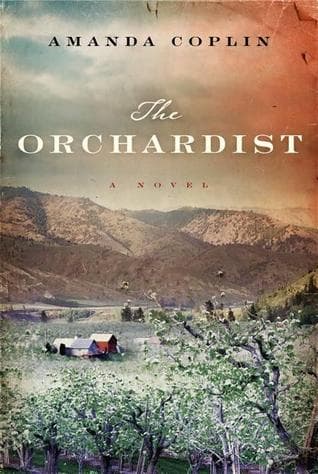
Amanda Coplin (2012)
Genre
Literary Fiction / Historical Fiction
Reading Time
540 min
Key Themes
See below
Sign in to track this book
In the wild American West of the early 1900s, a solitary orchardist's ordered life is upended when he shelters two feral, pregnant girls, forcing him to confront a violent past and forge an unconventional family rooted in the unforgiving land.
Talmadge, an aging and solitary orchardist, lives a secluded life in the foothills of the Cascade Mountains at the turn of the 20th century. He inherited the land from his father and has cultivated a vast orchard of apple, apricot, and plum trees for decades. His life is defined by the rhythm of the seasons, the care of his trees, and the memories of his mother, who died when he was thirteen, and his younger sister, Elsbeth, who mysteriously disappeared years ago. He rarely leaves his isolated valley, except to sell his fruit in the nearby town of Wenatchee. The annual passage of Nez Perce horse wranglers through his land is one of his few regular interactions with the outside world.
During a trip to Wenatchee to sell his fruit, Talmadge watches two young, barefoot girls, Jane and Della, steal apples from his wagon. He does not pursue them. Later, the girls, clearly wild and unkempt, appear at his orchard. Jane is heavily pregnant, and both are wary but curious. Talmadge, despite his initial discomfort, offers them food and shelter in an abandoned cabin on his property. He senses their fear and vulnerability, which stirs a protective instinct in him, like his care for Elsbeth. He allows them to stay, slowly earning some of their trust through his quiet kindness.
Just as Jane and Della begin to feel secure, their past catches up with them. A group of rough, armed men, led by a menacing figure, comes to the orchard. These men are the girls' former captors and abusers. Talmadge tries to protect Jane and Della, but he is overpowered. In the chaos, Jane is brutally beaten, and Della is taken away by the men. Talmadge is left injured and devastated, unable to prevent Della's abduction or the violence Jane endured. The incident shatters the peace of his orchard and ignites a fierce resolve to protect Jane and find Della.
After the attack, Talmadge cares for the severely injured Jane. He nurses her wounds, both physical and emotional, with patience and tenderness. Despite her trauma, Jane slowly begins to heal under his gentle care. She eventually gives birth to a baby girl, whom she names Caroline. Caroline's birth brings a new dynamic to the homestead, a fragile hope amid the lingering pain and fear. Talmadge feels deeply attached to both Jane and the infant, his protective instincts becoming a strong commitment to this makeshift family.
Haunted by Della's abduction, Talmadge decides he must find her. Leaving Jane and baby Caroline with a trusted neighbor, Mrs. Kincaid, he begins a dangerous journey. His search takes him through the rugged, unforgiving landscapes of the Pacific Northwest, following rumors and faint trails. He meets various people, some helpful, some dangerous, as he navigates the untamed frontier. The journey is hard and tests his resolve, but his determination to reunite the sisters and correct the wrongs done to them fuels his pursuit.
During his search, Talmadge meets the Nez Perce horse wranglers, a group he has known distantly from their annual passage through his land. He forms a tentative alliance with one of the wranglers, a young man named Billy, who offers guidance and assistance. Billy's knowledge of the land and its people is invaluable as Talmadge continues his quest for Della. This unexpected companionship gives Talmadge a rare connection to another human being, offering a brief break from his solitary burden and expanding his understanding of the world beyond his orchard.
Talmadge eventually tracks Della to a remote, desolate cabin, where she is held captive by the same brutal men who abducted her. He plans a daring rescue, confronting the men in a violent showdown. With Billy's help, Talmadge frees Della, but the confrontation is brutal and leaves lasting scars. Della is deeply traumatized and emotionally broken by her ordeal. While successful in rescuing her, Talmadge realizes the damage inflicted upon her, and the long road to healing that lies ahead for both sisters.
Talmadge brings Della back to the orchard, where she is reunited with Jane and meets her niece, Caroline. The return is heavy with the emotional weight of Della's trauma. She is withdrawn and deeply scarred, struggling to reconnect with her sister and adapt to a life free from captivity. Talmadge, Jane, and Della try to forge a new life together in the orchard, a makeshift family bound by shared trauma and the quiet resilience of the land. The orchard, once a place of solitary peace, now is a refuge for their healing process, though the shadows of their past remain.
Years pass, and the orchard becomes a sanctuary where Jane and Della slowly begin to heal. Caroline grows into a young girl, bringing joy and a sense of normalcy to their lives. Jane, though changed by her experiences, finds purpose in caring for Caroline and helping Talmadge with the orchard. Della remains more withdrawn, but the consistent love and stability offered by Talmadge and Jane slowly chip away at her defenses. The girls learn to work the land, finding a deep connection to the earth and a quiet rhythm of life that helps them process their trauma and build a future.
Throughout the years, Talmadge is still haunted by his sister Elsbeth's disappearance. He often thinks about his failure to protect her and the guilt he carries. Jane, Della, and Caroline's presence in his life brings these old wounds to the surface, making him more determined to ensure their safety and well-being. He sees echoes of Elsbeth in the girls, especially in their vulnerability and their connection to the wildness of the land. The orchard becomes a place where the past and present intertwine, as Talmadge tries to make up for his perceived past failures by protecting his new family.
Caroline, growing up among the apple trees, embodies the future and the possibility of a life unburdened by the past. She is a bright, curious child, and her presence brings light and laughter to the often-somber household. Talmadge, Jane, and Della all dote on her, finding joy in her innocence and growth. She learns about the orchard and the land, inheriting a deep connection to nature. Her developing personality and her secure upbringing in the orchard signify a breaking of the cycle of violence and displacement that marked Jane and Della's lives.
As Talmadge ages, the orchard continues to flourish, a symbol of his life's work and nature's resilience. The relationships within the makeshift family deepen, though the scars of the past remain. The orchard itself becomes more than just a farm; it is a living entity, a symbol of healing, refuge, and lasting connection to the land. The novel ends with a sense of quiet continuation, emphasizing the cyclical nature of life, death, and renewal. The characters, though marked by suffering, have found a fragile peace and a deep sense of belonging within the embrace of the orchard.
The Protagonist
Talmadge transforms from a solitary, guilt-ridden man to a protector and patriarch of a makeshift family, finding a new purpose in life and slowly reconciling with his past.
The Supporting
Jane evolves from a traumatized, fearful girl to a resilient mother and an integral part of the orchard family, finding healing and a sense of belonging.
The Supporting
Della's arc is one of enduring trauma and slow, difficult healing, finding a fragile sense of belonging but never fully escaping her past.
The Supporting
Caroline grows up in a nurturing environment, representing a breaking of the cycle of violence and embodying the potential for a peaceful future.
The Mentioned
Elsbeth's story is a static, tragic memory that serves as a foundational element for Talmadge's character and motivations.
The Supporting
Mrs. Kincaid remains a consistent, supportive figure, offering practical help and kindness.
The Supporting
Billy serves as a temporary, vital ally to Talmadge, demonstrating the power of unexpected connections.
The Antagonist
The men remain static figures of cruelty, serving as the primary antagonists and a catalyst for the main conflict.
The orchard and the surrounding wilderness are a powerful force for healing and solace throughout the novel. Talmadge finds purpose and peace in tending his trees, a connection that grounds him in the face of personal loss. For Jane and Della, the orchard becomes a sanctuary from their traumatic pasts, a place where the rhythmic cycles of growth and renewal offer stability and hope. The physical labor of working the land, the quiet beauty of the seasons, and the simple act of belonging to a place allow the characters to slowly mend their emotional wounds and find a new rhythm of life. This is clear as Jane helps Talmadge with the harvest, finding a new purpose, and Della quietly observes the fruit trees, finding a fragile peace.
“You belong to the earth, and the earth is hard.”
The novel explores the many sides of family, from the traditional bonds broken by loss (Talmadge's mother and Elsbeth) to the makeshift family formed through shared trauma and compassion. Talmadge, Jane, Della, and Caroline create an unconventional family unit, showing that family is not just defined by blood but by love, protection, and mutual support. Their relationships are fragile, tested by the echoes of past violence and the challenges of healing, yet they show remarkable resilience. This is shown in Talmadge's commitment to protect the girls and Jane's devotion to Caroline, building a new structure of care in the face of adversity.
“He understood that love was an action, not a feeling, and that it required a steady, unyielding effort.”
Trauma is a central theme, deeply affecting nearly every character. Talmadge carries unresolved grief and guilt from Elsbeth's disappearance, while Jane and Della bear the visible and invisible scars of extreme abuse and violence. The novel portrays the long, hard process of healing, emphasizing that trauma does not just disappear but becomes part of one's being. Della's continued withdrawal and Jane's quiet resilience show different ways of coping. The narrative suggests that while complete erasure of pain may be impossible, some peace and a way forward can be found through connection, safety, and time.
“The past was not a thing to be escaped, but a shadow that clung to you, shifting with the light.”
Set in a time and place where formal justice is often absent, the novel explores how individuals seek retribution or protection. Talmadge's journey to find Della is driven by a strong moral obligation and a desire for justice, even if it means confronting dangerous men outside the law. The violence inflicted upon Jane and Della goes unpunished by any official system, forcing Talmadge to become their protector and avenger. This theme highlights the brutal realities of the American West, where personal courage and a strong moral compass were often the only recourse against lawlessness, shaping the characters' choices and their understanding of right and wrong.
“There was no law out here but the law of a man's own choosing.”
Loss is a basic element of the narrative, shaping the lives of all characters. Talmadge's life is defined by the early loss of his mother and the lasting grief over his sister Elsbeth's disappearance. This deep sense of loss makes him initially withdrawn but also fuels his capacity for empathy and protection when he meets Jane and Della, who have also suffered immense losses. The novel explores how grief can become a silent companion, a constant presence that informs actions and motivations, and how finding new connections can help to lessen, though never fully erase, the pain of what has been lost. Elsbeth's absence is a constant undercurrent in Talmadge's thoughts.
“He knew the hollow ache of absence, the way a person could be there one moment and gone the next, leaving nothing but an empty space where they had been.”
The physical space of the orchard functions as a safe haven and a symbol of renewal.
The orchard is more than just Talmadge's home and livelihood; it acts as a literal and metaphorical sanctuary. Physically, its remote location and Talmadge's care provide a refuge from the violent world outside for Jane, Della, and Caroline. Metaphorically, the cyclical nature of the fruit trees – blooming, bearing fruit, and resting – mirrors the characters' journey of trauma, healing, and eventual renewal. It is a place of stability and growth, contrasting sharply with the chaotic and dangerous world from which the girls escaped. The orchard's enduring presence symbolizes hope and the possibility of a new, peaceful life.
Talmadge's unresolved grief over Elsbeth's disappearance foreshadows his protective role.
Talmadge's constant rumination on his sister Elsbeth's mysterious disappearance and his lingering guilt over his inability to protect her serve as a powerful foreshadowing device. This past trauma primes the reader for his intense protective instincts when Jane and Della arrive. His internal struggle with Elsbeth's memory directly informs his decision to shelter the girls and later, to embark on a dangerous quest to rescue Della. It establishes his character as someone deeply affected by loss and determined to prevent similar tragedies, setting the stage for his heroic actions.
The annual passage of the wranglers provides a connection to the wider world and aid.
The Nez Perce horse wranglers, who annually pass through Talmadge's land, serve multiple functions. They are a connection to the indigenous history of the land and a reminder of a way of life that predates the settlers. More importantly, their presence provides Talmadge with an unexpected ally in Billy during his search for Della. They represent a different kind of freedom and resilience, and their knowledge of the vast, untamed landscape is crucial to Talmadge's success. Their cyclical appearance also underscores the natural rhythms of the world, contrasting with the human-made chaos and violence.
The untamed American West acts as a powerful, shaping force in the characters' lives.
The rugged landscape of the Pacific Northwest, with its mountains, canyons, and vast expanses, functions almost as a character itself. It is both beautiful and brutal, offering solace and presenting immense dangers. The wilderness tests the characters' resilience, shapes their survival skills, and isolates them from conventional society. It dictates the pace of life, the challenges they face, and even their emotional states. The land is unforgiving, but also provides the resources for survival and, ultimately, a place of belonging for those who learn to live in harmony with it. It constantly reminds characters of their smallness yet also their strength.
“It was the orchard that made him feel connected, rooted to something beyond himself, a place where the seasons turned in a predictable, comforting way.”
— William Talmadge's deep connection to his apple orchard.
“The girls were like wild things, beautiful and untamed, and he was not sure how to tend to them, only that he must.”
— William's initial feelings about taking in the two orphaned girls, Jane and Cora.
“You can lose yourself in the doing of things, and sometimes that's a mercy.”
— William finding solace in his work after personal tragedies.
“Memory was a peculiar fruit, sometimes sweet, sometimes bitter, always leaving a trace.”
— Reflections on the lasting impact of past events and relationships.
“The world had a way of taking what it wanted, leaving you to pick up the pieces.”
— A recurring theme of loss and resilience throughout the characters' lives.
“Some silences were full, brimming with unspoken words and shared understanding.”
— Describing the quiet companionship between William and the girls.
“There was a wildness in her, a strength that even sorrow could not entirely extinguish.”
— Describing Jane's enduring spirit despite her difficult life.
“He understood then that love, like an orchard, required constant tending, protection from blight, and the patience to wait for harvest.”
— William's evolving understanding of family and attachment.
“The mountains stood sentinel, ancient and indifferent, witnessing the small dramas of human lives.”
— The vast, unchanging landscape of the Pacific Northwest.
“To forget was a kind of dying, but to remember was to carry the weight of all that had been lost.”
— The struggle with memory and the past.
“He had wanted to give them roots, but they had always been destined for flight.”
— William's realization about the independent nature of Jane and Cora.
“The past was not a straight line, but a tangled thicket, and sometimes you had to cut your way through it.”
— Characters grappling with the complexities and burdens of their history.
“Even in barren seasons, there was the promise of return, the deep, quiet hope beneath the frozen ground.”
— A metaphor for enduring hope and resilience despite hardship.
“The wind carried secrets through the branches, whispers of lives lived and choices made.”
— The atmospheric presence of nature observing human events.
Ready to see how well you understood this book? Take our interactive quiz with 10 questions.

Amanda Coplin is the author of the critically acclaimed novel, *The Orchardist*, which won the PEN/Faulkner Award for Fiction. Her writing often explores themes of resilience and the complexities of human relationships in rural settings. Coplin's work is praised for its lyrical prose and unflinching portrayal of character.







