“The child, whose name was John Wesley Rattner, was in the woods with his mother, who was named Martha, looking for their cow.”
— The opening lines of the novel, introducing the central character as a child.

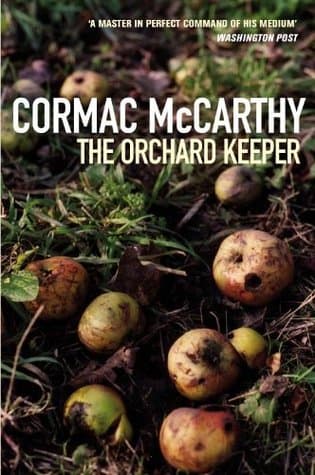
Cormac McCarthy (1965)
Genre
Literary Fiction / Historical Fiction
Reading Time
360 min
Key Themes
See below
Sign in to track this book
In 1930s Appalachia, an orphaned boy forms a father-son bond with the bootlegger who killed his father, their lives tied together by violence, loyalty, and time.
Kenneth Rattner, a local man, is killed by Marion Sylder, a bootlegger, during an argument over Sylder's broken-down car. Sylder, in a panic, buries Rattner's body in a shallow grave in an old, neglected apple orchard. Sylder does not know that Rattner's young son, John Wesley Rattner, is nearby and later finds the disturbed ground and feels a vague unease, though he does not understand what it means. Sylder tries to get his car back, but the situation is made harder by an old man, Arthur Ownby, who lives near the orchard and watches Sylder. This event connects the lives of the three main characters.
After his father disappears, John Wesley Rattner lives mostly alone. His mother moves away, leaving him to live with his aunt and uncle, but he spends much time exploring the wild areas around his home. He often visits the old apple orchard, drawn to it, and often brings his rifle for hunting. During these visits, he meets Arthur Ownby, the quiet old man who lives in a rundown shack nearby. Ownby, who calls himself the 'keeper' of the orchard, first views John Wesley with suspicion but slowly starts to accept and even guide the boy, teaching him about the land, though their talks are often brief and unclear.
Marion Sylder continues his life as a bootlegger and small-time criminal, always moving and avoiding the law. The memory of Kenneth Rattner's death, though he tries to forget it, stays with him. He occasionally passes by the old orchard, often from curiosity or a need to check on the undisturbed grave. During these trips, he often sees Arthur Ownby and knows the old man watches him. Sylder's interactions with other outlaws and his constant watch against authorities show his isolation and the unstable nature of his life, a sharp contrast to the natural world he lives in.
Arthur Ownby, the 'orchard keeper,' lives a life tied to the land. He spends his days gardening, watching nature, and keeping an eye on the apple orchard and its secrets. He sees John Wesley Rattner's frequent visits and Marion Sylder's occasional appearances. Ownby, with his deep connection to nature and old way of life, acts as a silent guardian of the orchard, knowing the unspoken truths buried there. His wisdom, often in unclear statements, shows a deep understanding of life and death, and the lasting power of the land.
One day, John Wesley Rattner, while hunting, meets Marion Sylder in the woods. Their talk is short and simple, a chance meeting between two strangers. Neither character knows the tragic connection that binds them – that Sylder killed John Wesley's father. The meeting has a quiet tension, a subtle unease that neither fully understands. This moment shows the novel's look at fate and the hidden forces that shape human lives, as the two men move through the same landscape, their pasts linked but their present selves unaware.
Marion Sylder's life on the run ends. After many close calls and continued bootlegging, the authorities catch him. The details of his capture are presented with McCarthy's direct style, showing the harsh and unavoidable nature of the law. Sylder is imprisoned, a big change from his free, wandering life. His time in jail is marked by confinement and thought, a forced quiet that sharply contrasts with his former life. This event removes him from the immediate setting of the orchard, but his presence still affects the story.
As time passes, Arthur Ownby, the old orchard keeper, becomes weaker. His health declines, and he can no longer care for the orchard. The orchard, once full of life and secrets, begins to show signs of neglect, its trees slowly returning to a wild state. Ownby's deep connection to the land means his decline reflects that of the orchard. John Wesley Rattner continues to visit, seeing the changes in both the old man and nature, a quiet witness to time passing and unavoidable decay. Ownby's death marks the end of an era for the orchard.
Years later, John Wesley Rattner, now a young man, starts to put together the fragmented memories and questions about his father's disappearance. The disturbed earth in the orchard, Ownby's unclear comments, and local talk combine into a growing understanding. He eventually learns, indirectly and through his own feelings, that his father was killed and buried in the orchard. This discovery is a painful turning point for John Wesley, changing his understanding of his past and his place in the world. He deals with the meaning of this violent truth, which has quietly shaped his entire life.
After serving his time, Marion Sylder is released from prison. He returns to the familiar, wild landscape of his youth, a landscape that has also changed. His return is quiet, marked by a feeling of displacement and the weight of his past actions. He is drawn back to the orchard area, a place that holds both the secret of his crime and a strange, lasting connection to the land. Sylder finds himself a stranger in a world that has moved on, yet the old patterns and connections remain, pulling him back to the place where his fate was decided.
The story ends with a final, tense meeting between John Wesley Rattner and Marion Sylder. John Wesley, now knowing Sylder killed his father, confronts him. The confrontation is not a dramatic fight, but a quiet, almost accepting moment of recognition and unspoken understanding. The violence has already happened, and what remains is the weight of its results. The scene has a sense of fate and the lasting cycle of violence and its aftermath, leaving the reader with a strong sense of the characters' connected destinies and how the past always affects the present.
The Protagonist
From an innocent, solitary boy unaware of his father's fate, John Wesley matures into a young man who confronts the violent truth of his past.
The Antagonist/Supporting
Sylder moves from a free-roaming outlaw haunted by a secret to a confined prisoner, eventually returning to face the consequences of his past.
The Supporting
Ownby maintains his solitary vigil over the orchard and its secrets until his eventual decline and death, symbolizing the fading of an old way of life.
The Mentioned
His death is the inciting incident, and the discovery of his fate drives the plot.
The Supporting
They provide a stable, if distant, home for John Wesley, but their role in his development is minimal.
The Mentioned
His role is to enforce the law and bring Sylder to justice, albeit for different crimes than the orchard murder.
The Mentioned
Her departure leaves John Wesley to navigate his early life largely on his own.
Violence, both open and implied, is present throughout 'The Orchard Keeper.' The novel begins with Kenneth Rattner's murder, an act that quietly affects the entire story, shaping the lives of John Wesley Rattner and Marion Sylder. McCarthy shows how violence, even if unpunished or unknown, leaves a lasting mark on people and the land. Sylder's life on the run and later imprisonment happen because of his actions, while John Wesley's journey is about finding the truth of his father's violent death. The final confrontation, though quiet, shows that past violence cannot be escaped.
“The tree stood in the orchard, not dead, not living, a tree long past fruit, but a tree that was still a tree.”
The Appalachian wilderness is not just a background but a character, deeply affecting the lives and fates of the characters. John Wesley Rattner finds peace and identity in the woods, learning its ways from Arthur Ownby. Marion Sylder's life as a bootlegger is closely tied to the hidden paths and isolation of the mountains. Ownby, the 'orchard keeper,' shows a spiritual connection to the land, acting as its silent guardian. The wilderness offers both safety and harsh reality, a place where society's rules are often less important than basic instincts and nature's order of life and death. The land holds secrets and endures, uncaring of human struggles.
“The world was not a thing of men, nor did it belong to them. It was a world of the tree and the rock and the river, and of the things that moved among them.”
The novel explores how past events, especially hidden ones, always shape the present and future. John Wesley Rattner unknowingly lives in the shadow of his father's murder, a secret buried in the land he lives on. Marion Sylder is troubled by his actions, even as he tries to outrun them. Arthur Ownby, with his deep wisdom, understands how memory and fate last, watching the story unfold with a knowing silence. The story structure, often broken and non-linear, reflects how memory works, with truths slowly appearing and connecting seemingly separate events. The past is not just an introduction; it is an active, living force.
“The past was not dead. It was not even past.”
Each main character in 'The Orchard Keeper' lives a very isolated life. John Wesley Rattner, after his father's death, finds himself mostly alone, seeking company in the wilderness. Marion Sylder is a solitary outlaw, always moving and not trusting others. Arthur Ownby is a recluse, living apart from regular society, his only true companion the land itself. This isolation is not always shown as bad; it allows for a deeper connection to nature and a sense of self-reliance. However, it also shows the characters' inability to fully connect with others, leading to unspoken truths and unresolved emotional burdens.
“He lived alone and had no need of company, but he watched the world with a fierce and knowing eye.”
A central symbolic setting where life, death, and secrets converge.
The old apple orchard serves as the primary symbolic setting of the novel. It is the burial site of Kenneth Rattner, making it a place of hidden violence and death. However, it is also a place of wild growth, natural cycles, and enduring life, 'kept' by Arthur Ownby. The orchard represents the intersection of human action and the indifferent power of nature, a place where secrets are buried but also slowly revealed. Its decaying yet persistent existence mirrors the themes of memory, the past, and the cyclical nature of life and death, making it a silent witness to the characters' fates.
The narrative device of characters being unknowingly connected by a past event.
A key plot device is the prolonged ignorance of John Wesley Rattner regarding the true circumstances of his father's death and Marion Sylder's role in it. For much of the novel, John Wesley and Sylder's paths cross without either understanding their profound, tragic connection. This creates dramatic irony and a pervasive sense of suspense. It highlights themes of fate and the lingering effects of the past, emphasizing how an unknown truth can silently shape destinies. The slow revelation of this connection drives much of John Wesley's character development and leads to the novel's quiet, inevitable climax.
McCarthy's minimalist style, often with unattributed dialogue, to create atmosphere and mystery.
McCarthy's distinctive prose style, characterized by its sparse nature, lack of quotation marks, and often unassigned dialogue, functions as a plot device by creating an atmosphere of ambiguity and realism. The cryptic conversations, particularly those involving Arthur Ownby, force the reader to actively interpret meaning and piece together information, mirroring John Wesley's own journey of discovery. This style immerses the reader in the characters' often isolated and internal experiences, emphasizing the unspoken truths and the raw, unadorned reality of their lives in the wilderness. It lends a mythic quality to ordinary events.
The use of natural elements to subtly hint at future events or underlying tensions.
McCarthy frequently employs natural imagery to foreshadow events and underscore thematic elements. The decaying orchard itself, the cycles of nature, and the behavior of animals often subtly reflect the human drama unfolding. For instance, the disturbed earth in the orchard hints at the buried secret long before John Wesley understands its meaning. The harshness of the wilderness often mirrors the brutal realities of the characters' lives. This device deepens the connection between man and nature, suggesting that the natural world is a silent, knowing observer of human actions, subtly revealing truths through its own language.
“The child, whose name was John Wesley Rattner, was in the woods with his mother, who was named Martha, looking for their cow.”
— The opening lines of the novel, introducing the central character as a child.
“He'd had enough of it. He'd had enough of the world. He was done with it. He was done with the world and all its ways.”
— Likely referring to Arthur Ownby, reflecting on his weariness with life.
“He went down the road and the road was dark.”
— A simple, evocative description of John Wesley's journey, highlighting the oppressive atmosphere.
“The world was not a thing to be improved. It was a thing to be endured.”
— A philosophical musing, reflecting the fatalistic worldview often present in McCarthy's work.
“He carried the shotgun like a stick.”
— Describing a character's casual familiarity with violence or the tools of it.
“He watched the smoke rise slow and perfect into the cold morning air.”
— A moment of quiet observation, showcasing McCarthy's descriptive power.
“The past was a thing that would not let go.”
— Reflecting on the inescapable influence of history and past actions on the characters.
“He felt the old man's eyes on him like a weight.”
— Describing the intense, silent communication or judgment between characters.
“The orchard was a place where things were left to rot.”
— A metaphorical description of the neglected orchard, symbolizing decay and the passage of time.
“He heard the sounds of the night, the small, secret sounds.”
— Emphasizing the immersive and often mysterious natural world surrounding the characters.
“The trees stood like sentinels, silent and old.”
— Personifying the ancient trees of the wilderness, giving them a watchful presence.
“He knew that some things were beyond understanding, and that was the way of it.”
— A character's acceptance of the unknowable aspects of life and the world.
“The old man was a kind of monument to something gone.”
— Likely referring to Arthur Ownby, representing a fading way of life and a connection to the past.
“The sun was a cold eye in the sky.”
— A stark, almost indifferent description of the sun, reflecting the harsh natural environment.
Ready to see how well you understood this book? Take our interactive quiz with 10 questions.
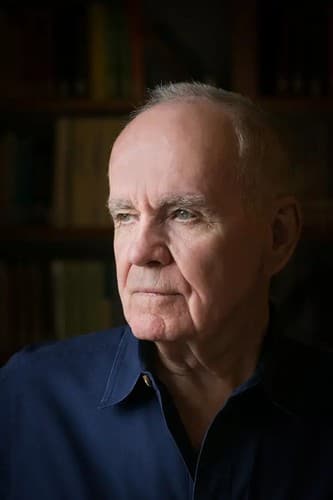
Cormac McCarthy was an American writer who authored twelve novels, two plays, five screenplays, and three short stories, spanning the Western and postapocalyptic genres. He was known for his graphic depictions of violence and his unique writing style, recognizable by a sparse use of punctuation and attribution. McCarthy is widely regarded as one of the greatest American novelists.







