“There are some things a woman cannot do alone, no matter how strong her heart.”
— Reflecting on the need for community and support, particularly in difficult times.

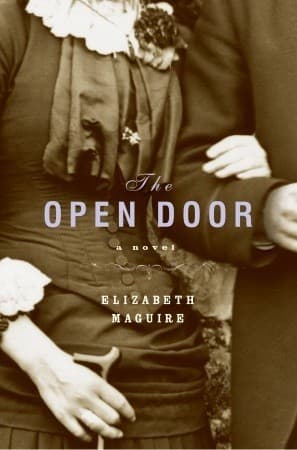
Elizabeth Maguire (2008)
Genre
Historical Fiction
Reading Time
240 min
Key Themes
See below
Sign in to track this book
In 19th-century Europe, an independent American author's passionate friendship with Henry James becomes a complex dance of admiration, secrets, and literary ambition, ultimately revealing the cost of an uncompromised life.
Constance Fenimore Woolson, having spent years supporting her family through her writing in America, wants personal experience and artistic renewal. In her early middle age, she decides to leave her conventional life and sail for Europe, specifically Italy. She carries a letter of introduction to Henry James, the renowned author whose work she admires. Constance wants to see the world, to live more fully, and to find inspiration beyond her previous existence. This journey is a turning point, a courageous step towards self-discovery and a pursuit of intellectual and emotional fulfillment.
Upon arriving in Italy, Constance is captivated by its beauty, especially Florence. She immerses herself in the culture, finding a new sense of liberation and inspiration. Eventually, through the letter of introduction, she meets Henry James. James, initially interested by her reputation and intelligence, is quickly charmed by Constance's independent spirit and sharp wit. He begins to call her 'Fenimore,' a sign of his respect and growing affection. Their initial encounters are marked by lively intellectual discussions and a mutual appreciation for literature, setting the stage for a deep, though complicated, friendship.
Constance and Henry James discover an unparalleled intellectual kinship. They spend hours discussing literature, art, and life, finding in each other a rare confidante with whom they never run out of things to say. Constance, with her open and passionate nature, finds great joy in this connection, feeling truly seen and understood. James, usually more reserved, is drawn to her candor and vitality. Their relationship deepens beyond mere acquaintanceship, becoming a central part of Constance's new European life, offering her the intellectual companionship she has long craved and providing James with a sympathetic ear.
Despite their deep connection, fundamental differences in Constance's and Henry's personalities begin to emerge. Constance is characterized by her courageous, open, and emotionally expressive nature, eager to embrace life's experiences. James, in contrast, is more secretive, controlled, and guarded, preferring to observe life rather than fully participate in it. These contrasting approaches to existence, while initially complementary, gradually lead to subtle friction. Constance's desire for deeper emotional intimacy and direct engagement often clashes with James's more detached and analytical disposition, foreshadowing future conflicts in their evolving relationship.
As their friendship matures, Constance's affection for Henry James grows, becoming something more than intellectual admiration. She longs for deeper emotional reciprocation from him, an openness that he seems unwilling or unable to provide. James, while valuing her companionship, maintains emotional distance, often retreating into his own world of observation and literary creation. This emotional imbalance causes Constance increasing frustration and pain. She struggles with his elusive nature, feeling a constant yearning for a connection that he, perhaps inadvertently, denies her, leading to a growing sense of unfulfilled desire.
Constance's health begins to decline, a development that highlights her emotional needs and James's limitations. As she battles illness, her vulnerability increases, and her desire for compassionate support becomes more urgent. While James offers some intellectual comfort and companionship, his emotional reserve prevents him from providing the deep, empathetic solace Constance truly craves. This period of illness tests their relationship, exposing the limits of James's capacity for emotional intimacy and leaving Constance feeling increasingly isolated despite his presence.
The narrative details a specific 'transgression' that significantly strains the bond between Constance and Henry. While the exact nature is left somewhat ambiguous, it likely involves a moment where Constance's open emotionality or directness clashes sharply with James's guarded nature, perhaps pushing boundaries he preferred to keep intact. This incident marks a turning point, making explicit the unspoken tensions and fundamental incompatibilities that had been simmering beneath the surface of their intellectual camaraderie. It marks a shift from mutual admiration to a more complex dynamic tinged with hurt and misunderstanding.
Following the transgression, the relationship between Constance and James enters a colder, more distant phase. The immediate aftermath involves a period of 'private revenge,' which manifests as emotional withdrawal, subtle slights, or perhaps even a deliberate withholding of affection or intellectual engagement from one or both parties. Constance, feeling hurt and misunderstood, might retreat into herself, while James, perhaps feeling his privacy invaded or boundaries crossed, could become even more guarded. This period is marked by unspoken resentments and a clear shift in the warmth and openness that once characterized their interactions.
The narrative suggests that Henry James, known for his subtle psychological portrayals, later incorporates aspects of his relationship with Constance into his literary work. This artistic transformation of their shared experiences, particularly the 'transgression,' is presented as a form of 'public revenge.' James, through his fiction, subtly reinterprets or fictionalizes events and characters inspired by Constance, perhaps subtly critiquing her or placing her in a light that reflects his own perspective on their complex bond. This literary echo of their friendship adds another layer of poignancy and public dimension to their private struggles.
Throughout the trials of her relationship with James and her declining health, Constance Fenimore Woolson's spirit remains strong. She continues to live with passion, refusing to allow her world or her artistic vision to shrink. Her journey to Europe was an assertion of her desire to live fully, and despite the emotional complexities and disappointments, she tries to maintain that spirit. Her resilience and commitment to her own experiences and creative pursuits show her strength and artistic integrity.
The story concludes with Constance Fenimore Woolson's final years, marked by continued artistic endeavor and personal reflection, even as her health declines further. Despite the emotional toll of her relationship with James and her own struggles, she leaves a significant body of work that reflects her keen observations and deep emotional intelligence. Her life, though marked by complexities and unfulfilled desires, is ultimately portrayed as one lived with courage, independence, and a commitment to art and experience. The novel honors her as a woman whose story transcends the confines of her personal relationships.
The Protagonist
Constance embarks on a journey of self-discovery and artistic liberation, navigating complex relationships and personal struggles while striving to live authentically and passionately.
The Supporting/Antagonist (in part)
James's arc involves a deepening, then straining, of his friendship with Constance, revealing the limits of his emotional capacity and his tendency to process personal experiences through his art.
The Mentioned
Her influence on Constance's early life is implied, setting the stage for Constance's eventual yearning for independence.
The Mentioned
His existence defines part of Constance's past obligations, which she later sheds by leaving for Europe.
This theme is central to Constance's journey. After years of family duty, she seeks self-discovery and artistic renewal in Europe. Her move signifies a break from societal expectations and a courageous embrace of an independent life. She seeks not just new places, but new ways of being and creating, as seen in her initial excitement with Italy and her fervent discussions with James. This pursuit is both exhilarating and challenging, as she navigates the complexities of newfound freedom alongside personal desires and disappointments.
“hungry, ravenous to see and live as much as possible.”
The novel deeply explores human connection, particularly through the evolving relationship between Constance and Henry James. It examines how intellectual bonds can form the basis of deep friendship, but also how differing emotional needs and personalities can lead to friction and heartbreak. Constance's open, passionate nature clashes with James's guarded reserve, highlighting the pain of unrequited emotional depth. The theme questions the boundaries of platonic and romantic affection and the compromises inherent in close relationships, especially when one person desires more profound intimacy than the other can offer.
“the unequalled joy of never running out of things to say.”
The novel explores the complex interplay between life and art, particularly how personal experiences become literary creation. For Constance, writing is a means of expression and livelihood, but for James, it also becomes an instrument for processing and, implicitly, 'revenging' private emotional conflicts. His 'public revenge' through fictionalized portrayals of their relationship shows how artists draw from and reinterpret their lived experiences, sometimes in ways that can be both cathartic and painful for those involved. It highlights the ethical ambiguities of using personal relationships for art.
“friction, transgression, and revenge both private and public.”
Constance Fenimore Woolson's life challenges the societal norms for women in the 19th century. Her career as a successful author, her financial independence, and her decision to travel alone in Europe all defy conventional expectations. The novel shows the struggles of an independent, intellectual woman seeking fulfillment beyond marriage and domesticity. Her vulnerability to unfulfilled emotional needs, particularly in her relationship with James, also reflects the limited avenues for emotional expression and reciprocation available to women who chose unconventional paths. Her 'courageous, open nature' contrasts with the more constrained roles often imposed on women.
“refused to accept the narrowing of her world.”
While Constance's independence is celebrated, the novel also examines its costs. Her decision to leave her family and pursue her own path, while liberating, also leads to periods of loneliness and emotional isolation. Her struggle to find a truly reciprocal emotional connection, particularly with James, highlights the sacrifices that can accompany a fiercely independent spirit. The 'narrowing of her world' is something she actively resists, yet the act of carving her own path often means forging it alone, facing both the joys and the pains of self-reliance.
“Constance’s courageous, open nature is odds with James’s more secretive one and inevitably leads to friction...”
A letter facilitates a crucial meeting and symbolizes social entry.
Constance's 'letter of introduction' to Henry James serves as a classic plot device for initiating a significant relationship. In the 19th century, such letters were vital for social and professional access. Beyond its practical function, it symbolizes Constance's deliberate step into a new world and her aspiration to connect with intellectual peers. The very act of carrying and presenting this letter underscores her intent and the formal, yet hopeful, beginning of her European journey and her encounter with James, setting the stage for their complex bond.
The stark contrast between Constance's and James's temperaments drives much of the conflict.
The novel heavily relies on the juxtaposition of Constance's 'courageous, open nature' against James's 'more secretive one.' This fundamental difference in their personalities is not merely a character trait but a core plot device that generates nearly all the narrative's emotional tension and conflict. It explains their initial attraction (complementary opposites) and their eventual friction and 'transgression.' This contrast highlights the theme of differing approaches to life and love, making their relationship both compelling and ultimately tragic due to their inherent incompatibilities.
Early hints of friction and emotional distance predict later conflicts.
The narrative employs subtle foreshadowing to hint at the eventual difficulties in Constance and James's relationship. Descriptions of James's 'secretive' nature or the initial 'friction' are not just descriptive but predictive. These early indications suggest that their intellectual harmony might not translate into emotional compatibility, preparing the reader for the inevitable clashes and disappointments. This device builds suspense and adds depth to the evolving relationship, making the later 'transgression' and 'revenge' feel earned rather than abrupt, stemming from inherent character traits.
The story is presented from Constance's perspective, shaping the reader's understanding.
While not explicitly stated as unreliable, the opening line, 'But this is my story,' suggests the narrative is primarily filtered through Constance's subjective experience and memory. This device means the reader experiences James and their relationship largely through Constance's hopes, desires, and eventual frustrations. It emphasizes her emotional journey and provides insight into her interior world, but also subtly cues the reader that James's motivations and internal life are largely inferred, adding a layer of ambiguity to his actions and the 'revenge' he exacts through his art.
“There are some things a woman cannot do alone, no matter how strong her heart.”
— Reflecting on the need for community and support, particularly in difficult times.
“The past is a stubborn beast, always lurking, always ready to pounce on the present.”
— A character grappling with unresolved issues from their past that impact their current life.
“Hope, like a tiny flame, can warm the coldest heart, even when all else seems lost.”
— Amidst despair, a small glimmer of hope emerges, offering comfort.
“A secret shared is a burden halved, but a secret kept can crush the soul.”
— The emotional weight of holding onto a significant secret.
“The world outside the door is full of dangers, but also full of wonders.”
— A character contemplating venturing beyond their familiar surroundings.
“Love is not a gentle river, but a rushing torrent that sweeps you away.”
— Describing the overwhelming and powerful nature of love.
“Sometimes, the greatest courage is simply to keep breathing, one moment at a time.”
— A character enduring immense personal hardship and finding strength in simple perseverance.
“Truth has a way of finding its light, no matter how deeply it is buried.”
— The eventual revelation of a hidden truth.
“Family is not always blood; sometimes it is the people who choose to stand by you.”
— Exploring themes of chosen family and loyalty beyond biological ties.
“A closed door is not always an end, but sometimes an invitation to find another way in.”
— Facing an obstacle and seeking alternative solutions.
“The silence between words often speaks louder than any utterance.”
— Understanding unspoken emotions and meanings in interactions.
“Forgiveness is a gift you give yourself, not just the one who wronged you.”
— A character struggling with resentment and considering the path to forgiveness.
“History remembers the victors, but the hearts remember the lost.”
— Reflecting on the human cost of conflict and the personal impact of loss.
Ready to see how well you understood this book? Take our interactive quiz with 10 questions.







