“Kyoto is not a city that can be known from a map. One must walk its streets and feel its breath.”
— Reflecting on the city's unique character as seen through the eyes of the twin sisters.

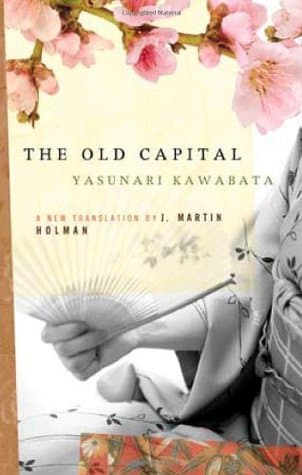
Yasunari Kawabata (1989)
Genre
Historical Fiction
Reading Time
180 min
Key Themes
See below
Sign in to track this book
In Kyoto, an adopted daughter of a kimono designer uncovers her past, mirroring the city's balance of tradition and change.
The novel opens with Chieko, the adopted daughter of Takichiro and Shige, a respected kimono wholesaler in Kyoto, observing cherry blossoms. Despite her comfortable upbringing, Chieko feels a subtle sense of being different. While visiting Maruyama Park with her parents, she feels a connection to nature and a recurring sense that she is not truly part of the family, which sometimes brings sadness. Her parents, especially her father Takichiro, notice her thoughtful nature and beauty, often comparing her to Kyoto's delicate flowers. This scene establishes Chieko's sensitivity and the mystery of her origins.
During the Gion Festival, Chieko participates with her parents. While watching the floats, she sees a young woman working at a cedar shop, selling braided cords. Chieko is struck by the woman's strong resemblance to herself. This brief meeting deeply disturbs Chieko, sparking a strong feeling of recognition and unease. She does not speak to the woman, but the image of her look-alike becomes a haunting presence, intensifying her unspoken questions about her birth parents and true identity. The festive mood contrasts sharply with Chieko's growing inner turmoil.
Disturbed by her encounter, Chieko eventually seeks out the young woman she saw at the Gion Festival. She learns her name is Naeko and she works in a cedar forest in Kyoto's northern mountains. Chieko travels to the village and confronts Naeko, who confirms their shared past: they are identical twin sisters, abandoned as infants under a cherry tree. Naeko explains that Chieko was found and adopted by the wealthy kimono merchant, while Naeko was taken in by a humble mountain family. This revelation deeply shocks Chieko, bringing clarity to her lifelong feelings of displacement and introducing a complex new reality.
Chieko spends time with Naeko in her mountain home, observing her sister's simple, hardworking life. Naeko works in the cedar forest, her hands rough, her life marked by physical labor and fewer comforts than Chieko's upbringing. Chieko is moved by Naeko's resilience and kindness but also overwhelmed by guilt. She feels her privileged life came at Naeko's expense, and the difference in their fates weighs heavily on her. This guilt is made worse by the fact that Naeko shows no resentment, only quiet acceptance, which highlights Chieko's inner conflict.
Takichiro, Chieko's adoptive father, is a master kimono designer, deeply connected to Kyoto's seasonal beauty and traditional aesthetics. His designs often use nature motifs—cherry blossoms, autumn leaves, and subtle patterns of moss and streams. Chieko often helps him, developing a keen eye for color and pattern, and finding comfort in the artistry. Her appreciation for beauty mirrors her father's, and this shared artistic sensibility forms a strong bond between them. Takichiro’s work is a constant part of their lives, reflecting Kyoto's enduring traditions and seasonal changes, and influencing Chieko's perception of beauty and heritage.
Chieko often helps her adoptive mother, Shige, with the detailed work of weaving obi sashes. This shared activity represents domestic harmony and the deep, unspoken bond between mother and daughter. As they work, the repetitive, careful motions of weaving create a meditative atmosphere, allowing Chieko to reflect on her life and her place in the family. Shige, though sometimes reserved, shows her love and concern for Chieko through these quiet, shared moments and her meticulous care. The obi, with its complex patterns and lasting quality, becomes a metaphor for the intricate and strong ties binding Chieko to her adoptive family.
Hideo, a young and skilled weaver who works for Takichiro, has deep feelings for Chieko. He often brings her small gifts and expresses admiration for her gentle nature and beauty. Chieko recognizes his feelings and is not entirely indifferent, but her discovery about Naeko and her identity crisis make her hesitant to fully respond. She feels unworthy, believing her complicated past might burden any relationship. Her internal struggle between her desire for a normal life and the weight of her origins creates a barrier, causing her to withdraw slightly even from those who care for her.
As autumn arrives, painting Kyoto's landscape in vibrant colors, Chieko arranges to meet Naeko again. They walk through a temple garden, surrounded by falling maple leaves. The season's beauty has a melancholy that reflects their shared, yet different, destinies. During this meeting, Chieko tries to offer Naeko financial help and the possibility of a better life, but Naeko, with quiet dignity, gently declines, preferring her independent existence. This encounter deepens Chieko's understanding of Naeko's strength and resilience, and reinforces the bittersweet reality of their sisterhood—a bond defined by both connection and an unbridgeable divide.
As the New Year approaches, Takichiro observes Chieko, reflecting on her future. He senses her inner turmoil and the quiet sadness that sometimes clouds her features, understanding that her discovery of Naeko has deeply impacted her. He worries about her happiness and her place in the world. He considers the fleeting nature of beauty and life, a theme often in his kimono designs. His love for Chieko is clear in his silent concern, and he wishes for her to find peace and fulfillment, even as he acknowledges the passage of time and the challenges she faces.
Towards the end of the novel, Chieko starts to accept her dual identity. She accepts her adoptive family's love and her place in their lives, while also acknowledging her twin sister, Naeko, as a part of herself. Though their lives remain separate, the bond between them is now a known and felt presence within Chieko. The story concludes with Chieko finding quiet acceptance and a deeper understanding of herself, even as her past and Naeko's presence continue to subtly shape her inner world. She finds a fragile balance between her two realities, embracing both her adopted heritage and her biological roots.
The Protagonist
Chieko transforms from a young woman haunted by an unknown past to someone who begins to accept her complex identity, embracing both her adopted and biological heritage.
The Supporting
Naeko remains largely unchanged, serving as a mirror for Chieko's journey and embodying a stoic acceptance of her fate.
The Supporting
Takichiro remains a steadfast and loving father figure, his wisdom and artistic sensibility serving as a grounding force for Chieko.
The Supporting
Shige consistently provides a loving and stable environment for Chieko, her quiet strength anchoring the family.
The Supporting
Hideo's feelings for Chieko remain consistent, serving to highlight Chieko's emotional state and her struggle with commitment.
The Mentioned
Shin'ichi's role is static, representing a societal expectation rather than a developed character arc.
The novel explores Chieko's search for her true identity. Raised in a loving adoptive family, she still feels a subtle sense of being different, which intensifies with the discovery of her identical twin sister, Naeko. This theme appears in Chieko's internal questions, her guilt over her privileged life compared to Naeko's, and her struggle to combine her adopted heritage with her biological roots. The story shows how identity is shaped by both nature and upbringing, and the complex process of integrating different parts of one's past.
“She was a daughter of Kyoto, but she was not a daughter of this house.”
Kawabata often uses the changing seasons and Kyoto's delicate flowers—cherry blossoms, autumn leaves, and moss—to show life's transient nature. Takichiro's kimono designs, which capture these moments, also reflect this theme. The parallel lives of Chieko and Naeko, two identical beings on different paths, further emphasize that life's circumstances are often beyond individual control and that beauty, like human existence, is precious because it is impermanent. This theme gives the story a sense of sadness.
“The cherry blossoms were beautiful, but their beauty was a sorrowful thing, for it was so fleeting.”
While not an explicit conflict, the novel subtly contrasts Kyoto's enduring traditions with the shifts of a changing world. The kimono industry, the Gion Festival, and seasonal rituals represent the deeply ingrained customs and aesthetic values of old Japan. Chieko's personal struggle can also be seen as a metaphor for a society dealing with its past and future. Her longing for authenticity reflects a broader cultural introspection, where traditional beauty is valued even as individuals navigate personal complexities that challenge established norms.
“Kyoto itself was like an ancient pattern, beautiful and intricate, yet always subtly changing with the seasons.”
The strongest example of this theme is the existence of Chieko and Naeko as identical twins. They represent two sides of a single coin, two potential lives from the same origin but shaped by different environments. Chieko's discovery of Naeko forces her to confront an alternate version of herself, highlighting the impact of upbringing over nature. This duality extends beyond the sisters, reflecting Chieko's inner conflicts as she deals with her adopted identity versus her biological truth, and her privileged present versus her unknown past.
“They were two halves of one person, divided by fate.”
The uncanny resemblance between Chieko and Naeko.
The doppelgänger motif is central to the novel, manifesting in the identical twin sisters, Chieko and Naeko. This device is not used for suspense or horror, but rather as a profound catalyst for Chieko's self-discovery and an externalization of her internal struggle with identity. Naeko serves as a living mirror, reflecting Chieko's potential past and an alternative life path. The physical similarity, combined with their vastly different upbringings, highlights the 'nature vs. nurture' debate and forces Chieko to confront the arbitrary nature of fate and her own sense of privilege and guilt.
The use of cherry blossoms, autumn leaves, and moss to reflect emotional states and themes.
Kawabata masterfully employs the changing seasons and specific flora of Kyoto—cherry blossoms, autumn leaves, cedar forests, and moss—as potent symbols. The cherry blossoms symbolize fleeting beauty and the transient nature of life, mirroring Chieko's initial melancholic questioning. Autumn leaves reflect the poignant beauty of decay and the bittersweet reality of separation and acceptance. The cedar forest where Naeko lives represents a raw, natural existence, contrasting with Chieko's refined urban environment. These natural elements are not merely setting; they are intertwined with the characters' emotional landscapes and underscore the novel's themes of impermanence and the deep connection between humans and nature.
The intricate art of kimono design and weaving symbolizing tradition, beauty, and intricate bonds.
The kimono and obi are more than just garments; they are central cultural metaphors. Takichiro's artistry in kimono design, which draws inspiration from Kyoto's natural beauty and traditions, reflects the novel's aesthetic sensibilities and the theme of ephemeral beauty. The intricate patterns and delicate fabrics symbolize the complex, interwoven lives of the characters and the rich tapestry of Japanese culture. Chieko's involvement in weaving obi sashes with Shige represents the meticulous care, quiet communication, and strong, yet often unspoken, bonds within her adoptive family. They embody the enduring traditions that shape Chieko's identity.
“Kyoto is not a city that can be known from a map. One must walk its streets and feel its breath.”
— Reflecting on the city's unique character as seen through the eyes of the twin sisters.
“The beauty of a flower is not only in its bloom but also in its fading.”
— Chieko observing chrysanthemums, contemplating the transient nature of beauty and life.
“Perhaps happiness is not something you find, but something you create in the small moments.”
— Chieko pondering her life, finding contentment in simple, everyday experiences.
“Even in separation, there is a kind of connection, like two stars shining in different skies.”
— Chieko thinking about her twin sister Naeko, and their bond despite their different lives.
“The past is like a river, always flowing, always present, even if we cannot see its source.”
— The narrative often delves into the historical layers and traditions of Kyoto.
“A craftsman's heart is woven into every thread, every brushstroke, every piece of wood.”
— Describing the dedication of artisans in Kyoto, particularly Chieko's father who creates obi.
“Silence in Kyoto is not empty; it is filled with history, with spirits, with unspoken words.”
— The quiet atmosphere of temples and traditional houses, rich with unseen narratives.
“To truly know someone is to know their sorrows as well as their joys.”
— Chieko reflecting on understanding Naeko's hardships and her own privileged life.
“The seasons dictate not just the landscape, but the very rhythm of life in this city.”
— Frequent descriptions of seasonal changes and their impact on Kyoto's customs and daily life.
“Regret is a shadow that follows even the brightest memories.”
— Chieko's unspoken sadness about her origins and the life Naeko has led.
“The beauty of cherry blossoms is their fleetingness, reminding us that nothing lasts forever.”
— A common motif in Japanese literature, applied to the cherry blossom viewing scenes.
“Sometimes, the most profound connections are those that are felt rather than spoken.”
— The unspoken bond and understanding between Chieko and Naeko.
“Tradition is not a burden, but a thread that weaves us into the fabric of time.”
— The book's deep exploration of Kyoto's enduring traditions and their significance.
“A life lived in harmony with nature is a life lived in harmony with oneself.”
— The characters' close relationship with the natural world, particularly the changing seasons.
Ready to see how well you understood this book? Take our interactive quiz with 10 questions.
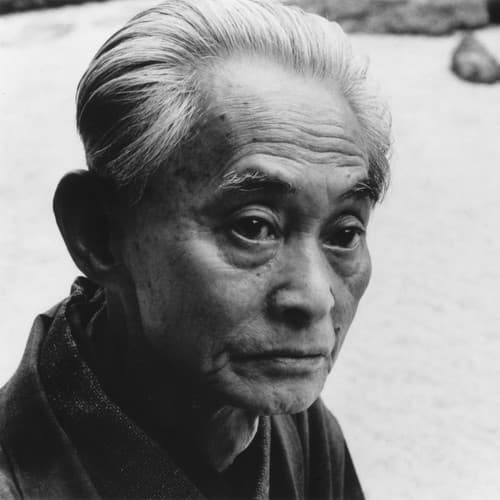
Yasunari Kawabata was a Japanese novelist and short story writer whose spare, lyrical, subtly shaded prose works won him the Nobel Prize in Literature in 1968, the first Japanese author to receive the award. His works have enjoyed broad international appeal and are still widely read.







