“The world was a library of all the words ever spoken, and he was reading them one by one.”
— From 'The Pedestrian', describing Leonard Mead's solitary nighttime walks.

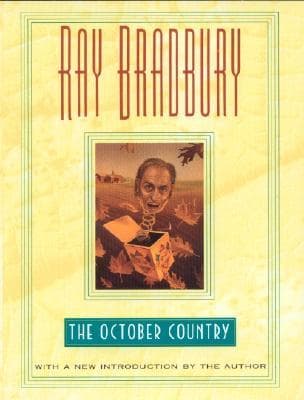
Ray Bradbury (1955)
Genre
Fantasy / Science Fiction
Reading Time
334 min
Key Themes
See below
Sign in to track this book
A carnival of the macabre, where funhouse mirrors show parasitic observers, poker chips whisper dark secrets, and childhood nostalgia is both celebrated and mourned in chilling tales.
Mr. Bigelow, self-conscious about his small stature, visits a carnival funhouse. He finds a mirror that makes him appear tall and imposing. He becomes obsessed with this image, believing it to be his true self. After the carnival leaves, Bigelow convinces the owner, Mr. Kobert, to sell him the mirror. He takes it home, but it reverts to its original, unflattering reflection when not in the funhouse. Driven to despair, he smashes the mirror, destroying his idealized self-image and forcing him to confront reality.
Marie, traveling in Mexico with her husband Joseph, is plagued by an intense fear of death and burial. This phobia worsens when Joseph insists they visit the catacombs of Guanajuato, filled with mummified corpses. The sight of the bodies, especially the children, deeply disturbs Marie. She feels a morbid pull towards the mummies, imagining herself among them. Despite Joseph's attempts to comfort her, her fear intensifies, ending in a terrifying vision where she sees herself as the 'next in line' to join the silent dead, hinting at a psychological breakdown.
O'Neill, a struggling writer, observes his friend H. Matisse, an eccentric artist, who carries a single, large, red poker chip everywhere. Matisse claims the chip is alive, that it 'watches' him and inspires his art. O'Neill initially dismisses this as artistic eccentricity, but the chip's constant presence and Matisse's belief in its sentience begin to unnerve him. Matisse even attributes his creative successes and failures to the chip's influence. The story leaves the reader to wonder if the chip truly has a supernatural quality or if it's a powerful psychological projection of Matisse's artistic muse and neuroses, blurring the line between reality and delusion.
Clavell, a hypochondriac obsessed with his own bones, believes his skeleton is an unwelcome, foreign entity within him. He seeks Dr. Burleigh, a dubious physician known for unorthodox treatments, and proposes the impossible: to have his skeleton removed. Burleigh, intrigued by the challenge and the potential for a macabre medical first, agrees. The procedure is performed in secret, and Clavell emerges a soft, shapeless mass, experiencing a fleeting sense of liberation before realizing the horror of his new, boneless existence. The story concludes with the implication that Burleigh has preserved Clavell's skeleton, perhaps for exhibition, and Clavell himself is reduced to a grotesque, helpless blob.
Charlie, a poor farmer, buys a large, sealed jar from a traveling showman. Inside, preserved in cloudy fluid, is an ambiguous, grotesque specimen that no one can identify; it is both fascinating and repulsive. The jar becomes the centerpiece of Charlie's home, attracting all the local townsfolk who gather nightly to speculate about its contents. Its presence fuels superstitions, gossip, and fear, with different people seeing different things within the murky glass. The jar affects the community, bringing them together in morbid curiosity while sowing discord and suspicion, particularly between Charlie and his jealous wife, Thedy.
Harold, now an adult, returns to the lake of his childhood. The lake holds a painful memory: the drowning of his first love, Tally, when they were children. He recalls their innocent games by the water and the sudden, tragic accident that took her life. Over the years, Tally has remained vivid in his mind, and he often dreams of her, particularly of her hair floating in the water. Harold confronts his lingering grief and the sense of loss that has shaped his life. He finds a measure of peace by the lake, accepting that Tally will always be a part of him, a ghost of childhood summers.
Martin, a young boy, is confined to his bed by a mysterious illness. His only connection to the outside world is his beloved terrier, which he sends out to explore. Martin describes the world to the dog, and the dog brings back objects that seem to fulfill Martin's subconscious desires for experience and connection, albeit morbidly. One day, the dog brings back a strange, small black glove. Later, it brings back a woman; a beautiful, kind woman named Miss Haight, who cares for Martin. However, the dog's affection for Miss Haight takes a dark turn when it brings her back again, after her death, implying the dog is a supernatural emissary of Martin's dark will.
Alice and David Leiber welcome their new baby boy, but Alice is immediately plagued by an unsettling feeling. She believes the infant is not a helpless child but a malevolent, conscious entity plotting their demise. Her husband, David, dismisses her fears as postpartum depression. However, a series of strange 'accidents' occur around the house, ending in the death of Alice's nurse. Alice becomes convinced the baby is responsible, using its apparent helplessness as a disguise. The story builds tension as Alice tries to convince David of the baby's sinister nature, leading to a terrifying climax where the baby's true, murderous intent is revealed.
Spallner, involved in a severe car accident, observes a peculiar phenomenon: a group of people, a 'crowd,' always seems to gather instantly at the scene of every accident, long before emergency services arrive. Recovering from his injuries, he becomes obsessed with this observation. He investigates, finding that the same faces reappear at different accident sites. He confronts one of them, Mr. Smith, who reveals that they are drawn to accidents, almost ritually. Spallner suspects they are not merely observers but somehow involved in the creation of these tragedies, feeding off the suffering. His investigation leads him into a chilling confrontation with the crowd, implying he too might become their next 'spectacle.'
Drew Erickson, a man on the brink of despair and starvation, stumbles upon an abandoned farm with a field of ripe wheat. Inside the farmhouse, he finds a dead old man and a mysterious, ancient scythe. A note instructs him to harvest the wheat, warning him of a 'terrible job.' As Drew begins to cut the wheat, he discovers that each stalk he cuts corresponds to a human life ending somewhere in the world. He has unwittingly inherited the mantle of Death. Initially horrified, he tries to resist, but the scythe compels him. He is trapped in this grim role, forced to reap the lives of humanity, forever bound to the tool and its grim purpose.
Uncle Einar is a beloved but melancholic member of a family of winged beings. Unlike his relatives, Einar has difficulty flying; his wings are too large and make too much noise, startling humans and preventing him from soaring gracefully. He longs to fly freely, to experience the joy of the sky like his siblings. He tries various methods to achieve silent flight, even considering surgery, but nothing works. His family, understanding his sadness, creates a special, quiet place for him, a 'nest' of sorts where he can feel at peace. The story is a tender portrayal of an outsider yearning for belonging and finding solace in acceptance.
Timothy, a seemingly ordinary ten-year-old boy, is the only mortal in a large, eccentric family of supernatural beings; vampires, ghosts, witches, and other creatures of the night. It is the annual family reunion, a grand, macabre affair held in a decaying mansion. While his relatives revel in their ghoulish traditions and supernatural abilities, Timothy feels profoundly out of place, longing for a normal life and the warmth of the sun. He tries to participate but finds he cannot truly belong. His aunt, who understands his plight, offers him comfort, acknowledging his unique and lonely position within their strange family, highlighting themes of belonging and difference.
Dudley Stone is an ancient man, seemingly immortal, who has lived for centuries, experiencing countless lives, loves, and historical epochs. He is utterly weary of existence, having seen and done everything, and now yearns for the oblivion of death. He tries various methods to end his life, but nothing works. He visits an old, wise woman, who understands his plight. She explains that his immortality is a curse, not a blessing. The story explores his profound ennui and his desperate search for an escape from his endless life, hinting that true death may only come when he truly accepts and understands his unique condition, or when he has finally learned all there is to learn.
The Protagonist
Bigelow moves from obsession with an idealized reflection to despair and destruction when that ideal is shattered, leaving him to confront his unvarnished reality.
The Protagonist
Marie's fear escalates from a general phobia to a terrifying, personalized premonition of her own demise, leading her to the brink of psychological breakdown.
The Supporting
Matisse remains steadfast in his belief in the chip's sentience, serving as a catalyst for O'Neill's contemplation of the supernatural and the artistic mind.
The Protagonist
Clavell's journey from skeletal obsession to boneless transformation reveals the horror of his desired 'liberation,' leaving him a grotesque and helpless form.
The Protagonist
Charlie's initial pride in the jar transforms into a source of conflict and tragedy as its mysterious nature corrupts his home and relationships.
The Protagonist
Harold revisits the site of his childhood trauma to finally confront and find a measure of peace with the enduring grief of Tally's death.
The Protagonist
Martin's seemingly innocent reliance on his dog for connection to the world evolves into a chilling demonstration of his subconscious control over the dog's actions, leading to a tragic outcome.
The Protagonist
Alice's initial postpartum unease escalates into a desperate struggle to convince others of her baby's malevolence, culminating in a horrifying realization of the truth.
The Protagonist
Spallner's journey from accident victim to determined investigator leads him to confront a chilling, supernatural truth, placing him in grave danger.
The Protagonist
Drew's initial desperation for survival transforms into the horrifying realization that he has become the reluctant personification of Death, forever bound to the scythe's purpose.
The Protagonist
Uncle Einar's struggle with his noisy wings and his desire for silent flight eventually lead him to find acceptance and peace within his family's understanding.
The Protagonist
Timothy's struggle to fit into his monstrous family's traditions leads him to embrace his own humanity, finding solace in the understanding of his aunt.
Many stories explore monstrosity, not just as external creatures, but as something inherent in human nature or even in the mundane. In 'The Small Assassin,' the ultimate horror comes from a seemingly innocent baby. 'Skeleton' externalizes a man's self-loathing into a literal desire to shed his bones. 'The Jar' shows how an ambiguous, grotesque object can bring out the worst in a community, turning neighbors against each other through suspicion and fear. This theme shows Bradbury's fascination with the psychological underpinnings of fear and the uncanny.
“What if it was a monster? What if it was a thing that only looked like a baby?”
Several stories look at the lasting impact of loss, especially from childhood. 'The Lake' is a poignant exploration of enduring grief, as Harold revisits the site of his first love's drowning, unable to fully escape the memory. The story captures how past tragedies continue to shape present lives. This theme often gives fantastical elements deep human emotion, grounding the horror or fantasy in relatable sorrow and the struggle for acceptance.
“She was dead, and I had been left alive. It was as simple as that.”
Characters often struggle with their sense of self and their place in the world. Mr. Bigelow in 'The Dwarf' is consumed by his physical appearance, seeking an idealized reflection to define himself. Uncle Einar, despite being part of a family of winged beings, feels like an outcast due to his noisy flight, yearning for acceptance and a quiet space. Timothy in 'Homecoming' is a mortal boy in a family of monsters, desperately trying to find where he belongs. These narratives explore the pain of being different and the universal desire for self-acceptance and connection.
“He tried to fly, but his wings were too big, too noisy.”
Bradbury uses the unknown to evoke both fascination and dread. 'The Jar' is a prime example, where an ambiguous specimen captivates an entire community, fueling morbid curiosity and escalating paranoia. The mystery itself becomes a catalyst for human drama and conflict. Similarly, 'The Watchful Poker Chip of H. Matisse' presents an object whose sentience is never fully explained, leaving the reader to ponder the thin line between artistic inspiration and delusion. This theme highlights humanity's attraction to the mysterious and the potential dangers it brings.
“It was a thing that no one could name, or guess at, or explain.”
The collection often touches upon the inescapable nature of death and a predetermined destiny. Marie in 'The Next in Line' is consumed by a terrifying premonition of her own mortality, unable to escape the psychological grip of the Mexican mummies. In 'The Scythe,' Drew Erickson is thrust into the role of Death itself, forced to reap lives, illustrating that some destinies cannot be avoided. Even Dudley Stone, in 'The Wonderful Death of Dudley Stone,' yearns for death, finding it elusive, suggesting that one's fate, even immortality, can be a burden. These stories explore humanity's confrontation with its own mortality and the power of fate.
“You are the Reaper now. The job is yours.”
Characters' subjective experiences distort or create their reality.
Bradbury frequently employs characters whose perceptions are skewed, making the reader question the reality of events. Alice Leiber in 'The Small Assassin' is convinced her baby is evil, a belief dismissed by her husband as postpartum delusion, leaving the reader to wonder if she's sane or if the horror is real. Similarly, H. Matisse's belief in the sentience of his poker chip in 'The Watchful Poker Chip of H. Matisse' could be artistic eccentricity or genuine supernatural connection. This device creates psychological tension and blurs the lines between internal fear and external threat.
An ordinary or mysterious object becomes a focal point for horror or obsession.
This device is central to several stories. The funhouse mirror in 'The Dwarf' becomes an object of intense obsession, reflecting a man's internal struggle with self-image. The ambiguous specimen in 'The Jar' acts as a catalyst for fear, superstition, and conflict within a community. Even the poker chip in 'The Watchful Poker Chip of H. Matisse' takes on a life of its own through the artist's belief. These objects are not inherently evil but become conduits for human anxieties, desires, and dark projections, transforming the mundane into the terrifying.
Drawing on established supernatural figures or roles to explore human conditions.
Bradbury often grounds his fantastical elements in traditional folklore or myth. 'The Scythe' directly positions its protagonist, Drew, as the embodiment of Death, inheriting a grim, ancient role. 'Homecoming' populates a family reunion with classic monsters like vampires, witches, and ghosts, but explores their humanity and their outsider status. This device allows Bradbury to tap into collective unconscious fears and archetypes, giving his unique stories a resonant, timeless quality while simultaneously subverting expectations by focusing on the emotional and psychological aspects of these figures.
Terror derived from characters' internal states, fears, and mental instability.
Many stories in 'The October Country' derive their horror not from explicit gore or jump scares, but from the psychological distress of the characters. Marie's overwhelming fear of death in 'The Next in Line' leads to a terrifying breakdown, fueled by her own mind. Clavell's obsession with his skeleton in 'Skeleton' is a profound psychological disorder that manifests in a grotesque physical transformation. This device allows Bradbury to explore the fragility of the human mind and how internal anxieties can warp perception and reality, making the reader question what is real and what is a product of mental anguish.
“The world was a library of all the words ever spoken, and he was reading them one by one.”
— From 'The Pedestrian', describing Leonard Mead's solitary nighttime walks.
“The wind was a whetting stone for the stars, sharpening them to a fine, cold glitter.”
— From 'The Wind', evoking the powerful and almost sentient nature of the wind.
“He knew it. He knew it all. The autumn country. The October country. The country of the things that were not and yet were.”
— From 'The October Country', defining the thematic core of the collection.
“Death is a lonely business.”
— From 'The Small Assassin', a chilling reflection on the nature of a malevolent infant.
“We are a lost people, a forgotten tribe, a race of dreamers who have awakened in a nightmare.”
— From 'The Jar', uttered by a character reflecting on their strange existence.
“There are nights when the wind is a carnival of voices, and you can hear them all, if you listen.”
— From 'The Wind', emphasizing the eerie sounds carried by the wind.
“He wanted to take the world and shake it till it woke up.”
— From 'The Pedestrian', describing Leonard Mead's desire for human connection in a silent world.
“The dust was everywhere, a fine, grey powder that settled on everything, like a shroud.”
— From 'The Next in Line', setting a desolate and morbid scene in a Mexican crypt.
“What do you want a tombstone for? You're not dead. You're just... different.”
— From 'The Wonderful Death of Dudley Stone', a character's unusual perspective on mortality.
“He felt like a man who had suddenly discovered that the world was not solid, but made of smoke and mirrors.”
— From 'The Emissary', as a character grapples with the blurring lines of reality.
“Some people are born on a rainy day, and some on a sunny day, and some on a day when the wind blows and the leaves fall.”
— From 'The October Country', a poetic observation on the diverse nature of humanity.
“The dead are always with us, if we only know how to listen.”
— From 'The Small Assassin', suggesting a spiritual or psychological presence of the deceased.
“He loved the smell of books, the feel of their pages, the secrets they held within their covers.”
— From 'The Pedestrian', highlighting Leonard Mead's appreciation for literature.
“There are no monsters, no demons, nothing in the dark that isn't in your own mind.”
— From 'The Jar', a character attempting to rationalize fear, perhaps unsuccessfully.
Ready to see how well you understood this book? Take our interactive quiz with 10 questions.
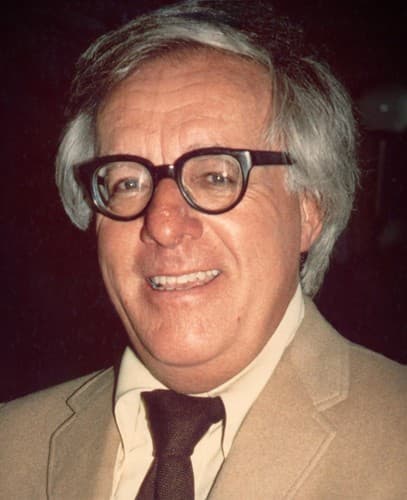
Ray Douglas Bradbury was an American author and screenwriter. One of the most celebrated 20th-century American writers, he worked in a variety of modes, including fantasy, science fiction, horror, mystery, and realistic fiction.







