“I lived in books more than I lived anywhere else.”
— The narrator reflects on his childhood and his escape into reading.

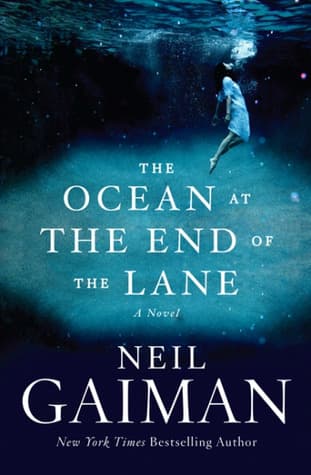
Neil Gaiman (2013)
Genre
Fantasy / Young Adult
Reading Time
180 min
Key Themes
See below
Sign in to track this book
A middle-aged man returns to his childhood home, bringing back terrifying, magical memories of his seven-year-old self, a girl named Lettie, and the ancient horrors in a pond.
The unnamed narrator, now a middle-aged man, returns to Sussex, England, for a family funeral. He drives down the familiar lane of his childhood and stops at the Hempstock farm, a place he hasn't thought about in decades. The old farmhouse, though run-down, is still there. He goes to a pond behind the house, which the girl he knew, Lettie Hempstock, once said was an ocean. As he sits by the pond, he starts to remember parts of his forgotten childhood. These are troubling memories of strange and scary events from when he was seven years old, involving the Hempstock women and a car theft and suicide.
The narrator's first clear memory is of a lodger, an opal miner from South Africa named Michael Hempstock (not related to the Hempstocks down the lane). This man stole his father's car and killed himself in it on the Hempstock farm. The young narrator saw this traumatic event, which started the supernatural occurrences. The suicide, it turns out, opened a door, letting an evil entity into their world. The young narrator, confused and scared, finds himself involved in the strange world of Lettie, her mother, and her grandmother, who seem to understand what is happening.
After the suicide, the young narrator meets Lettie Hempstock, who seems very wise for her age. She explains that the lodger's death let something escape, a 'flea' or an 'opalescent thing,' which is a dangerous, otherworldly entity. Lettie takes the boy to the pond, calling it an ocean, and performs a ritual to bind the entity. During this, the boy accidentally swallows something small and metallic, a 'coin,' which is actually a piece of the entity. This makes him a target for the entity, which later appears as Ursula Monkton.
Soon after the 'flea' incident, a new housekeeper, Ursula Monkton, comes to the narrator's home. She looks beautiful and acts charming to his parents, but she is immediately terrifying and mean to the young narrator and his sister. Ursula is the 'flea' the narrator accidentally swallowed. She has now taken human form and wants to make his life miserable and eventually consume him. She manipulates his parents, turning them against him, and punishes him cruelly, like holding his head underwater in the bath, making him feel alone and helpless in his own family.
Ursula's torment of the boy gets worse. She makes his father hit him, and she fills his mouth with worms, a truly awful experience. Desperate, the boy runs away from home and goes to the Hempstock farm. He tells Lettie, her mother, and her grandmother about Ursula's cruelty. The Hempstock women know what the entity is and agree to help him. They explain that Ursula is a 'hunger artist,' a creature that feeds on human emotion and life, and that they must stop her before she can fully consume the boy and others.
The Hempstock women plan to lure Ursula Monkton to their farm and contain her. They know the entity is drawn to the boy because he swallowed a piece of it. They use the boy as bait, telling him to walk back towards his home, knowing Ursula will follow. As she approaches the farm, the Hempstocks set a magical trap, drawing circles and speaking old words to bind the creature. The boy, though scared, trusts Lettie and follows their instructions, knowing his life, and possibly his family's lives, depend on their success.
Ursula Monkton, in her true, monstrous form, chases the boy to the Hempstock farm. A fierce magical fight happens between the Hempstock women and the entity. The boy sees the horror and is frozen with fear. Lettie, understanding the great danger, bravely steps forward and faces the creature, giving herself up to push it back into the 'ocean' – the pond. She contains the entity, but in doing so, she becomes part of the ocean herself, seemingly dying to save the boy and stop the creature from spreading further. The boy is very sad about losing her.
After Lettie's sacrifice, the remaining Hempstock women, Lettie's mother and grandmother, keep the boy safe. They explain that the memories of what happened are too dangerous and traumatic for a child. To protect him, they gently erase his memory of Ursula Monkton, Lettie's death, and the supernatural events, replacing them with more normal, less frightening memories. They tell him that Lettie has gone away, and he accepts this explanation, his mind shielded from the horrors he went through. He returns to his family, seemingly fine, but with a deep, unexplainable emptiness.
As the adult narrator sits by the pond, the suppressed memories return with terrifying clarity. He remembers Ursula Monkton's cruelty, the worms, his father's violence, and, most clearly, Lettie's sacrifice. The weight of these forgotten horrors hits him. He realizes the Hempstock women had protected him by hiding the truth, but remembering forces him to face the trauma he experienced as a child. He understands how much these events affected his life, shaping him in ways he never consciously knew.
The narrator feels overwhelmed by his memories. Lettie's mother and grandmother appear, looking unchanged by the decades, confirming his memories are real. They explain that Lettie is still in the 'ocean,' healing, and that she will eventually return, as she always does. The Hempstocks are old beings, tied to the land and the 'ocean,' existing outside normal time. The narrator understands that the cycle of protecting this world from other-worldly dangers continues, and that Lettie, though seemingly gone, is an eternal guardian, always returning to her ocean.
The Protagonist
From a traumatized child whose memories are suppressed, he becomes an adult who confronts and reintegrates his past, gaining a deeper understanding of himself and the world.
The Supporting
As an ancient entity, her 'arc' is cyclical; she 'dies' to protect, only to be reborn from the ocean, maintaining the balance.
The Antagonist
She enters the world as a 'flea,' transforms into Ursula Monkton, and is ultimately contained (but not destroyed) by the Hempstocks, returning to her primordial state within the 'ocean.'
The Supporting
As an ancient entity, her 'arc' is more about continuity and maintaining the balance of their world.
The Supporting
Her character is static, representing the ancient, unchanging wisdom and power that anchors the Hempstock lineage.
The Supporting
He begins as a normal father, is corrupted and manipulated, and returns to normal after Ursula's removal, remaining unaware of his actions' true cause.
The Supporting
She remains largely static, a loving but ultimately ineffective protector due to her inability to perceive the supernatural threat.
The Supporting
She is initially a normal sibling, is briefly alienated by Ursula's influence, and returns to normal after Ursula's removal, remaining unaware of the true events.
The Mentioned
His character serves as a catalyst, his death creating the narrative's central conflict.
The novel explores how traumatic childhood experiences, even when forgotten, affect an individual's adult life. The narrator's forgotten memories of Ursula Monkton and Lettie's sacrifice cause a constant feeling of unease and distance in his adult life. Remembering helps him face and accept his past, showing the psychological burden of hidden trauma. The Hempstocks' choice to erase his memories, while protective, also shows how complex it is to deal with deep pain.
“Childhood memories are sometimes covered and obscured beneath the things that come later, like childhood toys forgotten at the bottom of a crammed chest, but they are never lost for good.”
Gaiman blends the normal and the magical, suggesting that what adults see as reality is often a limited view. The 'pond' that is actually an 'ocean' and the old, timeless nature of the Hempstock women are examples. The narrator's childhood experiences are full of fantastical horrors and wonders that adults do not notice. This theme questions how much of the world we truly see and how our perception, especially as children, can reveal deeper, stranger truths hidden beneath everyday life.
“I was a bookworm, and that was a way of saying I was not like other boys. If I had been a girl, it would have been a way of saying I was not like other girls. But I was a boy, and I was not like other boys.”
The story's main conflict is the battle between the evil entity, Ursula Monkton, and the good, ancient power of the Hempstock women. Ursula embodies a predatory, consuming evil that preys on weakness and emotional pain. The Hempstocks, in contrast, represent an ancient, protective force, willing to sacrifice themselves (like Lettie does) to keep balance and protect innocent lives. The story shows how far good will go to protect against overwhelming darkness, even if it means erasing painful memories for survival.
“I was seven years old, and I knew that this was how it worked: if you were a good boy, and you did what you were told, and you didn't make any trouble, then good things would happen to you. And if you weren't, then bad things would happen.”
The narrative itself is a remembered story, showing how stories can shape, change, and finally reveal truth. The Hempstocks' explanations of the world, though fantastical, give the narrator a way to understand his experiences. His vivid imagination as a child lets him engage with the supernatural, while remembering and telling his story as an adult is a way to heal and reclaim his identity. Stories, both told and kept secret, are central to the narrator's journey.
“I was seven years old, and I was a monster. I knew it. I had done something terrible, something unforgivable, and I was going to be punished for it.”
The novel includes themes of loss, especially through Lettie Hempstock's sacrifice. Her willingness to give herself to the 'ocean' to save the narrator and contain Ursula Monkton shows the great cost of protecting others from evil. The narrator's later loss of memory about Lettie's fate is another layer of loss, as he loses the knowledge of her heroism. The story suggests that some losses are necessary for a greater good, but their impact, even when forgotten, leaves a lasting mark.
“Nobody died. Not really. Because if someone had really died, then I would remember it, wouldn't I?”
The entire story is told from the perspective of the adult narrator looking back on his childhood.
This device allows Gaiman to explore themes of memory, trauma, and the unreliability of childhood recollections. The adult narrator's perspective provides context and emotional depth to the terrifying events experienced by his seven-year-old self. The gradual unlocking of his repressed memories creates suspense and allows the reader to experience the horror and wonder alongside him as he pieces together his past. It also emphasizes the subjective nature of reality, as the adult narrator grapples with the fantastical events he now remembers.
A seemingly ordinary pond that is actually a primordial, magical ocean.
The 'ocean' is a central symbolic and literal plot device. It serves as a portal between worlds, a source of ancient power for the Hempstock women, a place of healing, and a prison for malevolent entities. Its dual nature (a small pond to mundane eyes, an infinite ocean to magical ones) encapsulates the novel's theme of hidden realities. Lettie's connection to it, her 'death' within it, and her eventual return from it underscore its vital role in the Hempstock lineage and the ongoing battle against otherworldly threats.
The Hempstocks' magical act of removing traumatic memories from the narrator's mind.
This device drives the adult narrator's journey of rediscovery. By having his memories suppressed, the true horror of his childhood experiences is initially hidden, creating a mystery for the adult narrator (and the reader) to unravel. It raises ethical questions about protection versus knowledge and highlights the lasting impact of trauma, even when forgotten. The return of these memories is the climax of the adult narrator's personal journey, forcing him to confront the truth of his past and the sacrifices made for his safety.
A shapeshifting, parasitic entity that serves as the primary antagonist.
The 'flea' is initially a small, almost invisible piece of the larger entity that the narrator accidentally ingests, linking him to the creature. It then takes the form of Ursula Monkton, embodying the insidious nature of evil that can hide behind a beautiful façade. As a 'hunger artist,' it feeds on emotions and life force, making it a terrifying, psychological threat. This device provides a concrete antagonist for the Hempstocks to battle and a tangible source for the narrator's childhood terror and later, his repressed trauma.
The Hempstock women exist outside conventional time, appearing eternally youthful despite being ancient.
This device establishes the Hempstocks as ancient, primordial beings deeply connected to the land and its magic. It emphasizes their role as eternal guardians, always present to protect against otherworldly incursions. Their unchanging nature contrasts sharply with the narrator's aging and his linear human experience, highlighting the vast difference between their worlds. It also provides a sense of continuity and reassurance, suggesting that even after great sacrifices, the forces of protection endure.
“I lived in books more than I lived anywhere else.”
— The narrator reflects on his childhood and his escape into reading.
“Grown-ups don't look like grown-ups on the inside either. Outside, they're big and thoughtless and they always know what they're doing. Inside, they look just like they always have. Like they did when they were your age. The truth is, there aren't any grown-ups.”
— Lettie Hempstock explains the nature of adulthood to the narrator.
“Monsters come in all shapes and sizes. Some of them are things people are scared of. Some of them are things that look like things people used to be scared of a long time ago. Sometimes monsters are things people should be scared of, but they aren't.”
— The narrator contemplates the nature of fear and monsters.
“You don't pass or fail at being a person, dear.”
— Old Mrs. Hempstock comforts the narrator during a moment of self-doubt.
“I remembered that, and remembered that monstrous creature, and I did not know which of them was the more terrifying.”
— The narrator compares the supernatural threat to a human one.
“Adults follow paths. Children explore. Adults are content to walk the same way, hundreds of times, or thousands; perhaps it never occurs to adults to step off the paths, to creep beneath rhododendrons, to find the spaces between fences.”
— The narrator contrasts the curiosity of childhood with adult conformity.
“I saw the world I had walked since my birth and I understood how fragile it was, that the reality was a thin layer of icing on a great dark birthday cake writhing with grubs and nightmares and hunger.”
— The narrator gains a terrifying insight into the true nature of reality.
“Nobody looks like what they really are on the inside. You don't. I don't. People are much more complicated than that. It's true of everybody.”
— Lettie Hempstock discusses the complexity of identity.
“I liked myths. They weren't adult stories and they weren't children's stories. They were better than that. They just were.”
— The narrator reflects on the timeless nature of myths.
“I do not miss childhood, but I miss the way I took pleasure in small things, even as greater things crumbled. I could not control the world I was in, could not walk away from things or people or moments that hurt, but I took joy in the things that made me happy.”
— The narrator reminisces about finding joy amidst childhood struggles.
“The ocean is older than the continents, and it remembers when the moon was born.”
— Lettie describes the ancient, mystical nature of the pond she calls an ocean.
“I was not scared of the dark. I was scared of the things in the dark.”
— The narrator distinguishes between fear of the unknown and tangible threats.
“I went away in my head, into a book. That was where I went whenever real life was too hard or too inflexible.”
— The narrator describes using books as an escape from difficult realities.
“Childhood memories are sometimes covered and obscured beneath the things that come later, like childhood toys forgotten at the bottom of a crammed adult closet, but they are never lost for good.”
— The narrator reflects on the persistence of childhood memories.
Ready to see how well you understood this book? Take our interactive quiz with 10 questions.
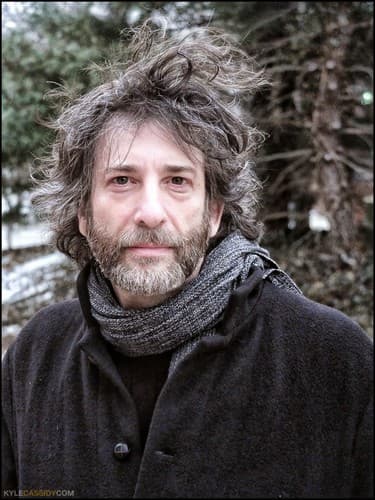
Neil Richard MacKinnon Gaiman is an English author of short fiction, novels, comic books, graphic novels, audio theatre, and a screenwriter. His works include the comic book series The Sandman and the novels Good Omens, Stardust, Anansi Boys, American Gods, Coraline, and The Graveyard Book. He has won numerous awards, including the Hugo, Nebula, and Bram Stoker awards, as well as the Newbery and Carnegie medals. He is the first author to win both the Newbery and the Carnegie medals for the same work, The Graveyard Book (2008). In 2013, The Ocean at the End of the Lane was voted Book of the Year in the British National Book Awards. It was later adapted into a critically acclaimed stage play at the Royal National Theatre in London.







