“The dragon. It's the dragon. It's in the town.”
— Manning's initial realization of the supernatural threat in Hyde River.

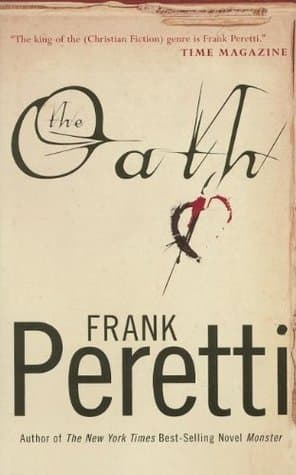
Frank E. Peretti (1995)
Genre
Thriller / Fantasy / Spirituality / Mystery
Reading Time
15-20 hours
Key Themes
See below
Sign in to track this book
In the isolated town of Hyde River, an ancient evil, born from a forgotten oath and generations of hidden sin, stalks residents and corrupts souls, turning hearts black with a spiritual decay more terrifying than any physical predator.
The story opens with Steve Benson, a local hunter in Hyde River, discovering a mutilated deer carcass, drained of blood, in the forest. This find is quickly followed by Steve's own disappearance, prompting a search party that yields no results. Shortly after, Steve's brother, Frank Peretti, a wildlife biologist, arrives in Hyde River, drawn by the unsettling news and a premonition of danger. Frank is immediately met with hostility from the townsfolk, particularly from Sheriff Ben Trask and his wife, Martha, who seem to know more than they let on. As Frank begins his own investigation into Steve's disappearance, he uncovers a history of similar, unexplained vanishings in the isolated mountain community, hinting at a deeper secret than a mere animal attack.
As Frank investigates, he learns about a generations-old secret within Hyde River: a blood oath made by the town's founders. This oath, born from a desperate pact to survive a harsh winter, involved sacrificing human life to an unseen entity in exchange for prosperity and protection. This entity, known as 'The Beast,' is not merely an animal but a spiritual predator that feeds on sin and unconfessed guilt, appearing physically to claim its victims. The town's prosperity is tied to its continued adherence to this covenant, and anyone who threatens to expose the truth or break the oath becomes a target. Frank realizes that Steve's disappearance is linked to this ancient pact, and he is now close to becoming the Beast's next victim.
Frank observes that the Beast's influence is not limited to physical attacks; it also appears as a moral decay and spiritual darkness within the town. People become increasingly selfish, suspicious, and prone to anger, their hearts growing cold and their consciences dulled. Sheriff Trask, initially an antagonist, shows this corruption, his actions driven by a desperate desire to protect the town and his family, even if it means sacrificing others. The Beast thrives on this spiritual darkness, its power growing with each unconfessed sin and each act of compromise. Frank realizes that the fight is not just against a physical monster, but against a spiritual force that is slowly consuming the souls of Hyde River's inhabitants, turning them against each other and against God.
Driven by his quest for truth, Frank confronts the town elders, including Mrs. Trask, who has a role in perpetuating the secret. Through their fragmented testimonies and his own deductions, Frank pieces together the full history of the oath. He learns that the founders, facing starvation, made a desperate pact with a demonic entity, offering human lives in exchange for the town's survival and prosperity. This initial sacrifice led to the Beast's presence and its hunger, which has been satisfied by generations of silent involvement and the occasional forced 'offering' of those who threaten the secret. The elders, burdened by guilt and fear, are trapped in a cycle they do not know how to break, paralyzed by the consequences of breaking the oath.
Sheriff Ben Trask, under pressure and fearing for his family's safety, becomes erratic and violent. He attempts to silence Frank and maintain the town's secret, believing it is the only way to protect his wife, Martha, and their son. However, his actions only deepen the town's spiritual darkness. Martha Trask, initially appearing as a victim, reveals a more complex role. She confesses to Frank that she has been affected by the Beast, carrying a spiritual mark or burden due to her family's long involvement in the oath. Her confession shows the Beast's influence, how even those who resist it are still entangled in its web of sin and consequence. This revelation complicates Frank's understanding of the conflict, as he realizes the enemy is not just an external force, but an internal corruption.
As Frank's investigation progresses and he begins to openly challenge the town's secrets, the Beast's attacks intensify and become more personal. It targets those close to Frank and those who show signs of breaking free from its influence. Frank experiences spiritual oppression and physical threats, forcing him to confront the supernatural nature of the enemy. He realizes that traditional scientific methods are useless against this entity and that he must engage in spiritual warfare. This involves prayer, seeking divine guidance, and relying on faith, a departure from his initial scientific approach. He understands that the Beast feeds on fear, guilt, and unconfessed sin, and that the only way to defeat it is through truth, repentance, and the power of God.
Following clues and spiritual promptings, Frank eventually discovers the Beast's physical lair deep within the mines beneath Hyde River. This place is a nexus of spiritual darkness, marked by an oppressive, suffocating evil. Here, he witnesses the Beast's true, terrifying physical form, a grotesque, powerful creature that is both animalistic and demonic. This encounter confirms everything he has suspected, solidifying the reality of the supernatural threat. The lair is filled with the remnants of past victims and gives off a sense of ancient, unholy power, further emphasizing the depth of the town's entanglement with this entity. Frank realizes he is not just fighting a monster, but a powerful, ancient evil rooted in a pact of blood and sin.
In a confrontation, Frank faces the Beast, both physically and spiritually. He understands that the Beast's power comes from the unbroken oath and the unconfessed sins of the town. The only way to defeat it is not through physical force alone, but by breaking the spiritual covenant. This involves a public act of confession, repentance, and breaking the secrecy that has fueled the Beast for generations. He appeals to the townspeople, urging them to confess their involvement and break free from the fear that binds them. This realization is a turning point, as Frank shifts from trying to simply kill the monster to dismantling the spiritual foundation of its power.
Despite initial resistance and fear, some of the townspeople, particularly those who have been most burdened by guilt, begin to respond to Frank's plea. Encouraged by Martha Trask's example and her own confession, they start to publicly acknowledge their sins, their involvement in the oath, and their silent acceptance of the Beast's reign. This collective act of repentance and breaking the code of silence begins to weaken the Beast's hold over Hyde River. The spiritual darkness starts to recede, and hope emerges. This process is not instantaneous or easy, as generations of sin and fear are deeply ingrained, but it marks the beginning of the town's spiritual healing and liberation from the ancient curse.
As the townspeople continue to confess and repent, the Beast's power lessens. In a final struggle, the creature is defeated, not just by physical means, but by the spiritual power unleashed through the breaking of the oath and the collective repentance of the town. The Beast's physical form collapses, and its spiritual influence over Hyde River is broken. The town, though scarred by its past, is free from the ancient curse. The ending signifies a long road to recovery and healing for Hyde River, as its inhabitants must now rebuild their community on a foundation of truth, forgiveness, and faith, rather than fear and sin. Frank, having fulfilled his mission, can leave Hyde River, knowing that his brother's disappearance ultimately led to the town's redemption.
The Protagonist
Frank evolves from a scientific skeptic to a man of profound faith, understanding that spiritual battles require spiritual weapons.
The Supporting/Catalyst
His disappearance sets the stage for the entire conflict, eventually leading to the town's liberation.
The Antagonist
He descends further into sin and violence, ultimately facing tragic consequences for his choices.
The Supporting
She moves from fearful complicity to courageous confession, becoming a catalyst for the town's redemption.
The Antagonist
Its power grows with the town's sin, but it is ultimately weakened and defeated by truth and repentance.
The Supporting/Antagonistic
They gradually reveal the truth, ultimately contributing to the Beast's downfall through their confessions.
The Supporting/Collective
They transition from a state of fear and complicity to collective repentance and the beginning of spiritual healing.
The Mentioned/Historical
Their initial sin casts a long shadow over generations, ultimately requiring a spiritual reckoning.
The book explores how unconfessed sin and inherited guilt can appear as spiritual and physical bondage. The Beast's power is linked to the townspeople's unacknowledged sins and their involvement in maintaining the ancient oath. Generations of silence and fear have continued a cycle of darkness, showing how sin, once embraced, can corrupt individuals and entire communities. Frank's journey shows that true freedom comes not from hiding sin, but from confronting and confessing it.
“For generations, they had fed the beast with their fear, their silence, their unconfessed sin. And the beast had grown fat.”
A core theme is the reality of spiritual warfare, where unseen forces of good and evil battle for human souls. Frank, initially a secular scientist, must embrace spiritual weapons, prayer, faith, and the truth of God's Word, to combat the demonic Beast. The book states that evil is not merely psychological but a spiritual force that requires a spiritual response. Redemption for Hyde River is achieved through collective repentance and breaking the spiritual covenant, showing that even deep-seated generational sin can be overcome through faith.
“This wasn't just a monster hunt; it was a battle for the very soul of a town.”
The story shows that secrecy and lies empower evil, while truth and confession lead to freedom. The Beast thrives on the hidden sins and unspoken involvement of Hyde River's inhabitants. Frank's pursuit of the truth, despite resistance, unearths the town's dark history. It is only when individuals like Martha Trask and eventually other townspeople openly confess their sins and break the code of silence that the Beast's power begins to lessen, showing the transformative power of honesty before God and others.
“The truth, like light, would expose the darkness, and the darkness would flee.”
The book explores generational curses, showing how the sin of the town's founders has plagued their descendants for centuries. The blood oath, made out of desperation, created a spiritual bondage that was passed down through generations, affecting the moral fabric and spiritual well-being of every resident. The story states that these cycles of sin and suffering can only be broken through a conscious, collective act of repentance and a rejection of the past covenant, showing the importance of acknowledging and atoning for ancestral wrongs.
“The sins of the fathers, visited upon the children, for generations untold.”
The struggle between fear and faith is central to the plot. The townspeople are paralyzed by fear of the Beast, which allows the entity to maintain its control. Sheriff Trask's actions are largely dictated by his fear for his family, leading him to commit further sins. Frank, on the other hand, must overcome his own initial fear and rely on his faith to confront the supernatural evil. The story suggests that fear breeds spiritual death and involvement, while true faith, even when things are difficult, provides the courage and power to resist evil and achieve freedom.
“Fear was the Beast's greatest weapon, a shadow that clung to every soul in Hyde River.”
The central covenant that binds the town to the demonic Beast.
The blood oath is the foundational plot device, serving as the origin of the Beast's power and the town's curse. Made by the original founders of Hyde River in exchange for survival, this covenant involves the sacrifice of human lives to a demonic entity. It is a spiritual contract that has been upheld through generations of complicity and fear, giving the Beast its right to claim victims and corrupt the town. Breaking this oath through collective repentance and confession is the ultimate goal, making it the primary mechanism driving the conflict and its resolution.
A literal and symbolic manifestation of sin and spiritual darkness.
The Beast acts as both a literal monster and a powerful symbol. Physically, it is a terrifying, grotesque creature that stalks and kills victims. Symbolically, it represents the tangible consequences of unconfessed sin, guilt, and spiritual compromise. Its physical manifestation and its feeding on spiritual darkness make the abstract concept of evil concrete and horrifying. Its presence forces characters to confront the reality of supernatural evil and the spiritual dimensions of their actions, making it the central antagonist and a catalyst for spiritual awakening.
The collective conspiracy of silence that fuels the Beast's power.
The pervasive secrecy and silence maintained by the townspeople of Hyde River is a crucial plot device. This collective agreement to hide the truth about the Beast and the oath acts as a protective shield for the entity, allowing it to operate unchecked. The fear of breaking this silence and facing retribution, either from the Beast or from fellow townspeople, traps the community in a cycle of complicity. Frank's challenge to this silence is what ultimately threatens the Beast's existence, making the breaking of this code of secrecy paramount to the town's liberation.
The Beast's non-physical influence, corrupting hearts and minds.
Beyond physical attacks, the Beast exerts a powerful spiritual oppression that causes moral decay within the town. This device is seen in the increasing selfishness, anger, suspicion, and hardening of hearts among the residents. It demonstrates how sin, once given a foothold, can permeate the very fabric of a community, making people susceptible to further evil and resistant to truth. This spiritual darkness amplifies the Beast's power and highlights the pervasive, insidious nature of evil, making the battle a fight for souls, not just lives.
The protagonist's journey from scientific reasoning to spiritual understanding.
Frank Peretti's character arc, transitioning from a rational, scientific wildlife biologist to a person who embraces spiritual warfare, serves as a significant plot device. This transformation allows the author to gradually introduce the supernatural elements of the story through Frank's evolving perspective, making the fantastical elements more believable. His initial skepticism mirrors that of many readers, and his eventual acceptance of spiritual realities provides a relatable entry point into the book's theological themes, demonstrating that logic alone is insufficient to combat spiritual evil.
“The dragon. It's the dragon. It's in the town.”
— Manning's initial realization of the supernatural threat in Hyde River.
“Sin is not just an act, it's a condition.”
— Manning's internal reflection on the nature of evil and its grip on the town.
“You can't fight what you can't see.”
— A character's frustration with the invisible yet pervasive evil plaguing Hyde River.
“The monster feeds on sin. That's why it's here.”
— Manning's understanding of the dragon's connection to the town's moral decay.
“Sometimes the greatest darkness is not what's out there, but what's in here.”
— A reflection on the internal battle against one's own sinful nature.
“The truth is a weapon, but only if you're willing to wield it.”
— Manning's realization that confronting the truth is essential for overcoming evil.
“Fear is the lock, and sin is the key.”
— Describing how fear and sin enable the dragon's power.
“They made an oath, and the oath demands its due.”
— Referring to the ancient pact that binds the town to the dragon.
“Forgiveness is the only way to break the cycle.”
— The ultimate spiritual solution to the town's predicament.
“The dragon doesn't just eat flesh; it eats souls.”
— Highlighting the spiritual devastation caused by the creature.
“You can't hide from what you are.”
— A character confronting their own complicity in the town's darkness.
“Hope is a dangerous thing in a town like this, but it's all we have.”
— A character's desperate clinging to hope amidst overwhelming despair.
“The silence in this town is louder than any scream.”
— Describing the oppressive atmosphere of fear and unspoken secrets in Hyde River.
“Breaking an oath can be as deadly as keeping it.”
— Exploring the perilous nature of the ancient pact and its implications.
“Sometimes the only way out is through.”
— Manning's determination to confront the evil directly.
Ready to see how well you understood this book? Take our interactive quiz with 10 questions.







