“For the sake of a few words I have to make a long journey.”
— Malte reflects on the difficulty of writing and capturing truth.

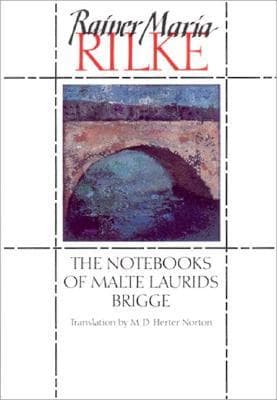
Rainer Maria Rilke (1987)
Genre
Literary Fiction / Philosophy
Reading Time
240 min
Key Themes
See below
Sign in to track this book
In early 20th-century Paris, a young Danish poet, Malte Laurids Brigge, struggles with his aristocratic past and the terror of modern life, seeing death everywhere as his own identity fades.
Malte Laurids Brigge, a 28-year-old Danish man, moves to Paris and rents a cheap room on a side street. He is a poet, but struggles to write, finding himself distracted and overwhelmed by the city's harsh realities. His early notebook entries describe the squalor, noise, anonymity, and human suffering he sees daily. He observes the sick, the dying, the poor, and the isolated, feeling an intense, almost physical, empathy that borders on terror. The city's indifference and fast pace begin to wear down his sense of self and his ability to create, leaving him exposed and vulnerable.
As Malte continues his observations, he becomes more aware of the widespread fear that seems to define Paris's inhabitants. He notes how people carry their illnesses and deaths within them, almost visibly. He reflects on how the city itself seems to be alive, consuming and changing its residents. This leads him to think about individuality and the terrifying idea of losing oneself in the crowd. He recounts mistaking a sick woman for a wall, showing his blurred perception of reality and his struggle to separate himself from the surrounding misery. This period involves an intense inner fight against growing despair.
Overwhelmed by Paris, Malte often thinks back to his childhood in Denmark, especially to the family estates, Ulsgaard and Urnekloster. He vividly recalls the grand, decaying houses, long corridors, tapestries, and portraits of his ancestors. These memories are not just nostalgic; they carry the lingering presence of the past and the weight of his aristocratic lineage. He remembers his grandfather, Count Christoph, and his mother, Sophie, as well as the family's quirks and their unique relationship with death. This introspection offers refuge from the present, and also helps him understand his own sensitivities and the legacy he carries.
Malte writes much of his notebooks about the deaths of various Brigge family members, highlighting their individual and often unusual ways of dying. He recalls his grandfather, Count Christoph, whose death was a grand, dramatic event, and his aunt, Abelone, whose life was marked by a deep, almost spiritual, connection to death. He contrasts these 'owned' deaths with the anonymous, impersonal deaths he sees in Paris, where people die without a sense of their own unique end. This exploration of his family's history with death is key to understanding Malte's anxieties and his search for an authentic life.
Malte recounts a deeply unsettling experience of intense, irrational fear that grips him in his room, making him feel utterly alone and vulnerable. This fear is not tied to a specific external threat but seems to come from within, a sign of his existential dread. He also describes a visit to a hospital, where he sees the raw reality of illness and mortality. The sterile environment and suffering patients increase his sense of alienation and his view of the body as a fragile, temporary container. These experiences push him further into introspection, questioning life's meaning and death's inevitability.
Malte returns to his childhood memories, specifically recalling his periods of illness. He describes these 'great fevers' not just as physical ailments but as deep, almost spiritual, experiences that changed his view of the world. During these times, he felt a heightened sensitivity, a blurring of lines between reality and imagination, and a deeper connection to the unseen. These childhood experiences of vulnerability and heightened perception seem to predict his adult sensitivities and poetic nature, suggesting his unique way of seeing the world formed early through suffering and introspection.
Malte dedicates a long section to the historical figure of the False Dmitry, who claimed to be the rightful Tsar of Russia. This story is a detailed digression, allowing Malte to explore identity, authenticity, and the burden of living a life that is not truly one's own. He analyzes Dmitry's motivations, successes, and eventual downfall, seeing in him a reflection of the human struggle for recognition and self-definition. The story of Dmitry's pretense and his ultimate failure resonates with Malte's own struggles with his identity as a poet and his feeling of inadequacy in the world.
Toward the end of his notebooks, Malte's reflections become more philosophical, moving from specific observations to abstract ideas. He grapples with the nature of love, suggesting that true love is not about possession or expectation, but about giving and letting the beloved exist freely. He also explores his understanding of God, seeing God not as a distant, all-powerful figure, but as something 'made' through human experience, suffering, and longing. These meditations reflect Malte's ongoing search for meaning and transcendence amidst the chaos and suffering he perceives.
In a new interpretation of the biblical parable of the Prodigal Son, Malte focuses not on the son's return to his father, but on his journey of self-discovery and alienation. He argues that the son's true act of love was not his return, but his initial departure, which allowed him to experience life, suffering, and ultimately, to become himself. Malte suggests that the son's true 'return' was an internal one, a coming to terms with his own identity and experiences, independent of his family's expectations. This re-reading highlights Malte's own struggles with belonging and his belief in the need for individual experience.
Malte's notebooks end with his continued struggle to express his experiences and find his voice as a poet. He recognizes that the poet's task is not to avoid suffering or the grotesque, but to confront it, absorb it, and change it into something meaningful. He believes that true art comes from deep personal experience and a willingness to embrace the full range of human existence, including its darkest aspects. His entries suggest an ongoing process of learning to 'see' and to 'live' authentically, even amidst the overwhelming challenges of modernity, hinting at a new understanding of his artistic purpose.
The Protagonist
Malte's arc is less about external action and more about internal transformation, moving from a state of raw, overwhelming sensitivity and fear towards a nascent understanding of the poet's role in confronting and transforming suffering.
The Supporting
As a figure from Malte's past, Count Christoph's arc is static, but his memory serves as a foundational element in Malte's developing understanding of death and individuality.
The Supporting
Like other ancestral figures, Sophie's arc is presented retrospectively, serving to enrich Malte's internal landscape and his reflections on heritage.
The Supporting
Her story is a fixed memory, illustrating a particular mode of existence and dying within the Brigge lineage that informs Malte's broader reflections.
The Mentioned
They are a static, pervasive force, serving as a constant external stimulus for Malte's internal monologues.
The novel shows the overwhelming and alienating parts of early 20th-century city life, especially in Paris. Malte is constantly bombarded by the city's noise, squalor, and the sheer amount of anonymous human suffering. He feels a deep sense of isolation and a terror of losing his individuality within the faceless crowds. The city is shown as a place where traditional identities and deaths are lost, replaced by a harsh, impersonal reality. This theme appears in Malte's descriptions of the sick and dying in the streets, the crumbling buildings, and his own inability to truly connect with others.
“I am sitting here in my room, a man of twenty-eight, and I am afraid, afraid of the city, of the people, of the darkness.”
A main theme is the different ways people face and 'own' their deaths. Malte contrasts the 'great deaths' of his aristocratic ancestors, who died with self-possession and ceremony, with the anonymous, unnoticed deaths he sees in Paris. He regrets the loss of a person's unique death, seeing it as part of a larger loss of identity in modern times. This theme is explored through his detailed recollections of Count Christoph and Abelone, whose deaths were central to their lives, versus the undifferentiated suffering of the urban poor.
“Ah, but there are no more such deaths. We die as best we can, and if we die because we have no more strength, then it is a death that cannot be ours.”
Malte grapples with the poet's role in a world full of suffering and superficiality. He believes the poet must not shy away from life's harsh realities but must confront them, absorb them, and turn them into art. This involves a deep act of 'seeing' – not just observing, but deeply experiencing and internalizing the world's pain and beauty. His notebooks show this struggle, as he tries to express the inexpressible and find meaning in chaos. This theme is clear in his self-reminders to write, to truly perceive, and to not be overwhelmed.
“It is not enough to have thoughts; one must know how to make them into things.”
Malte often retreats into his childhood memories, especially those of his aristocratic Danish family and their grand, decaying estates. These recollections are not just nostalgia; they help him understand his own identity, his sensitivities, and his ancestors' legacy. The past is shown as a powerful, living force that constantly shapes the present. His memories of childhood illnesses, family quirks, and the unique ways his relatives lived and died provide a contrast to the alienating present of Paris, offering both refuge and a deeper understanding of his own being.
“I am sitting here and remembering, and it is as if the past were alive within me, more alive than the present.”
A constant theme is Malte's struggle with his own identity and sense of self. He often questions who he is, feeling his individuality threatened by the overwhelming external world and his own inner anxieties. He feels himself dissolving, becoming just an observer, or even an object. His reflections on the False Dmitry, the Prodigal Son, and his own family's unique identities all contribute to this exploration. He seeks to create an authentic self amidst the pressures of heredity, environment, and his own deep sensitivity, suggesting that identity is a fluid, constantly changing process.
“God, if I am going to have a new life, then it must be a life that is truly mine.”
A narrative technique that directly presents Malte's unfiltered thoughts, feelings, and perceptions.
The entire novel is presented as Malte's notebooks, allowing for a non-linear, associative flow of his inner life. This device immerses the reader directly into Malte's subjective experience, blurring the lines between observation, memory, and philosophical reflection. It highlights his intense sensitivity and his struggle to organize his thoughts amidst the overwhelming stimuli of Paris. The lack of a conventional plot or external dialogue reinforces the focus on his internal world and his fragmented perception of reality.
The novel is structured as a series of diary entries or 'notebooks,' giving it an intimate and confessional tone.
By presenting the narrative as Malte's personal notebooks, Rilke creates a sense of immediacy and authenticity. This format allows for jumps in time, shifts in focus from external observations to internal meditations, and the inclusion of various genres (memories, philosophical essays, historical accounts). It emphasizes Malte's isolation and his attempt to make sense of his experiences through writing, making the act of narration itself a central theme. The reader becomes a privileged witness to his most private thoughts and struggles.
The novel frequently references historical figures, biblical parables, and literary concepts.
Rilke employs numerous allusions, such as the detailed recounting of the False Dmitry's story and the reinterpretation of the Prodigal Son parable. These intertextual references serve multiple purposes: they broaden the thematic scope beyond Malte's personal experiences, allow for philosophical exploration through historical and religious narratives, and provide intellectual frameworks for Malte's own struggles with identity, authenticity, and the nature of love and God. They enrich the text with layers of meaning and connect Malte's individual journey to broader human experiences.
The narrative frequently describes overwhelming sensory experiences, often blurring different senses.
Malte's descriptions are often characterized by an intense focus on sensory details – sounds, smells, sights – which he experiences with heightened sensitivity. This often leads to synesthetic descriptions, where one sense is described in terms of another (e.g., 'the smell of the street was thick'). This device effectively conveys Malte's overwhelmed state in Paris, his difficulty in processing the sheer volume of stimuli, and his unique poetic perception. It immerses the reader in his subjective, often disorienting, experience of the world.
“For the sake of a few words I have to make a long journey.”
— Malte reflects on the difficulty of writing and capturing truth.
“Oh, but there are so many dead people because there are so many who have not lived.”
— Malte ponders the lives of people in Paris and their unfulfilled existence.
“Is it possible that one has not seen anything, not experienced anything, not understood anything, and yet has lived?”
— Malte questions the depth of his own experiences and observations.
“I am learning to see. I don't know why, but everything enters me more deeply and is not staying where it once used to stay. I have an interior that I never knew. Everything goes into it now. I don't know what is happening.”
— Malte describes a profound shift in his perception and inner world.
“But the fear of the great is not the fear of the small. The fear of the small is a fear of the great, which is not understood.”
— Malte contemplates different types of fear and their origins.
“For verses are not, as people imagine, simply feelings (these one has early enough),—they are experiences. In order to write a single verse, one must see many cities, people and things, one must know animals, one must feel how the birds fly and know the gesture with which the small flowers open in the morning.”
— Rilke, through Malte, explains the profound depth of experience required for true poetry.
“And it is not yet enough to have memories. One must be able to forget them when they are many, and one must have the great patience to wait until they come again. For it is not the memories themselves. It is when they have turned to blood within us, to glance, to gesture, nameless and no longer distinguishable from ourselves, that they can become something within us.”
— Malte discusses the process of memory and its integration into the self, crucial for creative work.
“And what is terrible is not death, but the lives that people live or don't live up to their death.”
— Malte's reflection on mortality and the significance of how one lives.
“My God, what a life. The life of a city. The life of a man. The life of God. Everything is so infinitely different and yet so infinitely the same.”
— Malte observes the interconnectedness of various forms of existence in Paris.
“Perhaps all the dragons in our lives are princesses who are only waiting to see us act, just once, with beauty and courage. Perhaps everything that frightens us is, in its deepest essence, something helpless that wants our love.”
— Malte muses on the nature of fear and the potential for transformation through love and courage.
“What are you going to do, God, when I die? When I am your water, your drink? (I am your garb, your trade, and your profession, with me you lose your meaning.)”
— Malte imagines a dialogue with God, questioning God's existence and purpose without humanity.
“Ah, what did I know of fear? Nothing. I knew only a little fright, a little trembling, a little anxiety. But this was something else. This was the fear that has no object, the fear that is itself the object.”
— Malte describes a profound, existential fear he experiences.
“I sit here and am afraid. And I am afraid because I am here.”
— Malte expresses a fundamental sense of dread tied to his very existence and presence.
“It is not enough to have a past. One must love it to be worthy of the future.”
— Malte reflects on the importance of accepting and integrating one's past.
Ready to see how well you understood this book? Take our interactive quiz with 10 questions.
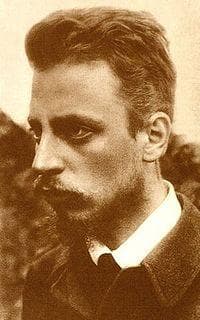
René Karl Wilhelm Johann Josef Maria Rilke, shortened to Rainer Maria Rilke, was an Austrian poet and novelist. Acclaimed as an idiosyncratic and expressive poet, he is widely recognized as a significant writer in the German language. His work is viewed by critics and scholars as possessing undertones of mysticism, exploring themes of subjective experience and disbelief. His writings include one novel, several collections of poetry and several volumes of correspondence.







