“The purpose of art is to prepare a person for death.”
— Shostakovich reflecting on art's ultimate purpose amidst the Soviet regime.

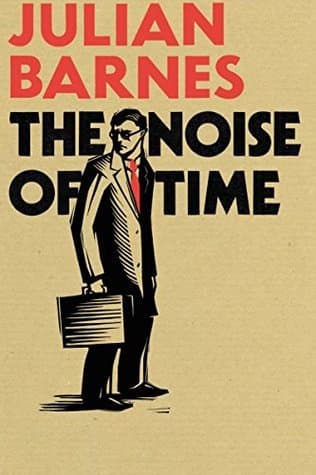
Julian Barnes (2016)
Genre
Literary Fiction / Historical Fiction
Reading Time
180 min
Key Themes
See below
Sign in to track this book
Under Stalin, composer Dmitri Shostakovich walks a dangerous line between artistic honesty and survival, his music a quiet protest against Soviet rule.
In 1936, Dmitri Shostakovich waits on the landing outside his Leningrad apartment, a small suitcase packed, expecting the NKVD. He has been called to the Big House (secret police headquarters) for questioning, but he thinks it is a trick; they will arrest him at home. He waits by the elevator to spare his wife, Nina Varzar, and infant daughter, Galina, from seeing his arrest. This fearful wait follows the damaging Pravda article, 'Muddle Instead of Music,' which condemned his opera, 'Lady Macbeth of the Mtsensk District,' after Joseph Stalin himself saw a performance. Shostakovich thinks about the sudden change from international praise to being labeled an 'enemy of the people,' a label that now threatens his life and career under Soviet rule.
Shostakovich endures a terrifying interrogation at the Big House, led by a polite but threatening officer. He is questioned about his artistic 'mistakes' and ties to 'enemies of the people.' The interrogation is mentally torturous, meant to break him and get confessions. He is told to return the next day. However, when he arrives, he learns his interrogator has been arrested overnight. This strange turn of events, common during the Great Purge, gives Shostakovich a temporary, unexplained break. He is released, but the experience leaves a lasting mark, deepening his understanding of the arbitrary and frightening nature of power in the Soviet Union and strengthening his constant fear of the knock on the door.
After the 'Muddle Instead of Music' scandal, Shostakovich is in a difficult position, forced to balance his artistic vision with state demands. He is working on his Fourth Symphony, a large and complex piece showing his inner turmoil and the era's anxieties. However, under great pressure and fearing more condemnations, he makes the painful choice to withdraw the symphony from performance. This act of self-censorship results directly from the atmosphere of fear and the regime's control over artistic expression. He understands that to survive, he must adapt, or appear to, even if it means compromising his artistic truth for a time. The symphony remains unperformed for decades, a silent symbol of art's suppression.
In 1937, Shostakovich premieres his Fifth Symphony, subtitled 'A Soviet Artist's Reply to Just Criticism.' This work, while subtly rebellious to some, is mostly seen by authorities as a return to socialist realism and a sign of his regret. The symphony is a great success with both the public and official critics, giving Shostakovich some recovery and easing the immediate pressure on him. He learns the delicate skill of creating music that can be understood on many levels: satisfying the regime's demands for accessibility and optimism while hiding deeper, more melancholic or critical messages for those who could hear them. This becomes a repeated strategy in his career, a way to keep artistic honesty while navigating a dangerous political situation.
During World War II, specifically the difficult Siege of Leningrad, Shostakovich composes his Seventh Symphony, known as the 'Leningrad' Symphony. He first refuses to leave the besieged city, helping the war effort by digging trenches and broadcasting messages. The symphony becomes a strong symbol of Russian resilience against the Nazi invasion. Its premiere in Leningrad under impossible conditions—orchestra members starving, city under constant bombing—is an act of defiance. The symphony becomes famous internationally, especially in the West, where it is seen as a universal statement against fascism. For the Soviet government, it is powerful propaganda, temporarily aligning Shostakovich with the state's story of patriotic heroism, even as his personal suffering and complex feelings are woven into the music.
In 1948, Shostakovich, along with other Soviet composers like Prokofiev and Khachaturian, is again publicly denounced under the Zhdanov Decree. Andrei Zhdanov, Stalin's cultural enforcer, condemns their music as 'formalist,' 'anti-people,' and 'bourgeois.' Shostakovich loses his professorships, his music is banned, and he is forced to publicly regret his 'mistakes.' This period marks another serious blow to his career and personal life, forcing him to compose 'for the desk drawer'—works that could not be performed publicly. He begins writing film scores and patriotic cantatas to earn money, while secretly composing his more personal and challenging works, such as the Violin Concerto No. 1 and the song cycle 'From Jewish Folk Poetry,' knowing they might never be heard.
Despite being officially denounced, Soviet authorities force Shostakovich to attend the Cultural and Scientific Conference for World Peace in New York City in 1949. This is a humiliating experience; he is made to read pre-written speeches criticizing Western music and praising Soviet cultural policy, including the very Zhdanov Decree that had condemned him. American composers and critics, including Olin Downes, publicly challenge him about his own music being suppressed. Shostakovich feels great shame and self-hatred, keenly aware of the hypocrisy and tragic irony of his situation. This event shows the deep moral compromises he is forced to make under the regime, sacrificing his dignity for the perceived safety of himself and his family.
Stalin's death in 1953 brings a period of cautious hope, known as the 'Thaw.' The immediate, strong fear that had controlled Soviet life for decades begins to fade. Shostakovich, like many others, feels a brief sense of freedom, allowing some of his previously suppressed works to be performed. However, the mental scars from years of terror run deep. He remains cautious, understanding that while the immediate threat might have lessened, the regime's basic nature had not entirely changed. The memory of past persecutions and the ingrained habit of self-censorship continue to trouble him, making true freedom of expression a complex and hard-to-reach goal. He continues to struggle with the moral weight of his compromises.
In 1960, under extreme pressure and direct force from Nikita Khrushchev's government, Shostakovich is finally made to join the Communist Party. This act is a deep personal and moral surrender, one he deeply resents and that leaves him with a lasting sense of shame. He sees it as the ultimate betrayal of his artistic and personal honesty, a final win for the 'power' that had troubled him for decades. The decision is made not from belief, but from a calculated fear for his family and his ability to keep composing. This event leaves him deeply depressed and spiritually broken, leading to a period of intense creative work, especially his String Quartet No. 8, which is deeply personal and full of despair.
In his final years, suffering from poor health and growing disappointment, Shostakovich becomes more withdrawn. He continues to compose, but his music often becomes darker and more thoughtful, reflecting his deep sadness and the compromises of his life. He often feels he has lost his 'inner voice' or that it has been corrupted by state demands. He finds comfort in his friendships and family, but the weight of his past actions, particularly joining the Party, troubles him. He understands that his music, while often serving the regime's purposes, also held hidden meanings and protests, a secret conversation with history. He dies in 1975, leaving a complex legacy of both artistic genius and tragic compromise.
The Protagonist
Shostakovich's arc is one of forced adaptation and inner resistance, evolving from a naive artist to a master of veiled dissent, ultimately achieving survival but at great personal cost.
The Supporting
Nina remains a constant, supportive presence, her arc defined by her unwavering loyalty and resilience in the face of her husband's precarious existence.
The Antagonist
Stalin's character remains a static, monolithic force of oppression, his death marking a shift in the immediate threat but not the ingrained fear.
The Supporting
Khrushchev represents a shift in the style of oppression, from overt terror to more subtle, yet still profound, coercion.
The Mentioned
The interrogator's brief appearance and sudden disappearance emphasize the unpredictable brutality of the Soviet system.
The Supporting
Galina's presence serves as a constant reminder of the human cost of political oppression, remaining a vulnerable figure Shostakovich seeks to protect.
The novel deeply explores the conflict between totalitarian power and artistic freedom. Shostakovich's life is a constant negotiation with 'power'—Stalin, Khrushchev, and the entire Soviet system—which seeks to control the content and form of his music. His struggle shows how political regimes try to take over or crush independent artistic expression, forcing artists to choose between honesty and survival. This theme is central in scenes like the 'Muddle Instead of Music' denunciation and Shostakovich's forced participation in the New York conference, where he is made to betray his own beliefs.
“What was courage? What was cowardice? What was compromise? What was the correct path? You had to be a hero to play the game and lose. You had to be a hero to play the game and win. You had to be a hero even to refuse to play the game.”
A constant theme is the moral compromise needed to survive under an oppressive regime. Shostakovich is forced to make many compromises, from withdrawing his Fourth Symphony to joining the Communist Party and reading state-approved speeches. These actions, while ensuring his survival, cause deep psychological pain and a strong sense of guilt and self-hatred. The novel examines the inner torment of a man who feels he has betrayed his true artistic self, even if it was for his family's sake. His inner thoughts constantly grapple with whether his choices were acts of cowardice or necessary survival.
“He always knew there was a price to be paid, and the price was not just his time and labour, but his soul.”
Despite the constant pressure, the novel celebrates art's lasting power to resist, even subtly. Shostakovich's music, especially his symphonies and quartets, becomes a way for hidden dissent, a 'covert message' heard by those who understood its details. Composing itself is an act of defiance, creating beauty and truth in a world of lies. Even when forced to produce 'acceptable' music, Shostakovich often puts his true feelings—sorrow, irony, anger—within the notes, showing that art can overcome censorship and speak across time, as seen in the double meanings of his Fifth Symphony.
“Music was a way to say the unsayable. It was a way to say the unsayable in an unsayable time.”
Fear drives much of Shostakovich's life and the overall mood of the Soviet Union. The fear of the knock on the door, random arrests, purges, and constant surveillance leads to a culture of silence and self-censorship. This theme appears clearly in the opening scene of Shostakovich waiting on the landing, and in his choice to withdraw his Fourth Symphony. The novel explores how fear not only silences people but also distorts truth and memory, making it hard for people to trust even their own thoughts or others' intentions.
“Fear was a habit. Fear was a way of life. Fear was a way of thinking, of not thinking, of being silent.”
The novel often returns to Shostakovich's memories, blending past and present, and questioning the official version of history. His inner thoughts are full of recollections of friends lost to purges, past humiliations, and brief moments of joy. This constant mix of memory highlights how personal experience often conflicts with official history, and how individuals struggle to keep their own truth in the face of state-imposed fictions. Remembering becomes a form of resistance, a way to keep alive the true 'noise of time' rather than the cleaned-up version presented by authorities.
“History was not the lies of the victors, as the old saying went, but the memories of the victims.”
The narrative is almost entirely presented through Shostakovich's stream of consciousness.
The novel primarily utilizes an internal monologue, allowing readers direct access to Shostakovich's thoughts, fears, anxieties, and ironic observations. This device is crucial for conveying the psychological impact of living under totalitarianism, as it reveals his private struggles, his self-doubt, and his attempts to reconcile his public actions with his inner convictions. It creates an intimate portrait of his mind, highlighting the constant negotiation between self-preservation and artistic integrity, and the deep-seated melancholy that permeates his existence. This allows for a nuanced exploration of his moral compromises.
The narrative is divided into three distinct chronological 'stations' or periods in Shostakovich's life.
The novel is structured around three key moments ('stations') in Shostakovich's life: 1936 (on the landing, anticipating arrest), 1949 (on a plane to New York, forced to represent the USSR), and 1960 (in a car, coerced into joining the Party). Each 'station' serves as a focal point for deep reflection, allowing Shostakovich to revisit past memories, contemplate his present predicament, and project his anxieties onto the future. This structure emphasizes the cyclical nature of his suffering and compromise, showing how the 'power' constantly resurfaces to demand allegiance, even as the specific circumstances change over time.
Shostakovich's internal narrative is often laced with dark humor and biting irony.
Shostakovich's internal monologue frequently employs irony and black humor as a coping mechanism against the absurd and terrifying reality of Soviet life. He observes the hypocrisy and brutality of the regime with a sardonic wit, using humor to distance himself from the horror and to retain a sliver of intellectual independence. This device allows the reader to understand his inner rebellion, even when his outward actions are those of compliance. It also highlights the surreal nature of living in a society where truth is constantly inverted and fear is a daily companion, making his observations both poignant and darkly amusing.
A recurring metaphor for the oppressive historical and political forces shaping Shostakovich's life.
The title itself, 'The Noise of Time,' serves as a central metaphor. It represents the cacophony of political dictates, propaganda, fear, and historical events that constantly intrude upon and threaten to silence Shostakovich's inner musical voice. It is the overwhelming external pressure from the state, the 'power,' that he must navigate. The 'noise' is both literal (the denunciations, the speeches) and metaphorical (the pervasive atmosphere of terror and ideological control). Shostakovich's struggle is to find or preserve his own music, his own truth, amidst this deafening and destructive 'noise'.
“The purpose of art is to prepare a person for death.”
— Shostakovich reflecting on art's ultimate purpose amidst the Soviet regime.
“You could not be a Soviet artist and be a free artist. You could be a Soviet artist, or you could be a free artist. But you could not be both.”
— Shostakovich grappling with the impossible choice between artistic integrity and survival under the Soviet system.
“The noise of time. That was what he had been listening to. The noise of time, which was the sound of the State.”
— Shostakovich's realization that the constant pressure and pronouncements of the Soviet state were the 'noise of time' he had to endure.
“There were certain things you could not do. There were certain things you must not do. And there were certain things you would not do, even if you could.”
— Shostakovich's internal monologue about the moral boundaries and self-imposed limits in a repressive society.
“To be a composer was to be a servant. To be a composer was to serve the State. To be a composer was to serve the people. To be a composer was to serve music. And sometimes, these four masters were in conflict.”
— Shostakovich contemplating the conflicting demands placed upon him as a Soviet composer.
“What was the worst thing they could do to you? Kill you? Yes. But they could also make you kill yourself, morally speaking.”
— Shostakovich's fear of moral compromise and spiritual death being worse than physical death.
“He had learned that the only way to resist was to not resist. To appear to conform, while preserving an inner core of defiance.”
— Describing Shostakovich's strategy of outward compliance as a form of subtle resistance.
“A coward, yes. But a coward who had survived. And survival, in those times, was a form of heroism.”
— Shostakovich's self-assessment and a justification for his choices, valuing survival as an act of defiance.
“Music was the only place he felt truly free. In music, there were no compromises, no denunciations, no fear.”
— Shostakovich's deep connection to music as his sanctuary and a realm of pure expression.
“He had been forced to denounce his friends, to praise his tormentors, to sign letters he did not believe in. And each time, a piece of him had died.”
— Shostakovich reflecting on the cumulative moral damage inflicted by his forced public concessions.
“The question was not whether art could change the world, but whether art could help you live in it.”
— Shostakovich considering the practical function of art for personal endurance rather than grand political change.
“Laughter was a good weapon. Against the terror, against the absurdity. Laughter was a way of saying: you haven't broken me.”
— Shostakovich finding solace and a form of defiance in humor, even in the darkest times.
“He understood that his music would outlive him. And that, perhaps, was the only true victory.”
— Shostakovich's hope that his artistic legacy would endure beyond his personal suffering and the regime.
“He had played the fool, the jester, the loyal servant. But underneath, the music was always there, a secret language, a hidden truth.”
— Describing Shostakovich's public persona versus his private artistic expression.
Ready to see how well you understood this book? Take our interactive quiz with 10 questions.
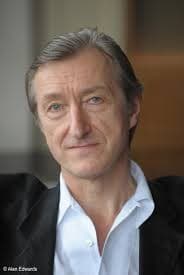
Julian Patrick Barnes is an English writer. He won the Man Booker Prize in 2011 with The Sense of an Ending, having been shortlisted three times previously with Flaubert's Parrot, England, England, and Arthur & George. Barnes has also written crime fiction under the pseudonym Dan Kavanagh. In addition to novels, Barnes has published collections of essays and short stories.







