“For the bells are the voice of the Church; they are themselves a part of the Church, and they speak to the living and the dead.”
— Lord Peter Wimsey reflecting on the significance of the bells.


Dorothy L. Sayers (2012)
Genre
Historical Fiction / Mystery
Reading Time
515 min
Key Themes
See below
Sign in to track this book
In rural East Anglia, Lord Peter Wimsey uncovers an old jewel theft and a series of local murders during a New Year's bell-ringing marathon.
On New Year's Eve, Lord Peter Wimsey and his valet, Bunter, crash their car in a snowstorm in the Fens. They find help at the nearby village of Fenchurch St. Paul, taken in by Rector Reverend Theodore Venables and his wife, Agnes. Wimsey, a musician, is interested in the church's old bells and the local 'change-ringing' tradition. He is asked to join the bell-ringers for a nine-hour marathon peal to welcome the New Year, replacing a sick ringer. This entry into village life sets the stage for the mysteries.
Wimsey, using the name 'Death Bredon,' joins the Fenchurch St. Paul bell-ringers for their New Year's peal. The group includes the Rector, Mr. Ezra Wilderspin (tower captain), Mr. Silas Mellard, Mr. Jim Thoday, and Mr. Alf Donnington. Wimsey quickly learns the complex patterns and physical demands of change-ringing, a core part of the village's identity. During the long night, he learns about the history of the bells, especially the 'Nine Tailors,' and the close-knit bell-ringing community. The experience is both tiring and mentally engaging, forming a temporary bond between Wimsey and the villagers.
Soon after New Year's, an old woman named Mrs. Agnes Twitterton dies. During her burial, an unknown man is also interred in her grave. His face is badly disfigured, making identification hard. The villagers are puzzled, and the local police, including Superintendent Blundell, start an investigation. Wimsey, still in Fenchurch St. Paul after his bell-ringing, becomes curious. The strange burial, along with the village's isolated nature, suggests deeper secrets beneath the quiet community.
Through careful investigation, including dental records and clothing, the disfigured body is identified as Reuben Garrett, a local man. Garrett had been a known jewel thief who disappeared years ago after stealing the Lady Thorpe emeralds. His sudden reappearance and mysterious death, plus his burial in Mrs. Twitterton's grave, raise many questions. The villagers are shocked, as Garrett's past is a sensitive topic, and his return seems to reopen old wounds and suspicions.
The investigation into Reuben Garrett's death quickly connects to the unsolved theft of the Lady Thorpe emeralds, which happened almost two decades earlier. Garrett was suspected of the crime but was never caught, and the jewels were never found. The theft had hurt the Thorpe family and cast a long shadow over Fenchurch St. Paul. Wimsey learns that Mrs. Twitterton, in whose grave Garrett was found, was once Garrett's wife, a fact she had kept secret. This link suggests the emeralds might still be hidden nearby, and Garrett's death could be related to their location or the original crime.
Wimsey looks into the history of the Lady Thorpe emeralds theft, interviewing villagers and putting together events from nineteen years prior. He learns about the Thorpe family, their decline after the theft, and the suspicions that fell on various people, including the bell-ringers. The theft had caused much disagreement and distrust in the community, with accusations and broken friendships. Wimsey discovers how Reuben Garrett, then known as 'Potty Peake,' was involved with Mrs. Twitterton (then Mary Thoday, Jim Thoday's sister) and how his disappearance left many questions, hinting at a carefully planned crime.
As Wimsey's investigation continues, Reverend Theodore Venables reveals a part of his past. He confesses that he was the original 'Potty Peake' – the man accused of the jewel theft who then disappeared. The man found in the grave was not the original 'Potty Peake' (Venables), but Reuben Garrett, a different man who had taken the 'Potty Peake' identity to escape the law after the theft. Venables had been trying to make up for his past by becoming a clergyman and serving the community, carrying the secret burden of the theft and his true identity. He admits to hitting Garrett, believing him to be an intruder in the church on the night of the peal, accidentally causing his death.
Wimsey, with Bunter's help, carefully reconstructs the events leading to Reuben Garrett's death. He discovers that Garrett, who had returned to Fenchurch St. Paul to get the emeralds he had hidden, had a stroke while hiding in the bell tower during the New Year's peal. The loud sound and vibration of the 'Nine Tailors' bells, ringing for hours nearby, worsened his condition and killed him. The Rector's earlier confession about hitting Garrett was a lie, driven by his guilt and fear of his past being revealed. The bells, a symbol of the village, had become an accidental tool of justice.
After understanding Garrett's true death, the focus returns to the missing Lady Thorpe emeralds. Wimsey realizes that Garrett, a skilled craftsman, would have hidden the jewels somewhere clever and secure. He deduces that Garrett must have used his knowledge of the church's mechanics. After a thorough search, Bunter finds the emeralds hidden inside the church clock's mechanism, specifically within the counter-weights. The jewels had been cleverly hidden for nineteen years, found only through Lord Peter Wimsey's careful deduction, ending the long-standing mystery.
With the truth about Reuben Garrett's death and the emeralds' location revealed, the villagers of Fenchurch St. Paul must process the complex web of lies, secrets, and sadness. Reverend Venables is cleared of murder, though his past identity and involvement in the jewel theft remain a heavy burden. The Thorpe family finally gets some closure, and the emeralds are returned. Wimsey, having uncovered the village's dark history, leaves Fenchurch St. Paul with Bunter, leaving the community to heal and come to terms with its past. The bells continue to ring, now carrying the weight of a newly understood history.
The Protagonist
Wimsey initially seeks a distraction from his own inner turmoil but finds himself deeply engrossed in a complex mystery that challenges his intellect and moral compass.
The Supporting
Bunter remains steadfast in his support for Wimsey, providing practical assistance and quiet counsel throughout the investigation.
The Supporting
Venables is initially secretive and fearful but is ultimately forced to confront his past and confess his true identity and actions to Wimsey.
The Supporting
Agnes remains a steadfast and loving wife, her world shaken by the revelations about her husband's past but her devotion unwavering.
The Victim/Antagonist (posthumous)
Garrett's arc is revealed posthumously, showing his transformation from a clever thief to a desperate man returning for his treasure, ultimately meeting a tragic and ironic end.
The Supporting/Victim
Her death uncovers her hidden past, linking her directly to the jewel theft and the victim.
The Supporting
Ezra remains a pillar of the bell-ringing community, his knowledge and dedication inadvertently providing clues to the mystery.
The Supporting
Blundell's investigation progresses methodically, eventually accepting Wimsey's unconventional deductions.
The novel shows how past events, like the Lady Thorpe emeralds theft and Reuben Garrett's disappearance, still affect the lives of Fenchurch St. Paul villagers. Secrets linger for almost two decades, shaping relationships, causing guilt (as with Reverend Venables), and creating suspicion. Garrett's body being found literally unearths a past the community tried to bury, forcing everyone to face old conflicts and moral compromises. The bells themselves, old and lasting, constantly remind them of history and tradition, showing how deeply rooted the past is in the village's identity.
“For nineteen years the bells had been silent on the subject of this buried shame, and now, suddenly, they had spoken.”
Justice is a central theme, not just legal punishment. Reverend Venables's life is a long act of making up for his past role in the jewel theft, even though he was not the main culprit. He seeks redemption through service, carrying his secret burden. Garrett's death, though accidental, can be seen as a form of justice, as he dies in the place where he tried to get his stolen goods. Wimsey's role is to solve a crime and bring moral clarity to a situation where legal guilt mixes with complex personal histories and motivations, leading to closure for the community.
“The bells had taken a hand in the matter, and the bells were older than justice, or even than vengeance.”
Fenchurch St. Paul is a close, isolated community where everyone knows everyone, but secrets can be kept for decades. The villagers' loyalty, suspicion, and shared history create a complex social structure. The bell-ringing team is a small example of this community, united by tradition and shared effort. While this closeness offers support, it also allows lies and misunderstandings to continue, such as Mrs. Twitterton's hidden past or the true identity of 'Potty Peake.' Wimsey's arrival, as an outsider, is needed to break these patterns and uncover truths the community has kept hidden.
“Every village is a little world, and its history is the history of the world.”
The novel explores how identity can change, be stolen, and be redefined. Reverend Venables lives under a false identity for nineteen years, leaving his past as 'Potty Peake' to become a respected clergyman. In contrast, Reuben Garrett takes on the 'Potty Peake' identity to avoid capture after the theft, further burdening Venables. The disfigured state of Garrett's body initially makes identification impossible, showing how physical appearance can hide true identity. Wimsey's investigation uncovers these layers of assumed and hidden identities, revealing the true selves and pasts of the characters, and the impact these deceptions have had on their lives and the community.
“A man may change his name, but he cannot change his past.”
The complex art of change-ringing bells represents both beauty and potential danger. The mathematical precision and ordered chaos of the bells are central to the village's identity and provide a framework for the New Year's peal. However, this very order and its powerful physical presence become an accidental cause of death for Reuben Garrett. The bells, representing tradition and harmony, also have a destructive force when experienced under extreme conditions. This dual nature reflects the novel's broader look at how seemingly harmless parts of life can hide dangers or lead to unexpected tragedies.
“The bells were not merely noise; they were a language, and a terrible one.”
A disfigured body whose identity is unknown provides the initial mystery.
The discovery of a disfigured, unidentified corpse buried in Mrs. Twitterton's grave is the primary inciting incident. This classic mystery trope immediately raises questions of 'who is he?' and 'how did he die?', drawing Wimsey into the investigation. The lack of immediate identification allows for the gradual revelation of the body's true identity (Reuben Garrett) and his connection to the long-unsolved Lady Thorpe emeralds theft, thus linking the present crime to a deep-seated historical mystery. The disfigurement itself serves to obscure the truth and heighten the intrigue.
The crime occurs within a small, isolated community, limiting the suspect pool.
Fenchurch St. Paul is a remote village in the Fens, a setting that creates a 'closed circle' environment. This isolation means that most suspects are known to each other, and their interactions and shared histories are crucial to solving the crime. The limited number of outsiders (Wimsey and Bunter) and the strong community ties create a rich tapestry of relationships, secrets, and grudges that Wimsey must navigate. This device allows for an intense focus on character psychology and the impact of historical events on a confined group of people.
A false confession diverts attention from the true cause of death.
Reverend Venables's confession that he struck Reuben Garrett, believing him to be an intruder, and potentially caused his death, serves as a significant red herring. This confession, driven by guilt over his past identity as 'Potty Peake' and a genuine belief in his culpability, misdirects both the police and the reader. It provides a plausible, human explanation for the death, allowing Wimsey to dig deeper and discover the more unusual and ironic true cause of Garrett's demise – the bells themselves. This device highlights the complexities of guilt and the hidden truths beneath apparent facts.
The church bells are central to the plot, both as a setting and as the instrument of death.
The church bells of Fenchurch St. Paul, particularly the 'Nine Tailors,' are not merely background but active participants in the plot. They are the setting for Garrett's death, the source of the unique sound that killed him, and the hiding place for the emeralds. Their ancient nature, complex mechanics, and powerful sound are meticulously described, immersing the reader in the world of campanology. The bells act as an 'inanimate witness,' holding the key to the mystery, and ultimately serve as the ironic instrument of justice, making them a unique and integral plot device.
“For the bells are the voice of the Church; they are themselves a part of the Church, and they speak to the living and the dead.”
— Lord Peter Wimsey reflecting on the significance of the bells.
“He knew that the only way to get on with people was to assume that they were reasonably intelligent and well-intentioned, until proved otherwise.”
— Lord Peter's general approach to interacting with others.
“The great bell gave out a deep, sonorous boom, as though the very earth had sighed.”
— Describing the sound of one of the church bells during ringing.
“It was not a question of what he knew, but of what he didn't know, and what he couldn't find out.”
— Lord Peter struggling with the limitations of his investigation.
“The dead man, it seemed, had been a person of no importance whatsoever, except to the parish.”
— Initial assessment of the victim's social standing.
“There's nothing like a good honest bit of work to clear the cobwebs out of your head.”
— A character commenting on the benefits of physical labor.
“The village, like all villages, had its own peculiar rhythm, its own unspoken rules and customs.”
— Observing the unique character of Fenchurch St. Paul.
“He had a rooted objection to anything that interfered with the smooth running of the universe, or at any rate, of his immediate corner of it.”
— Describing a character's desire for order and routine.
“The sound of the bells, when properly rung, was a thing of almost terrifying beauty.”
— Lord Peter's appreciation of change ringing.
“It's astonishing how much one can overlook when one isn't looking for anything in particular.”
— A reflection on the nature of observation and perception.
“Every man has his own private universe, and when it crashes, it crashes for him alone.”
— A philosophical thought on individual suffering.
“The past, after all, is never truly past; it merely waits for its moment to re-emerge.”
— Hinting at the long-buried secrets that drive the plot.
“He felt a sudden, almost physical pang of regret for all the things he had not known, and could now never know.”
— Lord Peter reflecting on lost opportunities for understanding.
“The great art of life is to make a bad job look like a good one.”
— A somewhat cynical, but practical, piece of advice.
Ready to see how well you understood this book? Take our interactive quiz with 10 questions.
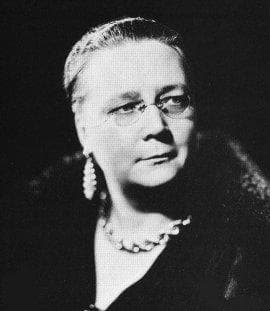
Dorothy Leigh Sayers was an English crime writer and poet. She was also a student of classical and modern languages.







