“It was impossible to describe that place, like trying to describe the color purple to someone who had only ever seen black and white.”
— Jack trying to explain the Underworld to Euri.

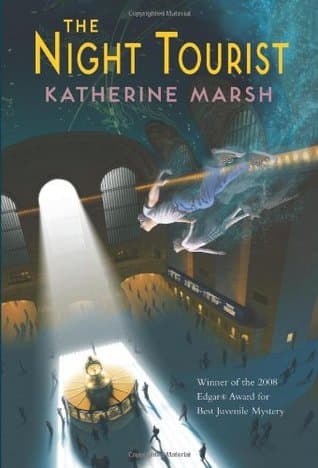
Katherine Marsh (2007)
Genre
Fantasy / Children's / Mystery / Young Adult
Reading Time
240 min
Key Themes
See below
Sign in to track this book
After a serious accident, a classics student discovers a hidden Underworld beneath Grand Central Station, where New York's deceased reside, offering him a chance to reunite with his mother and learn why he can see ghosts.
Jack Perdu, a quiet ninth-grader at Yale University, is reading his classics textbook while walking across campus. Distracted, he falls down a flight of stone stairs, hitting his head hard. The accident leaves him with a concussion and a constant headache that doctors cannot explain. His father, Professor Perdu, a classics professor at Yale, grows worried about Jack's health and his withdrawn behavior. Jack continues to focus on his studies, especially ancient Greek myths about the Underworld, to cope with his isolation and the grief over his mother's death.
Worried by Jack's unexplained headaches and pale appearance, Professor Perdu sends Jack to a specialist in New York City. This doctor, Dr. Vivaldi, is said to have unusual methods. Jack does not want to return to New York, a city he connects with the painful memory of his mother's death eight years before. He feels a sense of dread about the trip, which gets worse when he learns the doctor's office is in an old building near Grand Central Station, a place that seems strange to him.
When Jack arrives in New York, his first visit to Dr. Vivaldi's office is unsettling. He then finds himself drawn to Grand Central Station, where he meets a girl named Euri. Euri is beautiful and knows a lot about the station's hidden areas. She seems to know things about Jack, including his name and his interest in the Underworld, which makes him curious and suspicious. Euri offers to show him the 'real' Grand Central, hinting at secrets beyond what most people see. Jack, despite his first doubts, is drawn to her and the promise of discovery.
Euri takes Jack on a secret tour of Grand Central Station, leading him through hidden passages and forgotten rooms. She explains that the station is not just for the living, but also a way to the Underworld, where the souls of those who died in New York City stay. These souls, called 'Night Tourists,' remain in the Underworld until they are ready to move on. Euri reveals that she is a 'Night Tourist' herself, having died in New York years ago. Jack is at first unsure, but the signs of the spirit world around him, unseen by others, slowly convince him.
The news of the Underworld gives Jack a desperate hope: he believes he can find his mother, who died in New York eight years ago. He tells Euri about his mother's death and his strong desire to see her again. Euri understands his grief and agrees to help him search for her. This new goal gives Jack a drive he has not felt since his mother's passing, changing his visits to the Underworld from simple curiosity into a determined search. He begins to carefully look through records and watch the Night Tourists, hoping for a reunion.
As Jack explores the Underworld, he notices a shadowy figure, called 'the Watcher,' who seems to be watching him and Euri. He also meets Charon, the ferryman of the Underworld, who runs a ghostly subway line. Charon, a rough but wise character, warns Jack about staying too long in the Underworld and the possible results of bothering the spirits. He hints that Jack's presence there is not an accident and that forces are at work beyond his understanding, telling him to be careful.
Jack starts to put together clues about Euri's past. Through fragmented memories and talks, he learns that Euri died in a taxi accident eight years ago, on the same day and in the same place his mother died. This shocking connection makes him realize that Euri was the pedestrian hit by the taxi his mother was driving. This discovery is very emotional, linking their fates in an unexpected and sad way, revealing a shared trauma and a deeper reason for their meeting in the Underworld.
Dr. Vivaldi finally explains Jack's condition. His headaches are not just from a concussion; they show his unique ability to see the Underworld and its inhabitants. The accident at Yale, she says, just 'opened' his senses, making him a 'Night Tourist' in a different way – someone who can cross between the living and the dead. Dr. Vivaldi clarifies that she is not treating a physical problem, but helping him understand and control his new perception, preparing him for an important task related to his mother.
Jack finally finds his mother in the Underworld. He discovers that she, like Euri, is a Night Tourist, unable to move on because of strong guilt over Euri's death. His mother believed she was fully responsible for the accident. Jack realizes that his purpose in the Underworld is not just to see her, but to help her find peace. He must help his mother and Euri reconcile, and both with the truth of what happened, so they can finally leave the Underworld.
Jack arranges a meeting between his mother and Euri in the Underworld. With his help, both spirits face the accident that tied them together. His mother expresses her deep sorrow, while Euri, understanding the situation and the true regret, offers forgiveness. This moment allows both women to let go of their guilt and anger. Jack acts as the bridge, helping them find closure and understanding, setting the stage for their final journey.
With their pasts settled, Jack's mother and Euri are ready to leave the Underworld. They say a tender goodbye to Jack, thanking him for his part in their freedom. Jack watches as they board Charon's ferry, which will take them to the next stage of their existence. It is a bittersweet moment for Jack, filled with sadness at their leaving and deep peace, knowing he has helped them. He understands that this is not a permanent goodbye, but a necessary change.
Having finished his task, Jack returns to the living world, changed by his experiences in the Underworld. He no longer sees his headaches as a problem, but as a link to a deeper reality. Dr. Vivaldi assures him that his ability to see the Underworld will remain, but he will learn to control it. Jack feels a new sense of purpose and a deeper understanding of life and death. He is no longer just a quiet classics student, but a unique person with a deep connection to the unseen world, ready to face his future with new courage and wisdom.
The Protagonist
Jack transforms from a withdrawn, grieving boy into a courageous young man who accepts his unique abilities and finds peace regarding his mother's death.
The Supporting/Deuteragonist
Euri moves from a state of suspended animation in the Underworld, tied by her past, to finding forgiveness and finally moving on.
The Supporting
His arc is subtle, primarily involving his growing understanding and acceptance of Jack's mysterious recovery.
The Supporting
Dr. Vivaldi remains largely consistent, serving as a knowledgeable guide and orchestrator of events for Jack.
The Supporting/Mentioned
Her arc involves moving from a state of guilt-ridden stasis in the Underworld to finding peace and ascending.
The Supporting
Charon remains a steadfast figure, fulfilling his role as the ferryman.
The Mentioned
The Watcher's role is static, serving as an atmospheric element and a reminder of the rules of the Underworld.
The book explores the deep impact of grief, especially on Jack after his mother's death. His focus on classics is a way to cope, and his entire journey into the Underworld is driven by his unresolved sorrow and desire to see her again. The theme extends to Euri and Jack's mother, both of whom are stuck in the Underworld due to their own unresolved grief and guilt about the accident. The story suggests that true healing comes not from forgetting, but from facing and accepting loss, as seen when Jack's mother and Euri finally find peace.
“He knew, with a certainty that chilled him, that he was looking for his mother.”
A main part of the story is the idea of forgiveness, both forgiving oneself and forgiving others. Jack's mother is tied to the Underworld by her guilt over Euri's death, while Euri is similarly bound by her inability to fully move on from being a victim. Jack's role in bringing them together allows for a strong act of mutual forgiveness, letting both spirits find peace and finally move on. This theme highlights that holding onto past wrongs, whether self-inflicted or by others, prevents true peace and progress.
“Sometimes, the only thing keeping us from moving on is ourselves.”
The novel blends the lines between the living and the dead, showing the Underworld not as a far-off idea, but as a hidden part of New York City. Jack's ability to see this realm shows that life and death are not separate, but closely connected. The Night Tourists exist in a state between, influenced by the living world and still holding onto their pasts. This theme questions common views of death, suggesting that echoes of the departed remain, and that the living can help them find peace, creating a continuous cycle.
“New York is a city built on stories, and some of those stories are still walking around.”
Jack's journey is about self-discovery and accepting who he is. At first, he is a shy, bookish boy who feels out of place. His accident and his ability to see the Underworld force him to face a reality far beyond his studies. By the end, he accepts his role as a 'Night Tourist,' someone who can bridge worlds. This acceptance of his extraordinary perception changes him from a passive observer into an active participant in the mysteries of life and death, giving him a new sense of purpose and courage.
“You're not sick, Jack. You're just... seeing things differently.”
A hidden, spectral realm beneath a bustling New York landmark.
This device serves as the primary setting for much of the story's supernatural action. By placing the Underworld beneath Grand Central Station, the author creates a vivid contrast between the mundane, bustling world of the living and the spectral, unseen world of the dead. It grounds the fantasy elements in a recognizable, iconic location, making the magical more believable. This unique setting allows for the interaction between the living (Jack) and the dead (Night Tourists) and provides a tangible space for the themes of grief and reconciliation to unfold.
A physical symptom that acts as a gateway to supernatural awareness.
Jack's persistent headaches, initially believed to be a symptom of his concussion, are revealed to be a manifestation of his unique ability to perceive the Underworld. This device serves as a physical manifestation of his extraordinary gift, tying his internal state to the external supernatural world. It acts as a narrative trigger, propelling him to Dr. Vivaldi and into the Underworld, and also allows for a gradual unveiling of his powers, making his transition into seeing ghosts more plausible and less instantaneous.
Souls of the deceased who linger in the Underworld, unable to move on.
The Night Tourists are the spectral inhabitants of the Underworld. This device personifies the concept of unresolved grief and unfinished business. Each Night Tourist represents a soul tethered to the living world by some emotional or psychological burden. They provide a tangible representation of the story's core themes of grief, guilt, and the need for resolution. Their presence allows Jack to directly interact with the consequences of death and the possibility of finding his own mother among them.
References to ancient Greek myths of the Underworld, paralleling Jack's journey.
Jack's deep knowledge of classical mythology, particularly stories of the Underworld like those of Orpheus and Persephone, serves as a literary framework for his actual journey. These allusions foreshadow events, provide context for the rules of the Underworld, and lend a sense of timelessness and epic scope to Jack's personal quest. They also highlight Jack's intellectual nature and his initial way of coping with grief, bridging his academic world with his unfolding supernatural reality.
“It was impossible to describe that place, like trying to describe the color purple to someone who had only ever seen black and white.”
— Jack trying to explain the Underworld to Euri.
“Sometimes the greatest mysteries are found not in what is hidden, but in what is plainly visible.”
— A philosophical thought Jack has while investigating.
“The dead don't care about your living rules.”
— Euri warning Jack about the differences between the living and the dead.
“Every secret has a shadow, and every shadow eventually finds the light.”
— Jack reflecting on the unraveling of a secret.
“It was a strange sort of comfort, knowing that even in death, some things endured.”
— Jack observing the familiar elements of the Underworld.
“Fear can be a compass, if you know how to read it.”
— Euri giving advice to Jack about facing danger.
“The past isn't just something that happened; it's something that continues to happen, in its own way.”
— Jack contemplating the lingering effects of history and memory.
“You can't truly appreciate the light until you've spent some time in the dark.”
— A reflection on the contrast between life and the Underworld.
“Some journeys are not about finding a destination, but about understanding where you've been.”
— Jack's internal realization about his quest.
“Even the most ordinary places can hold extraordinary secrets.”
— Jack discovering hidden aspects of Grand Central Terminal.
“The world is full of echoes, if you only know how to listen.”
— Euri's mystical perspective on the world.
“It's not about being unafraid, it's about doing what needs to be done despite the fear.”
— Jack's internal monologue about bravery.
“Grief is a map with no clear path, only winding roads.”
— Jack reflecting on his feelings of loss.
“Sometimes, the most important answers aren't found in books, but in the spaces between them.”
— Jack's realization about the limitations of academic knowledge.
Ready to see how well you understood this book? Take our interactive quiz with 10 questions.

Biography coming soon.







